• Home
  • Latest
  • Fortune 500
  • Finance
  • Tech
  • Leadership
  • Lifestyle
  • Rankings
  • Multimedia
TechM-Kopa

Selling Solar to Rural Africa is Emerging as a Hot Market

By
Katie Fehrenbacher
Katie Fehrenbacher
Down Arrow Button Icon
By
Katie Fehrenbacher
Katie Fehrenbacher
Down Arrow Button Icon
December 22, 2015, 6:00 AM ET
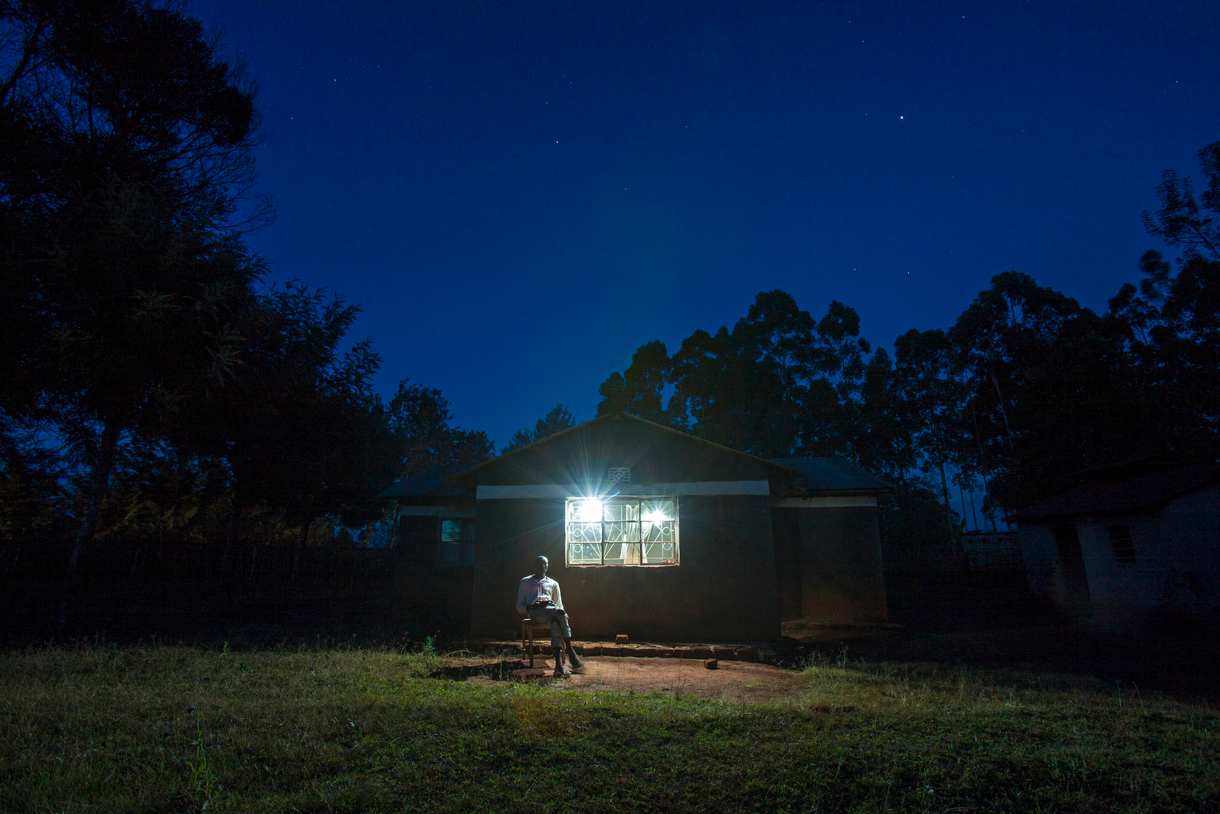
Photos courtesy of M-KOPA, Georgia Goodwin.

After years of fits and starts, startups and big businesses are finally starting to pay attention to the solar market in rural corners of the developing world.

Over the past few months, a number of high profile investors have backed startups selling solar panels to off-grid customers across regions like Africa, India, and East Asia. Meanwhile, big solar companies have created divisions focusing on rural customers in the same areas.

That this market is now starting to mature shows how solar is increasingly affordable to people who earn less than $2 daily. At the same time, it highlights how business can lead social development—electrification, in this case—in ways that some non-profits have failed.

For the most part, wealthy countries like the U.S. and Germany have been the ones to adopt home solar panels. Home owners typically buy their solar systems out right or lease them from a third party like SolarCity (SCTY). These solar systems tend to plug into the broader power grid.

But in regions like rural Africa, where the power grid is lacking, an entirely new strategy has had to be developed. These new solar products have relied on new types of financing, have ridden on the back of mobile technologies, and have depended on the emergence of cheap batteries. Will this type of solar product become the norm in rural off-grid areas?

The innovators

One of the rapidly growing startups tackling this market is M-Kopa, based in Nairobi, Kenya. The company was founded nearly five years ago by Jesse Moore and Nick Hughes, who was one of the original creators of mobile payment system M-Pesa. If you haven’t heard of it, M-Pesa is one of the world’s most successful mobile payment services. By some estimates, 95% of Kenyan adults use it to buy goods and services, and a third of Kenya’s GDP flows through it every year.

Moore and Hughes’ idea was to use a mobile payment system like M-Pesa as the backbone for offering credit to people who didn’t have bank accounts or full-time jobs. They decided to use it to create a pay-as-you-go financing system for solar panels, efficient lights and other appliances that piggy backed on the existing payment system, wireless networks and software.

Customers pay for the solar system, which costs about $200, with a small up-front sum followed, usually, by daily micro-payments for a year. If the customer stops paying, M-Kopa can turn the solar system off remotely.

MORE: Goldman Sachs to invest $150 billion in clean energy

Because customers can pay in small increments, it ends up making solar panels more affordable than kerosene, the traditional source of energy in rural areas. Off-grid rural home-owners have little choice but to burn kerosene indoors at night to light homes after dark, leading to respiratory problems and fires.

The average off-grid Kenyan spends $272 a year on energy, which includes $164 on kerosene, $36 on charging a cell phone (often times at charging kiosks), and $72 on batteries, as Bloomberg reported. M-Kopa says that its customers can save $750 over four years by switching to its solar kit.

M-Kopa is a financing company more than anything else. The company buys solar kits from others like startup D.Light, which in recent years has also started to focus more on new financing methods.

They are not alone. Off Grid Electric, a startup founded in 2011 and based in Tanzania, has a similar plan to bring pay-as-you-go solar panels that run off of cell phone systems and networks to Africa as does Azuri Technologies. In India, Simpa Networks and Mera Gao Power are making a similar push.

A big business?

In recent months, investors have started to place bets on some startups that have made solid progress. Earlier this month Generation Investment Management, a London-based fund started by investors David Blood and former Vice President Al Gore, led a round of $19 million for M-Kopa. Generation has invested in energy companies like solar installer SolarCity and smart thermostat maker Nest, now owned by Google parent Alphabet (GOOG).

WATCH: To learn more about energy in developing regions, watch this Fortune video:

M-Kopa’s round also included funding from Virgin’s Richard Branson and Steve Case, founder of AOL. Using the funds, M-Kopa plans to expand its business to reach 1 million homes in East Africa by the end of 2017. To date, M-Kopa has sold solar to about 280,000 homes in Kenya, Tanzania, and Uganda.

D.Light, meanwhile, has raised $40 million over its lifetime from investors including Draper Fisher Jurvetson, Omidyar Networks, Nexus India Capital, and Acumen Fund. The company has sold 10 million solar lanterns, which are stand alone solar devices that store solar energy, in contrast to the pay-as-you-go solar panels, which electrify an entire home.

Last week, Off Grid Electric announced that it had raised $45 million in debt financing from the Packard Foundation, Ceniarth, Calvert Foundation and other family offices to deploy its pay-as-you-go solar system across Africa. Off Grid Electric says the debt funding was the first of its kind to help deploy off-grid solar in Africa.

The company’s funding comes on the heels of $25 million in equity backing led by DBL Partners, which has also invested in Tesla (TSLA) and SolarCity. Other investors in Off Grid Electric included SolarCity itself, Zouk Capital and Vulcan Capital, the fund of Microsoft co-founder Paul Allen.

It’s not just startups that are eying this emerging market. Clean energy giant SunEdison (SUNE) earlier this year hired Cathy Zoi, a former assistant secretary of energy efficiency and renewable energy with the U.S. Energy Department. She runs SunEdison Frontier Power, a division that focuses on electricity for developing countries. Challenges remain with finding banks that will provide debt financing for rural utilities customers that are at a higher risk of default on payments, Zoi said at Fortune’s Brainstorm E event earlier this year.

SIGN UP: Get Data Sheet, Fortune’s daily newsletter about the business of technology.

The market for solar panels in off-grid areas of developing countries is still relatively small. If M-Kopa hits 1 million customers in 2016 that will still be a tiny fraction of the 2 billion people that are estimated to need off-grid electricity.

But down the road, the power grid could be pretty helpful, too. Big cities in Africa are expanding the number of homes with electricity, transforming areas that had previously dependent on kerosene lamps.

Yet off-grid solar services like M-Kopa’s prove to be cheaper than expanding the power grid and the technology could be an example of what the future of electricity would look like in rural Africa, India and Asia. At the same time, many wonder whether these regions will bypass the power grid in the same way that many of them were connected to cell phones networks without first having landline phones.

Wireless communications was not only cheaper, but also better in many ways than wired communications. Will off-grid electricity and solar emerge the same way?

This article referred to Off Grid Electric as Off-Grid Solar in several places and was been updated on December 22 at 3:40 pm pst with the correct reference.


About the Author
By Katie Fehrenbacher
See full bioRight Arrow Button Icon

Latest in Tech

Finance
Lorem ipsum dolor sit amet, consectetur adipiscing elit, sed do eiusmod tempor incididunt ut labore et dolore magna aliqua. Ut enim ad minim veniam
By Fortune Editors
October 20, 2025
Finance
Lorem ipsum dolor sit amet, consectetur adipiscing elit, sed do eiusmod tempor incididunt ut labore et dolore magna aliqua. Ut enim ad minim veniam
By Fortune Editors
October 20, 2025
Finance
Lorem ipsum dolor sit amet, consectetur adipiscing elit, sed do eiusmod tempor incididunt ut labore et dolore magna aliqua. Ut enim ad minim veniam
By Fortune Editors
October 20, 2025
Finance
Lorem ipsum dolor sit amet, consectetur adipiscing elit, sed do eiusmod tempor incididunt ut labore et dolore magna aliqua. Ut enim ad minim veniam
By Fortune Editors
October 20, 2025
Finance
Lorem ipsum dolor sit amet, consectetur adipiscing elit, sed do eiusmod tempor incididunt ut labore et dolore magna aliqua. Ut enim ad minim veniam
By Fortune Editors
October 20, 2025
Finance
Lorem ipsum dolor sit amet, consectetur adipiscing elit, sed do eiusmod tempor incididunt ut labore et dolore magna aliqua. Ut enim ad minim veniam
By Fortune Editors
October 20, 2025

Most Popular

Finance
Lorem ipsum dolor sit amet, consectetur adipiscing elit, sed do eiusmod tempor incididunt ut labore et dolore magna aliqua. Ut enim ad minim veniam
By Fortune Editors
October 20, 2025
Finance
Lorem ipsum dolor sit amet, consectetur adipiscing elit, sed do eiusmod tempor incididunt ut labore et dolore magna aliqua. Ut enim ad minim veniam
By Fortune Editors
October 20, 2025
Finance
Lorem ipsum dolor sit amet, consectetur adipiscing elit, sed do eiusmod tempor incididunt ut labore et dolore magna aliqua. Ut enim ad minim veniam
By Fortune Editors
October 20, 2025
Finance
Lorem ipsum dolor sit amet, consectetur adipiscing elit, sed do eiusmod tempor incididunt ut labore et dolore magna aliqua. Ut enim ad minim veniam
By Fortune Editors
October 20, 2025
Finance
Lorem ipsum dolor sit amet, consectetur adipiscing elit, sed do eiusmod tempor incididunt ut labore et dolore magna aliqua. Ut enim ad minim veniam
By Fortune Editors
October 20, 2025
Finance
Lorem ipsum dolor sit amet, consectetur adipiscing elit, sed do eiusmod tempor incididunt ut labore et dolore magna aliqua. Ut enim ad minim veniam
By Fortune Editors
October 20, 2025
Fortune Secondary Logo
Rankings
  • 100 Best Companies
  • Fortune 500
  • Global 500
  • Fortune 500 Europe
  • Most Powerful Women
  • Future 50
  • World’s Most Admired Companies
  • See All Rankings
Sections
  • Finance
  • Fortune Crypto
  • Features
  • Leadership
  • Health
  • Commentary
  • Success
  • Retail
  • Mpw
  • Tech
  • Lifestyle
  • CEO Initiative
  • Asia
  • Politics
  • Conferences
  • Europe
  • Newsletters
  • Personal Finance
  • Environment
  • Magazine
  • Education
Customer Support
  • Frequently Asked Questions
  • Customer Service Portal
  • Privacy Policy
  • Terms Of Use
  • Single Issues For Purchase
  • International Print
Commercial Services
  • Advertising
  • Fortune Brand Studio
  • Fortune Analytics
  • Fortune Conferences
  • Business Development
  • Group Subscriptions
About Us
  • About Us
  • Editorial Calendar
  • Press Center
  • Work At Fortune
  • Diversity And Inclusion
  • Terms And Conditions
  • Site Map
  • About Us
  • Editorial Calendar
  • Press Center
  • Work At Fortune
  • Diversity And Inclusion
  • Terms And Conditions
  • Site Map
  • Facebook icon
  • Twitter icon
  • LinkedIn icon
  • Instagram icon
  • Pinterest icon

Latest in Tech

The Navy confirmed an ‘abundant amount’ of Uncrustables when the Artemis II crew lands. Smucker’s just offered them a lifetime supply
PoliticsFood and drink
The Navy confirmed an ‘abundant amount’ of Uncrustables when the Artemis II crew lands. Smucker’s just offered them a lifetime supply
By Catherina GioinoApril 10, 2026
1 hour ago
Three people sit behind a desk and look at the phone screen of the person in the middle.
Future of WorkConsulting
Meet ‘trendslop,’ the new, AI-fueled scourge of workplace consultants everywhere
By Sasha RogelbergApril 10, 2026
1 hour ago
Amazon is still paying Jeff Bezos an $80,000 yearly salary—but $1.6 million for travel and security
Big TechCEO salaries and executive compensation
Amazon is still paying Jeff Bezos an $80,000 yearly salary—but $1.6 million for travel and security
By Marco Quiroz-GutierrezApril 10, 2026
3 hours ago
Kash Patel sits with his two fingers on lips
CybersecurityIran
First they went after medtech, then Kash Patel. Iranian hackers’ next target is likely ‘low-hanging fruit’ in water, energy, and tourism, experts say
By Jacqueline MunisApril 10, 2026
4 hours ago
scott bessent
CybersecurityFederal Reserve
The AI that found 27-year-old vulnerabilities no human ever caught before just forced an emergency meeting with every major Wall Street CEO
By Jake AngeloApril 10, 2026
6 hours ago
Ukraine will have the most important defense industrial base in the free world, former CIA chief predicts
InnovationDefense
Ukraine will have the most important defense industrial base in the free world, former CIA chief predicts
By Jason MaApril 10, 2026
8 hours ago

Most Popular

The U.S. government is spending $88 billion a month in interest on national debt—equal to spending on defense and education combined
Economy
The U.S. government is spending $88 billion a month in interest on national debt—equal to spending on defense and education combined
By Fortune EditorsApril 9, 2026
1 day ago
A Meta employee created a dashboard so coworkers can compete to be the company's No. 1 AI token user—and Zuckerberg doesn't even rank in the top 250
AI
A Meta employee created a dashboard so coworkers can compete to be the company's No. 1 AI token user—and Zuckerberg doesn't even rank in the top 250
By Fortune EditorsApril 9, 2026
2 days ago
Mark Cuban admits he made a mistake letting go of the Mavericks: 'I don't regret selling. I regret who I sold to'
Investing
Mark Cuban admits he made a mistake letting go of the Mavericks: 'I don't regret selling. I regret who I sold to'
By Fortune EditorsApril 9, 2026
1 day ago
Schools across America are quietly admitting that screens in classrooms made students worse off and are reversing years of tech-first policies
Innovation
Schools across America are quietly admitting that screens in classrooms made students worse off and are reversing years of tech-first policies
By Fortune EditorsApril 10, 2026
15 hours ago
'I hate working 5 days': Zoom CEO says traditional work schedules are becoming obsolete—and predicts a 3-day workweek by 2031
Success
'I hate working 5 days': Zoom CEO says traditional work schedules are becoming obsolete—and predicts a 3-day workweek by 2031
By Fortune EditorsApril 9, 2026
1 day ago
Gen Z doesn't want your full-time job. They want several part-time roles, and it's reshaping the entire workforce
Success
Gen Z doesn't want your full-time job. They want several part-time roles, and it's reshaping the entire workforce
By Fortune EditorsApril 9, 2026
2 days ago

© 2026 Fortune Media IP Limited. All Rights Reserved. Use of this site constitutes acceptance of our Terms of Use and Privacy Policy | CA Notice at Collection and Privacy Notice | Do Not Sell/Share My Personal Information
FORTUNE is a trademark of Fortune Media IP Limited, registered in the U.S. and other countries. FORTUNE may receive compensation for some links to products and services on this website. Offers may be subject to change without notice.