• Home
  • Latest
  • Fortune 500
  • Finance
  • Tech
  • Leadership
  • Lifestyle
  • Rankings
  • Multimedia

Trendingnow

1

China's export shock is pushing the global economy to a breaking point, and the U.S. may have to clean up the mess, former trade official says

2

Kevin O'Leary says if you earn $68,000 a year and follow this rule, you'll retire a millionaire

3

U.S. debt is even worse than it seems, and rising Treasury yields are now an 'all-hands-on-deck situation,' top economist warns

1

China's export shock is pushing the global economy to a breaking point, and the U.S. may have to clean up the mess, former trade official says

2

Kevin O'Leary says if you earn $68,000 a year and follow this rule, you'll retire a millionaire

3

U.S. debt is even worse than it seems, and rising Treasury yields are now an 'all-hands-on-deck situation,' top economist warns
Finance

Why the Fed Just Decided to Give Big Banks Free Money

By
Chris Matthews
Chris Matthews
Down Arrow Button Icon
By
Chris Matthews
Chris Matthews
Down Arrow Button Icon
December 16, 2015, 6:00 PM ET
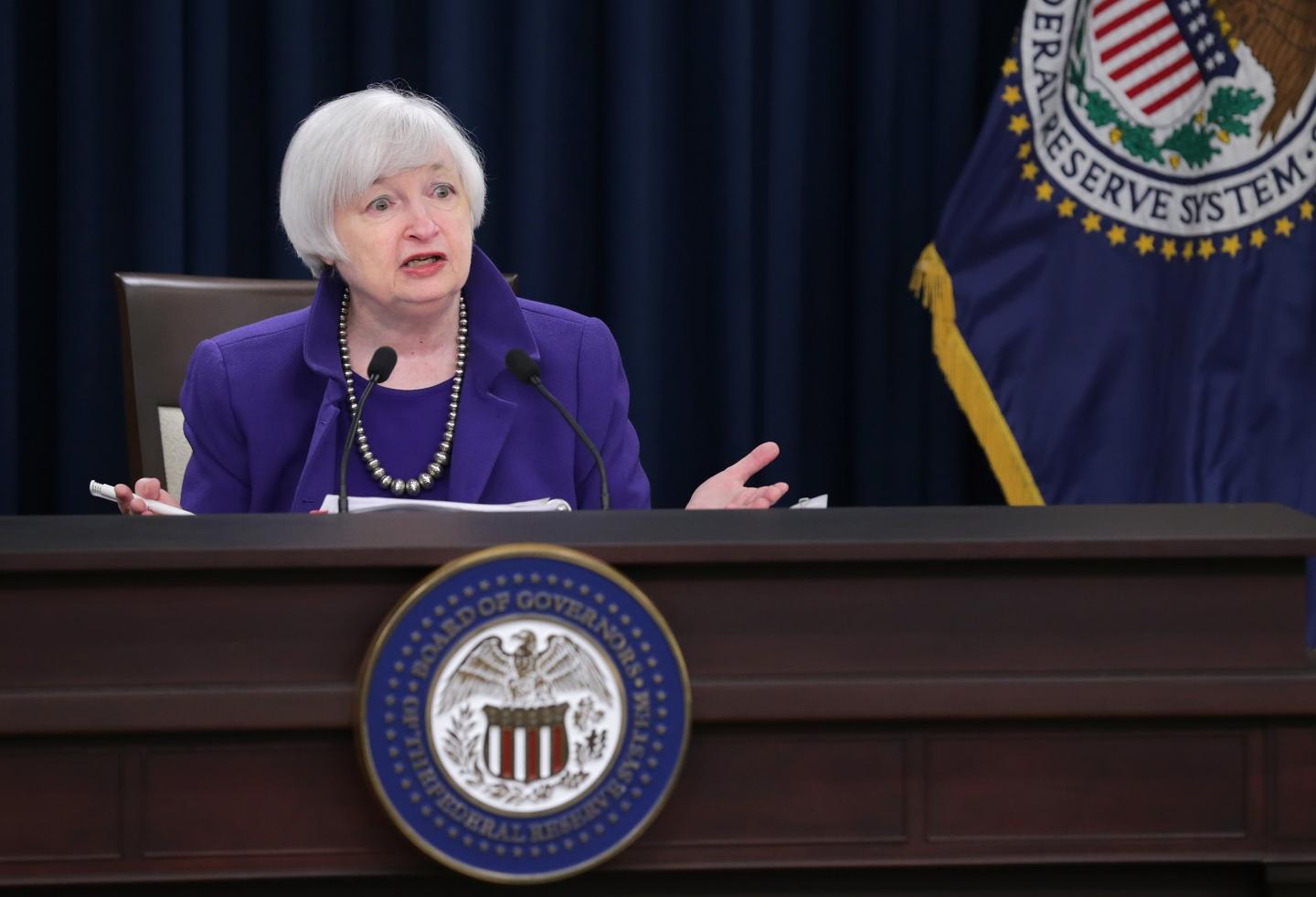
Janet Yellen Holds Press Conf. After Federal Reserve Meeting On Interest Rates
WASHINGTON, DC - DECEMBER 16: Federal Reserve Bank Chair Janet Yellen holds a news conference where she announced that the Fed will raise its benchmark interest rate for the first time since 2008 at the bank's Wilson Conference Center December 16, 2015 in Washington, DC. With unemployment at 5-percent and the economy showing signs of strength, the Fed raised the interest rate a quarter of a percentage point and many experts believe the interest rate on short-term loans could go as high as one percent by the end of 2016. (Photo by Chip Somodevilla/Getty Images)Chip Somodevilla—Getty Images
Google source logo
Add Fortune on Google for similar content.

The Federal Reserve decided to raise interest rates for the first time in nine years on Wednesday, and the stock market celebrated by closing up more than 200 points.

But there’s other Wall Street institutions that should love the move even more: America’s largest banks.

That’s because the Fed must use a different strategy this time around for raising rates than it normally does: Paying banks interest rates on reserves, or the equivalent of deposits that banks keep at the central bank.

On Wednesday, Fed Chair Janet Yellen announced that the bank would raise the rate it pays banks to keep reserves at the central bank from 0.25% to 0.5%. And with there being $2.5 trillion in reserves in the banking system that means that the Fed is paying America’s banks, collectively, a little more than $12.5 billion per year.

So why is the Fed paying banks so much? In normal times, the Fed is able to lower the overnight rate at which banks lend to each other by buying U.S. government debt from banks and adding to their reserves. When it wanted to raise interest rates, it would simply drain those reserves from the system, swapping those deposits for Treasuries.

But after the Fed has spent years buying up government debt of various maturities as well as mortgage-backed securities in order to drive down long-term interest rates, the banking system is awash with a huge number of excess reserves. To drain those reserves, the Fed would have to sell a good portion of those bonds. That would likely drive up interest rates—particularly long-term and mortgage rates—higher than the Fed would like. So instead of draining the reserves, the Fed has decided to pay a higher interest rate on those deposits.

This strategy enables the Fed to still control the overnight rate that banks lend to each other, because it makes no sense for them to lend to each other at a lower rate than what the Fed will pay.

And the biggest beneficiaries of these interest rate payments will be America’s largest banks, the so-called “primary dealers“, like JP Morgan, Citi, and Goldman Sachs, that act as counterparties to the Fed when it implements monetary policy. So while these unusual times may make these payments necessary, the change does underscore that it often pays well to be close to the central bank.

About the Author
By Chris Matthews
See full bioRight Arrow Button Icon
Google source logo
Add Fortune on Google for similar content.

Latest in Finance


Most Popular

Fortune Secondary Logo
Rankings
  • 100 Best Companies
  • Fortune 500
  • Global 500
  • Fortune 500 Europe
  • Most Powerful Women
  • World's Most Admired Companies
  • See All Rankings
  • Lists Calendar
Sections
  • Finance
  • Fortune Crypto
  • Features
  • Leadership
  • Health
  • Commentary
  • Success
  • Retail
  • Mpw
  • Tech
  • Lifestyle
  • CEO Initiative
  • Asia
  • Politics
  • Conferences
  • Europe
  • Newsletters
  • Personal Finance
  • Environment
  • Magazine
  • Education
Customer Support
  • Frequently Asked Questions
  • Customer Service Portal
  • Privacy Policy
  • Terms Of Use
  • Single Issues For Purchase
  • International Print
Commercial Services
  • Advertising
  • Fortune Brand Studio
  • Fortune Analytics
  • Fortune Conferences
  • Business Development
  • Group Subscriptions
About Us
  • About Us
  • Press Center
  • Work At Fortune
  • Terms And Conditions
  • Site Map
  • About Us
  • Press Center
  • Work At Fortune
  • Terms And Conditions
  • Site Map
  • Facebook icon
  • Twitter icon
  • LinkedIn icon
  • Instagram icon
  • TikTok icon
  • YouTube icon

    Latest in Finance


    Most Popular

    © 2026 Fortune Media IP Limited. All Rights Reserved. Use of this site constitutes acceptance of our Terms of Use and Privacy Policy | CA Notice at Collection and Privacy Notice | Do Not Sell/Share My Personal Information
    FORTUNE is a trademark of Fortune Media IP Limited, registered in the U.S. and other countries. FORTUNE may receive compensation for some links to products and services on this website. Offers may be subject to change without notice.