• Home
  • Latest
  • Fortune 500
  • Finance
  • Tech
  • Leadership
  • Lifestyle
  • Rankings
  • Multimedia

Trendingnow

1

Corporate America has been draining the world's water. Matt Damon's new campaign calls on Gap, Starbucks, and Amazon to help give it back

2

When SpaceX starts trading, some 'shareholders' will discover they own nothing at all

3

Analysts expected oil to surge above $200 but China has quietly kept prices half of that—and can’t for much longer

1

Corporate America has been draining the world's water. Matt Damon's new campaign calls on Gap, Starbucks, and Amazon to help give it back

2

When SpaceX starts trading, some 'shareholders' will discover they own nothing at all

3

Analysts expected oil to surge above $200 but China has quietly kept prices half of that—and can’t for much longer
Tech

Facebook, Twitter and the death of the link

By
Mathew Ingram
Mathew Ingram
Down Arrow Button Icon
By
Mathew Ingram
Mathew Ingram
Down Arrow Button Icon
October 28, 2015, 3:34 PM ET
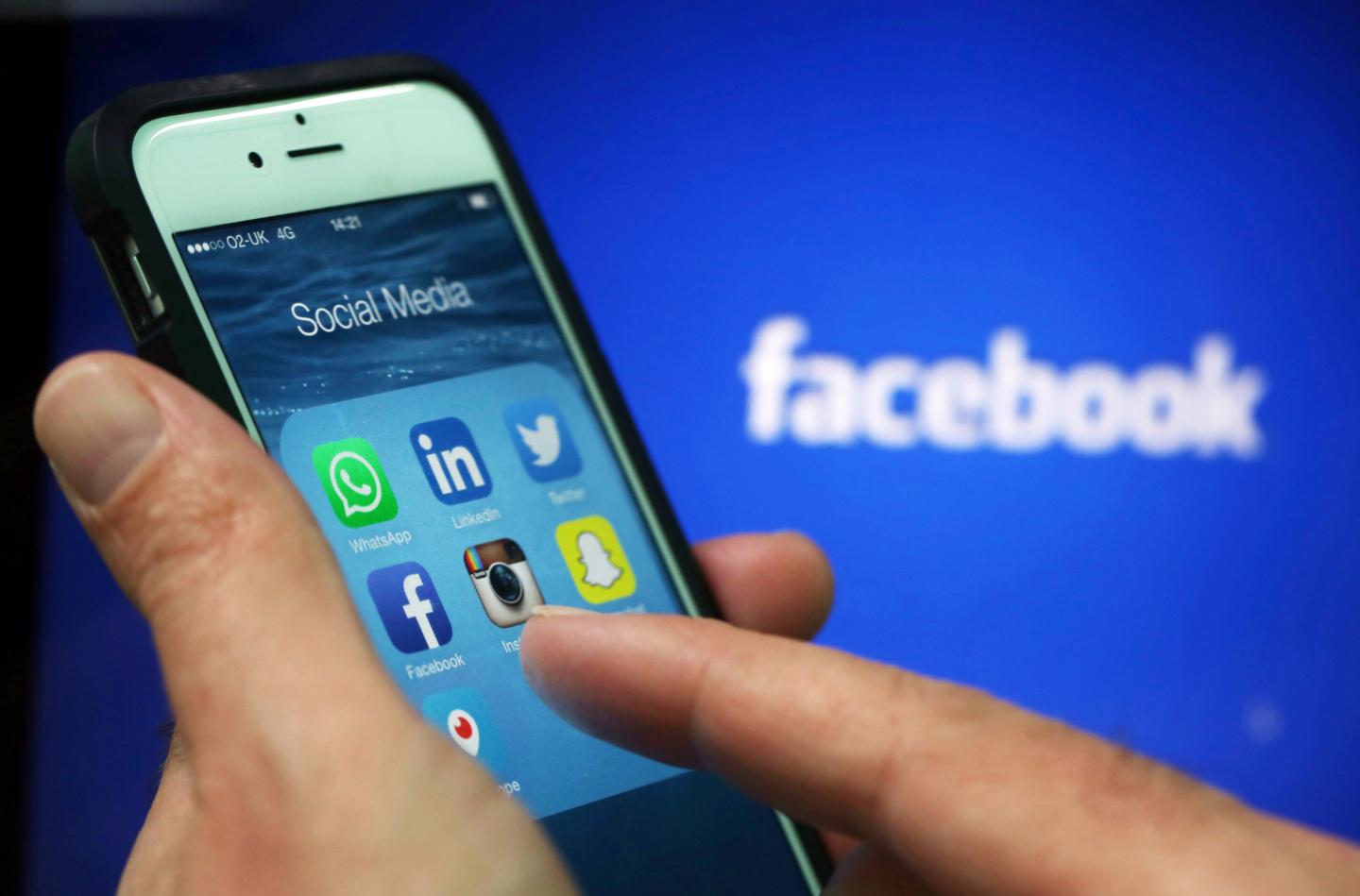
Social Media Illustrations
Photograph by Chris Ratcliffe — Bloomberg via Getty Images

If you’re of a certain age, the web has a single thing at its core, and that is the hyperlink—those blue links that connect one page to another, creating a kind of interlocking mesh of URLs that encircles the globe. But if you’re someone who lives on social networks like Facebook, Twitter, and Snapchat, links don’t matter nearly as much because you hardly ever see them, and even if you do, you probably never click on them.

Facebook’s “Instant Articles” and Twitter’s new Moments feature seem to be accelerating this phenomenon, for better or worse. The whole point of Facebook’s Instant Articles project, in which it has formed partnerships with publishers like the New York Times, is that the content from those publishers exists completely inside Facebook’s mobile app. It’s consumed there, and shared there—there’s no link to an external site because it’s unnecessary.

Twitter (TWTR) seems to be taking a similar approach with Moments, a listing of tweets and images that are selected by the company’s editorial staff. They are a great way to catch up on the news, but if you want to get at the link to the underlying story, it is hidden three clicks deep. Realistically, there’s zero chance that anyone will actually click those links.

The stated reason for Facebook’s Instant Articles is to help publishers speed up the loading of their articles on mobile. But from the social network’s point of view, the main benefit is that it keeps people inside Facebook, because there’s effectively no option to click and go somewhere else.

The spider and the fly

In fact, according to the Wall Street Journal, in some cases you can’t include a link to the website that published the story even if you want to. Since the Washington Post publishes 100% of its content through the Facebook Instant Articles feature—a somewhat controversial strategy— if you try to link to a story on the Post website, it winds up getting converted into a link to the Instant Article.

According to both the New York Times and Facebook itself, the initial results show that Instant Articles get shared a lot more than the more traditional kind of post that has an excerpt from a story and a link. Because the posts load quickly, it’s more likely people will read and share them, Facebook product manager Michael Reckhow pointed out in a recent interview with the Nieman Journalism Lab.

That’s good for Facebook (FB), since it means more engagement, which is the whole reason why they are reaching out to publishers in the first place. And theoretically it’s a good idea for the media outlets that are participating, because their content is being shared more widely and they are reaching more people.

The almighty algorithm

But do publishers lose out because their articles and videos live completely inside Facebook? The social network argues they don’t, because they get to sell the same advertising as they would on their own site, or they can share the revenue from Facebook’s ads (Twitter doesn’t share revenue from Moments, at least not yet). And the traffic that occurs with Instant Articles is treated the same by audience measurement firms like Omniture, as though it was on their own site.

So where is the downside? The risk is that since news consumption occurs entirely inside Facebook, the social network becomes the default source of news for large numbers of people, and they eventually stop associating that news with the outlet that actually created it. There’s already some evidence that this is happening.

On top of that, because Facebook controls the algorithm that determines what users see or don’t see, then it gets to decide what the news is, and what is important. And that’s a potential problem if Facebook chooses to delete disturbing images or news stories about war and promote peaceful happy stories instead. In some cases, information disappears from Facebook and the social network never explains why.

There are definitely risks for news outlets and publishers with both Instant Articles and Moments, especially if those outlets don’t have a business model that lets them function as a completely distributed media entity—that is, one whose content lives on a range of different platforms and networks—the way BuzzFeed does.

Should we mourn the hyperlink?

More broadly though, is the death of the hyperlink something we should be concerned about? Does it matter that growing numbers of users, particularly on mobile devices, never actually go to the source of the news they are reading? Many people never clicked on links even before mobile and the social web came along, either because they were lazy or because they didn’t have time to go any deeper.

In the old days of the web, links were a way of showing that you had done your research, a way of supporting your facts and assertions, and also a way of paying your respects to other bloggers writing about the same things. But as blogs became media companies, links started to get buried at the bottom of stories, and aggregators in many cases never bothered linking to the original source at all.

From that perspective, features like Facebook’s Instant Articles and Twitter’s Moments are just the continuation of an ongoing process of devaluing the hyperlink— a process that values the stream over the URL, the in-app experience over the click. Another step in the transformation of the web into something more like television. Is that bad? I honestly don’t know. But there’s no question it’s happening.

You can follow Mathew Ingram on Twitter at @mathewi, and read all of his posts here or via his RSS feed. And please subscribe to Data Sheet, Fortune’s daily newsletter on the business of technology.

About the Author
By Mathew Ingram
See full bioRight Arrow Button Icon

Latest in Tech

Finance
Lorem ipsum dolor sit amet, consectetur adipiscing elit, sed do eiusmod tempor incididunt ut labore et dolore magna aliqua. Ut enim ad minim veniam
By Fortune Editors
October 20, 2025
Finance
Lorem ipsum dolor sit amet, consectetur adipiscing elit, sed do eiusmod tempor incididunt ut labore et dolore magna aliqua. Ut enim ad minim veniam
By Fortune Editors
October 20, 2025
Finance
Lorem ipsum dolor sit amet, consectetur adipiscing elit, sed do eiusmod tempor incididunt ut labore et dolore magna aliqua. Ut enim ad minim veniam
By Fortune Editors
October 20, 2025
Finance
Lorem ipsum dolor sit amet, consectetur adipiscing elit, sed do eiusmod tempor incididunt ut labore et dolore magna aliqua. Ut enim ad minim veniam
By Fortune Editors
October 20, 2025
Finance
Lorem ipsum dolor sit amet, consectetur adipiscing elit, sed do eiusmod tempor incididunt ut labore et dolore magna aliqua. Ut enim ad minim veniam
By Fortune Editors
October 20, 2025
Finance
Lorem ipsum dolor sit amet, consectetur adipiscing elit, sed do eiusmod tempor incididunt ut labore et dolore magna aliqua. Ut enim ad minim veniam
By Fortune Editors
October 20, 2025

Most Popular

Finance
Lorem ipsum dolor sit amet, consectetur adipiscing elit, sed do eiusmod tempor incididunt ut labore et dolore magna aliqua. Ut enim ad minim veniam
By Fortune Editors
October 20, 2025
Finance
Lorem ipsum dolor sit amet, consectetur adipiscing elit, sed do eiusmod tempor incididunt ut labore et dolore magna aliqua. Ut enim ad minim veniam
By Fortune Editors
October 20, 2025
Finance
Lorem ipsum dolor sit amet, consectetur adipiscing elit, sed do eiusmod tempor incididunt ut labore et dolore magna aliqua. Ut enim ad minim veniam
By Fortune Editors
October 20, 2025
Finance
Lorem ipsum dolor sit amet, consectetur adipiscing elit, sed do eiusmod tempor incididunt ut labore et dolore magna aliqua. Ut enim ad minim veniam
By Fortune Editors
October 20, 2025
Finance
Lorem ipsum dolor sit amet, consectetur adipiscing elit, sed do eiusmod tempor incididunt ut labore et dolore magna aliqua. Ut enim ad minim veniam
By Fortune Editors
October 20, 2025
Finance
Lorem ipsum dolor sit amet, consectetur adipiscing elit, sed do eiusmod tempor incididunt ut labore et dolore magna aliqua. Ut enim ad minim veniam
By Fortune Editors
October 20, 2025
Fortune Secondary Logo
Rankings
  • 100 Best Companies
  • Fortune 500
  • Global 500
  • Fortune 500 Europe
  • Most Powerful Women
  • World's Most Admired Companies
  • See All Rankings
  • Lists Calendar
Sections
  • Finance
  • Fortune Crypto
  • Features
  • Leadership
  • Health
  • Commentary
  • Success
  • Retail
  • Mpw
  • Tech
  • Lifestyle
  • CEO Initiative
  • Asia
  • Politics
  • Conferences
  • Europe
  • Newsletters
  • Personal Finance
  • Environment
  • Magazine
  • Education
Customer Support
  • Frequently Asked Questions
  • Customer Service Portal
  • Privacy Policy
  • Terms Of Use
  • Single Issues For Purchase
  • International Print
Commercial Services
  • Advertising
  • Fortune Brand Studio
  • Fortune Analytics
  • Fortune Conferences
  • Business Development
  • Group Subscriptions
About Us
  • About Us
  • Press Center
  • Work At Fortune
  • Terms And Conditions
  • Site Map
  • About Us
  • Press Center
  • Work At Fortune
  • Terms And Conditions
  • Site Map
  • Facebook icon
  • Twitter icon
  • LinkedIn icon
  • Instagram icon
  • Pinterest icon

Latest in Tech

Elon Musk stands behind the Nasdaq opening bell and in front of a "SpaceX" background.
Startups & VentureSpaceX
Founders Fund, Andreessen Horowitz, Valor, and the biggest VC winners from SpaceX’s IPO
By Allie GarfinkleJune 12, 2026
4 hours ago
Sven Gerjets, chief technology officer at Gap, speaks on stage on a panel at Fortune Brainstorm Tech 2026.
Future of WorkBrainstorm Tech
Why companies are treating AI as a strategic partner rather than a passive technology, and how to avoid an ‘AI hangover’
By Sebastian HerreraJune 12, 2026
5 hours ago
Elon Musk stands behind the Nasdaq opening bell and in front of a "SpaceX" background.
Future of WorkElon Musk
Despite his new trillionaire status, Elon Musk says money ‘will stop being relevant’ in the future because of AI
By Sasha RogelbergJune 12, 2026
6 hours ago
AI was supposed to cut health care costs. One of its first jobs was charging you more, PwC report shows
AIHealth Care Service
AI was supposed to cut health care costs. One of its first jobs was charging you more, PwC report shows
By Whizy Kim and Tech BrewJune 12, 2026
6 hours ago
paul
AIWorld Cup
Machine learning gives the U.S. a 1% chance of winning the World Cup final in its own backyard
By Achim Zeileis and The ConversationJune 12, 2026
6 hours ago
DoorDash wants you to stop scrolling and just tell its new AI chatbot what you’re hungry for
RetailDoorDash
DoorDash wants you to stop scrolling and just tell its new AI chatbot what you’re hungry for
By Dave Lozo and Morning BrewJune 12, 2026
6 hours ago

Most Popular

Corporate America has been draining the world's water. Matt Damon's new campaign calls on Gap, Starbucks, and Amazon to help give it back
Environment
Corporate America has been draining the world's water. Matt Damon's new campaign calls on Gap, Starbucks, and Amazon to help give it back
By Catherina GioinoJune 9, 2026
3 days ago
When SpaceX starts trading, some 'shareholders' will discover they own nothing at all
Investing
When SpaceX starts trading, some 'shareholders' will discover they own nothing at all
By Jim EdwardsJune 12, 2026
14 hours ago
Analysts expected oil to surge above $200 but China has quietly kept prices half of that—and can’t for much longer
Energy
Analysts expected oil to surge above $200 but China has quietly kept prices half of that—and can’t for much longer
By Sasha RogelbergJune 10, 2026
2 days ago
Current price of oil as of June 12, 2026
Personal Finance
Current price of oil as of June 12, 2026
By Joseph HostetlerJune 12, 2026
12 hours ago
American taxpayers have spent $33 billion on sports stadiums. They got fewer seats—and higher prices
Success
American taxpayers have spent $33 billion on sports stadiums. They got fewer seats—and higher prices
By Catherina GioinoJune 11, 2026
1 day ago
Current price of oil as of June 11, 2026
Personal Finance
Current price of oil as of June 11, 2026
By Joseph HostetlerJune 11, 2026
1 day ago

© 2026 Fortune Media IP Limited. All Rights Reserved. Use of this site constitutes acceptance of our Terms of Use and Privacy Policy | CA Notice at Collection and Privacy Notice | Do Not Sell/Share My Personal Information
FORTUNE is a trademark of Fortune Media IP Limited, registered in the U.S. and other countries. FORTUNE may receive compensation for some links to products and services on this website. Offers may be subject to change without notice.