Citizens hoping to find rational political dialogue when they tune in to the first televised debate of Democrat presidential candidates on October 13 are sure to be disappointed.
Having studied and written about every American televised presidential debate going back to Kennedy-Nixon in 1960, I believe that TV is a medium incapable of providing a sensible setting in which voters can get meaningful insights.
It was more of the same during the first two Republican debates of this election cycle, which were vacuous, circus-like spectacles.
CNN will telecast the upcoming Democrat event, getting a do-over to see if it can improve its performance in hosting the recent Republican debate.
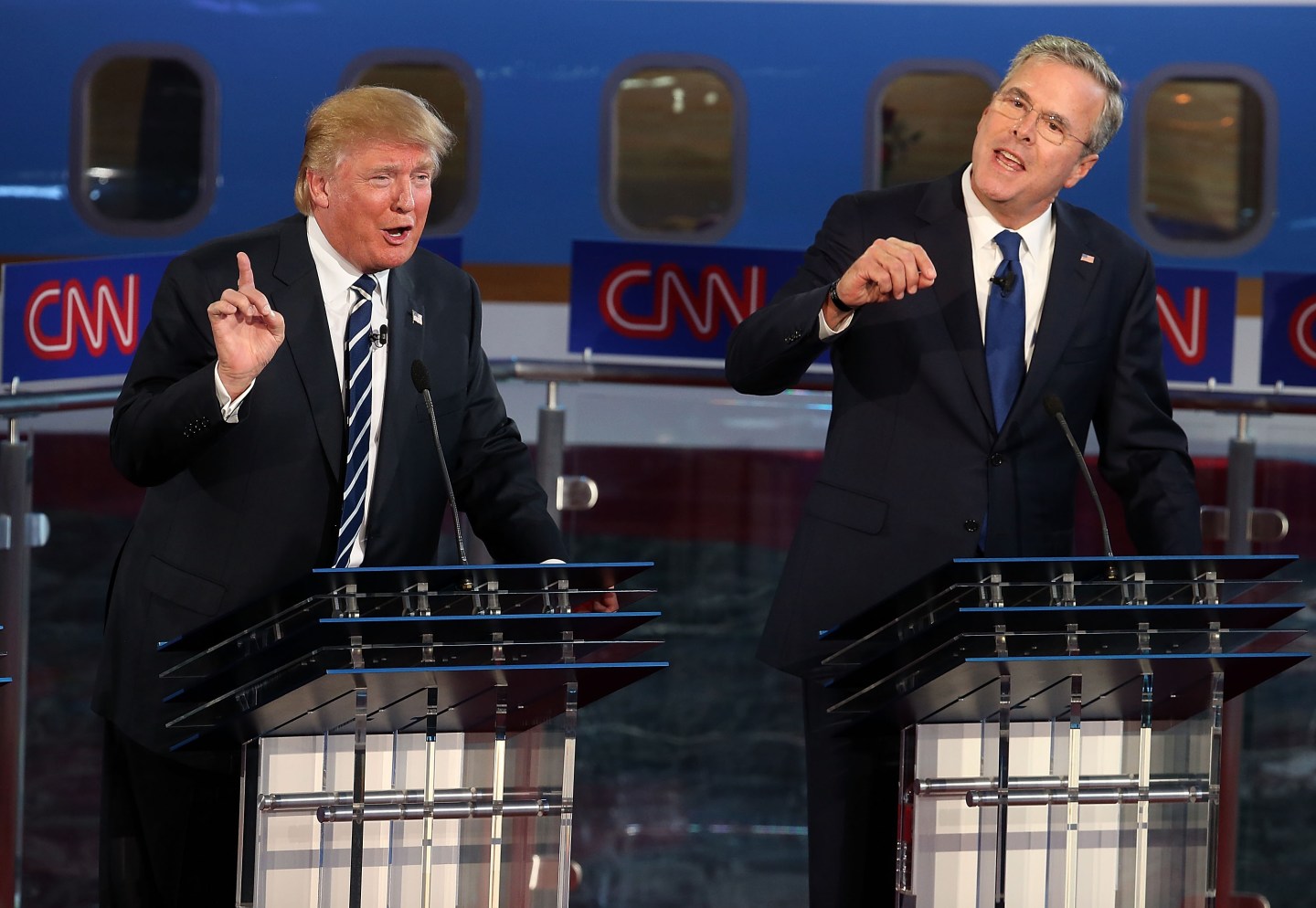
The September CNN gathering of GOP candidates lasted three long hours, yet yielded little that could help a nation decide who should be president. The supposed highlight of that debate was Carly Fiorina’s zinger at Donald Trump for his earlier remark about her face. Unclear, of course, is how Fiorina’s preplanned one-liner demonstrates how she could be a good president.
The medium of television provides no framework in which reasoned political discussion can take place. Part of the problem is the visual nature of the medium itself. Beyond that, however, is how the TV-makers produce the events.
Television producers create an environment that’s more like a game show or all-star sports event than a venue to carefully explain economic or international policy. The sponsoring channels exploit what should be public affairs discussions into promotional and branding events for television personalities. CNN will open its debate coverage with Sheryl Crow singing the national anthem. CNN is also trumpeting that this debate will be available to viewers in virtual reality, as though that can really help the audience better understand debating points. Further, the narrow time frames for candidate responses lend themselves to simple catchphrases and prefab, focus group tested slogans from the stump. Television is a medium of emotion, and as such, is not up to the task of promoting reasoned dialogue.
The upcoming debate will be moderated by CNN anchor Anderson Cooper. He will be joined by CNN political correspondent Dana Bash and CNN en Espanol anchor Juan Carlos Lopez.
What can Cooper and pals do to make the upcoming debate more informative, assuming they want to? Several things.
Improvements to make:
- They can provide candidates more than a minute to answer a question. A minute limit, which candidates tried to ignore in the first debate, just doesn’t allow for more than sound bites. The upcoming Democrat debate should have no more than six candidates on stage, even if Joe Biden declares his candidacy – far fewer than the 11 at the last GOP brawl. Let the candidates provide some depth and nuance to their answers.
- Cooper needs to assert moderator leadership and guarantee that candidates get balanced time to make their points. CNN’s Jake Tapper failed to do that in the last debate, as did Fox News’ Bret Baier in the August GOP debate. In both events, Trump received almost twice as much time to speak as did some other candidates. This problem can be solved easily with a stopwatch.
- The CNN panelists need to address issues that are most important to the electorate and to the future of the nation. The CNN debate in September asked GOP candidates about Secret Service code names, whose face should be on the ten dollar bill, Planned Parenthood, and a county clerk in Kentucky, but virtually ignored questions about the economy.
- The panelists can also help the discussion by keeping their questions short and letting the candidates be the focus. The Fox-sponsored GOP debate in August had panelists Baier, Megyn Kelly and Chris Wallace speaking for almost a third of the overall program time.
- Panelists also need to ask questions that provide equal challenge to all candidates present. A question that attacks a particular candidate or quotes an insult from an opposing candidate might work well in a one-on-one press conference, but doesn’t provide a setup for debate. The candidates are all right there on stage and they can attack each other as they see fit, without the panelists stooping to spark political food fights.
“Anything can happen”
Sadly, CNN and future sponsors of political debates are unlikely to do the things that would make for focused and helpful discussion among the candidates. That’s because of the big ratings FNC and CNN both achieved in the first two GOP debates of the presidential campaign season. The television channels falsely believe hype and overproduction are needed to get viewers.
Tapper opened the September debate trying to electrify his audience, saying, “Anything could happen over the next few hours.” He came off more like Monty Hall than Edward R. Murrow.
Political observer and activist Ralph Nader reflected on the recent CNN debate, writing “snarls, quips, ripostes, and gaffes, now qualify as news.” That’s because television’s producers and news anchors set such an agenda. Nader continued, “How demeaning to our country and its people!”
Unless changes are made, televised political debates may become more of a hindrance than a help to a nation trying to find the best candidate to be the next president.
Jeffrey M. McCall is a professor of communication at DePauw University. This article originally appeared on The Conversation.