• Home
  • Latest
  • Fortune 500
  • Finance
  • Tech
  • Leadership
  • Lifestyle
  • Rankings
  • Multimedia
CommentaryEuropean Union

Here’s what will actually happen if there is a Brexit

By
Christopher Grey
Christopher Grey
Down Arrow Button Icon
By
Christopher Grey
Christopher Grey
Down Arrow Button Icon
October 7, 2015, 11:10 AM ET
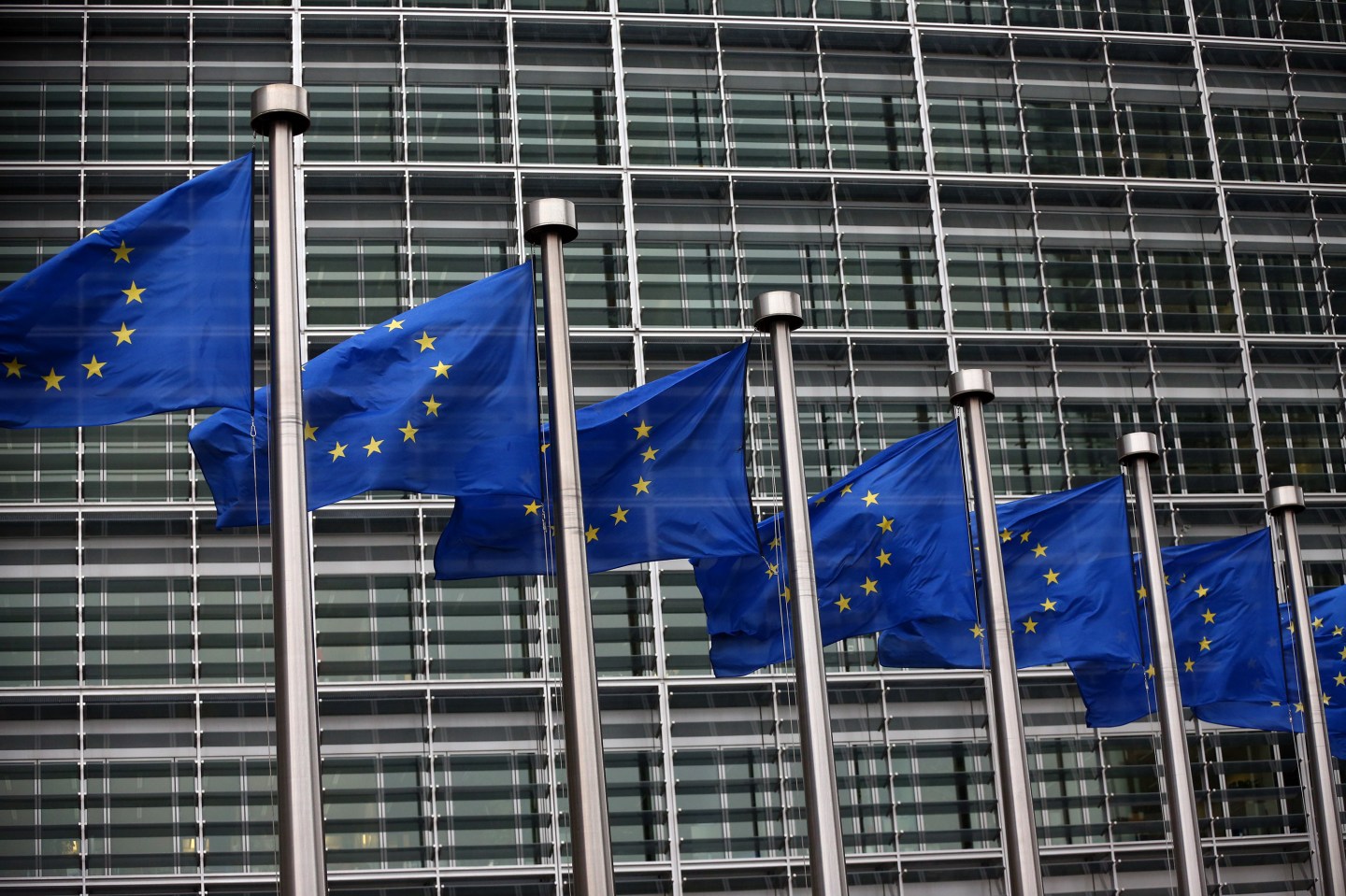
Caption:BRUSSELS, BELGIUM - OCTOBER 24: European Union flags are pictured outside the European Commission building on October 24, 2014 in Brussels, Belgium. Alongside criticism from outgoing European Commission president Jose Manuel Barroso on the UK's stance on EU immigration and a plan to quit the European Court of Human Rights, the UK has now been told to pay an extra £1.7bn GBP (2.1bn EUR) towards the EU's budget because its economy has performed better than expected. (Photo by Carl Court/Getty Images)
Caption:BRUSSELS, BELGIUM - OCTOBER 24: European Union flags are pictured outside the European Commission building on October 24, 2014 in Brussels, Belgium. Alongside criticism from outgoing European Commission president Jose Manuel Barroso on the UK's stance on EU immigration and a plan to quit the European Court of Human Rights, the UK has now been told to pay an extra £1.7bn GBP (2.1bn EUR) towards the EU's budget because its economy has performed better than expected. (Photo by Carl Court/Getty Images) Photograph by Carl Court — Getty Images

Europe is always a heated topic at a Conservative party conference. This year much debate has focused on David Cameron’s ongoing renegotiation of terms for staying in. By contrast, relatively little has been said about the terms on which Brexit might happen. Those advocating it oscillate between — and often treat as interchangeable — quite different and incompatible scenarios.

The truth is that anyone who works for, or consumes the products of any organization — in other words everyone — would be affected by a U.K. exit from the European Union. As someone who studies organizations for a living, I believe that it is strongly in Britain’s interests to remain in; it is why I am a member of the European Movement. Now, you may disagree with that view, but it is surely vital that when it comes to the Brexit referendum, voters know what happens next if Britain chooses to leave.

One possibility is direct single market access via European Economic Area (EEA) membership (the so-called Norway option) as advocated by, for example, the Tory eurosceptic Owen Paterson. However, it doesn’t appear that this would deliver what many Brexiters say they want: not in terms of sovereignty (Norway has almost no control over the single market rules it must abide by); cost (Norway pays more per head); immigration (there is still free movement of labor in and out of the EEA) or the ability to negotiate third-party free-trade agreements, which it does via the European Free Trade Area (EFTA).

A second scenario is single-market access via EFTA membership by multiple bilateral agreements (the so-called Swiss option), as sometimes argued by the U.K. Independence Party’s (UKIP) only member of parliament, Douglas Carswell. A Brexit on this model would have to negotiate multiple separate agreements (Switzerland has more than 120 which have developed over many years) over an unknown timescale with unknown outcomes. As with Norway, Switzerland is in large part bound by E.U. law and regulation. So far as immigration is concerned, the E.U. Commission is in ongoing dispute with the Swiss approach to free movement of labor and it is simply inconceivable that a U.K. opt-out on free movement would be granted alongside EFTA membership any more than, as Brexiters rightly say, it could be re-negotiated within the framework of E.U. membership.

The third scenario is a Free Trade Agreement (FTA) with the E.U., which is apparently the current UKIP position. It is absolutely crucial to understand that an FTA is not the same as single-market membership. In general, FTAs eliminate tariffs, whereas a single market eliminates non-tariff barriers to trade and harmonizes regulation. A particular difference from the previous scenarios, appealing to some Brexiters, is that an FTA would exempt the U.K. from free movement of people. But one consequence would be that British people would also lose their rights of free movement within the E.U.. That includes the two million or more British people currently working or living in the E.U. — and the arrangements for them are unknown.

Likewise unknown are the consequences for the similar number of E.U. nationals without British citizenship currently in the U.K. Brexit (in the FTA sense) would be a fundamental shift in which Europeans lose their right to move freely to Britain and Britons, both now and in the future, lose their right to move freely around Europe.

Would the E.U. sign such an FTA? Brexiters sometimes suggest that Article 50 of the Lisbon Treaty defines terms of exit. In fact, it simply defines the process for exit. The terms would have to be negotiated: not all FTAs are the same and they are not quick. For example, the E.U. deals with Singapore and South Korea took several years to negotiate. A U.K. FTA with the E.U. would also mean ceasing to have access to those FTAs held between the E.U. and other countries. In due course the U.K. might sign new deals. The terms are unknowable, however, and the expectation must be that they will be worse than those the E.U. has, for simple reasons of market scale.

One of the arguments put forward for Brexit is that E.U. membership precludes the U.K., signing its own FTAs. This is correct but there is an obvious reason. If it were allowed for the U.K. then it would also be possible for any E.U. nation to sign such a deal. That would in turn give a third-party country access to the single market, which would in turn create a trading relationship with the U.K., but in which it had had no say whatsoever — surely highly offensive to eurosceptics.

Buyers’ remorse
These are the three main scenarios, but it is also sometimes said that on exit it will just be a matter of trading on the terms of the World Trade Organization (WTO). But the WTO does not establish global free trade, which is why individual countries negotiate FTAs within the WTO framework. Of course trade would not cease on Brexit, but the issue is in what volume and on what terms – and what the consequent effects on non-EU inward investment in the U.K. would be.

Alternatively, some float the idea of the U.K. joining a Commonwealth free-trade area. But there is no such entity and no foreseeable plan to create one. Another suggestion is that the U.K. could join the North American Free Trade Agreement (NAFTA). This again is unrealistic: one obvious clue is in the name.

Flirting with fantasies like this does no one any favours. For the debate to be bona fide, we must be absolutely clear which of the different Brexit scenarios is envisaged and not to confuse or conflate them. If not, and the vote is to exit, it will be no good saying afterwards that “we didn’t understand what we were voting for” – the repeated complaint made by eurosceptics about the 1975 Referendum. By then it will be too late.

Christopher Grey is a professor of Organization Studies at Royal Holloway. This article originally appeared on The Conversation.
The Conversation

About the Author
By Christopher Grey
See full bioRight Arrow Button Icon

Latest in Commentary

Finance
Lorem ipsum dolor sit amet, consectetur adipiscing elit, sed do eiusmod tempor incididunt ut labore et dolore magna aliqua. Ut enim ad minim veniam
By Fortune Editors
October 20, 2025
Finance
Lorem ipsum dolor sit amet, consectetur adipiscing elit, sed do eiusmod tempor incididunt ut labore et dolore magna aliqua. Ut enim ad minim veniam
By Fortune Editors
October 20, 2025
Finance
Lorem ipsum dolor sit amet, consectetur adipiscing elit, sed do eiusmod tempor incididunt ut labore et dolore magna aliqua. Ut enim ad minim veniam
By Fortune Editors
October 20, 2025
Finance
Lorem ipsum dolor sit amet, consectetur adipiscing elit, sed do eiusmod tempor incididunt ut labore et dolore magna aliqua. Ut enim ad minim veniam
By Fortune Editors
October 20, 2025
Finance
Lorem ipsum dolor sit amet, consectetur adipiscing elit, sed do eiusmod tempor incididunt ut labore et dolore magna aliqua. Ut enim ad minim veniam
By Fortune Editors
October 20, 2025
Finance
Lorem ipsum dolor sit amet, consectetur adipiscing elit, sed do eiusmod tempor incididunt ut labore et dolore magna aliqua. Ut enim ad minim veniam
By Fortune Editors
October 20, 2025

Most Popular

Finance
Lorem ipsum dolor sit amet, consectetur adipiscing elit, sed do eiusmod tempor incididunt ut labore et dolore magna aliqua. Ut enim ad minim veniam
By Fortune Editors
October 20, 2025
Finance
Lorem ipsum dolor sit amet, consectetur adipiscing elit, sed do eiusmod tempor incididunt ut labore et dolore magna aliqua. Ut enim ad minim veniam
By Fortune Editors
October 20, 2025
Finance
Lorem ipsum dolor sit amet, consectetur adipiscing elit, sed do eiusmod tempor incididunt ut labore et dolore magna aliqua. Ut enim ad minim veniam
By Fortune Editors
October 20, 2025
Finance
Lorem ipsum dolor sit amet, consectetur adipiscing elit, sed do eiusmod tempor incididunt ut labore et dolore magna aliqua. Ut enim ad minim veniam
By Fortune Editors
October 20, 2025
Finance
Lorem ipsum dolor sit amet, consectetur adipiscing elit, sed do eiusmod tempor incididunt ut labore et dolore magna aliqua. Ut enim ad minim veniam
By Fortune Editors
October 20, 2025
Finance
Lorem ipsum dolor sit amet, consectetur adipiscing elit, sed do eiusmod tempor incididunt ut labore et dolore magna aliqua. Ut enim ad minim veniam
By Fortune Editors
October 20, 2025
Rankings
  • 100 Best Companies
  • Fortune 500
  • Global 500
  • Fortune 500 Europe
  • Most Powerful Women
  • Future 50
  • World’s Most Admired Companies
  • See All Rankings
Sections
  • Finance
  • Leadership
  • Success
  • Tech
  • Asia
  • Europe
  • Environment
  • Fortune Crypto
  • Health
  • Retail
  • Lifestyle
  • Politics
  • Newsletters
  • Magazine
  • Features
  • Commentary
  • Mpw
  • CEO Initiative
  • Conferences
  • Personal Finance
  • Education
Customer Support
  • Frequently Asked Questions
  • Customer Service Portal
  • Privacy Policy
  • Terms Of Use
  • Single Issues For Purchase
  • International Print
Commercial Services
  • Advertising
  • Fortune Brand Studio
  • Fortune Analytics
  • Fortune Conferences
  • Business Development
About Us
  • About Us
  • Editorial Calendar
  • Press Center
  • Work At Fortune
  • Diversity And Inclusion
  • Terms And Conditions
  • Site Map
  • Facebook icon
  • Twitter icon
  • LinkedIn icon
  • Instagram icon
  • Pinterest icon

© 2026 Fortune Media IP Limited. All Rights Reserved. Use of this site constitutes acceptance of our Terms of Use and Privacy Policy | CA Notice at Collection and Privacy Notice | Do Not Sell/Share My Personal Information
FORTUNE is a trademark of Fortune Media IP Limited, registered in the U.S. and other countries. FORTUNE may receive compensation for some links to products and services on this website. Offers may be subject to change without notice.


Most Popular

placeholder alt text
Economy
Elon Musk warns the U.S. is '1,000% going to go bankrupt' unless AI and robotics save the economy from crushing debt
By Jason MaFebruary 7, 2026
1 day ago
placeholder alt text
Success
Gen Z Patriots quarterback Drake Maye still drives a 2015 pickup truck even after it broke down on the highway—despite his $37 million contract
By Sasha RogelbergFebruary 7, 2026
2 days ago
placeholder alt text
Success
Even with $850 billion to his name, Elon Musk admits ‘money can’t buy happiness.’ But billionaire Mark Cuban says it’s not so simple
By Preston ForeFebruary 6, 2026
2 days ago
placeholder alt text
Future of Work
Anthropic cofounder says studying the humanities will be 'more important than ever' and reveals what the AI company looks for when hiring
By Jason MaFebruary 7, 2026
1 day ago
placeholder alt text
AI
AI can make anyone rich: Mark Cuban says it could turn 'just one dude in a basement' into a trillionaire
By Sydney LakeFebruary 7, 2026
1 day ago
placeholder alt text
Real Estate
We may be looking at the housing affordability crisis all wrong. Higher earners are driving home prices, not lack of supply, researchers say
By Jason MaFebruary 7, 2026
1 day ago

Latest in Commentary

CommentaryHealth
Patient private capital is needed to help Asia plug its healthcare gaps
By Abrar MirFebruary 8, 2026
1 hour ago
nfl
CommentaryTV
The Super Bowl was made for TV and instant replay was made for visual AI. Here’s how it could be better and what it would look like
By Jason CorsoFebruary 8, 2026
10 hours ago
tipping
CommentaryTipping
I’m the chief growth officer at a payments app and I know how America really tips. Connecticut, I’m looking at you
By Ricardo CiciFebruary 8, 2026
12 hours ago
heacock
CommentaryLeadership
I’m a CEO who grew a ‘boring’ air filter business into a $260 million company, and AI is going to help blue-collar, everyday people just like me
By David HeacockFebruary 8, 2026
12 hours ago
broker
CommentaryRecession
We studied 70 countries’ economic data for the last 60 years and something big about market crashes changed 25 years ago
By Josh Ederington, Jenny Minier and The ConversationFebruary 8, 2026
13 hours ago
birthday
CommentaryAmerican Dream
America marks its 250th birthday with a fading dream—the first time that younger generations will make less than their parents
By Mark Robert Rank and The ConversationFebruary 8, 2026
13 hours ago