• Home
  • Latest
  • Fortune 500
  • Finance
  • Tech
  • Leadership
  • Lifestyle
  • Rankings
  • Multimedia
LeadershipSpain

Why aren’t you drinking Spanish wine?

By
Ian Mount
Ian Mount
Madrid-based Editor
Down Arrow Button Icon
By
Ian Mount
Ian Mount
Madrid-based Editor
Down Arrow Button Icon
October 3, 2015, 9:30 AM ET
Harvest season in Briones, La Rioja, Spain
Harvest season in Briones, La Rioja, SpainPhotograph by Carlos Sanchez Pereyra—Getty Images/AWL Images RM

For the genteel world of fine wine, it almost qualified as a barroom brawl.

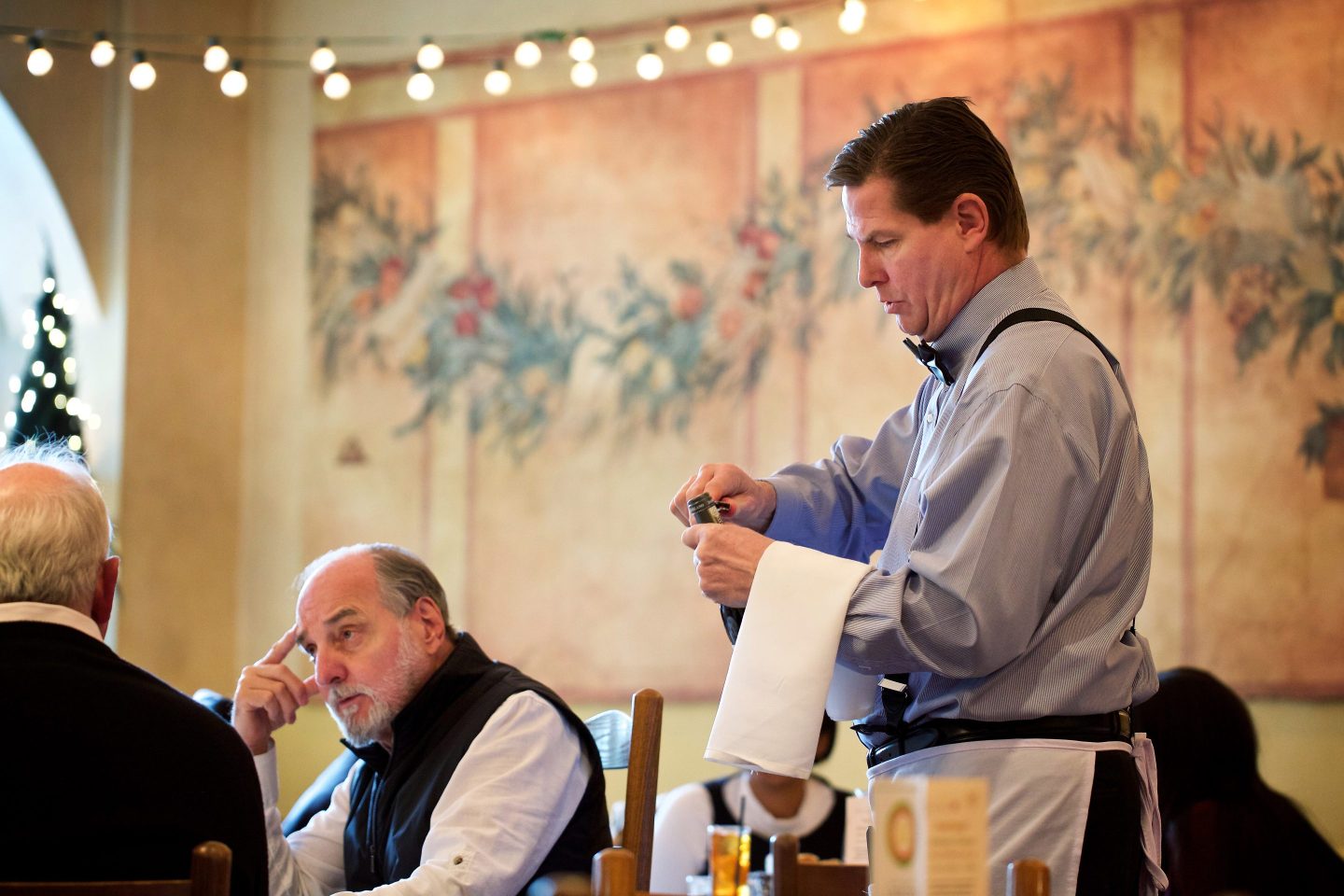
It was a few weeks ago at a tasting of the top vintages from seven wineries based around the train station of the Spanish town of Haro, in the Rioja wine region. There, the “Master of Wine” who was leading the tasting, Tim Atkin, said that for Spanish winemakers to really get ahead, they had to label and promote their wines on the basis of the exact physical birthplace—the terroir—of the grapes found in them.

“The future is in the vineyards,” he said.

Later that night, at the tasting’s closing dinner, María Urrutia, the marketing director of one of the seven Haro wineries, CVNE, politely disagreed.

“First you have to put Spain on a map, then Rioja on a map, and we’re arguing about putting a small village [on the label],” said Urrutia, a member of the fifth generation of CVNE’s founding family. “It’s a way to make noise, but really, what sense does it make if a label doesn’t say Rioja and it says Logroño [the capital city of the region]? Who from Norway will know where Logroño is? You’ll be lucky if they know where Spain is.”

This may seem like a small difference of opinion, but it gets to the heart of the argument over how wine—and many other luxury products—are best marketed. How do you sell a product whose value is not defined by supply and demand, as with commodities, but rather wrapped up in its story?

The Spanish wine industry’s exporting issues, which have long been a source of concern, have come to the fore in recent years. Spanish wine exports have tripled since 1995, And last year, exports grew 22.4% to 2.3 billion liters, according to the Spanish Observatory of Wine Markets (OEMV), helping the country pass Italy as the world’s biggest wine exporter by volume.

The problem is that exports have been dominated by low-price/low-profit bulk wine, which accounted for 55% of Spain’s export volume last year.

Spain’s biggest market in 2014 was France, which bought 518 million liters of Spanish wine—for only €0.47 per liter (about $0.53). Much of that bulk wine shipped to France was then bottled, marked up, and resold as a French product.


“That’s why I bang my head,” says Urrutia. “We have the best olive oil in the world and it’s sent to Italy and sold as Italian. We send our wine to France and it’s sold as French. Why aren’t we able to do that?”

France has long been able to sell wine at good prices—including plenty of abysmal plonk—simply because it’s French. And in recent years Italy has developed the same skill. According to the OEMV, Italy has doubled the value of its wine exports since 2000, to €5.1 billion, and raised its average price per liter from €1.41 to €2.50, largely by replacing bulk exports with bottled ones.

But Spain can’t seem to get it. Since 2000, prices for bulk-heavy Spanish exports actually fell, from €1.41 to €1.17 per liter.

“The real question,” says Rick Castaldi, a San Francisco State University emeritus professor of management who has studied the wine business, “is why has Spain failed in branding their wines in global markets despite having an excellent product?”

For many, the blame falls on the conservative regulatory bodies (Consejo Regulador de la Denominación de Origen, or DO Control Board) that oversee each of the country’s many wine regions.

These boards define the way winemakers can grow, make, blend, and market their grapes, often prohibiting the publication on the label of the precise origin—the terroir—of the grapes used. The Spanish wine industry is run by winery heads, not vineyard owners, which helps explain this peculiar prohibition, says wine industry consultant and “Master of Wine” Pedro Ballesteros. “The resistance to valuing terroir is because those in power don’t own vineyards,” he says. “They want to put the value on their blends.”

While being granted DO status is meant to show a wine’s high quality (as DO Rioja does), critics say that limiting terroir information denies modern wine consumers the information they now demand.

One solution is to follow what some Italian winemakers in Tuscany did and break free from the regulators. Tired of the restrictions placed on the making of Chianti wines, they downgraded their classification to the level below DO. This freed them to create new blends and label them differently, leading to the creation of “Super Tuscans,” which became immensely popular—and expensive.

Some in Spain are already breaking the rules. One is top Rioja winemaker Juan Carlos López de Lacalle, who, against DO Rioja regulations, puts his wine’s provenance on the label (Laguardia, Álava, España).

Of course, not everyone agrees that a lack of vineyard information is the problem. For Urrutia at CVNE, wineries need to get people on the ground in export markets and sell Spain’s great wine with confidence. A decade ago, the CVNE export manager didn’t speak English, she says. Now the company has representatives around the world and sells 30% of the over 6 million bottles it produces annually to overseas markets, up from under 20% a decade ago. “You have to go there and be there, pushing and selling. Because there are a lot of wines,” Urrutia says.

With 20,000 wine brands in Spain alone, she has a point. High quality alone does not sell wine; uniqueness, dependability, positive associations, and a good story do.

In that sense, Urrutia and those rebelling against DO rules are not so different: they are both searching for the best way to tell their wine’s story in a way that grabs the luxury consumer in what is a very crowded market.

Spain’s wine industry may simply need more storytellers. And in the same way that thousands of pasta joints around the world act as Italian wine ambassadors, purveyors of Spanish food is leading the way: The increase in tapas bars and restaurants around the world, Castaldi notes, may be the push that finally gives Spain its big wine break.

About the Author
By Ian MountMadrid-based Editor
LinkedIn icon

Ian Mount is a Madrid-based editor at Fortune.

See full bioRight Arrow Button Icon

Latest in Leadership

Finance
Lorem ipsum dolor sit amet, consectetur adipiscing elit, sed do eiusmod tempor incididunt ut labore et dolore magna aliqua. Ut enim ad minim veniam
By Fortune Editors
October 20, 2025
Finance
Lorem ipsum dolor sit amet, consectetur adipiscing elit, sed do eiusmod tempor incididunt ut labore et dolore magna aliqua. Ut enim ad minim veniam
By Fortune Editors
October 20, 2025
Finance
Lorem ipsum dolor sit amet, consectetur adipiscing elit, sed do eiusmod tempor incididunt ut labore et dolore magna aliqua. Ut enim ad minim veniam
By Fortune Editors
October 20, 2025
Finance
Lorem ipsum dolor sit amet, consectetur adipiscing elit, sed do eiusmod tempor incididunt ut labore et dolore magna aliqua. Ut enim ad minim veniam
By Fortune Editors
October 20, 2025
Finance
Lorem ipsum dolor sit amet, consectetur adipiscing elit, sed do eiusmod tempor incididunt ut labore et dolore magna aliqua. Ut enim ad minim veniam
By Fortune Editors
October 20, 2025
Finance
Lorem ipsum dolor sit amet, consectetur adipiscing elit, sed do eiusmod tempor incididunt ut labore et dolore magna aliqua. Ut enim ad minim veniam
By Fortune Editors
October 20, 2025

Most Popular

Finance
Lorem ipsum dolor sit amet, consectetur adipiscing elit, sed do eiusmod tempor incididunt ut labore et dolore magna aliqua. Ut enim ad minim veniam
By Fortune Editors
October 20, 2025
Finance
Lorem ipsum dolor sit amet, consectetur adipiscing elit, sed do eiusmod tempor incididunt ut labore et dolore magna aliqua. Ut enim ad minim veniam
By Fortune Editors
October 20, 2025
Finance
Lorem ipsum dolor sit amet, consectetur adipiscing elit, sed do eiusmod tempor incididunt ut labore et dolore magna aliqua. Ut enim ad minim veniam
By Fortune Editors
October 20, 2025
Finance
Lorem ipsum dolor sit amet, consectetur adipiscing elit, sed do eiusmod tempor incididunt ut labore et dolore magna aliqua. Ut enim ad minim veniam
By Fortune Editors
October 20, 2025
Finance
Lorem ipsum dolor sit amet, consectetur adipiscing elit, sed do eiusmod tempor incididunt ut labore et dolore magna aliqua. Ut enim ad minim veniam
By Fortune Editors
October 20, 2025
Finance
Lorem ipsum dolor sit amet, consectetur adipiscing elit, sed do eiusmod tempor incididunt ut labore et dolore magna aliqua. Ut enim ad minim veniam
By Fortune Editors
October 20, 2025
Rankings
  • 100 Best Companies
  • Fortune 500
  • Global 500
  • Fortune 500 Europe
  • Most Powerful Women
  • Future 50
  • World’s Most Admired Companies
  • See All Rankings
Sections
  • Finance
  • Leadership
  • Success
  • Tech
  • Asia
  • Europe
  • Environment
  • Fortune Crypto
  • Health
  • Retail
  • Lifestyle
  • Politics
  • Newsletters
  • Magazine
  • Features
  • Commentary
  • Mpw
  • CEO Initiative
  • Conferences
  • Personal Finance
  • Education
Customer Support
  • Frequently Asked Questions
  • Customer Service Portal
  • Privacy Policy
  • Terms Of Use
  • Single Issues For Purchase
  • International Print
Commercial Services
  • Advertising
  • Fortune Brand Studio
  • Fortune Analytics
  • Fortune Conferences
  • Business Development
About Us
  • About Us
  • Editorial Calendar
  • Press Center
  • Work At Fortune
  • Diversity And Inclusion
  • Terms And Conditions
  • Site Map
  • Facebook icon
  • Twitter icon
  • LinkedIn icon
  • Instagram icon
  • Pinterest icon

© 2026 Fortune Media IP Limited. All Rights Reserved. Use of this site constitutes acceptance of our Terms of Use and Privacy Policy | CA Notice at Collection and Privacy Notice | Do Not Sell/Share My Personal Information
FORTUNE is a trademark of Fortune Media IP Limited, registered in the U.S. and other countries. FORTUNE may receive compensation for some links to products and services on this website. Offers may be subject to change without notice.


Most Popular

placeholder alt text
Success
Even with $850 billion to his name, Elon Musk admits ‘money can’t buy happiness.’ But billionaire Mark Cuban says it’s not so simple
By Preston ForeFebruary 6, 2026
2 days ago
placeholder alt text
Success
Gen Z Patriots quarterback Drake Maye still drives a 2015 pickup truck even after it broke down on the highway—despite his $37 million contract
By Sasha RogelbergFebruary 7, 2026
1 day ago
placeholder alt text
Economy
Elon Musk warns the U.S. is '1,000% going to go bankrupt' unless AI and robotics save the economy from crushing debt
By Jason MaFebruary 7, 2026
19 hours ago
placeholder alt text
Success
Nestlé’s CEO drinks 8 coffees a day, but says Gen Z staffers are his secret to staying sharp by ‘learning constantly’
By Emma BurleighFebruary 5, 2026
3 days ago
placeholder alt text
Success
Larry Ellison and Jeff Bezos have seen more than $66 billion swiped from their net worths since the start of this year as AI-driven slump sees tech billionaires’ wealth free-fall
By Emma BurleighFebruary 6, 2026
2 days ago
placeholder alt text
Personal Finance
Current price of gold as of February 6, 2026
By Danny BakstFebruary 6, 2026
2 days ago

Latest in Leadership

Tom Brady looks on prior to the game at AT&T Stadium on September 15, 2024 in Arlington, Texas.
Personal FinanceNFL
Tom Brady is making 15 times more as a Super Bowl commentator than he did playing in the big game thanks to $375 million contract 
By Eva RoytburgFebruary 8, 2026
6 minutes ago
tipping
CommentaryTipping
I’m the chief growth officer at a payments app and I know how America really tips. Connecticut, I’m looking at you
By Ricardo CiciFebruary 8, 2026
38 minutes ago
heacock
CommentaryLeadership
I’m a CEO who grew a ‘boring’ air filter business into a $260 million company, and AI is going to help blue-collar, everyday people just like me
By David HeacockFebruary 8, 2026
38 minutes ago
Joanna Griffiths, the founder and president of Knix
SuccessEntrepreneurs
The founder of $400 million company Knix sees a hypnotherapist to ‘rewire’ her brain and work through her fear of failure
By Emma BurleighFebruary 8, 2026
1 hour ago
broker
CommentaryRecession
We studied 70 countries’ economic data for the last 60 years and something big about market crashes changed 25 years ago
By Josh Ederington, Jenny Minier and The ConversationFebruary 8, 2026
2 hours ago
birthday
CommentaryAmerican Dream
America marks its 250th birthday with a fading dream—the first time that younger generations will make less than their parents
By Mark Robert Rank and The ConversationFebruary 8, 2026
2 hours ago