By Charles M. C. Lee, Stanford Graduate School of Business
In May, before the Chinese stock market took global investors on a wild ride, it seemed obvious that Chinese stock prices had become unhinged from reality. The average stock on ChiNext, a Nasdaq-style market for Chinese high-tech firms, was selling for about 140 times the company’s earnings, compared with a ratio of 15 or 20 for American stocks.
Millions of ordinary people were buying shares “on margin” — borrowing money — in the hope of turbocharging their profits. My own friends in Hong Kong, apparently taking pity on me for missing the party, took to sending me tips about no-lose stocks that had already doubled in price. One Asian newspaper even ran a picture of a Buddhist monk waiting in line at a brokerage house to buy shares.
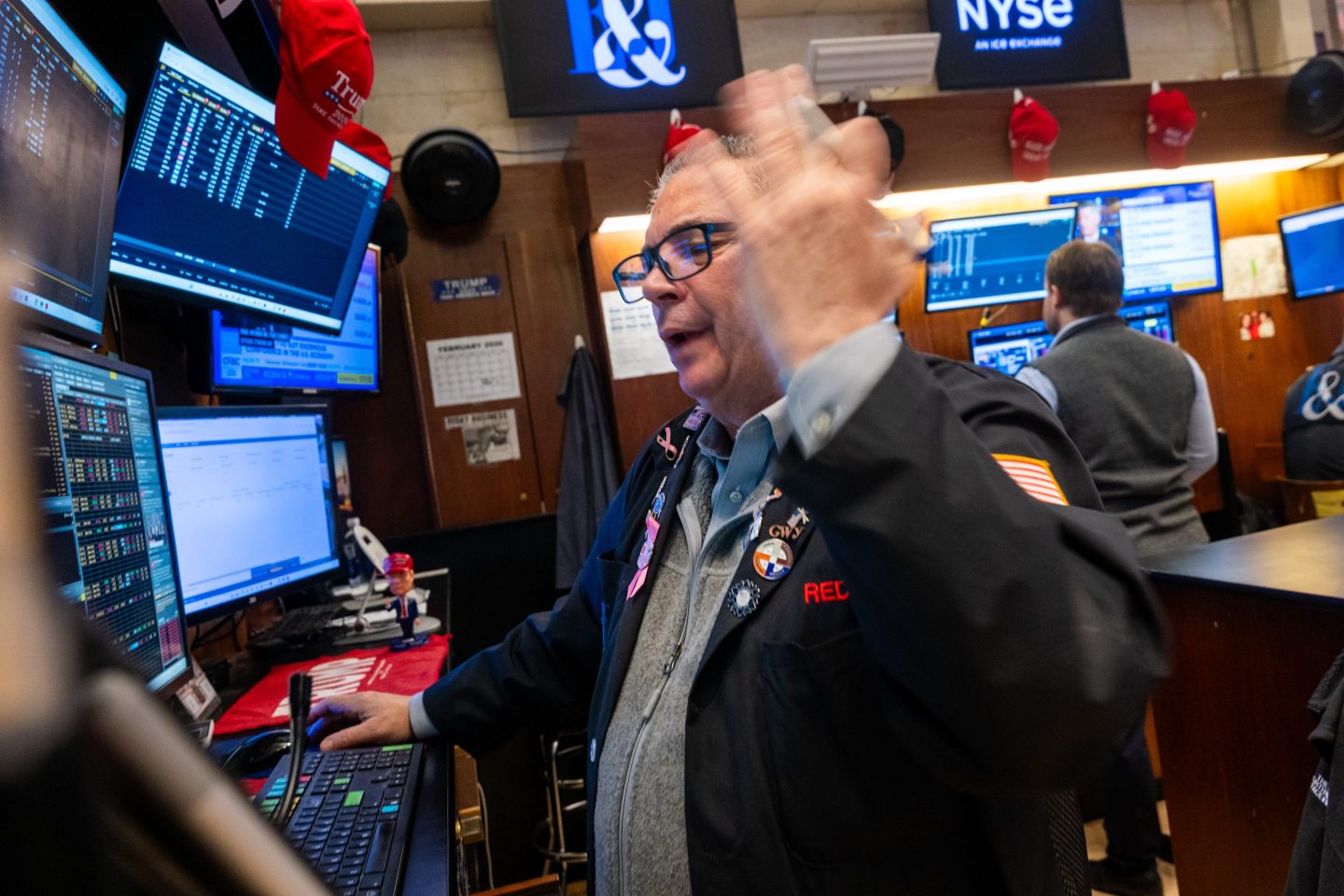
Now, of course, we’re all living through the hangover. Thanks in large part to the plunge in Chinese stocks, markets here in the United States and in Europe are going through their most turbulent period in years.
How does a rational, ordinary person save and invest for the future? If the markets can gain or lose tens of billions of dollars in a day, should we just run away?
No. I and other scholars have been studying the impact of less-than-rational investor sentiment for a long time, and it’s clear that emotions do often drive short-term market mayhem. Even with the most powerful econometric models, under the most generous definitions of what constitutes fundamental news, researchers have been able to explain only a fraction of the observed volatility in prices. In fact, many of the most dramatic market moves occur in the absence of fundamental news.
But it is certainly possible to find a method through the madness. Let me start with four core principles to guide the perplexed:
Focus on values rather than prices
The fundamental value of a company’s stock is based on its current and expected earnings, and evolves relatively slowly. A company’s stock price, on the other hand, is simply the result of supply and demand on any given day. The daily demand for a stock, like our moods and emotions, is affected by many things that have nothing to do with a company’s fundamentals.
A company’s long-term value is not easy to estimate with precision. A simple rule of thumb is to buy profitable companies with low price-to-earnings or price-to-book ratios, particularly if they have solid growth prospects. The key for most investors is to focus on the long-term value rather than the short-term price fluctuations. It sounds obvious, but it’s amazing how often people confuse the two.
Don’t try to time the markets
We have many studies on this topic, and they all point in the same direction: Investors are remarkably bad at timing markets, and they ultimately fare worse for the effort. Whether we are talking about the stock market or individual mutual funds, money tends to chase performance. Strong performance in one period attracts new investors in the next period. Unfortunately, time and again, most of those investors arrive just before the market peaks, and most of them sell just before the market bottoms. Evidently most investors are either caught up in the sentiment waves themselves or are trying to outmaneuver the sentiment of others. Either way, it doesn’t work. You might as well be in a hall of mirrors.
By the way, this isn’t only a problem for ordinary investors. Corporations have a similarly dismal record, investing most heavily at the peak of business cycles and least when the cycle has nearly hit bottom.
Create a diversified portfolio
Diversify your investments with a balance of assets in stocks, bonds, real estate, and even commodities. Again, this sounds obvious. Assets within a particular class, such as stocks, tend to move in sync. This is true even with stocks that seem as different as Apple (AAPL) and Procter & Gamble (PG). By contrast, different classes of assets move much less in sync. So the best way to weather market turbulence is to invest in multiple asset classes, and stick to these long-term allocations over time.
Most people know this. In practice, however, investors fall into the same traps again and again. We tend to shift our holdings across asset classes at the worst times. Our biases and our herd-like behavior are almost hard-wired into our psyches.
[fortune-brightcove videoid=4498994034001]
Diversification is harder than it looks. I can’t tell you how many people avoid bonds. They hate the low yields, and they worry that bond prices will fall sharply as soon as the Federal Reserve starts to raise interest rates. (A bond’s price drops as interest rates climb.) “Everybody knows” that the Fed will be raising rates soon.
But this is flawed thinking. In fact, it’s really a form of market timing. Any imminent rate hikes are typically more than priced into the bonds already. Sure, Treasury yields are low. But they are a reliable source of steady cash flow, and bonds will do well if the economy and stock prices head south. They are a natural and logical hedge against recession risk.
Why is this hard? Because at any given moment, one asset class or another will deliver what seem like low returns. But each asset class has a slightly different role — different blends of risk, reward, security, and liquidity. And none of us can be sure what kinds of jolts and economic shifts lie just over the horizon.
Keep things simple
Ask yourself this: Is your money serving you, or are you serving your money?
If you want to be an “alpha’’ investor, someone who can consistently outperform the market averages, you have to spend enormous time and effort in building up an information advantage — and even then the odds are against you. (If you are wondering whether you have a real information advantage, it’s best to assume you do not.)
Even if you succeed, do you really want to manage your money as a full-time job? Do you want the angst? Or do you have a life and simply want your money to contribute to that?
For most people, the most sensible goal is follow a low-maintenance wealth-management system that fits their short- and long-term goals. You set a strategy for asset allocation, contribute a regular part of your discretionary income, and stay consistent. Then ignore the market gyrations. Think of Ulysses, who had himself tied to the mast of his ship so he could hear the Sirens without becoming enslaved by their songs.
As a general rule, younger people still years from retirement can expose themselves to more short-term volatility to benefit from higher returns in the long run. But the real issue is less about your age than the length of your “spending horizon.” A young couple who want to buy a house, or parents in their 40s who face college expenses for their children, may have very short spending horizons. They ought to put more emphasis on conservative investments.
The good news is that it is cheaper and easier than ever to build a well-diversified portfolio. Exchange-traded funds (ETFs), which hold baskets of securities that mimic an index, charge incredibly low fees and come in all shapes and sizes. The biggest ETFs mimic the S&P 500 stock index, but others follow everything from tech stocks and emerging-market stocks to bonds, commodities, and real estate.
You can use ETFs to meet very customized goals. Perhaps you’re a young software engineer who wants to own real estate. You can’t yet afford to buy a house anywhere near Silicon Valley, but you worry that home prices will only climb if you wait. If you invest in an ETF that holds real estate investment trusts, your savings are growing right in line with housing prices. If you add an ETF that specializes in information technology stocks, you can tie your portfolio even more closely to the Silicon Valley housing prices.
Your grandparents may have told you about “dollar-weighted averaging.” Put the same amount each month into your respective investments. If stock prices have climbed, you’ll buy fewer shares at an elevated price. If stock prices have fallen, you’ll buy more shares at a lower price. Over time, it’s a remarkably efficient way to invest money.
One final thought: Volatility isn’t entirely bad. The global economy is fast-changing and uncertain. Big swings in asset prices represent an effort by markets to sort through conflicting evidence and test rival theories about underlying trends.
We need that kind of hard-headed questioning and skepticism about conventional wisdom. The more complacent and convinced investors are, the more it’s time to start worrying.
Charles M. C. Lee is the Moghadam Family Professor of Management at Stanford Graduate School of Business, a senior academic fellow of the Asian Bureau of Finance and Economic Research, and cofounder of Nipun Capital LLC, an asset management firm focused on Asian equities. This column was written with Edmund L. Andrews.
This article was previously published in Insights by Stanford Graduate School of Business. Read the original article here.
More from Stanford Graduate School of Business:
• Is Affordable Housing Good for the Neighborhood?
• Adina Sterling: What Your New Co-Workers Know About You Matters
• What Our Digital Footprint Says About Us