• Home
  • Latest
  • Fortune 500
  • Finance
  • Tech
  • Leadership
  • Lifestyle
  • Rankings
  • Multimedia
TechAI

Better driving through artificial intelligence

By
Derrick Harris
Derrick Harris
Down Arrow Button Icon
By
Derrick Harris
Derrick Harris
Down Arrow Button Icon
September 18, 2015, 12:29 PM ET
Photograph by Jim Fets

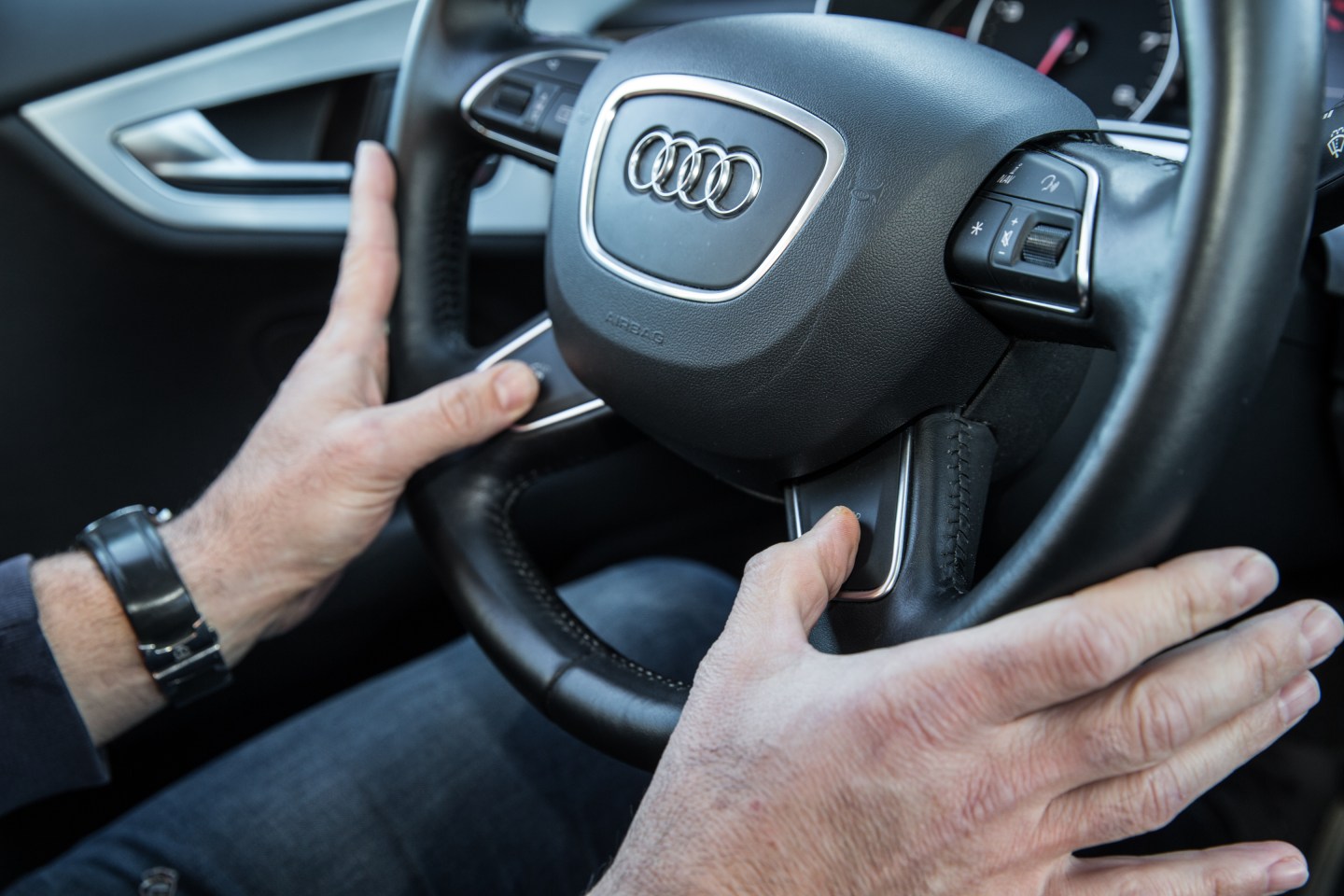
You’ve been on the road for hours, trying to make good time back home after an exhausting weekend in Vegas. With each blink your eyes stay closed a little longer. Your head nods and then snaps back up. Before it can happen again, possibly resulting in a deadly crash, your car begins to slow down and an alarm blares to jolt you awake.

This future is getting closer to reality, according to a trio of researchers from Cornell University and Stanford University, who have created an artificial intelligence system that can predict with high accuracy what the driver of a car will do next. Applied broadly, this type of research could improve everything from the safety of our cars to the usefulness of our robots.

A paper the researchers published on Thursday, explains how their system can accurately anticipate a driver’s next maneuver better than 90% of the time. Previous efforts, they say, topped out at just over 77%. The team used a method of artificial intelligence called deep learning, which is remarkably good at recognizing patterns in data and currently powers commercial applications ranging from voice recognition to computer vision.

In order to achieve such high accuracy, their experiments analyzed numerous sources of contextual data as 10 drivers navigated a combined 1,180 miles on the road. Sources included cameras, GPS signals and vehicular data such as speed. What really took the researchers over the top, though, was using camera images to identify the positions of drivers’ heads as they steered their vehicles.

The team has dubbed its research Brain4Cars, which is apt given the data with which it has been working. It’s pretty easy to imagine the benefits of an intelligent car, which could theoretically do everything from waking up dozing drivers to preparing the braking or steering systems in anticipation of a sharp turn.

How the Brain4Cars system predicts what's next.
How the Brain4Cars system predicts what’s next.Image courtesy of Brain4Cars.
Image courtesy of Brain4Cars.

However, this type of anticipatory artificial intelligence system could also prove valuable as robots become more common in our homes and workplaces, and as consumers eye intelligent appliances and other housewares. Think about a robot that could notice when the dog is about to pee on the floor, or a living room that knows from experience just how dim you want the lights at any given time.

Indeed, one of the researchers on the Brain4Cars project is Ashutosh Saxena, director of the Cornell- and Stanford-led RoboBrain project that aims to teach robots everyday facts such as what a person holding a phone looks like, or how to make tea. Saxena is also one of the founders of a stealth-mode startup called Brain of Things, which isn’t sharing many details, but has the tagline “Brain for Your Connected Home.”

When I spoke with Saxena about RoboBrain earlier this year, he explained, “The ability to handle variations is what enables these robots to go out into the world and actually be useful.”

In other words, we want our artificial intelligence algorithms—whether they’re in our robots, our cars or our appliances—to act less like automatons and more like engaged participants in whatever it is we’re doing.

To learn more about driverless cars, watch this Fortune video:

Sign up for Data Sheet, Fortune’s daily newsletter about the business of technology.
About the Author
By Derrick Harris
See full bioRight Arrow Button Icon

Latest in Tech

InvestingStock
There have been head fakes before, but this time may be different as the latest stock rotation out of AI is just getting started, analysts say
By Jason MaDecember 13, 2025
43 minutes ago
Politicsdavid sacks
Can there be competency without conflict in Washington?
By Alyson ShontellDecember 13, 2025
1 hour ago
InnovationRobots
Even in Silicon Valley, skepticism looms over robots, while ‘China has certainly a lot more momentum on humanoids’
By Matt O'Brien and The Associated PressDecember 13, 2025
3 hours ago
Sarandos
Arts & EntertainmentM&A
It’s a sequel, it’s a remake, it’s a reboot: Lawyers grow wistful for old corporate rumbles as Paramount, Netflix fight for Warner
By Nick LichtenbergDecember 13, 2025
7 hours ago
Oracle chairman of the board and chief technology officer Larry Ellison delivers a keynote address during the 2019 Oracle OpenWorld on September 16, 2019 in San Francisco, California.
AIOracle
Oracle’s collapsing stock shows the AI boom is running into two hard limits: physics and debt markets
By Eva RoytburgDecember 13, 2025
8 hours ago
robots
InnovationRobots
‘The question is really just how long it will take’: Over 2,000 gather at Humanoids Summit to meet the robots who may take their jobs someday
By Matt O'Brien and The Associated PressDecember 12, 2025
22 hours ago

Most Popular

placeholder alt text
Economy
Tariffs are taxes and they were used to finance the federal government until the 1913 income tax. A top economist breaks it down
By Kent JonesDecember 12, 2025
1 day ago
placeholder alt text
Success
Apple cofounder Ronald Wayne sold his 10% stake for $800 in 1976—today it’d be worth up to $400 billion
By Preston ForeDecember 12, 2025
1 day ago
placeholder alt text
Success
40% of Stanford undergrads receive disability accommodations—but it’s become a college-wide phenomenon as Gen Z try to succeed in the current climate
By Preston ForeDecember 12, 2025
1 day ago
placeholder alt text
Economy
The Fed just ‘Trump-proofed’ itself with a unanimous move to preempt a potential leadership shake-up
By Jason MaDecember 12, 2025
21 hours ago
placeholder alt text
Economy
For the first time since Trump’s tariff rollout, import tax revenue has fallen, threatening his lofty plans to slash the $38 trillion national debt
By Sasha RogelbergDecember 12, 2025
23 hours ago
placeholder alt text
Success
At 18, doctors gave him three hours to live. He played video games from his hospital bed—and now, he’s built a $10 million-a-year video game studio
By Preston ForeDecember 10, 2025
3 days ago
Rankings
  • 100 Best Companies
  • Fortune 500
  • Global 500
  • Fortune 500 Europe
  • Most Powerful Women
  • Future 50
  • World’s Most Admired Companies
  • See All Rankings
Sections
  • Finance
  • Leadership
  • Success
  • Tech
  • Asia
  • Europe
  • Environment
  • Fortune Crypto
  • Health
  • Retail
  • Lifestyle
  • Politics
  • Newsletters
  • Magazine
  • Features
  • Commentary
  • Mpw
  • CEO Initiative
  • Conferences
  • Personal Finance
  • Education
Customer Support
  • Frequently Asked Questions
  • Customer Service Portal
  • Privacy Policy
  • Terms Of Use
  • Single Issues For Purchase
  • International Print
Commercial Services
  • Advertising
  • Fortune Brand Studio
  • Fortune Analytics
  • Fortune Conferences
  • Business Development
About Us
  • About Us
  • Editorial Calendar
  • Press Center
  • Work At Fortune
  • Diversity And Inclusion
  • Terms And Conditions
  • Site Map

© 2025 Fortune Media IP Limited. All Rights Reserved. Use of this site constitutes acceptance of our Terms of Use and Privacy Policy | CA Notice at Collection and Privacy Notice | Do Not Sell/Share My Personal Information
FORTUNE is a trademark of Fortune Media IP Limited, registered in the U.S. and other countries. FORTUNE may receive compensation for some links to products and services on this website. Offers may be subject to change without notice.