• Home
  • Latest
  • Fortune 500
  • Finance
  • Tech
  • Leadership
  • Lifestyle
  • Rankings
  • Multimedia
TechMedia

You shouldn’t feel bad about using an ad blocker, and here’s why

By
Mathew Ingram
Mathew Ingram
Down Arrow Button Icon
By
Mathew Ingram
Mathew Ingram
Down Arrow Button Icon
September 17, 2015, 12:10 PM ET
A new ad-blocking feature is set to come to iOS 9, setting up a confrontation between Apple and Google.
A new ad-blocking feature is set to come to iOS 9, setting up a confrontation between Apple and Google.Photograph by Justin Sullivan—Getty Images

In case the hysteria over ad-blocking software wasn’t already at a fever pitch, Apple’s new iOS version is now in the wild—complete with built-in support for ad blocking—and several ad blockers are topping the most-installed list. Is this an apocalypse for publishers, especially small ones? And if it is, does installing and using an ad blocker make you as a user complicit in the destruction of independent media?

That’s the sense you might get from reading some of the coverage of the ad-blocking phenomenon, including a piece at The Verge (which is owned by Vox Media) entitled “Welcome to Hell: Apple vs. Google vs. Facebook and the Slow Death of the Web.”

In the post, Verge editor-in-chief Nilay Patel argues—with some justification—that ad blocking in Safari is just a new front in an ongoing battle between giant platforms, each of whom wants to dominate the advertising and content landscape of the future. So Apple (AAPL) is trying to go after the Google (GOOG) ad network monopoly, and Facebook (FB) is trying to develop its own monopoly on socially-driven content.

“The collateral damage of that war is going to include the web, and in particular any small publisher on the web that can’t invest in proprietary platform distribution, native advertising, and the type of media wining-and-dining it takes to secure favorable distribution deals on proprietary platforms. It is going to be a bloodbath of independent media.”

In the comments on the Verge post, a reader argues that using an ad-blocking program is ethically akin to software piracy. This argument says that by reading something without loading the advertising that pays for the content, a reader is effectively breaching an implied moral contract with the publisher, and essentially stealing that publication’s content.

Does this theory hold any water? Not really. Marco Arment, co-founder of Tumblr and creator of Instapaper (which strips out ads when a user saves the article) argued in a recent post that no implicit contract exists, because readers aren’t given enough information about what a site is doing to make an informed choice (Arment has also created an ad blocker that is now a top choice in the Apple app store).

“The implied-contract theory is invalid: People aren’t agreeing to write a blank check and give up reasonable expectations of privacy by clicking a link. They can’t even know what the cost of visiting a page will be until they’ve already visited it and paid the price.”

The idea that readers are somehow morally obligated to look at advertising becomes absurd if we apply it to almost any other medium. Are readers who only look at one or two sections of a newspaper—and never the ads—stealing that content? Are people who use PVRs to fast-forward through the ads on television committing a theft of some kind? Would it be better if publishers sued readers for not looking at ads?

The reckoning is coming for an ad industry that grew reckless with user's bandwidth, privacy, CPU, and attention. About time.

— DHH (@dhh) September 17, 2015

As tech analyst Ben Thompson pointed out in a recent edition of his Stratechery newsletter—and as media theorist Clay Shirky has also noted in the past—advertising became the financial foundation for journalism and media because of the way the media industry was structured at the time. Newspapers and TV programs were the only way to reach large numbers of potential consumers.

That’s no longer the case, thanks to platforms like Facebook, Instagram, Snapchat and dozens more you’ve probably never heard of, but your children use every day. As a result, most publishers are increasingly irrelevant to advertisers, which means that they are forced to rely on the most desperate or cheap forms of popup displays, click-farming, and so on. Is that your fault as a reader? Hardly. Says Thompson:

“Publishers and ad networks are locked in a dysfunctional relationship that doesn’t serve readers or advertisers, and it’s only a matter of time until advertisers—which again, care only about reaching potential customers, wherever they may be—desert the whole mess entirely for new, more efficient and effective advertising options that put them directly in front of the people they care about.”

It’s true that this phenomenon is pushing publishers towards large platforms like Facebook, which then control what content gets seen and by whom, and also control the levers of the advertising associated with that content. But will somehow forcing or bullying readers into watching low-value display ads solve that problem? No.

Good luck with this argument. I guess nixing pop-ups makes me a destroyer of investigative journalism or something. https://t.co/u2TMzM3qg8

— Jay Rosen (@jayrosen_nyu) September 17, 2015

Submitting to Facebook isn’t the only strategy. Some sites focused on niche topics can probably make a go of it via subscriptions and other revenue models. Others, such as Vox Media, Mashable, and BuzzFeed, are betting on native advertising as a better way of appealing to readers and getting around the barriers set up by ad blockers. Some think micropayments via “iTunes for news” apps like Blendle might work.

To get at the heart of Patel’s point, there will undoubtedly be publishers and sites that can’t survive in this world because they are too small for Facebook or Apple to care about, and they can’t afford the in-house studios that BuzzFeed and Mashable have to create native advertising. Maybe some of them will find a home on more open platforms like Medium, which is working on its own solutions.

What is unlikely to fly as a long-term strategy is begging readers to load all of the 50 or so trackers and ad-loaders and popups and banners, each of which might make a publisher three cents per thousand clicks, if they are lucky. That business is in a death spiral, and yelling about ad blockers isn’t going to change that. Evolution is a messy business, but it goes on regardless. Adapt or die.

You can follow Mathew Ingram on Twitter at @mathewi, and read all of his posts here or via his RSS feed. And please subscribe to Data Sheet, Fortune’s daily newsletter on the business of technology.


About the Author
By Mathew Ingram
See full bioRight Arrow Button Icon

Latest in Tech

Finance
Lorem ipsum dolor sit amet, consectetur adipiscing elit, sed do eiusmod tempor incididunt ut labore et dolore magna aliqua. Ut enim ad minim veniam
By Fortune Editors
October 20, 2025
Finance
Lorem ipsum dolor sit amet, consectetur adipiscing elit, sed do eiusmod tempor incididunt ut labore et dolore magna aliqua. Ut enim ad minim veniam
By Fortune Editors
October 20, 2025
Finance
Lorem ipsum dolor sit amet, consectetur adipiscing elit, sed do eiusmod tempor incididunt ut labore et dolore magna aliqua. Ut enim ad minim veniam
By Fortune Editors
October 20, 2025
Finance
Lorem ipsum dolor sit amet, consectetur adipiscing elit, sed do eiusmod tempor incididunt ut labore et dolore magna aliqua. Ut enim ad minim veniam
By Fortune Editors
October 20, 2025
Finance
Lorem ipsum dolor sit amet, consectetur adipiscing elit, sed do eiusmod tempor incididunt ut labore et dolore magna aliqua. Ut enim ad minim veniam
By Fortune Editors
October 20, 2025
Finance
Lorem ipsum dolor sit amet, consectetur adipiscing elit, sed do eiusmod tempor incididunt ut labore et dolore magna aliqua. Ut enim ad minim veniam
By Fortune Editors
October 20, 2025

Most Popular

Finance
Lorem ipsum dolor sit amet, consectetur adipiscing elit, sed do eiusmod tempor incididunt ut labore et dolore magna aliqua. Ut enim ad minim veniam
By Fortune Editors
October 20, 2025
Finance
Lorem ipsum dolor sit amet, consectetur adipiscing elit, sed do eiusmod tempor incididunt ut labore et dolore magna aliqua. Ut enim ad minim veniam
By Fortune Editors
October 20, 2025
Finance
Lorem ipsum dolor sit amet, consectetur adipiscing elit, sed do eiusmod tempor incididunt ut labore et dolore magna aliqua. Ut enim ad minim veniam
By Fortune Editors
October 20, 2025
Finance
Lorem ipsum dolor sit amet, consectetur adipiscing elit, sed do eiusmod tempor incididunt ut labore et dolore magna aliqua. Ut enim ad minim veniam
By Fortune Editors
October 20, 2025
Finance
Lorem ipsum dolor sit amet, consectetur adipiscing elit, sed do eiusmod tempor incididunt ut labore et dolore magna aliqua. Ut enim ad minim veniam
By Fortune Editors
October 20, 2025
Finance
Lorem ipsum dolor sit amet, consectetur adipiscing elit, sed do eiusmod tempor incididunt ut labore et dolore magna aliqua. Ut enim ad minim veniam
By Fortune Editors
October 20, 2025
Fortune Secondary Logo
Rankings
  • 100 Best Companies
  • Fortune 500
  • Global 500
  • Fortune 500 Europe
  • Most Powerful Women
  • Future 50
  • World’s Most Admired Companies
  • See All Rankings
Sections
  • Finance
  • Fortune Crypto
  • Features
  • Leadership
  • Health
  • Commentary
  • Success
  • Retail
  • Mpw
  • Tech
  • Lifestyle
  • CEO Initiative
  • Asia
  • Politics
  • Conferences
  • Europe
  • Newsletters
  • Personal Finance
  • Environment
  • Magazine
  • Education
Customer Support
  • Frequently Asked Questions
  • Customer Service Portal
  • Privacy Policy
  • Terms Of Use
  • Single Issues For Purchase
  • International Print
Commercial Services
  • Advertising
  • Fortune Brand Studio
  • Fortune Analytics
  • Fortune Conferences
  • Business Development
  • Group Subscriptions
About Us
  • About Us
  • Editorial Calendar
  • Press Center
  • Work At Fortune
  • Diversity And Inclusion
  • Terms And Conditions
  • Site Map
  • About Us
  • Editorial Calendar
  • Press Center
  • Work At Fortune
  • Diversity And Inclusion
  • Terms And Conditions
  • Site Map
  • Facebook icon
  • Twitter icon
  • LinkedIn icon
  • Instagram icon
  • Pinterest icon

Latest in Tech

Nutella seen aboard the Orion spacecraft Integrity.
RetailFood and drink
Nutella jumps on the best product placement money can’t buy: a trip to the far side of the moon
By Catherina GioinoApril 9, 2026
48 minutes ago
kash
Cybersecuritycyber
Trump’s ‘cease-fire’ won’t stop Iranian hackers for long, cyber experts say
By David Klepper and The Associated PressApril 9, 2026
51 minutes ago
lego
PoliticsIran
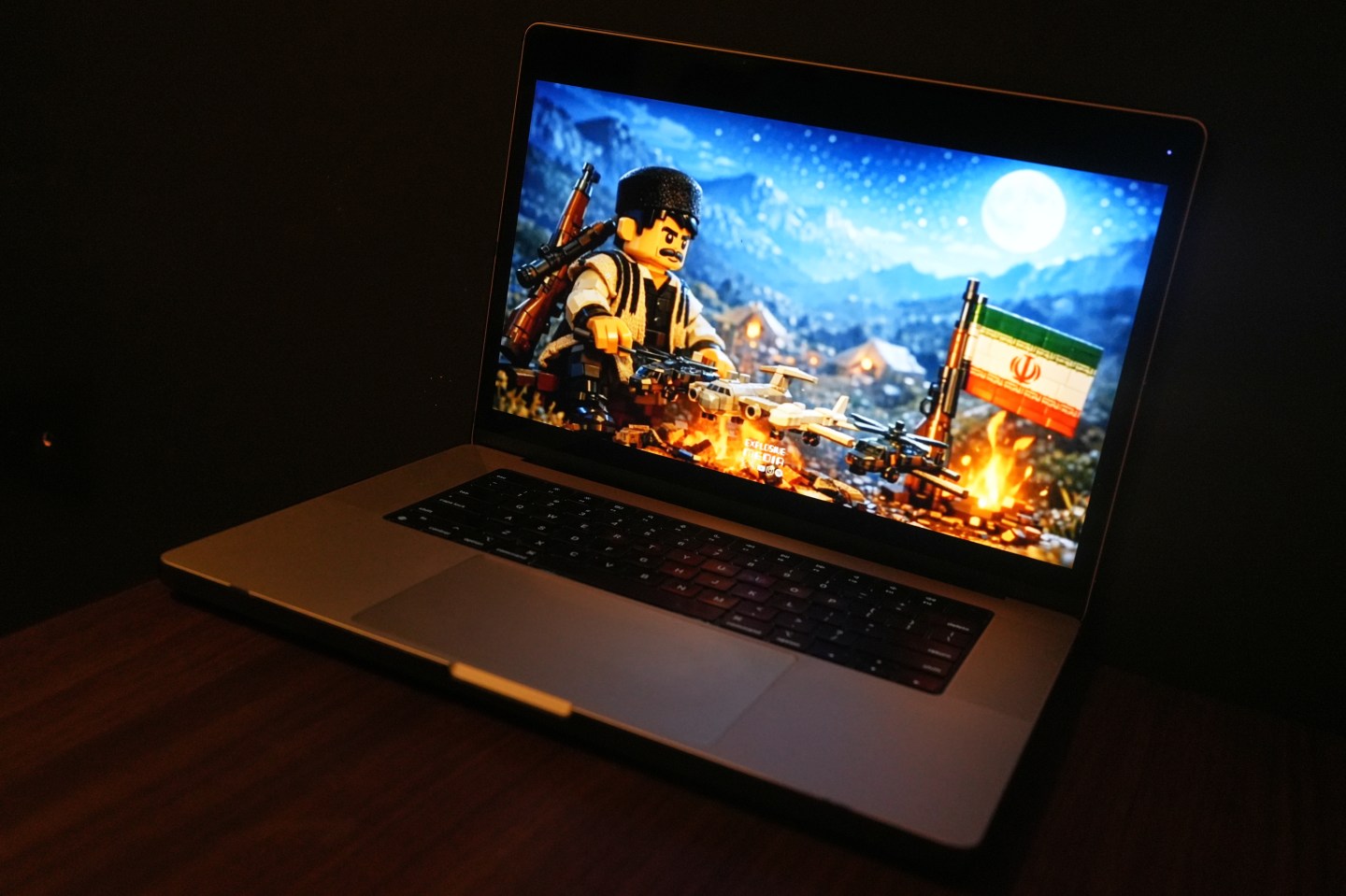
AI-savvy pro-Iran groups troll America with Lego Movie-style propaganda videos mocking American failure
By Sam McNeil and The Associated PressApril 9, 2026
1 hour ago
data centers
EnergyData centers
Data centers are destroying states’ clean energy dreams
By Jessica Hill and The Associated PressApril 9, 2026
2 hours ago
Bobby Healy stands in front of a Manna drone with his arms crossed.
NewslettersTerm Sheet
ARK Invest is betting on underdog drone delivery company Manna to beat out Alphabet and Zipline
By Lily Mae LazarusApril 9, 2026
3 hours ago
Photo: A fireball rises from a building hit by an Israeli airstrike in the area of Abbasiyeh, on the outskirts of the southern Lebanese city of Tyre, on April 8, 2026. Lebanon's army warned people against returning to the country's south on April 8, where the Israeli military is still launching attacks, as Israel said the ceasefire with Iran did not include its conflict with Hezbollah. (Photo by Kawnat HAJU / AFP via Getty Images)
PoliticsMarkets
Too much fire, not enough cease: Iran tightens its grip on global oil trade on eve of peace talks
By Jim EdwardsApril 9, 2026
4 hours ago

Most Popular

The U.S. had a national debt ‘home run’ in its grasp, says Jamie Dimon. But the government did nothing, and now its best option is crisis management
Economy
The U.S. had a national debt ‘home run’ in its grasp, says Jamie Dimon. But the government did nothing, and now its best option is crisis management
By Fortune EditorsApril 8, 2026
1 day ago
2 years ago, Saudi Arabia quietly canceled the ‘petrodollar’ deal with America that wired the world economy for 50 years. Then war broke out in Iran
Energy
2 years ago, Saudi Arabia quietly canceled the ‘petrodollar’ deal with America that wired the world economy for 50 years. Then war broke out in Iran
By Fortune EditorsApril 7, 2026
2 days ago
MacKenzie Scott's latest donation takes her HBCU giving to well over $1 billion
Success
MacKenzie Scott's latest donation takes her HBCU giving to well over $1 billion
By Fortune EditorsApril 7, 2026
2 days ago
Current price of oil as of April 8, 2026
Personal Finance
Current price of oil as of April 8, 2026
By Fortune EditorsApril 8, 2026
1 day ago
Artemis II’s astronauts are on their way home—a six-figure salary but no overtime or hazard pay awaits them back on Earth
Success
Artemis II’s astronauts are on their way home—a six-figure salary but no overtime or hazard pay awaits them back on Earth
By Fortune EditorsApril 7, 2026
2 days ago
Self-made billionaire MrBeast says his work-life balance is nonexistent and calls it a ‘miracle’ if he works less than 15-hour days: ‘I live to work’
Success
Self-made billionaire MrBeast says his work-life balance is nonexistent and calls it a ‘miracle’ if he works less than 15-hour days: ‘I live to work’
By Fortune EditorsApril 8, 2026
23 hours ago

© 2026 Fortune Media IP Limited. All Rights Reserved. Use of this site constitutes acceptance of our Terms of Use and Privacy Policy | CA Notice at Collection and Privacy Notice | Do Not Sell/Share My Personal Information
FORTUNE is a trademark of Fortune Media IP Limited, registered in the U.S. and other countries. FORTUNE may receive compensation for some links to products and services on this website. Offers may be subject to change without notice.