• Home
  • Latest
  • Fortune 500
  • Finance
  • Tech
  • Leadership
  • Lifestyle
  • Rankings
  • Multimedia
TechMedia

There could be a silver lining behind the ad-blocking apocalypse

By
Mathew Ingram
Mathew Ingram
Down Arrow Button Icon
By
Mathew Ingram
Mathew Ingram
Down Arrow Button Icon
September 15, 2015, 5:46 PM ET
528840343
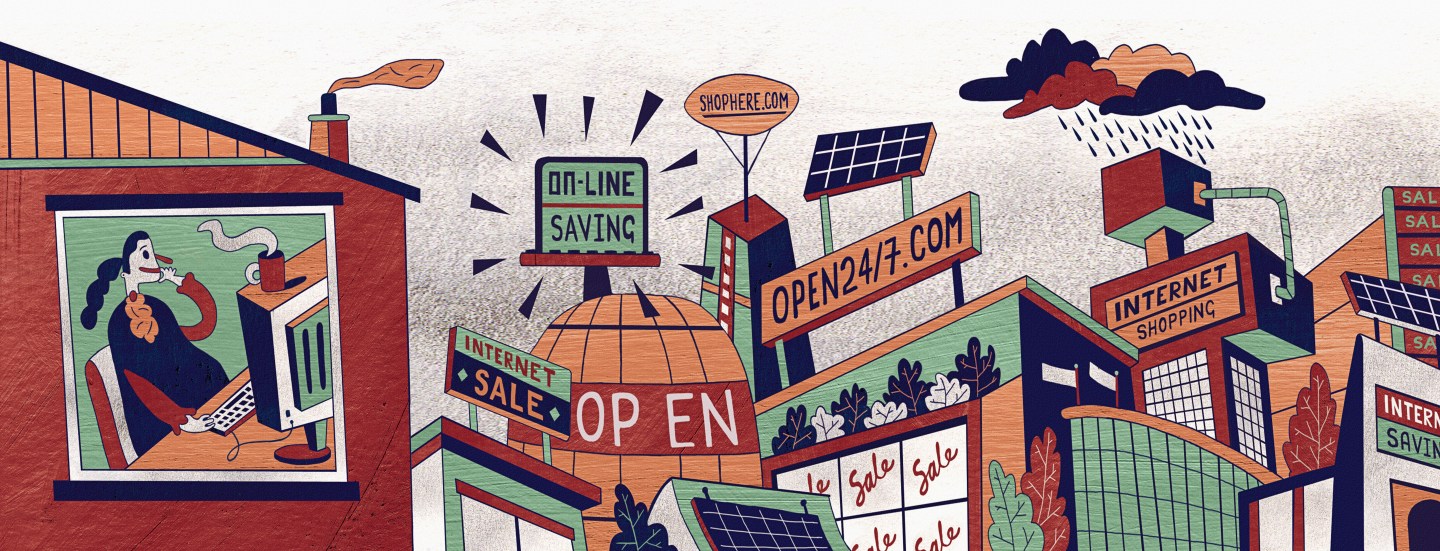
Woman at home using computer for online shopping with lots of internet sales adverts outside windowPhotograph by Philby Illustration/Getty Images/Ikon Images

If you follow the media industry at all, you’ll know that there has been a kind of slow-building panic going on when it comes to ad-blocking. This firestorm was sparked in part by a report that said the use of ad-blocking software is increasing (although that study is flawed in a number of ways), but also by the news that Apple is going to include ad-blocking features in the latest version of its mobile operating system. But could there be a silver lining to this cloud?

For most media companies and publishers, especially the ones who rely on advertising for the bulk of their revenue — in other words, almost all of them — ad blocking sounds like an unmitigated disaster, albeit one that is partly of their own making. If no one is seeing ads, then advertisers will be willing to pay much less for them, revenues continue their inexorable decline, and so on.

So why is it that some online media companies are less concerned about ad blocking than others? It’s not just the ones who have subscription models or other alternative sources of revenue either. At a recent New York media conference I was involved in, Vox Media president Marty Moe, Mashable founder Pete Cashmore and Mic co-founder Chris Altchek said they actually think ad blocking could turn out to be a good thing — and not just for users but for media companies too.

How could this be? In a nutshell, they argued that the rise of ad-blocking behavior has been driven primarily by the terrible user experience that many websites and publishers have created for readers. The use of irritating methods such as pop-up ads, interstitial takeovers, pop-unders and so on — along with what in some cases are dozens of Javascript-powered banners and tracking scripts — has made the reader relationship actively hostile in many cases.

The growth of mobile as a platform for content has torpedoed much of this business model, or is in the process of doing so, since popups and banner ads and other garbage don’t function well — or in some cases, at all — on a mobile device.

That may be bad for publishers who rely on those kinds of advertising, says Altchek (who says his site gets more than 70% of its traffic from mobile devices) but in the end it could help to purify the industry, by making those kinds of ads impossible. In the end, Moe said, the bar will be raised for what readers are willing to tolerate, and that will serve readers better and media outlets too. As Farhad Manjoo recently put it in the New York Times:

“In the long run, there could be a hidden benefit to blocking ads for advertisers and publishers: Ad blockers could end up saving the ad industry from its worst excesses. If blocking becomes widespread, the ad industry will be pushed to produce ads that are simpler, less invasive and far more transparent about the way they’re handling our data — or risk getting blocked forever if they fail.”

It’s no coincidence that all three of the media companies who were on the Digital Media Strategies panel are focusing their business models on “native” advertising or sponsored content, which in many cases isn’t blocked by ad-blocking software. Vox and Mashable and Mic all have their own in-house advertising agencies who create content for brands and then insert it into their publications.

The bottom line with native advertising, Moe said, is that it doesn’t work unless it’s attractive to look at and easy to use, and well targeted to appeal to a reader. In other words, it doesn’t work unless it functions just like any other kind of content.

There are many in the media industry who don’t like native advertising or sponsored content, because of a potential blurring of the lines they say it encourages between editorial and marketing (although it should be noted that most new-media entities like Vox and BuzzFeed maintain a hard line between the two parts of their business).

But if nothing else, native advertising at least puts publishers in the position of actually trying to make the reading experience as rewarding and fulfilling as possible for their users — as opposed to the adversarial relationship created by much modern advertising, where websites are trying to fool users into clicking, or just irritating them with endless tricks and gimmicks. Could ad blocking help get us to a better place?

You can follow Mathew Ingram on Twitter at @mathewi, and read all of his posts here or via his RSS feed. And please subscribe to Data Sheet, Fortune’s daily newsletter on the business of technology.


About the Author
By Mathew Ingram
See full bioRight Arrow Button Icon

Latest in Tech

Sarandos
Arts & EntertainmentM&A
It’s a sequel, it’s a remake, it’s a reboot: Lawyers grow wistful for old corporate rumbles as Paramount, Netflix fight for Warner
By Nick LichtenbergDecember 13, 2025
5 hours ago
Oracle chairman of the board and chief technology officer Larry Ellison delivers a keynote address during the 2019 Oracle OpenWorld on September 16, 2019 in San Francisco, California.
AIOracle
Oracle’s collapsing stock shows the AI boom is running into two hard limits: physics and debt markets
By Eva RoytburgDecember 13, 2025
5 hours ago
robots
InnovationRobots
‘The question is really just how long it will take’: Over 2,000 gather at Humanoids Summit to meet the robots who may take their jobs someday
By Matt O'Brien and The Associated PressDecember 12, 2025
19 hours ago
Man about to go into police vehicle
CryptoCryptocurrency
Judge tells notorious crypto scammer ‘you have been bitten by the crypto bug’ in handing down 15 year sentence 
By Carlos GarciaDecember 12, 2025
20 hours ago
three men in suits, one gesturing
AIBrainstorm AI
The fastest athletes in the world can botch a baton pass if trust isn’t there—and the same is true of AI, Blackbaud exec says
By Amanda GerutDecember 12, 2025
20 hours ago
Brainstorm AI panel
AIBrainstorm AI
Creative workers won’t be replaced by AI—but their roles will change to become ‘directors’ managing AI agents, executives say
By Beatrice NolanDecember 12, 2025
20 hours ago

Most Popular

placeholder alt text
Economy
Tariffs are taxes and they were used to finance the federal government until the 1913 income tax. A top economist breaks it down
By Kent JonesDecember 12, 2025
1 day ago
placeholder alt text
Success
Apple cofounder Ronald Wayne sold his 10% stake for $800 in 1976—today it’d be worth up to $400 billion
By Preston ForeDecember 12, 2025
1 day ago
placeholder alt text
Success
40% of Stanford undergrads receive disability accommodations—but it’s become a college-wide phenomenon as Gen Z try to succeed in the current climate
By Preston ForeDecember 12, 2025
24 hours ago
placeholder alt text
Economy
For the first time since Trump’s tariff rollout, import tax revenue has fallen, threatening his lofty plans to slash the $38 trillion national debt
By Sasha RogelbergDecember 12, 2025
20 hours ago
placeholder alt text
Economy
The Fed just ‘Trump-proofed’ itself with a unanimous move to preempt a potential leadership shake-up
By Jason MaDecember 12, 2025
18 hours ago
placeholder alt text
Success
At 18, doctors gave him three hours to live. He played video games from his hospital bed—and now, he’s built a $10 million-a-year video game studio
By Preston ForeDecember 10, 2025
3 days ago
Rankings
  • 100 Best Companies
  • Fortune 500
  • Global 500
  • Fortune 500 Europe
  • Most Powerful Women
  • Future 50
  • World’s Most Admired Companies
  • See All Rankings
Sections
  • Finance
  • Leadership
  • Success
  • Tech
  • Asia
  • Europe
  • Environment
  • Fortune Crypto
  • Health
  • Retail
  • Lifestyle
  • Politics
  • Newsletters
  • Magazine
  • Features
  • Commentary
  • Mpw
  • CEO Initiative
  • Conferences
  • Personal Finance
  • Education
Customer Support
  • Frequently Asked Questions
  • Customer Service Portal
  • Privacy Policy
  • Terms Of Use
  • Single Issues For Purchase
  • International Print
Commercial Services
  • Advertising
  • Fortune Brand Studio
  • Fortune Analytics
  • Fortune Conferences
  • Business Development
About Us
  • About Us
  • Editorial Calendar
  • Press Center
  • Work At Fortune
  • Diversity And Inclusion
  • Terms And Conditions
  • Site Map

© 2025 Fortune Media IP Limited. All Rights Reserved. Use of this site constitutes acceptance of our Terms of Use and Privacy Policy | CA Notice at Collection and Privacy Notice | Do Not Sell/Share My Personal Information
FORTUNE is a trademark of Fortune Media IP Limited, registered in the U.S. and other countries. FORTUNE may receive compensation for some links to products and services on this website. Offers may be subject to change without notice.