A quiet corporate revolution is underway: Companies are beginning to compete to change the world for the better. The drive for profit, often criticized for coming at society’s expense, is driving and enabling solutions to many of the world’s most challenging problems.
For decades many companies ignored the social and environmental consequences of their activities. They saw their main responsibility as delivering returns to shareholders and viewed their obligations to society narrowly, as “giving back” through philanthropy. After repeated corporate scandals, public pressure forced companies to accept a heightened level of “corporate social responsibility” as a cost of doing business and a way to improve their reputations. A growing number of investors also began to take note of companies’ environmental, social, and governance indicators, raising the bar on corporate conduct. But still, the main focus was on avoiding harm.
What’s emerging today is something more fundamental—something we call creating shared value. Large companies are addressing big social problems as a core part of their strategy. They are disproving the flawed and simplistic notion that business and society are implacable opponents locked in a zero-sum game. Instead, they are demonstrating the radical idea that companies that tackle social problems through a profitable business model offer new hope for innovative and scalable solutions.
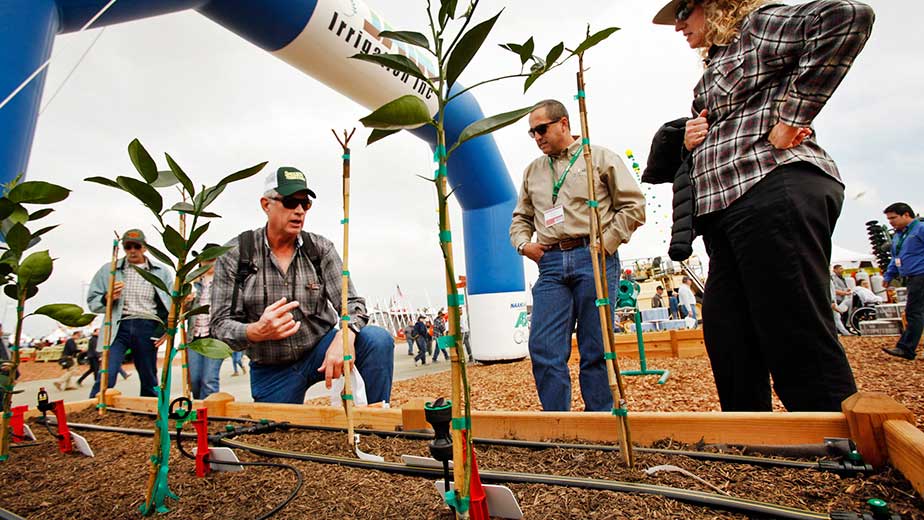
Discovery Insurance, for example, has devised programs that extend the life expectancy of its customers, resulting in lower prices and higher profits. Novartis (NVS) has found new revenues outside normal distribution channels by bringing medicines and health education to tens of millions of rural villagers in India. Walmart (WMT) is saving billions in costs by reducing its environmental footprint and encouraging its suppliers to do the same. And Jain Irrigation has taught 5 million smallholder farmers in India how to grow more and save water through drip irrigation.
Companies like these see societal problems as opportunities for business innovation and competitive advantage. They reveal important unmet needs that can be addressed through new or redesigned products. Societal deficits create internal costs that can be reduced by reinventing value chains and strengthening the business environment in the communities in which they operate. Companies are finding new opportunities to partner with nonprofits and governments to achieve these shared-value objectives. The ability to profit and sustain growth drives innovations that improve health outcomes, make progress on climate change, provide better access to education, and create new economic opportunities for those in poverty, all at massive scale.
Fortune’s first Change the World list is an effort to acknowledge this shift. It is a ranking of companies that have made a sizable impact on major global social or environmental problems as part of their competitive strategy. This list is not meant to be a ranking of the overall “goodness” of companies or of their “social responsibility.” Big corporations are complex operations that affect the world in myriad ways. The goal here is simply to shine a spotlight on instances where companies are doing good as part of their profit-making strategy, and to shed new light on the power of capitalism to improve the human condition.
In working on this project, we and the editors of Fortune reached out to dozens of business, academic, and nonprofit experts around the world, asking for their recommendations. More than 200 submissions were vetted by a joint team from the Shared Value Initiative and our nonprofit social-impact advisory firm, FSG. We considered four criteria: the degree of business innovation involved, the measurable impact at scale on an important social challenge, the contribution of the shared-value activities to the company’s profitability and competitive advantage, and the significance of the shared value effort to the overall business. A team of journalists from Fortune then further vetted each of the nominees and reported on their impact. The final list of 51 was selected and ranked by the editors of Fortune based on the magazine’s own reporting and by the analysis provided.
Shared value is only beginning to be measured comprehensively. Some companies remain reluctant to disclose the business impact of their social activities because they seek to appear altruistic and fear that the mere mention of profit will undermine that. Others on the list compete in controversial industries or have engaged in harmful practices in some areas even as they create social benefits in others. Shared value is not a one-dimensional filter that labels companies as either good or bad.
This first Change the World list is only a start. Many more companies that are transforming the planet will be recognized in future years, and we hope that still more will be inspired. Our goal here is to demonstrate the power of capitalism to solve social problems. Every company, large or small, should strive to be on this list. Business can—and must—compete to change the world.
Michael E. Porter, a professor at Harvard Business School, and Mark R. Kramer co-founded FSG, a nonprofit social-impact consulting firm. The Shared Value Initiative, launched by FSG, is a global platform for advancing the practice of shared value among companies and their partners.
To see the full Change the World list, visit fortune.com/change-the-world.
A version of this article appears in the September 1, 2015 issue of Fortune magazine with the headline “Profiting the Planet.”