It’s graduation season. Time for lofty speeches about the bright future, punctuated with thanks for the sacrifices parents have made to help their children thrive. What better time of year to be thinking about the economy our children are entering?
From the post-World War II period to the late 1970s, our parents and grandparents enjoyed an economy in which wages grew in tandem with productivity, and they did not need a college degree to have a family-sustaining job. Rising wages, even at the lower end, enabled many families to save. Many bought houses; they went to college at little or no cost. Employer-provided health care was the norm in mid-size and large businesses. About half of workers had defined benefit pensions. Many enjoyed union representation. To be sure, this rosy picture didn’t apply to everyone, but it fits more people than ever before.
Today’s high school and college graduates cannot expect the same. For the first time in our country’s history, kids can’t expect to be better off economically than their parents were. Though college graduates will likely prosper more than those without a college degree, their real average hourly earnings have dropped since 2000, and they are saddled with debt averaging $29,000.
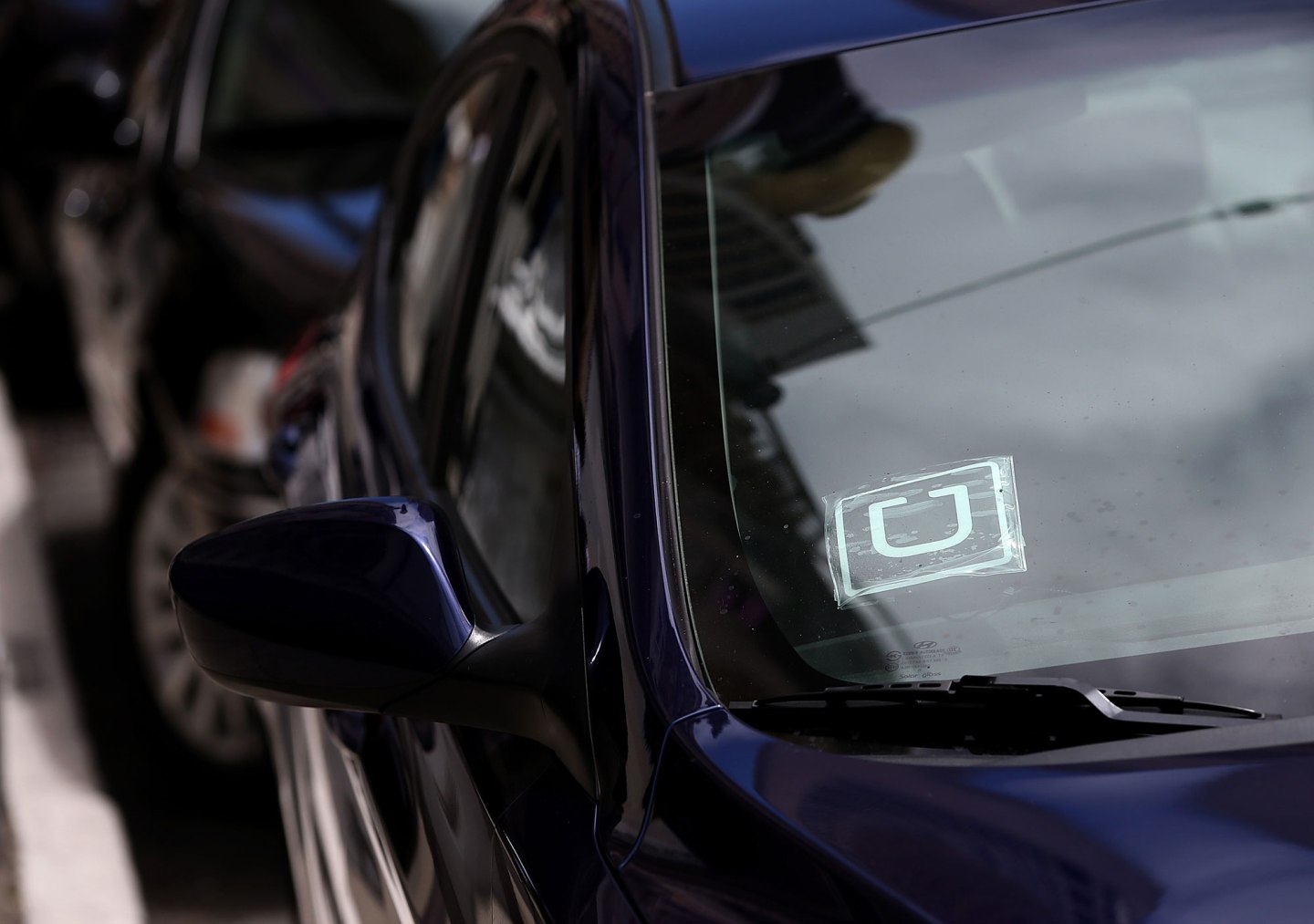
Today, as the super-rich have amassed ever greater shares of wealth, the connection between working for a living and being able to earn a decent living from work has disintegrated. Perhaps nowhere is this disparity more evident than in the growing “on-demand” economy. Companies like Uber, Lyft, Crowdflower, Homejoy, and others in transportation, delivery, hospitality, home improvement, domestic service, technology and elsewhere have adopted business models that pass the costs of doing business onto workers themselves and move the wealth their service provides upwards. The on-demand economy has already created its share of billionaires – Uber’s co-founders are worth around $5 billion each, while those who drive for Uber receive meager pay.
Among others, two key strategies create wealth at the top. First, most on-demand companies call their workers “self-employed,” not “employees” of the platforms themselves or of those receiving their services. This enables the businesses to save capital costs, such as investments in machinery, as well as the costs traditionally associated with employment.
Workers using app-based and other on-demand platforms to get work, on the other hand, are on their own. They are led to believe they have no entitlement to social protections and the benefits traditionally provided to people in generations past. Non-employees are not entitled to minimum wage, overtime pay, compensation for workplace injuries, or protection against discrimination. They have no federally-protected right to join a union and collectively bargain with the companies for which they work. Few have job-based health care or pensions.
Second, many on-demand companies break down and outsource what once were jobs into tasks, and those tasks into micro-tasks that are paid at piece rates, sometimes in pennies, to their independent contractor workers. In the past, workers might have toiled for Honda (HMC) or T-Mobile or Amazon (AMZN). The next generation may not have jobs, but rather “gigs” with companies that claim Honda and T-Mobile as their clients. Amazon’s Mechanical Turk pioneered this method. Its client base is dominated by large corporations that use it and other platforms as staffing agencies.
Our new grad might sit down to her computer every day, wondering whether she will get enough work to make it through to tomorrow, doing mind-numbing tasks like matching names to photographs and matching the word “blue” with the color “blue,” and she’ll compete with 500,000 workers across the world who are hungry for the same micro-jobs. One researcher has found that 70% of the tasks on Mechanical Turk are worth 5 cents or less, yielding an hourly wage of less than $5.
A recent survey of on-demand workers found that half have college degrees. Indeed, one in six landed these gigs through advertisements at their universities. Half said that finding enough work to pay the bills was their biggest problem. To make ends meet, two out of five work for more than one on-demand company at once, and just like workers in previous generations, what they most want from work is paid leave, pensions and health care.
When technological advances create new ways to deliver, acquire and perform work feasible and potentially more profitable, that’s progress. But when the benefits of these new techniques are skewed to a tiny few who control the platforms, while those who provide the services and perform the work struggle to get by, that’s perverse.
[fortune-brightcove videoid=4226134184001]
It doesn’t have to be this way. We can build an economy that gives our kids job security and decent wages. For now, companies should be required to deliver the basics: pay into universal systems like Social Security and workers’ compensation, and provide fair pay and predictable jobs to their workers – whether or not they call them “employee.” In the decades to come, we may need to restructure our tax system to guarantee everyone a basic income.
The on-demand economy has reshaped how many of us get to the airport, buy groceries, plan our vacations and clean our homes. It will likely employ a growing percentage of U.S. workers in years to come. We must take steps to ensure it doesn’t leave our graduates with dwindling opportunities for a truly promising future.
Rebecca Smith is deputy director of the National Employment Law Project.