“Have you ever Wunwun’d?” Lee Hnetinka, the 27-year-old CEO of Wunwun asks, using the verb-ification of the company he’s building in a shared office space near New York’s Gramercy Park neighborhood. Wunwun (pronounced “one-one”) stands for “what you need, when you need” and offers a kind of universal delivery service for anything a user could want. Enter a desired item into Wunwun’s app and it will dispatch someone to go find it and bring it to you wherever you are, right this moment.
At the time I meet Hnetinka at Wunwun’s HQ I’ve never personally used the service, and—somewhat bashfully—I tell him so. His eyes light up. “Oh man, we have to Wunwun something. What do you want? It can be anything.”
Snatching his phone from the conference table, Hnetinka rapidly scrolls through his last ten orders. (He claims he uses the app up to a dozen times per day.) Most of Wunwun’s customers use the app for groceries, take-out, and liquor, he explains as he rattles off a more varied list of items he’s had delivered in the last 24 hours: a very ingredient-specific breakfast burrito, a pair of Nike sneakers, a bagel from his favorite place in the Lower East Side, various health-oriented concoctions from a local chain of juice bars.
He settles on a couple of cayenne- and lemon-heavy juice shots and places the order through the app. Then he explains how Wunwun will best Amazon, Google, and the rest of the competition in the same-day delivery game.
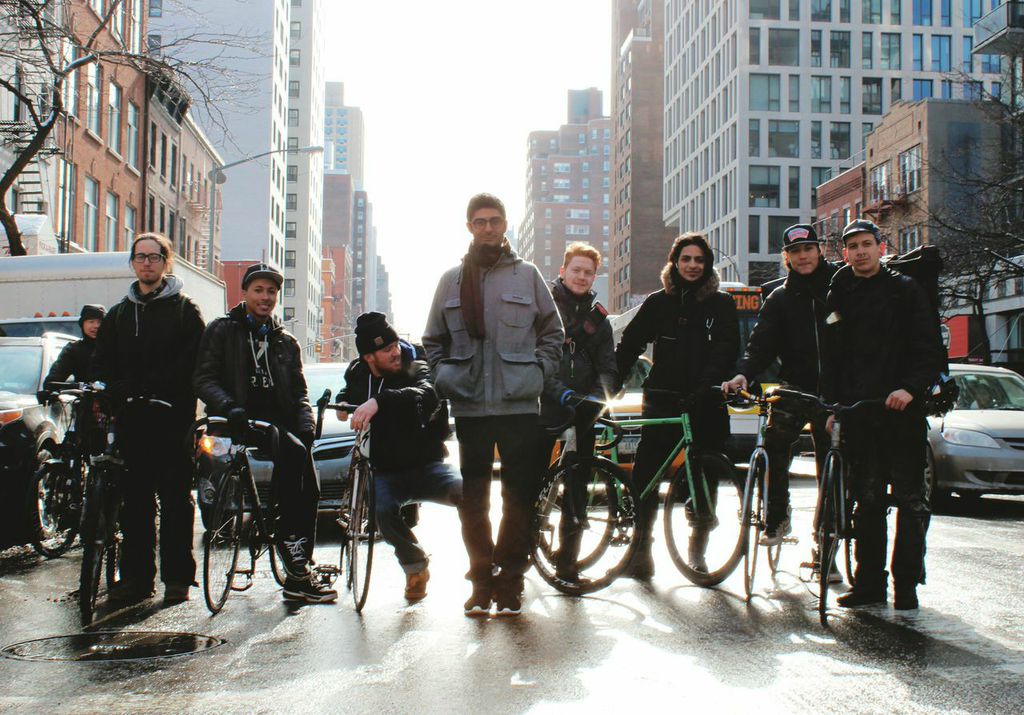
Though only one-and-a-half years old and only available in NYC and San Francisco, Wunwun has been quietly building a loyal following—revenues have grown 30 percent month-over-month during Wunwun’s short lifespan, Hnetinka says—while tweaking its revenue model and building an army of “helpers,” Wunwun-speak for the service’s couriers. Now the company is ready to scale, and scale quickly. The nascent startup plans to expand to nine new cities in 2015 and expects to bring in between $50 million and $90 million in revenue, Hnetinka says. Its secret sauce: charge nothing for the delivery service and never build any brick and mortar infrastructure. Ever.
Like most tech startups, Wunwun has an origin story. As Hnetinka tells it, he and some friends wanted candy delivered from boutique sweets shop Dylan’s Candy Bar. Dylan’s Candy Bar doesn’t make house calls, and the nearby stores that would deliver them candy wouldn’t deliver the specific candy they wanted. Hnetinka saw opportunity.
Wunwun’s platform simply connects users with the company’s helpers, which in turn will fetch items from wherever the user desires. Delivery usually takes less than an hour, often more like half an hour. Wunwun doesn’t mark up the cost of the goods purchased, nor does it charge a membership or delivery fee under normal circumstances (in inclement weather and at peak hours small delivery fees may apply). The couriers take home 80% of an automatically tabulated gratuity; Wunwun gets the other 20% of that gratuity for providing the platform. Small fees can be accrued if a user requires a courier to travel outside of a pre-set geographic zone, but an average order on an average day means the user pays only the cost of the goods plus tip.
By using existing retail establishments as its warehouses, Wunwun requires no inventory or other physical infrastructure outside of the offices that house its roughly 20 employees. Its legion of 500 helpers is paid out of gratuities, so they don’t eat into the company’s bottom line. And in most cases, the items a user wants are closer to the user than a centralized warehouse would be. Wunwun can route orders to the courier nearest both the desired store and destination, keeping delivery times short, often right around half an hour.
“When delivery happens in 30 minutes or less, there’s a 90 percent chance that person places another order,” Hnetinka says, citing Wunwun’s own customer retention data. And once customers get into a habit of using Wunwun they tend to start using it more and more often, he says. “We have insane repeatability and frequency.”
While services like Postmates, Amazon Prime Now, Google Express, and Instacart advertise similar same-day (and even one-hour) delivery services, each of them either charges a delivery fee, marks up the price of goods, requires a paid membership, or requires users to choose from the service’s limited inventory. “The city is our warehouse,” Hnetinka likes to say, and by bringing offline retail into the online sphere without marking up items or charging extra fees, he believes Wunwun can offer the largest number of goods at the lowest possible prices with the fastest delivery turnaround.
A knock at the conference room door announces the arrival of the juice shots that Hnetinka ordered at the beginning of our conversation. A courier steps into the room, hands over the cargo, and Hnetinka signs via the courier’s iPhone to complete the transaction. We toss back the sinus-clearing ginger-lemon-cayenne cocktails—a favorite of Hnetinka’s. I steal a glance at my watch. Total elapsed time since ordering: 21 minutes.
“Here’s what winning looks like” Hnetinka continues. “Lots of merchants delivering where there’s no extra cost for delivery. E-commerce will no longer be warehouse-based. That will be the shift change.”
Merchants, it turns out, are a big part of Wunwun’s growth strategy. The company recently inked a deal with Best Buy (BBUY)—a model for the kind of brick-and-mortar retailer that’s now a showroom for customers who later purchase from Amazon (AMZN)—to provide one-hour delivery to the electronics giant’s customers in Manhattan.
Say a Wunwun user needs anything from an HDMI cable to an Xbox. Through the deal with Best Buy, that order would go not only to a Wunwun helper but to a Best Buy store as well, where a store employee would find and ring up the item. The courier then picks it up from Best Buy (without losing any time locating and purchasing the item in-store) and delivers it to the customer.
Best Buy gets one-hour delivery for its customers without the headache of providing those logistics in-house. Wunwun takes a small marketing fee from Best Buy for driving business its way (the terms of that fee are undisclosed). And the customer—who simply wants an Xbox and doesn’t care where it comes from—has one delivered to his or her doorstep within an hour.
Hnetinka sees this model repeating itself over and over again as Wunwun scales in 2015. Even as the service spreads to several new cities—Hnetinka won’t say which ones, though he hints at plans to grow regionally from its NYC headquarters—Wunwun plans to create a new feature in its app that allows merchants to upload their inventories, allowing users to browse merchandise just as they can via Amazon, GrubHub (GRUB), or other online vendors. These merchants could be Best Buy or Target (TGT), or the mom-and-pop market on the corner—or even Dylan’s Candy Bar.
“Merchants are our future,” Hnetinka says. “Amazon is a threat to merchants. We’re a partner to merchants, and merchants are a huge part of our expansion in 2015.”
It’s an intriguing argument, even if there’s no guarantee that Amazon, Google, or some other larger competitor won’t shift tactics to in an effort to marginalize smaller entrants like Wunwun. Amazon in particular has swallowed huge losses in past efforts to drive competitors from what it sees as its turf (R.I.P. Diapers.com). But Hnetinka is confident that Wunwun has flown under the radar long enough—and can now scale fast enough—to remain competitive no matter what other companies do.
“The idea always was: ‘before we can go off and scale, let’s figure out what works,’” he says. “We’ve done that, and now we’re going to scale rapidly.”