• Home
  • Latest
  • Fortune 500
  • Finance
  • Tech
  • Leadership
  • Lifestyle
  • Rankings
  • Multimedia
Leadership

How temp jobs make your office more dangerous

Claire Zillman
By
Claire Zillman
Claire Zillman
Editor, Leadership
Down Arrow Button Icon
Claire Zillman
By
Claire Zillman
Claire Zillman
Editor, Leadership
Down Arrow Button Icon
March 5, 2015, 11:57 AM ET
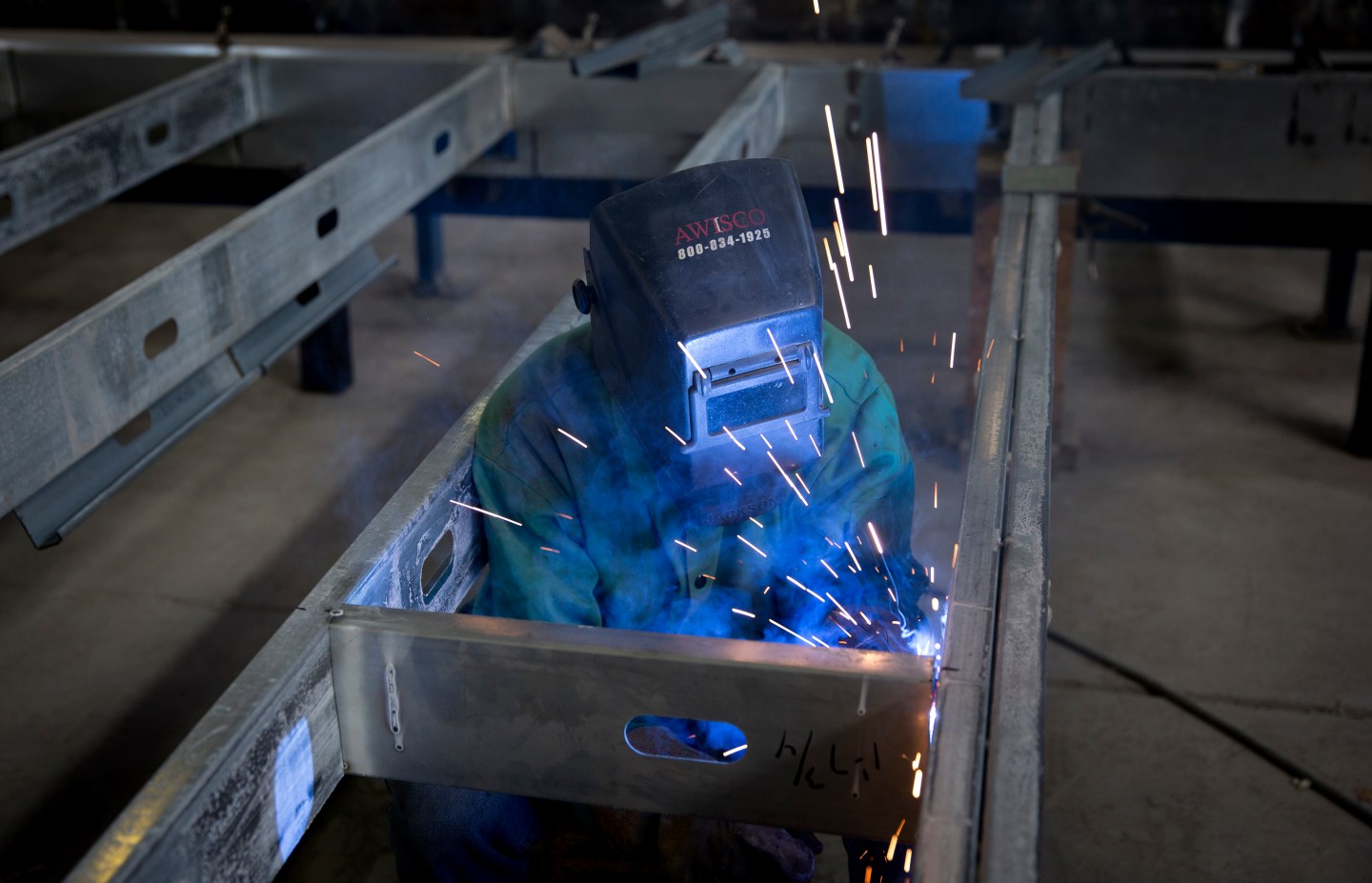
Production Line At Capsys Corp. Building Modular Housing Units
Juan Villegas, a Capsys Corp. employee, MIG welds a steel frame for a modular housing unit at the Brooklyn Navy Yard in the Brooklyn borough of New York, U.S., on Wednesday, Feb. 13, 2013. Capsys Corp., which specializes in prefabricated buildings, will be building micro-unit apartments in New York City. Photographer Scott Eells/Bloomberg via Getty ImagesPhotograph by Scott Eells — Bloomberg via Getty Images

Let’s start with some good news: The American workplace is much safer than it used to be. In 1970, 14,000 workers were killed on the job, about 38 workers per day. Today, with a much larger workforce, the rate has fallen to about 12 deaths per day.

Now, for the not-so-good. According to a new report by the Occupational Safety and Health Administration, an ongoing trend is posing additional risks to worker safety: employers’ increasing reliance on temporary employees.

“More and more, workers are not actual employees of the employer who owns or controls the workplace where they work,” the report says. Indeed, over the last two decades, employment in the temporary help services has more than doubled and increasingly includes a larger share of workers in higher skill occupations. This trend has had a “significant, negative impact on the safety and health of U.S. workers,” OSHA says.

There’s a simple reason why: A company that relies on temporary employees has little financial incentive to ensure workers’ wellbeing. OSHA law doesn’t apply to employees who are classified as self-employed—as independent contractors often are—and a company isn’t responsible for paying pay workers’ compensation insurance premiums for workers it hires through a third party—that’s the responsibility of the hiring agency. Companies that rely on temp workers may not invest in training such staffers on safety measures. This is a critical oversight since temp workers—by the nature of their employment status—are more likely to encounter unfamiliar work environments. The report says that OSHA has recently investigated the deaths of numerous temp workers who were killed on their first days.

There’s evidence that temp workers are more likely to get injured on the job than their permanent counterparts. A study in Washington state found that temp workers had substantially higher rates for “caught in” and “struck by” injuries in the construction and manufacturing industry sector. At the same time, though, temp workers are less likely than permanent workers to receive workers’ compensation benefits. They’re more hesitant to report their injuries and file compensation claims with their staffing agency out of concern that they’ll miss out on future work assignments or out of confusion as to which employer is responsible, according to the report.

In those instances, the staff agency and the employer that hires temp workers both avoid paying for workplace injuries. Who picks up the tab? Workers, their families, and American taxpayers.

Screen Shot 2015-03-04 at 4.37.37 PM

In addition to burdening individuals and families with medical expenses, there’s another crucial consequence from staffing agencies—and the companies that rely on them—dodging the cost of worker injuries. With no financial liability for dangerous workplaces, companies have little incentive to make them safer. And that doesn’t bode well for OSHA’s goal of reducing the 12 workplace deaths that occur every day to zero.

About the Author
Claire Zillman
By Claire ZillmanEditor, Leadership
LinkedIn iconTwitter icon

Claire Zillman is a senior editor at Fortune, overseeing leadership stories. 

See full bioRight Arrow Button Icon

Latest in Leadership

Donald Trump
HealthHealth Insurance
‘Tragedy in the making’: Top healthcare exec on why insurance will spike to subsidize a tax cut to millionaires and billionaires
By Nick LichtenbergDecember 12, 2025
4 hours ago
three men in suits, one gesturing
AIBrainstorm AI
The fastest athletes in the world can botch a baton pass if trust isn’t there—and the same is true of AI, Blackbaud exec says
By Amanda GerutDecember 12, 2025
5 hours ago
Brainstorm AI panel
AIBrainstorm AI
Creative workers won’t be replaced by AI—but their roles will change to become ‘directors’ managing AI agents, executives say
By Beatrice NolanDecember 12, 2025
5 hours ago
Ryan Serhant lifts his arms at the premiere of Owning Manhattan, his Netflix show
Successrelationships
Ryan Serhant, a real-estate mogul who’s met over 100 billionaires, reveals his best networking advice: ‘Every room I go into, I use the two C’s’
By Dave SmithDecember 12, 2025
6 hours ago
Fei-Fei Li, the "Godmother of AI," says she values AI skills more than college degrees when hiring software engineers for her tech startup.
AITech
‘Godmother of AI’ says degrees are less important in hiring than how quickly you can ‘superpower yourself’ with new tools
By Nino PaoliDecember 12, 2025
7 hours ago
C-SuiteFortune 500 Power Moves
Fortune 500 Power Moves: Which executives gained and lost power this week
By Fortune EditorsDecember 12, 2025
8 hours ago

Most Popular

placeholder alt text
Economy
Tariffs are taxes and they were used to finance the federal government until the 1913 income tax. A top economist breaks it down
By Kent JonesDecember 12, 2025
13 hours ago
placeholder alt text
Success
At 18, doctors gave him three hours to live. He played video games from his hospital bed—and now, he’s built a $10 million-a-year video game studio
By Preston ForeDecember 10, 2025
3 days ago
placeholder alt text
Success
Palantir cofounder calls elite college undergrads a ‘loser generation’ as data reveals rise in students seeking support for disabilities, like ADHD
By Preston ForeDecember 11, 2025
1 day ago
placeholder alt text
Arts & Entertainment
'We're not just going to want to be fed AI slop for 16 hours a day': Analyst sees Disney/OpenAI deal as a dividing line in entertainment history
By Nick LichtenbergDecember 11, 2025
1 day ago
placeholder alt text
Success
40% of Stanford undergrads receive disability accommodations—but it’s become a college-wide phenomenon as Gen Z try to succeed in the current climate
By Preston ForeDecember 12, 2025
9 hours ago
placeholder alt text
Uncategorized
Transforming customer support through intelligent AI operations
By Lauren ChomiukNovember 26, 2025
16 days ago
Rankings
  • 100 Best Companies
  • Fortune 500
  • Global 500
  • Fortune 500 Europe
  • Most Powerful Women
  • Future 50
  • World’s Most Admired Companies
  • See All Rankings
Sections
  • Finance
  • Leadership
  • Success
  • Tech
  • Asia
  • Europe
  • Environment
  • Fortune Crypto
  • Health
  • Retail
  • Lifestyle
  • Politics
  • Newsletters
  • Magazine
  • Features
  • Commentary
  • Mpw
  • CEO Initiative
  • Conferences
  • Personal Finance
  • Education
Customer Support
  • Frequently Asked Questions
  • Customer Service Portal
  • Privacy Policy
  • Terms Of Use
  • Single Issues For Purchase
  • International Print
Commercial Services
  • Advertising
  • Fortune Brand Studio
  • Fortune Analytics
  • Fortune Conferences
  • Business Development
About Us
  • About Us
  • Editorial Calendar
  • Press Center
  • Work At Fortune
  • Diversity And Inclusion
  • Terms And Conditions
  • Site Map

© 2025 Fortune Media IP Limited. All Rights Reserved. Use of this site constitutes acceptance of our Terms of Use and Privacy Policy | CA Notice at Collection and Privacy Notice | Do Not Sell/Share My Personal Information
FORTUNE is a trademark of Fortune Media IP Limited, registered in the U.S. and other countries. FORTUNE may receive compensation for some links to products and services on this website. Offers may be subject to change without notice.