• Home
  • Latest
  • Fortune 500
  • Finance
  • Tech
  • Leadership
  • Lifestyle
  • Rankings
  • Multimedia
FinanceChina

Why China keeps throwing trillions in investments down the drain

By
Minxin Pei
Minxin Pei
Down Arrow Button Icon
By
Minxin Pei
Minxin Pei
Down Arrow Button Icon
December 1, 2014, 3:56 PM ET
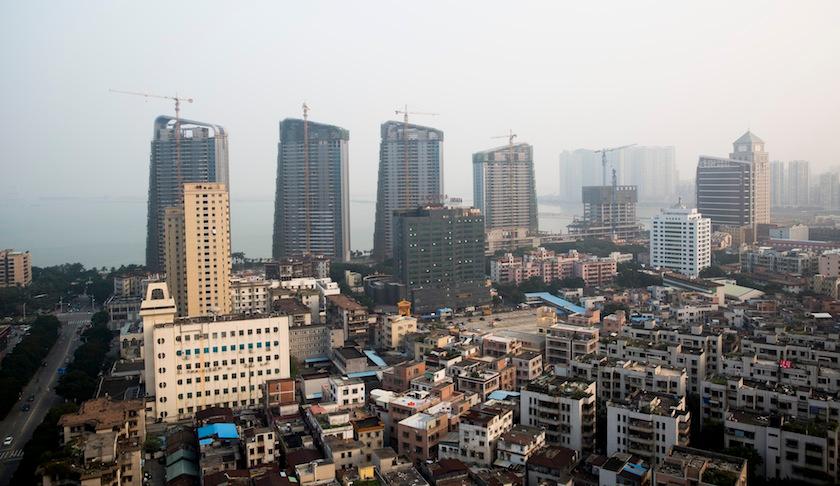
General Images of Chinese Economy From Zhuhai
Cranes operate at a residential construction site in the Gongbei district of Zhuhai, Guangdong province, China, on Friday, Nov. 14, 2014. Investors piled into Shanghai shares on the first day of exchange-link trading, buying the maximum amount allowed in a sign of global demand for mainland equities as China opens up its $4.2 trillion market. Photographer: Brent Lewin/Bloomberg via Getty ImagesPhotograph by Brent Lewin—Bloomberg via Getty Images

There are two indisputable facts about China’s mammoth investments in its infrastructure and factories. One, they are a growth engine, accounting for roughly half of the country’s GDP increase since 2000. The other fact is that China’s investment rate, averaging 43% of GDP since 2000, is greater than any other major economy in history.

Many question whether such investment in the Chinese economy can maintain its role as the nation’s primary driver of growth. Most economists believe that China must shift from an investment-based growth model to one focused on consumption. (According to the World Bank, Chinese household consumption was only 34% of GDP in 2013.) Amid this debate, one question has gone unanswered: How much bang has China got for the trillions of bucks it has poured into its physical capital over the last two decades?

A recent study performed by two economists affiliated with the Chinese National Development and Reform Commission (NDRC), Beijing’s powerful economic planning and regulatory agency, offered a revealing glimpse into this puzzle. The economists examined two indicators: the delivery rate of completed fixed-asset investment projects and the incremental capital output ratio (ICOR), which measures how much additional capital is required to generate an extra unit of GDP growth. The researchers concluded that both measures show an alarming increase in wasteful and ineffective investments in China.

The delivery rate of completed capital projects, which was 74-79% in the late 1990s, has now fallen below 60%. This implies that nearly 40% of Chinese investment projects are either not finished on time or not completed at all.

The even more alarming figure, which made headlines around the world, is that ineffective investment has cost China $10.8 trillion since 1997. Sixty-two percent of the wasteful investment—$6.8 trillion—was made after 2009, when China went on an investment binge to stimulate its economy.

The two scholars reached this startling conclusion by noting that China’s ICOR has risen 50%, from 2.6 (for the period of 1979-1996) to 4 (for the period of 1997-2013). In practical terms, this means that before 1997 China needed $2.60 in investment to generate one dollar of GDP growth; today, China needs $4 to produce a dollar of GDP growth. The rise of ICOR, according to the researchers, indicates that China’s investments have become less efficient.

To be sure, one can raise technical questions about using ICOR to estimate investment efficiency. A country’s ICOR can rise as its economy becomes more capital intensive. Obviously, agriculture requires less capital than manufacturing. In China’s case, ICOR was 0.3 for agriculture but 5.9 for manufacturing during 2001-2007. Therefore, in all likelihood, the estimate that China has flushed $10.8 trillion down the drain since 1997 should be taken with caution.

Nevertheless, the two audacious government-affiliated economists have asked the right question even though their conclusion may not be totally convincing. Their study highlights a serious problem that many in the international business community have overlooked: the role of the state in making investment decisions in China.

Based on official data, the Chinese government and state-owned enterprises invest $2.3 trillion a year in infrastructure and factories (43% of the country’s total investment). Since government-funded investments are driven by political decisions, these investments are more likely to fall victim to waste and corruption. Research conducted by a scholar at China’s Tsinghua University’s School of Management shows that government-funded infrastructure projects, contrary to conventional wisdom, undercut China’s productivity. Even when the Chinese government invests in factories, its decisions can result in poor outcomes. This is the case with the manufacturing sector. Every self-respecting local government in China, it seems, wants to own steel mills, cement factories, and auto plants. As a result, these sectors are plagued by overcapacity across the country, which destroys investment returns.

To be sure, there is plenty of bad news here. For example, failed investments saddle Chinese banks, which finance most of the investments made by the Chinese government and SOEs, with mountains of non-performing loans. But there may be a silver lining behind China’s abysmal investment record. The shocking inefficiency of Chinese investments also means that reforms could potentially generate significant benefits. With a more efficient investment system, Beijing could cut down on its overall investment and channel more of its resources into encouraging consumption, which would make China’s economic growth more sustainable in the long run.

Let us hope that, instead of punishing the two economists for revealing China’s dirty little secret, the Chinese government will get the message and start meddling less in the country’s investment activities.

Minxin Pei is the Tom and Margot Pritzker ’72 Professor of Government at Claremont McKenna College and a non-resident senior fellow of the German Marshall Fund of the United States

About the Author
By Minxin Pei
See full bioRight Arrow Button Icon

Latest in Finance

Finance
Lorem ipsum dolor sit amet, consectetur adipiscing elit, sed do eiusmod tempor incididunt ut labore et dolore magna aliqua. Ut enim ad minim veniam
By Fortune Editors
October 20, 2025
Finance
Lorem ipsum dolor sit amet, consectetur adipiscing elit, sed do eiusmod tempor incididunt ut labore et dolore magna aliqua. Ut enim ad minim veniam
By Fortune Editors
October 20, 2025
Finance
Lorem ipsum dolor sit amet, consectetur adipiscing elit, sed do eiusmod tempor incididunt ut labore et dolore magna aliqua. Ut enim ad minim veniam
By Fortune Editors
October 20, 2025
Finance
Lorem ipsum dolor sit amet, consectetur adipiscing elit, sed do eiusmod tempor incididunt ut labore et dolore magna aliqua. Ut enim ad minim veniam
By Fortune Editors
October 20, 2025
Finance
Lorem ipsum dolor sit amet, consectetur adipiscing elit, sed do eiusmod tempor incididunt ut labore et dolore magna aliqua. Ut enim ad minim veniam
By Fortune Editors
October 20, 2025
Finance
Lorem ipsum dolor sit amet, consectetur adipiscing elit, sed do eiusmod tempor incididunt ut labore et dolore magna aliqua. Ut enim ad minim veniam
By Fortune Editors
October 20, 2025

Most Popular

Finance
Lorem ipsum dolor sit amet, consectetur adipiscing elit, sed do eiusmod tempor incididunt ut labore et dolore magna aliqua. Ut enim ad minim veniam
By Fortune Editors
October 20, 2025
Finance
Lorem ipsum dolor sit amet, consectetur adipiscing elit, sed do eiusmod tempor incididunt ut labore et dolore magna aliqua. Ut enim ad minim veniam
By Fortune Editors
October 20, 2025
Finance
Lorem ipsum dolor sit amet, consectetur adipiscing elit, sed do eiusmod tempor incididunt ut labore et dolore magna aliqua. Ut enim ad minim veniam
By Fortune Editors
October 20, 2025
Finance
Lorem ipsum dolor sit amet, consectetur adipiscing elit, sed do eiusmod tempor incididunt ut labore et dolore magna aliqua. Ut enim ad minim veniam
By Fortune Editors
October 20, 2025
Finance
Lorem ipsum dolor sit amet, consectetur adipiscing elit, sed do eiusmod tempor incididunt ut labore et dolore magna aliqua. Ut enim ad minim veniam
By Fortune Editors
October 20, 2025
Finance
Lorem ipsum dolor sit amet, consectetur adipiscing elit, sed do eiusmod tempor incididunt ut labore et dolore magna aliqua. Ut enim ad minim veniam
By Fortune Editors
October 20, 2025
Fortune Secondary Logo
Rankings
  • 100 Best Companies
  • Fortune 500
  • Global 500
  • Fortune 500 Europe
  • Most Powerful Women
  • Future 50
  • World’s Most Admired Companies
  • See All Rankings
Sections
  • Finance
  • Fortune Crypto
  • Features
  • Leadership
  • Health
  • Commentary
  • Success
  • Retail
  • Mpw
  • Tech
  • Lifestyle
  • CEO Initiative
  • Asia
  • Politics
  • Conferences
  • Europe
  • Newsletters
  • Personal Finance
  • Environment
  • Magazine
  • Education
Customer Support
  • Frequently Asked Questions
  • Customer Service Portal
  • Privacy Policy
  • Terms Of Use
  • Single Issues For Purchase
  • International Print
Commercial Services
  • Advertising
  • Fortune Brand Studio
  • Fortune Analytics
  • Fortune Conferences
  • Business Development
  • Group Subscriptions
About Us
  • About Us
  • Editorial Calendar
  • Press Center
  • Work At Fortune
  • Diversity And Inclusion
  • Terms And Conditions
  • Site Map
  • About Us
  • Editorial Calendar
  • Press Center
  • Work At Fortune
  • Diversity And Inclusion
  • Terms And Conditions
  • Site Map
  • Facebook icon
  • Twitter icon
  • LinkedIn icon
  • Instagram icon
  • Pinterest icon

Latest in Finance

Mortgage rates today, April 14, 2026
Personal Financemortgages
Mortgage rates today, April 14, 2026
By Glen Luke FlanaganApril 14, 2026
56 minutes ago
Current refi mortgage rates report for April 14, 2026
Personal Financemortgage rates
Current refi mortgage rates report for April 14, 2026
By Glen Luke FlanaganApril 14, 2026
56 minutes ago
Current ARM mortgage rates report for April 14, 2026
Personal FinanceReal Estate
Current ARM mortgage rates report for April 14, 2026
By Glen Luke FlanaganApril 14, 2026
56 minutes ago
Most of Wall Street points to high oil prices as the driver of inflation. A maverick Johns Hopkins economist says they’re chasing the wrong culprit
EconomyU.S. economy
Most of Wall Street points to high oil prices as the driver of inflation. A maverick Johns Hopkins economist says they’re chasing the wrong culprit
By Shawn TullyApril 14, 2026
57 minutes ago
Donald Trump walks outside, putting a fist in the air.
PoliticsTariffs
Tariffs are the new normal, and now most CEOs expect the import taxes to outlast the Trump administration, PwC report finds
By Sasha RogelbergApril 14, 2026
2 hours ago
United CEO has pitched possible combination with rival American
PoliticsAirline industry
United CEO has pitched possible combination with rival American
By Siddharth Philip, Allyson Versprille, Sri Taylor and BloombergApril 13, 2026
9 hours ago

Most Popular

Billionaire philanthropist MacKenzie Scott has donated again—a week after gifting millions to a college, she's just given $70 million to Meals on Wheels America
Success
Billionaire philanthropist MacKenzie Scott has donated again—a week after gifting millions to a college, she's just given $70 million to Meals on Wheels America
By Fortune EditorsApril 13, 2026
17 hours ago
'People are trying to be creative': Tariff-battered American companies are so cash-starved they are using refund claims as collateral for loans
Economy
'People are trying to be creative': Tariff-battered American companies are so cash-starved they are using refund claims as collateral for loans
By Fortune EditorsApril 12, 2026
2 days ago
'This is the last warning.' Iran threatens U.S. warships after they throw down the gauntlet for winner-take-all Strait of Hormuz
Politics
'This is the last warning.' Iran threatens U.S. warships after they throw down the gauntlet for winner-take-all Strait of Hormuz
By Fortune EditorsApril 11, 2026
2 days ago
Current price of oil as of April 13, 2026
Personal Finance
Current price of oil as of April 13, 2026
By Fortune EditorsApril 13, 2026
19 hours ago
U.S. naval blockade on Iran will trigger a currency devaluation spiral and hyperinflation, potentially ending the war more quickly, analyst says
Economy
U.S. naval blockade on Iran will trigger a currency devaluation spiral and hyperinflation, potentially ending the war more quickly, analyst says
By Fortune EditorsApril 13, 2026
16 hours ago
As the U.S. Navy attempts to take control of the Strait of Hormuz today, Trump asks the Pope to shut up
Politics
As the U.S. Navy attempts to take control of the Strait of Hormuz today, Trump asks the Pope to shut up
By Fortune EditorsApril 13, 2026
22 hours ago

© 2026 Fortune Media IP Limited. All Rights Reserved. Use of this site constitutes acceptance of our Terms of Use and Privacy Policy | CA Notice at Collection and Privacy Notice | Do Not Sell/Share My Personal Information
FORTUNE is a trademark of Fortune Media IP Limited, registered in the U.S. and other countries. FORTUNE may receive compensation for some links to products and services on this website. Offers may be subject to change without notice.