• Home
  • Latest
  • Fortune 500
  • Finance
  • Tech
  • Leadership
  • Lifestyle
  • Rankings
  • Multimedia
Retailgas prices

Gas prices are falling, so why aren’t consumers spending?

By
John Kell
John Kell
Contributing Writer and author of CIO Intelligence
Down Arrow Button Icon
By
John Kell
John Kell
Contributing Writer and author of CIO Intelligence
Down Arrow Button Icon
October 15, 2014, 12:17 PM ET
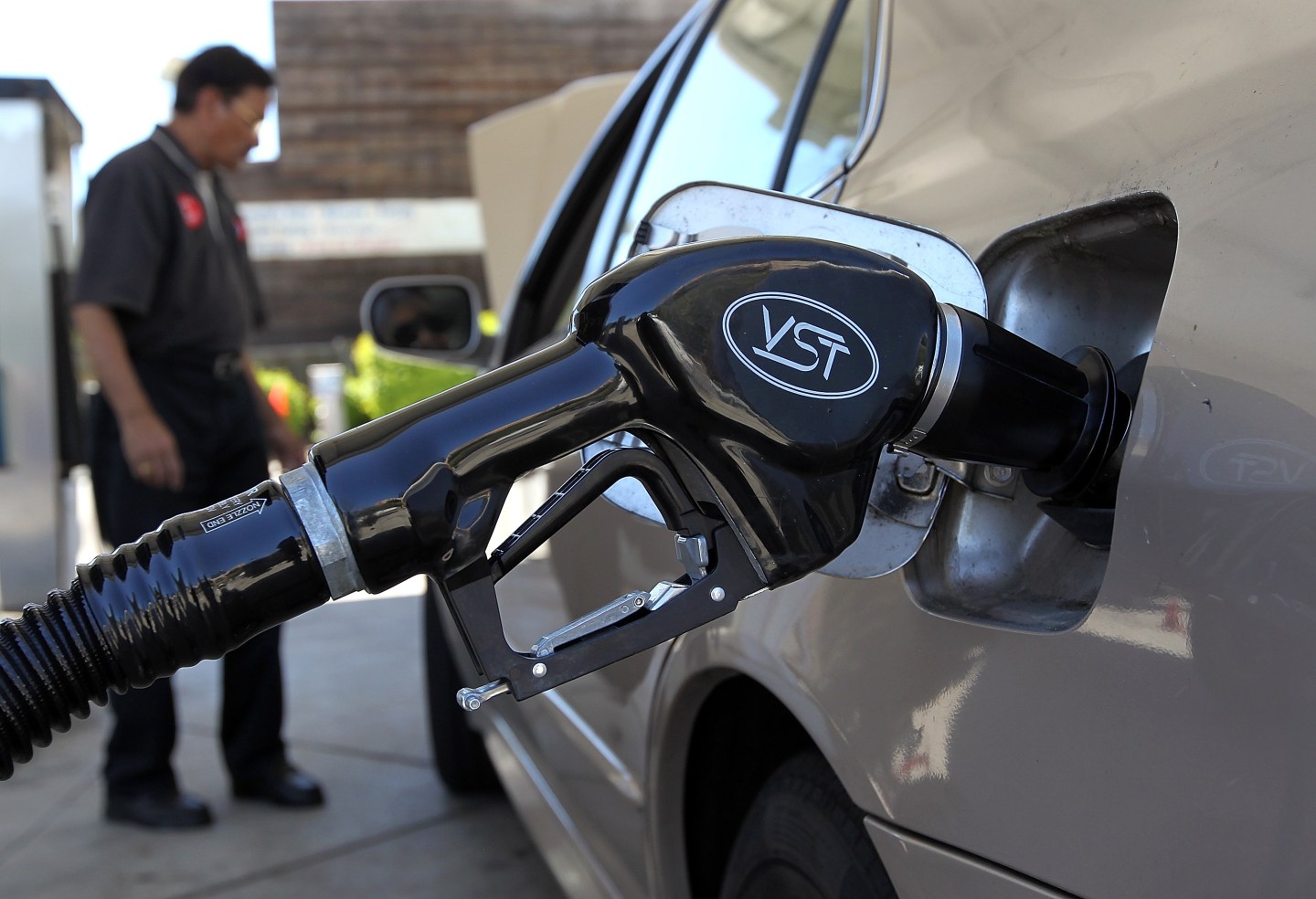
A gas pump
A gasoline pump rests in the tank of a car in San Anselmo, Calif.Photograph by Justin Sullivan — Getty Images

U.S. consumers are spending less to fill up their tanks, but they aren’t opening up their fatter wallets to spend more on discretionary items.

Fortune reported retail sales slid a worse-than-expected 0.3% in September, weakness that caught investors and retail observers off guard as some had hoped falling gasoline prices would boost spending on the wares retailers sell. Sales on a sequential basis were weaker for apparel, building material and garden equipment, automobiles and furniture and home furnishing items. One bright spot was for electronics, bolstered by the launch of Apple’s (AAPL) newest iPhones.

“Retail sales were surprisingly weak in September,” NRF Chief Economist Jack Kleinhenz said. “Despite increasing consumer confidence, an uptick in employment, lower gas prices, and with inflation in check, consumers still slowed spending.”

The disappointing data helped pushed U.S. stocks briefly to an eight-month low on Wednesday.

The retail price of gasoline for the average American has dropped nearly 15% since late June, according to The Wall Street Journal, which cited at a from Gasbuddy.com. That should have led to higher sales at retail stores, as gas prices are especially transparent to consumers that often pass dozens of fuel retailers as part of their daily commute. For example, a survey conducted last year by the National Association of Convenience Stores found that nearly nine in ten consumers say that gas prices impact their feelings on the economy.

But some observers say consumers don’t pay attention to gasoline prices as much as media reports indicate, especially those with a higher income (a group that spends more on discretionary goods).

“We all tend to overestimate the sensitivity of gasoline prices, both the upside and downside,” said John Canally, chief economic strategist for LPL Financial. “We all expect an immediate response that consumers with more change in their pocket to go out and buy stuff.”

Canally said the September retail data is at odds with other economic indicators, pointing out that employers continue to add jobs and the housing market is recovering. The deceleration in consumer spending is problematic as retailers gear up for the holiday season, and a few factors — such as warmer-than-usual weather and fears surrounding the Ebola epidemic — could also play a role in how people spend.

“The economy is two-thirds consumer, so if they throw in the towel, there is only so much that housing and capital spending can do,” Canally said. “The momentum heading into the fourth quarter isn’t so good.”

The poor retail sales for September shouldn’t have caught investors entirely off guard, as there were a few canaries in the coal mine that were sounding the alarm. J.C. Penney (JCP) earlier this month lowered its third-quarter comparable sales forecast after a disappointing September. Gap (GPS) Chief Executive Glenn Murphy last week said September “proved to be more challenging than we expected.”

Still, some are cheering the fact that less pain at the pump can help their consumers. At Wal-Mart’s (WMT) analyst day presentation on Wednesday, a marketing executive said lower fuel prices could be a “tailwind” this holiday season.

—Fortune’s Phil Wahba contributed to this report.
About the Author
By John KellContributing Writer and author of CIO Intelligence

John Kell is a contributing writer for Fortune and author of Fortune’s CIO Intelligence newsletter.

See full bioRight Arrow Button Icon

Latest in Retail

millennial
CommentaryConsumer Spending
Meet the 2025 holiday white whale: the millennial dad spending $500+ per kid
By Phillip GoerickeDecember 12, 2025
2 days ago
McDonald
RetailRetail
Lululemon CEO Calvin McDonald to step down as quarterly profit dips 13%
By Anne D'Innocenzio and The Associated PressDecember 12, 2025
2 days ago
Sarandos
CommentaryAntitrust
Netflix, Warner, Paramount and antitrust: Entertainment megadeal’s outcome must follow the evidence, not politics or fear of integration
By Satya MararDecember 12, 2025
2 days ago
InvestingMarkets
Retail investors drive stocks to a pre-Christmas all-time high—and Wall Street sees a moment to sell
By Jim EdwardsDecember 12, 2025
2 days ago
Five panelists seated; two women and five men.
AIBrainstorm AI
The race to deploy an AI workforce faces one important trust gap: What happens when an agent goes rogue?
By Amanda GerutDecember 11, 2025
2 days ago
Oreo
RetailFood and drink
Zero-sugar Oreos headed to America for first time
By Dee-Ann Durbin and The Associated PressDecember 11, 2025
3 days ago

Most Popular

placeholder alt text
Success
Apple cofounder Ronald Wayne sold his 10% stake for $800 in 1976—today it’d be worth up to $400 billion
By Preston ForeDecember 12, 2025
2 days ago
placeholder alt text
Economy
Tariffs are taxes and they were used to finance the federal government until the 1913 income tax. A top economist breaks it down
By Kent JonesDecember 12, 2025
2 days ago
placeholder alt text
Success
40% of Stanford undergrads receive disability accommodations—but it’s become a college-wide phenomenon as Gen Z try to succeed in the current climate
By Preston ForeDecember 12, 2025
1 day ago
placeholder alt text
Economy
The Fed just ‘Trump-proofed’ itself with a unanimous move to preempt a potential leadership shake-up
By Jason MaDecember 12, 2025
1 day ago
placeholder alt text
Economy
For the first time since Trump’s tariff rollout, import tax revenue has fallen, threatening his lofty plans to slash the $38 trillion national debt
By Sasha RogelbergDecember 12, 2025
1 day ago
placeholder alt text
Success
Apple CEO Tim Cook out-earns the average American’s salary in just 7 hours—to put that into context, he could buy a new $439,000 home in just 2 days
By Emma BurleighDecember 12, 2025
1 day ago
Rankings
  • 100 Best Companies
  • Fortune 500
  • Global 500
  • Fortune 500 Europe
  • Most Powerful Women
  • Future 50
  • World’s Most Admired Companies
  • See All Rankings
Sections
  • Finance
  • Leadership
  • Success
  • Tech
  • Asia
  • Europe
  • Environment
  • Fortune Crypto
  • Health
  • Retail
  • Lifestyle
  • Politics
  • Newsletters
  • Magazine
  • Features
  • Commentary
  • Mpw
  • CEO Initiative
  • Conferences
  • Personal Finance
  • Education
Customer Support
  • Frequently Asked Questions
  • Customer Service Portal
  • Privacy Policy
  • Terms Of Use
  • Single Issues For Purchase
  • International Print
Commercial Services
  • Advertising
  • Fortune Brand Studio
  • Fortune Analytics
  • Fortune Conferences
  • Business Development
About Us
  • About Us
  • Editorial Calendar
  • Press Center
  • Work At Fortune
  • Diversity And Inclusion
  • Terms And Conditions
  • Site Map

© 2025 Fortune Media IP Limited. All Rights Reserved. Use of this site constitutes acceptance of our Terms of Use and Privacy Policy | CA Notice at Collection and Privacy Notice | Do Not Sell/Share My Personal Information
FORTUNE is a trademark of Fortune Media IP Limited, registered in the U.S. and other countries. FORTUNE may receive compensation for some links to products and services on this website. Offers may be subject to change without notice.