The punchline of European Commission’s 21-page letter to the Irish government released Tuesday comes three paragraphs from the end:
The Commission wishes to remind Ireland that Article 108(3) of the Treaty on the Functioning of the European Union has suspensory effect, and would draw your attention to Article 14 of Council Regulation (EC) No 659/199935, which provides that all unlawful aid may be recovered from the recipient.”
The “recipient” in this sentence is Apple Inc. The “aid” came in the form of a pair of Irish tax rulings — in 1991 and 2007 — that didn’t pass the EC’s smell test.
How much Apple might be on the line for in unpaid taxes the EC doesn’t say. Estimates range from the Wall Street Journal‘s up to $200 million to Business Insider’s $8 billion.
The rest of the commission’s letter — in which it made public for the first time its objections to Apple’s Irish tax loophole — is almost unreadable. There may be a winnable case there, but you’d have to be a international tax lawyer to makes heads or tails of it.
The best parts — snippets of actual Apple-Irish negotiations conducted by e-mail — are spoiled by clumsy bracketed identifiers, as in
[The representative of Irish Revenue] pointed out that in the proposed scheme the level of fee charged would be critical. [The tax advisor’s employee representing Apple] stated that the company would be prepared to accept a profit of $30-40m assuming that Apple Computer Ltd. will make such a profit.”
The clearest paragraph is the one describes why companies like Apple seek — and countries like Ireland offer — tax incentives in the first place. Here the prose snaps into sharp focus:
Multinational corporations pay taxes in jurisdictions which have different tax rates. The after tax profit recorded at the corporate group level is the sum of the after-tax profits in each county in which it is subject to taxation. Therefore, rather than maximise the profit declared in each country, multinational corporations have a financial incentive when allocating profit to the different companies of the corporate group to allocate as much profit as possible to low tax jurisdictions and as little profit as possible to high tax jurisdictions. This could, for example, be achieved by exaggerating the price of goods sold by a subsidiary established in a low tax jurisdiction to a subsidiary established in a high tax jurisdiction. In this manner, the higher taxed subsidiary would declare higher costs and therefore lower profits when compared to market conditions. This excess profit would be recorded in the lower tax jurisdiction and taxed at a lower rate than if the transaction had been priced at market conditions.”
Ireland, which has become a favorite second home to a long list of U.S. corporations, is sticking to the response it gave in June: it’s “confident that there is no state aid rule breach in this case.”
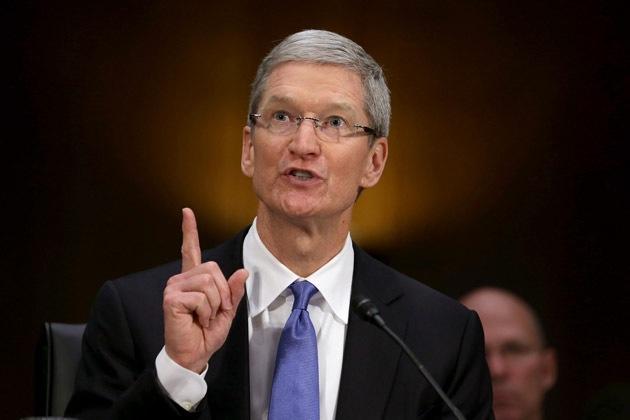
An Apple spokewoman and the company’s CFO have also denied any wrongdoing. But perhaps the most detailed response is the one Tim Cook offered a U.S. Senate subcommittee that investigated the same Irish subsidiaries last year. In words that would have been carefully vetted by lawyers, he told the Senators: (I quote)
- Apple has real operations in real places, with Apple employees selling real products to real customers.
- We pay all the taxes we owe – every single dollar.
- We not only comply with the laws, but we comply with the spirit of the laws.
- We don’t depend on tax gimmicks.
- We don’t move intellectual property offshore and use it to sell products back into the U.S. to avoid U.S. taxes.
- We don’t stash money on some Caribbean island.
- We don’t borrow money from our foreign subsidiaries to fund our U.S. business in order to skirt the repatriation tax.
.
Ireland has said it will vigorously defend its tax rulings. Apple, the party that would have to pay the EC’s piper, will no doubt do the same.
LINK: The redacted “public” version the EC’s letter.
See also: Apple’s ‘double Irish’ tax dodge is coming back to bite them. Again.
Follow Philip Elmer-DeWitt on Twitter at @philiped. Read his Apple (AAPL) coverage at fortune.com/ped or subscribe via his RSS feed.