• Home
  • Latest
  • Fortune 500
  • Finance
  • Tech
  • Leadership
  • Lifestyle
  • Rankings
  • Multimedia
FinanceVenezuela

How to fix Venezuela’s troubled exchange rate

By
Mark Weisbrot
Mark Weisbrot
Down Arrow Button Icon
By
Mark Weisbrot
Mark Weisbrot
Down Arrow Button Icon
July 22, 2014, 5:06 PM ET
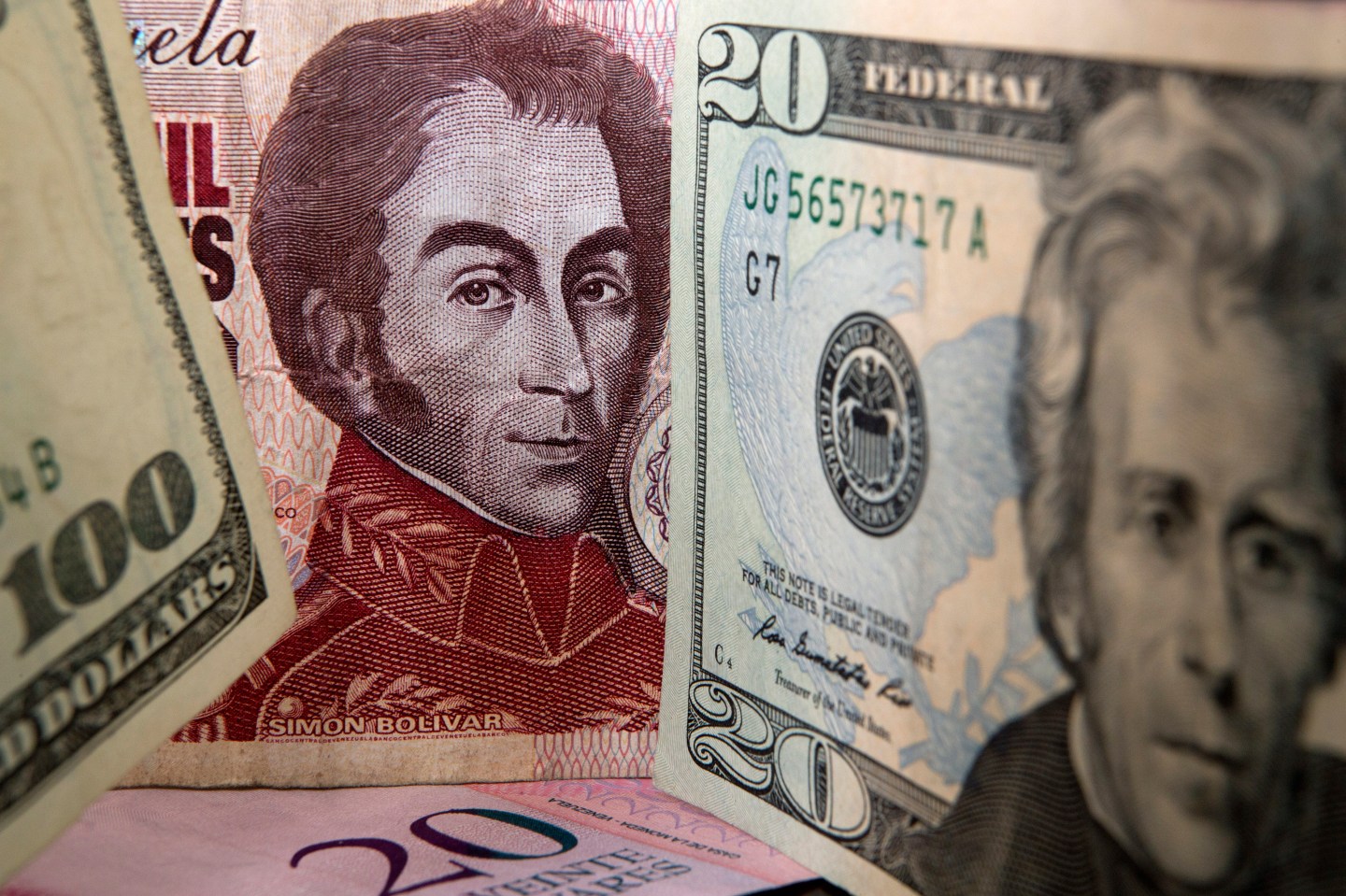
Bloomberg — Getty Images

Most people think that the Venezuelan economy is a basket case on the verge of collapse, and that has been a widespread belief for most of the last decade. But the South American nation has only run into serious trouble in the past two years. Starting in 2004, after the government wrested control from its political opposition over the all-important oil industry the economy performed quite well through 2012. It grew at an annual rate of 4.8%, and the poverty rate fell by half.

During the past two years, however, a number of problems worsened. Inflation has hit annual rates of more than 60%, and the country has faced an increasing shortage of essential consumer goods like milk and toilet paper. The black market price of the dollar also soared.

Earlier this month, the government announced that it would try to resolve these imbalances by creating a single, unified exchange rate system. Venezuela currently has four different exchange rates. Most dollars are bought from the government at the official rate of 6.3 bolivares fuertes per U.S. Dollar. These are intended for essential goods, such as food and medicine. Some other importers can buy dollars from the government at a rate of about 11 bolivares per dollar on a limited exchange called SICAD 1. There is also SICAD 2, which was introduced in March and involves private sellers, at a rate of 50 Bf. per dollar. Finally, there is the black market, which is unregulated, where dollars currently sell for about 79 Bf. per dollar.

Will the new system help? It’s likely, given that a lot of the current problems do seem to be connected to the exchange rate system. The vast majority of the rise in inflation over the past two years, for example, has been in food that is mostly imported. Shortages of these foods and other imported goods have been mostly caused by shortages of dollars. But why does a country with $90 billion of annual oil revenue have a shortage of dollars? One reason is the current exchange rate system: When the exchange rate is fixed at a rate where dollars are too cheap (i.e. the domestic currency is overvalued), there is an incentive for people and businesses to bet against the domestic currency and put their money in dollars. Then they are much richer in domestic currency when the next devaluation occurs.

As this happens repeatedly, people begin to lose confidence in the domestic currency and the demand for dollars grows. If dollars are scarce, it pushes the black market price up, and this adds to inflation as import prices rise. The increased inflation makes the problem worse, as more people want to hold dollars. In extreme cases this can cause an “inflation-depreciation” or “inflation-devaluation” spiral, where the two movements (in inflation and the exchange rate) feed off each other.

The government seems to have stabilized the black market rate for the dollar in the last few months, so there is no “inflation-depreciation” spiral. Prior to adoption of the SICAD 2 system, the black market rate for the dollar had risen from 12 bolivars in October 2012 to 88 bolivars in March.

But the system of fixed, overvalued exchange rates still contributes to shortages. Once the black market differential is big enough, it also increases the incentive for corruption; unlike selling cocaine, you don’t even need risk to leaving this world in a hail of bullets if you can get access to official dollars at 6.3 Bf and sell them for 72 on the black market.

In order to establish a stable exchange rate under a unified exchange rate regime, the government will still have to bring inflation down. If inflation continues at current levels, even the SICAD 2 rate of 50 Bf per dollar would eventually become an overvalued exchange rate in real terms. And the government will have to manage the transition to a new exchange rate regime so that ordinary people are not hurt by it. Since many prices are already determined by the black market, we would not expect inflation to accelerate as the country moves to a unified exchange rate with a more expensive dollar than the lower official rates. But the government will have to make sure that people are not hit by unaffordable prices – or scarcities – of essentials such as food and medicines.

According to the Bank of America’s March report, Venezuela has about $50 billion in foreign exchange reserves. (Although most of the central bank’s reserves are in gold, these can be easily sold – currently at a sizeable profit relative to their purchase price.) Imports have been shrinking over most of the past year. All of this should give the government a comfortable margin of foreign exchange with which to manage the transition.

Mark Weisbrot is co-director of the Center for Economic and Policy Research, in Washington, D.C. He is also President of Just Foreign Policy.


About the Author
By Mark Weisbrot
See full bioRight Arrow Button Icon

Latest in Finance

Finance
Lorem ipsum dolor sit amet, consectetur adipiscing elit, sed do eiusmod tempor incididunt ut labore et dolore magna aliqua. Ut enim ad minim veniam
By Fortune Editors
October 20, 2025
Finance
Lorem ipsum dolor sit amet, consectetur adipiscing elit, sed do eiusmod tempor incididunt ut labore et dolore magna aliqua. Ut enim ad minim veniam
By Fortune Editors
October 20, 2025
Finance
Lorem ipsum dolor sit amet, consectetur adipiscing elit, sed do eiusmod tempor incididunt ut labore et dolore magna aliqua. Ut enim ad minim veniam
By Fortune Editors
October 20, 2025
Finance
Lorem ipsum dolor sit amet, consectetur adipiscing elit, sed do eiusmod tempor incididunt ut labore et dolore magna aliqua. Ut enim ad minim veniam
By Fortune Editors
October 20, 2025
Finance
Lorem ipsum dolor sit amet, consectetur adipiscing elit, sed do eiusmod tempor incididunt ut labore et dolore magna aliqua. Ut enim ad minim veniam
By Fortune Editors
October 20, 2025
Finance
Lorem ipsum dolor sit amet, consectetur adipiscing elit, sed do eiusmod tempor incididunt ut labore et dolore magna aliqua. Ut enim ad minim veniam
By Fortune Editors
October 20, 2025

Most Popular

Finance
Lorem ipsum dolor sit amet, consectetur adipiscing elit, sed do eiusmod tempor incididunt ut labore et dolore magna aliqua. Ut enim ad minim veniam
By Fortune Editors
October 20, 2025
Finance
Lorem ipsum dolor sit amet, consectetur adipiscing elit, sed do eiusmod tempor incididunt ut labore et dolore magna aliqua. Ut enim ad minim veniam
By Fortune Editors
October 20, 2025
Finance
Lorem ipsum dolor sit amet, consectetur adipiscing elit, sed do eiusmod tempor incididunt ut labore et dolore magna aliqua. Ut enim ad minim veniam
By Fortune Editors
October 20, 2025
Finance
Lorem ipsum dolor sit amet, consectetur adipiscing elit, sed do eiusmod tempor incididunt ut labore et dolore magna aliqua. Ut enim ad minim veniam
By Fortune Editors
October 20, 2025
Finance
Lorem ipsum dolor sit amet, consectetur adipiscing elit, sed do eiusmod tempor incididunt ut labore et dolore magna aliqua. Ut enim ad minim veniam
By Fortune Editors
October 20, 2025
Finance
Lorem ipsum dolor sit amet, consectetur adipiscing elit, sed do eiusmod tempor incididunt ut labore et dolore magna aliqua. Ut enim ad minim veniam
By Fortune Editors
October 20, 2025
Rankings
  • 100 Best Companies
  • Fortune 500
  • Global 500
  • Fortune 500 Europe
  • Most Powerful Women
  • Future 50
  • World’s Most Admired Companies
  • See All Rankings
Sections
  • Finance
  • Leadership
  • Success
  • Tech
  • Asia
  • Europe
  • Environment
  • Fortune Crypto
  • Health
  • Retail
  • Lifestyle
  • Politics
  • Newsletters
  • Magazine
  • Features
  • Commentary
  • Mpw
  • CEO Initiative
  • Conferences
  • Personal Finance
  • Education
Customer Support
  • Frequently Asked Questions
  • Customer Service Portal
  • Privacy Policy
  • Terms Of Use
  • Single Issues For Purchase
  • International Print
Commercial Services
  • Advertising
  • Fortune Brand Studio
  • Fortune Analytics
  • Fortune Conferences
  • Business Development
About Us
  • About Us
  • Editorial Calendar
  • Press Center
  • Work At Fortune
  • Diversity And Inclusion
  • Terms And Conditions
  • Site Map
  • Facebook icon
  • Twitter icon
  • LinkedIn icon
  • Instagram icon
  • Pinterest icon

Latest in Finance

kiara
AIstart-ups
Exclusive: Peter Thiel-backed industrial AI startup emerges from stealth in a16z ‘American Dynamism’ push
By Nick LichtenbergFebruary 9, 2026
15 minutes ago
Real EstateHousing
Which class of mortgage holder are you? Only 20% are in the elite pre-2022 camp
By Nick LichtenbergFebruary 9, 2026
20 minutes ago
dara
LawUber Technologies
Uber ordered to pay $8.5 million after being found liable for sexual assault in landmark jury verdict
By Wyatte Grantham-Philips, Hallie Golden and The Associated PressFebruary 9, 2026
34 minutes ago
AIMeta
As billionaires bail, Mark Zuckerberg doubles down on California with $50 million donation
By Sydney LakeFebruary 9, 2026
36 minutes ago
trump
Economyaffordability
Top analyst: Trump’s economy marked by ‘soggy consumption, weak job gains and a sour public mood’
By Nick LichtenbergFebruary 9, 2026
1 hour ago
Personal FinanceLoans
Personal loan APRs on Feb. 9, 2026
By Glen Luke FlanaganFebruary 9, 2026
3 hours ago

Most Popular

placeholder alt text
Economy
Elon Musk warns the U.S. is '1,000% going to go bankrupt' unless AI and robotics save the economy from crushing debt
By Jason MaFebruary 7, 2026
2 days ago
placeholder alt text
Economy
Russian officials are warning Putin that a financial crisis could arrive this summer, report says, while his war on Ukraine becomes too big to fail
By Jason MaFebruary 8, 2026
20 hours ago
placeholder alt text
Commentary
America marks its 250th birthday with a fading dream—the first time that younger generations will make less than their parents
By Mark Robert Rank and The ConversationFebruary 8, 2026
1 day ago
placeholder alt text
Commentary
We studied 70 countries' economic data for the last 60 years and something big about market crashes changed 25 years ago
By Josh Ederington, Jenny Minier and The ConversationFebruary 8, 2026
1 day ago
placeholder alt text
Success
Gen Z Patriots quarterback Drake Maye still drives a 2015 pickup truck even after it broke down on the highway—despite his $37 million contract
By Sasha RogelbergFebruary 7, 2026
2 days ago
placeholder alt text
Personal Finance
Tom Brady is making 15 times more as a commentator than he did playing in the big game thanks to $375 million contract 
By Eva RoytburgFebruary 8, 2026
1 day ago

© 2026 Fortune Media IP Limited. All Rights Reserved. Use of this site constitutes acceptance of our Terms of Use and Privacy Policy | CA Notice at Collection and Privacy Notice | Do Not Sell/Share My Personal Information
FORTUNE is a trademark of Fortune Media IP Limited, registered in the U.S. and other countries. FORTUNE may receive compensation for some links to products and services on this website. Offers may be subject to change without notice.