• Home
  • Latest
  • Fortune 500
  • Finance
  • Tech
  • Leadership
  • Lifestyle
  • Rankings
  • Multimedia
FinanceChina

How the China bubble could puncture U.S. banks

By
Stephen Gandel
Stephen Gandel
Down Arrow Button Icon
By
Stephen Gandel
Stephen Gandel
Down Arrow Button Icon
June 13, 2014, 4:46 PM ET
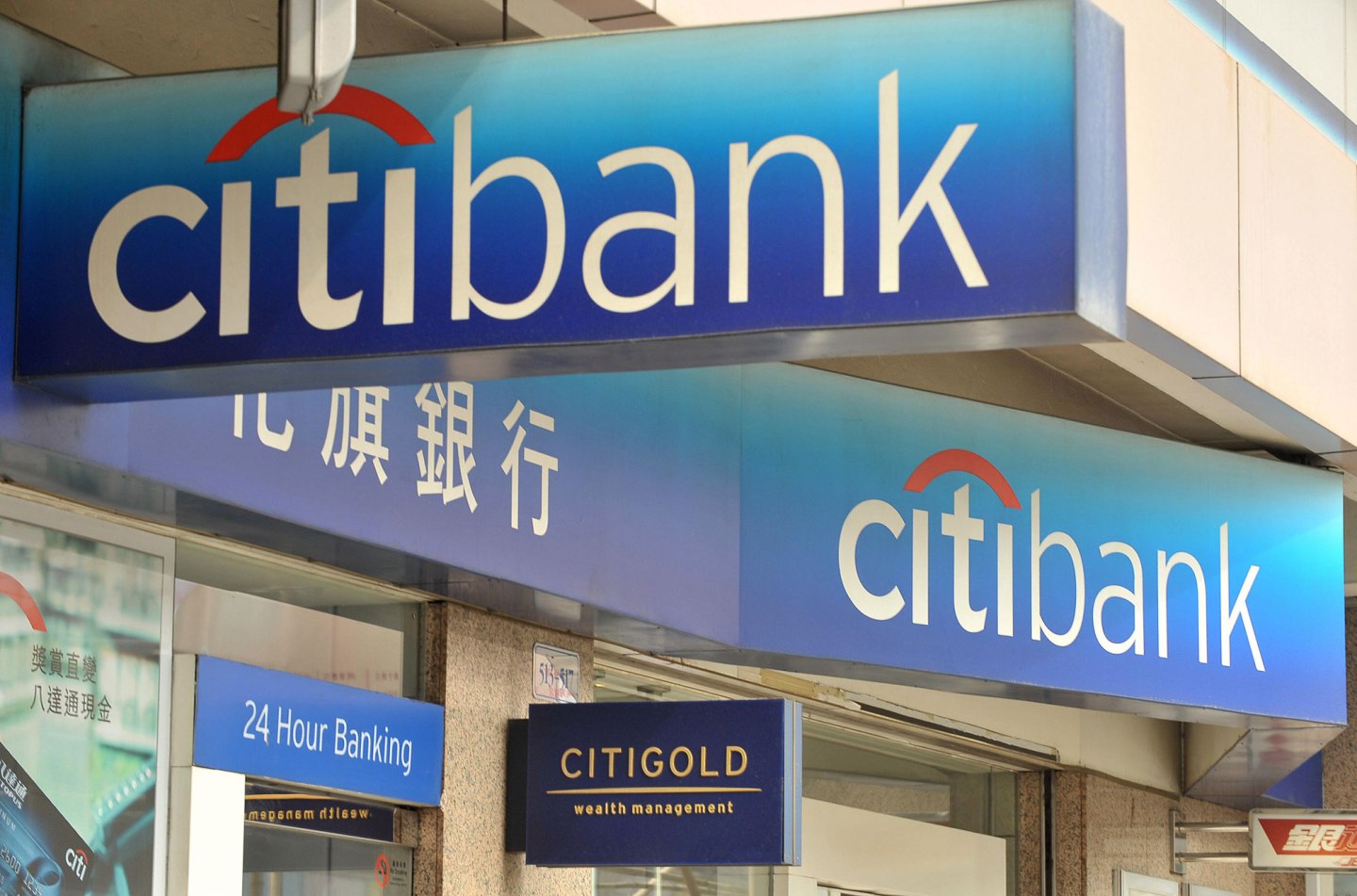
Mike Clarke/AFP—Getty Images

The conventional wisdom is that China doesn’t hold much direct risk for U.S. banks. Sure, if China were to have a financial crisis, and if it were to fall into recession — a long way to go, considering its recent annual growth of 7% — that would do serious damage to the global economy. American banks and the U.S. economy would feel that. But in terms of direct exposure to China, U.S. banks don’t stand to lose a lot.

According to a report last week from debt rating agency Fitch, U.S. banks have a collective $83 billion in direct loan exposure to China. That isn’t very much in the scope of the U.S. banking sector. JPMorgan Chase (JPM), alone, for instance, has over $700 billion in total loans. The entire U.S. banking sector has nearly $15 trillion in assets. For U.S. banks, China is still not that big of deal.

That appears to be changing, though. Fearing a credit bubble, a year ago, Chinese authorities sharply raised domestic interest rates to slow lending made by local banks. That opened up a huge gap between U.S. interest rates, which are around 0.50% for short-term interbank loans, and Chinese interest rates, which are 5% for short-term banks loans.

And so it appears there is easy money to be made borrowing money from the U.S. and Europe, and lending it in China. The trade’s been growing for a while, but it has attracted attention lately. And it’s a bit dicey, at least for the U.S. banks.

In the last week or so, a number of large banks have been trying to figure out if they were taken in a loan fraud scheme in which a Chinese commodities trading firm in the port of Qingdao pledged the same collateral to a number of lenders. The scheme has shed light on the fact that a large portion of the overseas lending that Chinese companies are doing to capture the interest rate spread has been with loans collateralized with commodities.

Goldman Sachs estimates that commodities-based lending has resulted in an inflow of $110 billion of foreign currency into the Chinese economy in the past four years, or about a third of all new short-term debt in China in that time.

Citigroup (C) appears to be the only large U.S. bank that has fallen victim to the Qingdao fraud. But most large U.S. banks make commodities-based loans, and the practice has been growing recently. Last year, banks around the world lent $687 billion to commodities-based businesses, according to Bloomberg, though much of those loans were made directly to the companies and secured by raw materials. JPMorgan was the top U.S. lender worldwide, at $57 billion, followed by Wells Fargo (WFC), which gave out $47 billion.

Many of these loans might not be factored in the estimates that Fitch and others have put together to calculate U.S. banks’ exposure to China. For instance, sometimes commodities loans are structured as derivatives or swaps. Fitch says its China loan estimates do not factor in derivatives or guarantees.

What’s more, when it comes to commodities, some banks might not even realize they are taking on China risk. The Citi loan that ended up sending money to China by way of the Qingdao port was made to Swiss commodities trading firm Mercuria. The commodities that Mercuria used to finance the loan were stored in Qingdao, on loan from a Chinese commodities company named Decheng Mining.

And unlike other types of lending, banks typically don’t break out just how much money they have lent out based on accounting. “I have never seen any bank balance sheet that has that information,” says Haoziang Zhu, an economics professor at MIT who has studied commodity-based lending. “It’s hard to track.”

And while the China-to-U.S. carry trade may seem like easy money, there are ways it can go bad. A drop in the yuan, which is down 3% in the past year, would cut into profits because a debtor company would need more of those to pay back the dollars they owe in the U.S. loan at the end of the transaction. Also, if you are financing a transaction with commodities, and commodities prices rise, that could erase some of your gains.

That said, as long as interest rates between the U.S. and China remain this wide, the China carry trade will carry on.

About the Author
By Stephen Gandel
See full bioRight Arrow Button Icon

Latest in Finance

Finance
Lorem ipsum dolor sit amet, consectetur adipiscing elit, sed do eiusmod tempor incididunt ut labore et dolore magna aliqua. Ut enim ad minim veniam
By Fortune Editors
October 20, 2025
Finance
Lorem ipsum dolor sit amet, consectetur adipiscing elit, sed do eiusmod tempor incididunt ut labore et dolore magna aliqua. Ut enim ad minim veniam
By Fortune Editors
October 20, 2025
Finance
Lorem ipsum dolor sit amet, consectetur adipiscing elit, sed do eiusmod tempor incididunt ut labore et dolore magna aliqua. Ut enim ad minim veniam
By Fortune Editors
October 20, 2025
Finance
Lorem ipsum dolor sit amet, consectetur adipiscing elit, sed do eiusmod tempor incididunt ut labore et dolore magna aliqua. Ut enim ad minim veniam
By Fortune Editors
October 20, 2025
Finance
Lorem ipsum dolor sit amet, consectetur adipiscing elit, sed do eiusmod tempor incididunt ut labore et dolore magna aliqua. Ut enim ad minim veniam
By Fortune Editors
October 20, 2025
Finance
Lorem ipsum dolor sit amet, consectetur adipiscing elit, sed do eiusmod tempor incididunt ut labore et dolore magna aliqua. Ut enim ad minim veniam
By Fortune Editors
October 20, 2025

Most Popular

Finance
Lorem ipsum dolor sit amet, consectetur adipiscing elit, sed do eiusmod tempor incididunt ut labore et dolore magna aliqua. Ut enim ad minim veniam
By Fortune Editors
October 20, 2025
Finance
Lorem ipsum dolor sit amet, consectetur adipiscing elit, sed do eiusmod tempor incididunt ut labore et dolore magna aliqua. Ut enim ad minim veniam
By Fortune Editors
October 20, 2025
Finance
Lorem ipsum dolor sit amet, consectetur adipiscing elit, sed do eiusmod tempor incididunt ut labore et dolore magna aliqua. Ut enim ad minim veniam
By Fortune Editors
October 20, 2025
Finance
Lorem ipsum dolor sit amet, consectetur adipiscing elit, sed do eiusmod tempor incididunt ut labore et dolore magna aliqua. Ut enim ad minim veniam
By Fortune Editors
October 20, 2025
Finance
Lorem ipsum dolor sit amet, consectetur adipiscing elit, sed do eiusmod tempor incididunt ut labore et dolore magna aliqua. Ut enim ad minim veniam
By Fortune Editors
October 20, 2025
Finance
Lorem ipsum dolor sit amet, consectetur adipiscing elit, sed do eiusmod tempor incididunt ut labore et dolore magna aliqua. Ut enim ad minim veniam
By Fortune Editors
October 20, 2025
Fortune Secondary Logo
Rankings
  • 100 Best Companies
  • Fortune 500
  • Global 500
  • Fortune 500 Europe
  • Most Powerful Women
  • Future 50
  • World’s Most Admired Companies
  • See All Rankings
Sections
  • Finance
  • Fortune Crypto
  • Features
  • Leadership
  • Health
  • Commentary
  • Success
  • Retail
  • Mpw
  • Tech
  • Lifestyle
  • CEO Initiative
  • Asia
  • Politics
  • Conferences
  • Europe
  • Newsletters
  • Personal Finance
  • Environment
  • Magazine
  • Education
Customer Support
  • Frequently Asked Questions
  • Customer Service Portal
  • Privacy Policy
  • Terms Of Use
  • Single Issues For Purchase
  • International Print
Commercial Services
  • Advertising
  • Fortune Brand Studio
  • Fortune Analytics
  • Fortune Conferences
  • Business Development
About Us
  • About Us
  • Editorial Calendar
  • Press Center
  • Work At Fortune
  • Diversity And Inclusion
  • Terms And Conditions
  • Site Map
Fortune Secondary Logo
  • About Us
  • Editorial Calendar
  • Press Center
  • Work At Fortune
  • Diversity And Inclusion
  • Terms And Conditions
  • Site Map
  • Facebook icon
  • Twitter icon
  • LinkedIn icon
  • Instagram icon
  • Pinterest icon

Latest in Finance

CybersecurityMeta
Trump’s FTC backs off social media regulation despite finding that nearly 20% of America’s children are online for 4 hours or more
By Catherina GioinoFebruary 27, 2026
60 minutes ago
Personal FinanceInsurance
State Farm is doling out $100 checks to 49 million customers. Here’s who qualifies and how to get paid
By Sydney LakeFebruary 27, 2026
3 hours ago
Aerial view of a data center under construction in Ohio.
EconomyEconomics
Before AI gains materialize, governments will have to deal with a ‘policy tradeoff,’ Moody’s says: How to handle the massive spending and debt risk
By Tristan BoveFebruary 27, 2026
3 hours ago
Graphic depicting a coin reads, Fortune Crypto: Facebook Crypto 2.0
CryptoCrypto Playbook
Facebook’s first crypto push set off a firestorm. This time around, its plans are met with a shrug
By Jeff John RobertsFebruary 27, 2026
4 hours ago
Personal Financewealth management
The Great Wealth Transfer is already happening as millennials hitting their ‘Peak 35’ are richer than ever
By Catherina GioinoFebruary 27, 2026
5 hours ago
Low angle view of male carpenters working on rooftop of construction frame
EconomyU.S. economy
More people are moving out of the U.S. than moving in for the first time since the Great Depression—a bad omen for the $38.8 trillion national debt
By Tristan BoveFebruary 27, 2026
5 hours ago

Most Popular

placeholder alt text
Innovation
An MIT roboticist who cofounded bankrupt robot vacuum maker iRobot says Elon Musk’s vision of humanoid robot assistants is ‘pure fantasy thinking’
By Marco Quiroz-GutierrezFebruary 25, 2026
2 days ago
placeholder alt text
Success
Jeff Bezos says being lazy, not working hard, is the root of anxiety: ‘The stress goes away the second I take that first step’
By Sydney LakeFebruary 25, 2026
2 days ago
placeholder alt text
Economy
Trump claims America is ‘winning so much.’ The IMF agrees, adding that Trump’s trade policies are the only thing holding it back from even more
By Tristan BoveFebruary 26, 2026
1 day ago
placeholder alt text
Commentary
'The Pitt': a masterclass display of DEI in action 
By Robert RabenFebruary 26, 2026
1 day ago
placeholder alt text
Economy
It’s more than George Clooney moving to France: America is becoming the ‘uncool’ country that people want to move away from
By Nick LichtenbergFebruary 27, 2026
15 hours ago
placeholder alt text
Success
Gen Z Olympic champion Eileen Gu says she rewires her brain daily to be more successful—and multimillionaire founder Arianna Huffington says it really does work
By Orianna Rosa RoyleFebruary 25, 2026
2 days ago

© 2026 Fortune Media IP Limited. All Rights Reserved. Use of this site constitutes acceptance of our Terms of Use and Privacy Policy | CA Notice at Collection and Privacy Notice | Do Not Sell/Share My Personal Information
FORTUNE is a trademark of Fortune Media IP Limited, registered in the U.S. and other countries. FORTUNE may receive compensation for some links to products and services on this website. Offers may be subject to change without notice.