• Home
  • News
  • Fortune 500
  • Tech
  • Finance
  • Leadership
  • Lifestyle
  • Rankings
  • Multimedia
CommentaryAmazon Go

Commentary: This Is Amazon Go’s Real Innovation

By
Per Bylund
Per Bylund
and
Bethany Cianciolo
Bethany Cianciolo
Down Arrow Button Icon
By
Per Bylund
Per Bylund
and
Bethany Cianciolo
Bethany Cianciolo
Down Arrow Button Icon
April 20, 2018, 5:17 PM ET
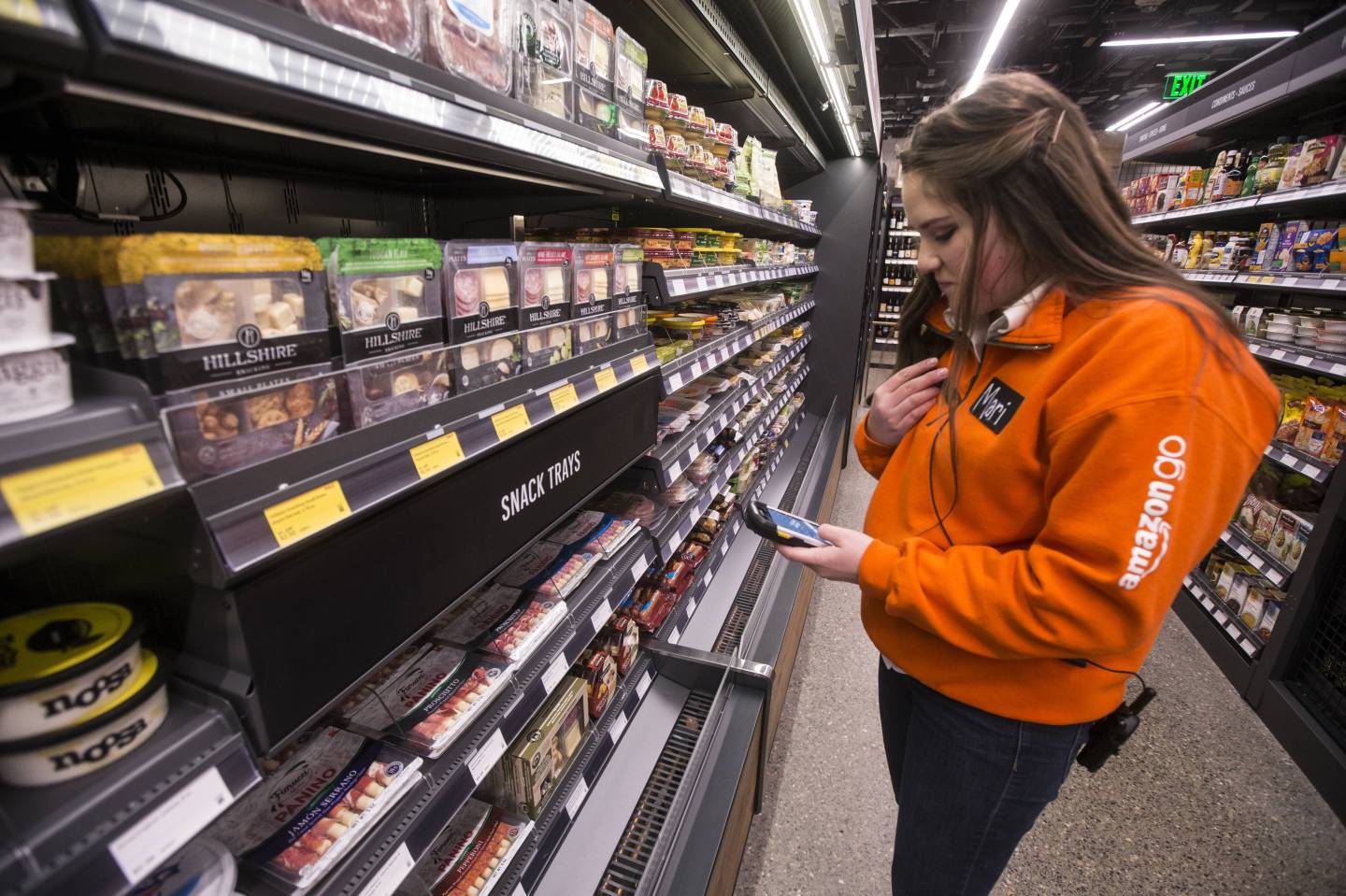
Amazon Opens First Cashierless Convenience Store In Seattle
SEATTLE, WA - JANUARY 22: Amazon Go employee Mari Avellaneda stocks shelves using a mobile device at the Amazon Go store, on January 22, 2018 in Seattle, Washington. After more than a year in beta Amazon opened the cashier-less store to the public. (Photo by Stephen Brashear/Getty Images)Stephen Brashear—Getty Images

In this year’s letter to Amazon (AMZN) shareholders, released earlier this week, CEO Jeff Bezos extolled the value of high expectations. “We didn’t ascend from our hunter-gatherer days by being satisfied,” he wrote. Among the products that Bezos summarized was the company’s new shopping concept, Amazon Go.

“Since opening, we’ve been thrilled to hear many customers refer to their shopping experience as ‘magical,’” Bezos wrote. “What makes the magic possible is a custom-built combination of computer vision, sensor fusion, and deep learning, which come together to create Just Walk Out shopping.”

Innovation is a tricky thing. Too much change too quickly, and consumers will shun the advancement. Microsoft (MSFT) knows this well, having unsuccessfully launched the Tablet PC nearly a decade before iPads hit shelves.

Going too far or arriving too early is just as bad as arriving late to an industry trend—your company’s expectations can’t overshoot the customer’s expectations. Bad timing leads to losses. To disrupt the marketplace, businesses must show consumers the obvious value of the innovation before they make them feel comfortable enough to try it.

Bezos is right: The new Amazon Go store absolutely nailed that execution. The cashier-less shopping experience is a (rather obvious) next step toward automation, but it’s not so shocking that customers feel uncomfortable with the experience.

The real innovation of Amazon Go, however, is not the lack of cashiers. Amazon’s true endgame is what comes next: the end of the traditional grocery store.

A world without grocery stores

The usefulness of grocery stores is based on outdated thinking and old technology. We travel to hubs to buy food because we are used to it, but it makes little sense to ask customers to congregate in modern-day market squares. Convenience has become increasingly important to shoppers over the years, and consumers would rather select items online and have them delivered right to their doors.

Stores don’t bring goods to consumers; they bring consumers to goods. Combine Amazon’s shipping and subscription power with its acquisition of Whole Foods and add a dash of drone delivery and smart doorbells, and the result is a more sensible, convenient alternative to traditional retail.

Amazon Go took one small step toward convenience, but its true purpose is expanding the company’s footprint to get people comfortable with Amazon-provided food. Once people get used to the idea of dinner from Amazon, they will begin to wonder why they even need to go to the store. Why not make a few selections from home? Why not have the fridge automatically reorder staple items?

Grocery operations, too, could benefit from this change. Delivery-oriented services would allow stores to spend less money on prime real estate. Perhaps grocery stores would invest in warehouses outside city limits, using fleets of delivery drivers and drones instead. Whatever the result, the future of groceries looks nothing like the present.

Time for a change

Lovers of the grocery store experience can rest easy for now, though. Consumers are not yet willing to change their behavior so drastically. Amazon will use this opportunity to gather data on behavior and product complements, feeding that data to artificial intelligence to design a more intuitive experience.

Of course, Amazon is not likely to shut down its Whole Foods locations or stop opening new stores—it still needs to compete in the current model. Instead, Amazon will cut costs and test new technology along the way. Perhaps Amazon will open its warehouses for customers to pick up items without any need to interact with workers.

Grocery stores will not disappear tomorrow, but the way we buy food will change sooner than many realize. In the future, traditional stores will continue to exist as luxury options. In the same way that people pay for private tutors and small-class education over public schools, some consumers will opt for the traditional grocery experience. Service-oriented stores feel familiar, but they are an increasingly inefficient way to buy goods as distribution logistics improve.

We already buy everything online. With the Internet of Things revolution gaining steam, why shouldn’t our cabinets and refrigerators stock themselves? Why should we waste our time? Amazon understands this shift, and its debut of Amazon Go stores is the beginning of the end for grocery stores as we know them.

Per Bylund is assistant professor of entrepreneurship and Records-Johnston Professor of Free Enterprise in the School of Entrepreneurship at Oklahoma State University. His areas of research are entrepreneurship, management, and economic organization. Connect with him on Twitter.

About the Authors
By Per Bylund
See full bioRight Arrow Button Icon
By Bethany Cianciolo
See full bioRight Arrow Button Icon

Latest in Commentary

Matt Rogers
CommentaryInfrastructure
I built the first iPhone with Steve Jobs. The AI industry is at risk of repeating an early smartphone mistake
By Matt RogersDecember 4, 2025
2 hours ago
Jerome Powell
CommentaryFederal Reserve
Fed officials like the mystique of being seen as financial technocrats, but it’s time to demystify the central bank
By Alexander William SalterDecember 4, 2025
2 hours ago
Rakesh Kumar
CommentarySemiconductors
China does not need Nvidia chips in the AI war — export controls only pushed it to build its own AI machine
By Rakesh KumarDecember 3, 2025
1 day ago
Rochelle Witharana is Chief Financial and Investment Officer for The California Wellness Foundation
Commentarydiversity and inclusion
Fund managers from diverse backgrounds are delivering standout returns and the smart money is slowly starting to pay attention
By Rochelle WitharanaDecember 3, 2025
1 day ago
Ayesha and Stephen Curry (L) and Arndrea Waters King and Martin Luther King III (R), who are behind Eat.Play.Learn and Realize the Dream, respectively.
Commentaryphilanthropy
Why time is becoming the new currency of giving
By Arndrea Waters King and Ayesha CurryDecember 2, 2025
2 days ago
Trump
CommentaryTariffs and trade
The trade war was never going to fix our deficit
By Daniel BunnDecember 2, 2025
2 days ago

Most Popular

placeholder alt text
North America
Jeff Bezos and Lauren Sánchez Bezos commit $102.5 million to organizations combating homelessness across the U.S.: ‘This is just the beginning’
By Sydney LakeDecember 2, 2025
2 days ago
placeholder alt text
Economy
Ford workers told their CEO 'none of the young people want to work here.' So Jim Farley took a page out of the founder's playbook
By Sasha RogelbergNovember 28, 2025
6 days ago
placeholder alt text
Economy
Two months into the new fiscal year and the U.S. government is already spending more than $10 billion a week servicing national debt
By Eleanor PringleDecember 4, 2025
4 hours ago
placeholder alt text
North America
Anonymous $50 million donation helps cover the next 50 years of tuition for medical lab science students at University of Washington
By The Associated PressDecember 2, 2025
2 days ago
placeholder alt text
Economy
Scott Bessent calls the Giving Pledge well-intentioned but ‘very amorphous,’ growing from ‘a panic among the billionaire class’
By Nick LichtenbergDecember 3, 2025
22 hours ago
placeholder alt text
Innovation
Google CEO Sundar Pichai says we’re just a decade away from a new normal of extraterrestrial data centers
By Sasha RogelbergDecember 1, 2025
3 days ago
Rankings
  • 100 Best Companies
  • Fortune 500
  • Global 500
  • Fortune 500 Europe
  • Most Powerful Women
  • Future 50
  • World’s Most Admired Companies
  • See All Rankings
Sections
  • Finance
  • Leadership
  • Success
  • Tech
  • Asia
  • Europe
  • Environment
  • Fortune Crypto
  • Health
  • Retail
  • Lifestyle
  • Politics
  • Newsletters
  • Magazine
  • Features
  • Commentary
  • Mpw
  • CEO Initiative
  • Conferences
  • Personal Finance
  • Education
Customer Support
  • Frequently Asked Questions
  • Customer Service Portal
  • Privacy Policy
  • Terms Of Use
  • Single Issues For Purchase
  • International Print
Commercial Services
  • Advertising
  • Fortune Brand Studio
  • Fortune Analytics
  • Fortune Conferences
  • Business Development
About Us
  • About Us
  • Editorial Calendar
  • Press Center
  • Work At Fortune
  • Diversity And Inclusion
  • Terms And Conditions
  • Site Map

© 2025 Fortune Media IP Limited. All Rights Reserved. Use of this site constitutes acceptance of our Terms of Use and Privacy Policy | CA Notice at Collection and Privacy Notice | Do Not Sell/Share My Personal Information
FORTUNE is a trademark of Fortune Media IP Limited, registered in the U.S. and other countries. FORTUNE may receive compensation for some links to products and services on this website. Offers may be subject to change without notice.