• Home
  • Latest
  • Fortune 500
  • Finance
  • Tech
  • Leadership
  • Lifestyle
  • Rankings
  • Multimedia
Commentaryfreedom of speech

How the Justice Department’s Facebook Subpoenas Threaten Free Speech

By
Aziz Huq
Aziz Huq
and
Bethany Cianciolo
Bethany Cianciolo
Down Arrow Button Icon
By
Aziz Huq
Aziz Huq
and
Bethany Cianciolo
Bethany Cianciolo
Down Arrow Button Icon
October 11, 2017, 10:31 AM ET
Social Media Apps And Computer Keyboards
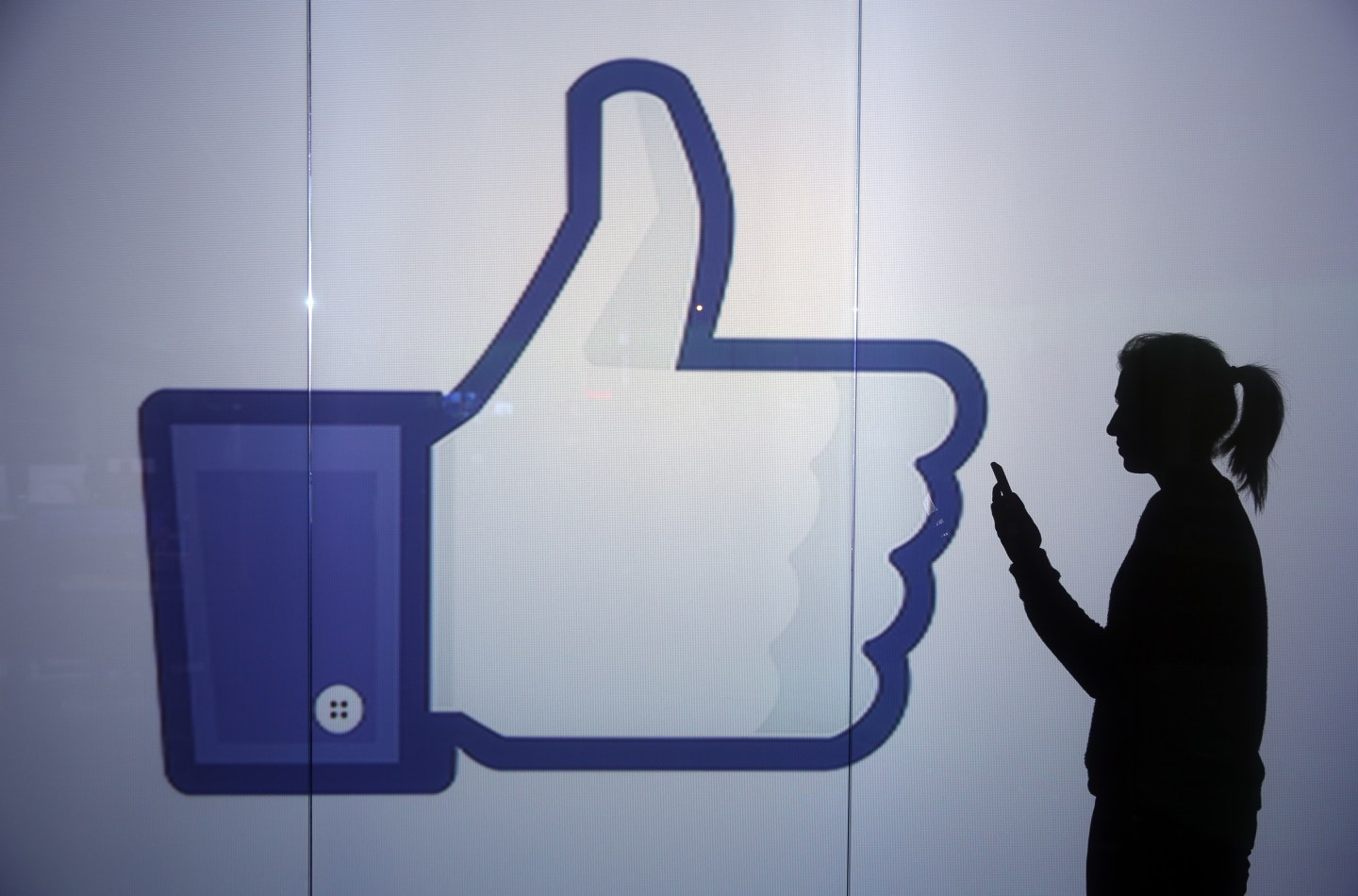
A woman stands and checks her smartphone whilst framed against an illuminated wall bearing Facebook Inc.s 'Thumbs Up' symbol in this arranged photograph in London, U.K., on Wednesday, Dec. 23, 2015. Facebook Inc.s WhatsApp messaging service, with more than 100 million local users, is the most-used app in Brazil, according to an Ibope poll published on Dec. 15. Photographer: Chris Ratcliffe/Bloomberg via Getty ImagesChris Ratcliffe/Bloomberg via Getty Images

In recent months, the U.S. Justice Department has issued subpoenas against Facebook (FB) and web host DreamHost for records of thousands, perhaps millions, of citizens who expressed interest in protesting President Trump’s inauguration. Such requests, while perhaps well-intentioned, impinge on constitutional values embodied in the First, Fourth, and Fifth amendments. And worryingly, there is no good way now to ensure such values are respected.

Prosecutors often subpoena businesses for personal and revealing documents in white-collar and criminal cases. During the Whitewater investigation in 1998, Independent Counsel Kenneth Starr demanded records from the Washington, D.C. bookstore Kramerbooks respecting President Clinton’s purchases. Five years earlier, Senate investigators subpoenaed Sen. Bob Packwood’s diaries. And the reporter who obtained Judge Robert Bork’s video rental records in 1987 could as easily have been a zealous prosecutor.

Social media and web-hosted platforms generate business records much like bookstores, libraries, and video stores—just at a much higher rate, and entangling many more people. The Justice Department’s request to DreamHost, for example, potentially swept in 1.3 million people.

Prosecutors often have legitimate interests in these records. The ongoing Las Vegas investigation into gunman Stephen Paddock, for example, will properly reach records of his online activity. Many terrorist investigations hinge on tracking suspects’ interactions with online radicalizers, necessitating the acquisition of records.

At the same time, subpoenas pose challenges to privacy and political freedom. First, the specter of wide-ranging government power to acquire records of online interactions might alter people’s behavior, allowing government to subtly influence the shape of public debate. Second, subpoenas respecting online conduct allow government to identify those with divergent views—and to target them for harassment or punishment.

These are precisely the concerns that led to James Madison’s drafting of provisions in the Bill of Rights in 1791 to protect not just a right of free speech, but also rights against unreasonable searches and seizures and compelled self-incrimination under the Fourth and Fifth amendments, respectively.

A key case that the Bill of Rights’ framers knew well was the 1763 decision in Wilkes v. Wood. Parliamentarian John Wilkes was a loud critic of the prime minister. After Wilkes published an especially stinging pamphlet, his home was raided for inculpatory papers. In a case closely watched in the colonies, Wilkes then sued for damages—and won.

In 1886, the Supreme Court faced its first important case on the meaning of Fourth and Fifth amendments. Edward Boyd, a glass merchant, challenged a government subpoena for documents related to alleged evasion of customs duties. Drawing on the Wilkes case and other Founding era precedent, the Court held that a subpoena for “a man’s private papers,” apparently including business records, was per se a violation of the Fourth and Fifth amendments.

In the first half of the 20th century, the Court retreated from this formulation in the face of growing demands by the emerging New Deal regulatory state for more investigative powers. In 1976, it withdrew Fourth Amendment protection for private papers held by a third party. In 1973 and 1976, it held that subpoenas for documents from third parties no longer raised a Fifth Amendment issue. The Boyd rule, once thought the foundation of civil liberty, was dead.


Although some justices have lately registered some awareness of the important constitutional issues raised by data held by third-party online intermediaries, the Court has so far failed to reconsider its abandonment of Boyd’s rule.

In this vacuum, Congress might have stepped in. True, it did respond to the Bork videos story by enacting the Video Privacy Protection Act in 1988. And, it passed the Stored Communications Act (SCA) in 1986, which now provides a primitive framework for regulating government acquisition of online-related data. But the SCA—written for the Internet circa 1986—is now about as technologically up to date as Judge Bork’s VCR.

The net result is that there are no reliable guideposts to help even well-meaning government lawyers manage these competing concerns. The failure means that there’s no sure way to ensure that both legitimate investigative ends and constitutional values are respected in the current Facebook/DreamHost investigation. It’s a failure we can’t blame the Framers for—only Congress and the Court.

Aziz Huq is the Frank and Bernice J. Greenberg Professor of Law at the University of Chicago Law School.

About the Authors
By Aziz Huq
See full bioRight Arrow Button Icon
By Bethany Cianciolo
See full bioRight Arrow Button Icon

Latest in Commentary

Finance
Lorem ipsum dolor sit amet, consectetur adipiscing elit, sed do eiusmod tempor incididunt ut labore et dolore magna aliqua. Ut enim ad minim veniam
By Fortune Editors
October 20, 2025
Finance
Lorem ipsum dolor sit amet, consectetur adipiscing elit, sed do eiusmod tempor incididunt ut labore et dolore magna aliqua. Ut enim ad minim veniam
By Fortune Editors
October 20, 2025
Finance
Lorem ipsum dolor sit amet, consectetur adipiscing elit, sed do eiusmod tempor incididunt ut labore et dolore magna aliqua. Ut enim ad minim veniam
By Fortune Editors
October 20, 2025
Finance
Lorem ipsum dolor sit amet, consectetur adipiscing elit, sed do eiusmod tempor incididunt ut labore et dolore magna aliqua. Ut enim ad minim veniam
By Fortune Editors
October 20, 2025
Finance
Lorem ipsum dolor sit amet, consectetur adipiscing elit, sed do eiusmod tempor incididunt ut labore et dolore magna aliqua. Ut enim ad minim veniam
By Fortune Editors
October 20, 2025
Finance
Lorem ipsum dolor sit amet, consectetur adipiscing elit, sed do eiusmod tempor incididunt ut labore et dolore magna aliqua. Ut enim ad minim veniam
By Fortune Editors
October 20, 2025

Most Popular

Finance
Lorem ipsum dolor sit amet, consectetur adipiscing elit, sed do eiusmod tempor incididunt ut labore et dolore magna aliqua. Ut enim ad minim veniam
By Fortune Editors
October 20, 2025
Finance
Lorem ipsum dolor sit amet, consectetur adipiscing elit, sed do eiusmod tempor incididunt ut labore et dolore magna aliqua. Ut enim ad minim veniam
By Fortune Editors
October 20, 2025
Finance
Lorem ipsum dolor sit amet, consectetur adipiscing elit, sed do eiusmod tempor incididunt ut labore et dolore magna aliqua. Ut enim ad minim veniam
By Fortune Editors
October 20, 2025
Finance
Lorem ipsum dolor sit amet, consectetur adipiscing elit, sed do eiusmod tempor incididunt ut labore et dolore magna aliqua. Ut enim ad minim veniam
By Fortune Editors
October 20, 2025
Finance
Lorem ipsum dolor sit amet, consectetur adipiscing elit, sed do eiusmod tempor incididunt ut labore et dolore magna aliqua. Ut enim ad minim veniam
By Fortune Editors
October 20, 2025
Finance
Lorem ipsum dolor sit amet, consectetur adipiscing elit, sed do eiusmod tempor incididunt ut labore et dolore magna aliqua. Ut enim ad minim veniam
By Fortune Editors
October 20, 2025
Rankings
  • 100 Best Companies
  • Fortune 500
  • Global 500
  • Fortune 500 Europe
  • Most Powerful Women
  • Future 50
  • World’s Most Admired Companies
  • See All Rankings
Sections
  • Finance
  • Leadership
  • Success
  • Tech
  • Asia
  • Europe
  • Environment
  • Fortune Crypto
  • Health
  • Retail
  • Lifestyle
  • Politics
  • Newsletters
  • Magazine
  • Features
  • Commentary
  • Mpw
  • CEO Initiative
  • Conferences
  • Personal Finance
  • Education
Customer Support
  • Frequently Asked Questions
  • Customer Service Portal
  • Privacy Policy
  • Terms Of Use
  • Single Issues For Purchase
  • International Print
Commercial Services
  • Advertising
  • Fortune Brand Studio
  • Fortune Analytics
  • Fortune Conferences
  • Business Development
About Us
  • About Us
  • Editorial Calendar
  • Press Center
  • Work At Fortune
  • Diversity And Inclusion
  • Terms And Conditions
  • Site Map
  • Facebook icon
  • Twitter icon
  • LinkedIn icon
  • Instagram icon
  • Pinterest icon

Most Popular

placeholder alt text
Success
In 2026, many employers are ditching merit-based pay bumps in favor of ‘peanut butter raises’
By Emma BurleighFebruary 2, 2026
3 days ago
placeholder alt text
Economy
Trump may have shot himself in the foot at the Fed, as Powell could stay on while Miran resigns from White House post
By Eleanor PringleFebruary 4, 2026
13 hours ago
placeholder alt text
Investing
Tech stocks go into free fall as it dawns on traders that AI has the ability to cut revenues across the board
By Jim EdwardsFebruary 4, 2026
18 hours ago
placeholder alt text
Cybersecurity
Top AI leaders are begging people not to use Moltbook, a social media platform for AI agents: It’s a ‘disaster waiting to happen’
By Eva RoytburgFebruary 2, 2026
2 days ago
placeholder alt text
North America
Gates Foundation doubles down on foreign aid as U.S. government largely withdraws
By Thalia Beaty and The Associated PressFebruary 3, 2026
2 days ago
placeholder alt text
Politics
Peter Thiel warns the Antichrist and apocalypse are linked to the ‘end of modernity’ currently happening—and cites Greta Thunberg as a driving example
By Nick LichtenbergFebruary 4, 2026
9 hours ago

© 2026 Fortune Media IP Limited. All Rights Reserved. Use of this site constitutes acceptance of our Terms of Use and Privacy Policy | CA Notice at Collection and Privacy Notice | Do Not Sell/Share My Personal Information
FORTUNE is a trademark of Fortune Media IP Limited, registered in the U.S. and other countries. FORTUNE may receive compensation for some links to products and services on this website. Offers may be subject to change without notice.


Latest in Commentary

disney
CommentaryDisney
Disney’s new D’Amaro-land:  a dream team succession saga comes to life
By Jeffrey Sonnenfeld and Stephen HenriquesFebruary 4, 2026
12 hours ago
minnesota
CommentaryMinnesota
I’ve studied nonviolent resistance in war zones for 20 years and Minnesota reminds me of Colombia, the Philippines and Syria
By Oliver Kaplan and The ConversationFebruary 3, 2026
1 day ago
MagazineLetter from London
Oracle billionaire Larry Ellison’s next big bet: Redefining how long–and how well–we live
By Kamal AhmedFebruary 3, 2026
2 days ago
davos
CommentaryCareers
While elites debate geopolitics, Americans are rethinking college in the search for economic mobility
By Ed MitzenFebruary 3, 2026
2 days ago
american dream
CommentaryCapitalism
We need more capitalists, not necessarily more capitalism
By Seth Levine and Elizabeth MacBrideFebruary 3, 2026
2 days ago
pretti
CommentaryLeadership
What should business leaders say about Alex Pretti’s death?
By Deepak MalhotraFebruary 3, 2026
2 days ago