• Home
  • News
  • Fortune 500
  • Tech
  • Finance
  • Leadership
  • Lifestyle
  • Rankings
  • Multimedia
Commentary

Here’s When Having a Self-Driving Car Will Be a Normal Thing

By
Gene Munster
Gene Munster
Down Arrow Button Icon
By
Gene Munster
Gene Munster
Down Arrow Button Icon
September 13, 2017, 4:02 PM ET

The self-driving car revolution is gaining speed—and will change our everyday lives in ways big and small.

In recent weeks, announcements from technology companies, governments, and carmakers have accelerated the inevitable transition to safer, more sustainable, and more efficient transportation systems. While this transition may take longer than industry leaders hope, its eventual impact on society is hard to overstate.

For starters, lives will be saved. The World Health Organization estimates that there were about 1.25 million traffic fatalities worldwide in 2013. Self-driving cars will eliminate human error and distraction, a major cause of those accidents. We’ll also have more free time (albeit in a car). According to the U.S. Census, the average American commutes more than 26 minutes each way, or 500 days spent commuting per lifetime. In an autonomous car, we’ll be able to use this time for work or leisure. Finally, consumers will save money as autonomous ride-sharing fleets reduce the cost of transportation.

So, when will we be able to enjoy the benefits of a self-driving car? Tesla CEO Elon Musk claims that we are two years away from “sleeping in our cars.” Kyle Vogt, CEO of General Motors-owned Cruise Automation, announced this week that GM has built “the world’s first mass-producible car designed to operate without a driver” based on the Chevrolet Bolt. However, even Vogt acknowledges that GM is waiting on improvements in self-driving software and legislation to make his vision a reality.

Today, 99.9% of all vehicles on the road do not have the technology to enable full autonomy. Self-driving cars won’t hit our roads in a noticeable way until 2020. But by 2040, we estimate that 95% of new vehicles sold, or 96.3 million cars, will be fully autonomous—a $3.6 trillion opportunity.

Big opportunities draw big competition. Tech companies that pride themselves on expertly integrating hardware and software (the basic ingredients of a self-driving car), namely Google, Tesla, and Apple, are looking to beat traditional carmakers at their own game. And they appear to be winning—both Google and Tesla have driven millions of miles autonomously.

Some traditional carmakers can and will transition successfully to the autonomous future, but these tech companies, with deep expertise in computer vision and artificial intelligence, are meaningfully ahead. Automakers will compete on brand recognition and manufacturing capability; however, in order to implement core self-driving technology, they will need to buy and integrate the technology, as GM has done with Cruise.

Aside from the automotive industry itself, the self-driving vehicle revolution will upend many multi-billion dollar industries: trucking and delivery, auto insurance providers, energy companies, auto parts suppliers, dealerships, parking lots, and ride-sharing services.

Companies in those sectors have more to lose than to gain from autonomy, but society is the big winner. We’ll benefit from fewer traffic accidents, a reduced reliance on fossil fuels, more affordable transportation options, and more free time.

A final thought for those of us who love to drive and dread the thought of an autonomous car: You’ll have your chance to drive, but it will become a hobby, like horseback riding. And you’ll have plenty of time to prepare for your drive on the way to the track—in your self-driving car.

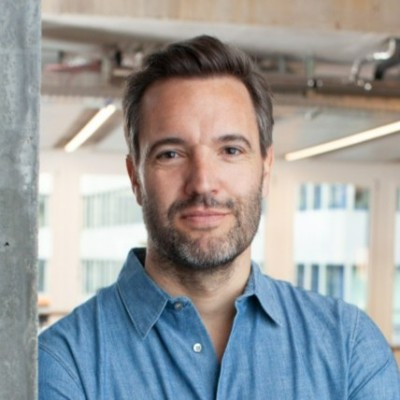
Gene Munster is a managing partner at Loup Ventures. You can follow Loup Ventures on Twitter@LoupVentures.

About the Author
By Gene Munster
See full bioRight Arrow Button Icon

Latest in Commentary

Ayesha and Stephen Curry (L) and Arndrea Waters King and Martin Luther King III (R), who are behind Eat.Play.Learn and Realize the Dream, respectively.
Commentaryphilanthropy
Why time is becoming the new currency of giving
By Arndrea Waters King and Ayesha CurryDecember 2, 2025
22 hours ago
Trump
CommentaryTariffs and trade
The trade war was never going to fix our deficit
By Daniel BunnDecember 2, 2025
23 hours ago
Elizabeth Kelly
CommentaryNon-Profit
At Anthropic, we believe that AI can increase nonprofit capacity. And we’ve worked with over 100 organizations so far on getting it right
By Elizabeth KellyDecember 2, 2025
24 hours ago
Decapitation
CommentaryLeadership
Decapitated by activists: the collapse of CEO tenure and how to fight back
By Mark ThompsonDecember 2, 2025
24 hours ago
David Risher
Commentaryphilanthropy
Lyft CEO: This Giving Tuesday, I’m matching every rider’s donation
By David RisherDecember 1, 2025
2 days ago
college
CommentaryTech
Colleges risk getting it backwards on AI and they may be hurting Gen Z job searchers
By Sarah HoffmanDecember 1, 2025
2 days ago

Most Popular

placeholder alt text
Economy
Ford workers told their CEO 'none of the young people want to work here.' So Jim Farley took a page out of the founder's playbook
By Sasha RogelbergNovember 28, 2025
5 days ago
placeholder alt text
Success
Warren Buffett used to give his family $10,000 each at Christmas—but when he saw how fast they were spending it, he started buying them shares instead
By Eleanor PringleDecember 2, 2025
1 day ago
placeholder alt text
North America
Jeff Bezos and Lauren Sánchez Bezos commit $102.5 million to organizations combating homelessness across the U.S.: ‘This is just the beginning’
By Sydney LakeDecember 2, 2025
22 hours ago
placeholder alt text
Economy
Elon Musk says he warned Trump against tariffs, which U.S. manufacturers blame for a turn to more offshoring and diminishing American factory jobs
By Sasha RogelbergDecember 2, 2025
21 hours ago
placeholder alt text
C-Suite
MacKenzie Scott's $19 billion donations have turned philanthropy on its head—why her style of giving actually works
By Sydney LakeDecember 2, 2025
1 day ago
placeholder alt text
North America
Anonymous $50 million donation helps cover the next 50 years of tuition for medical lab science students at University of Washington
By The Associated PressDecember 2, 2025
1 day ago
Rankings
  • 100 Best Companies
  • Fortune 500
  • Global 500
  • Fortune 500 Europe
  • Most Powerful Women
  • Future 50
  • World’s Most Admired Companies
  • See All Rankings
Sections
  • Finance
  • Leadership
  • Success
  • Tech
  • Asia
  • Europe
  • Environment
  • Fortune Crypto
  • Health
  • Retail
  • Lifestyle
  • Politics
  • Newsletters
  • Magazine
  • Features
  • Commentary
  • Mpw
  • CEO Initiative
  • Conferences
  • Personal Finance
  • Education
Customer Support
  • Frequently Asked Questions
  • Customer Service Portal
  • Privacy Policy
  • Terms Of Use
  • Single Issues For Purchase
  • International Print
Commercial Services
  • Advertising
  • Fortune Brand Studio
  • Fortune Analytics
  • Fortune Conferences
  • Business Development
About Us
  • About Us
  • Editorial Calendar
  • Press Center
  • Work At Fortune
  • Diversity And Inclusion
  • Terms And Conditions
  • Site Map

© 2025 Fortune Media IP Limited. All Rights Reserved. Use of this site constitutes acceptance of our Terms of Use and Privacy Policy | CA Notice at Collection and Privacy Notice | Do Not Sell/Share My Personal Information
FORTUNE is a trademark of Fortune Media IP Limited, registered in the U.S. and other countries. FORTUNE may receive compensation for some links to products and services on this website. Offers may be subject to change without notice.