Millennial women are worse off than those of the Baby Boomer generation in terms of economic equality, health, and overall wellbeing, according to a new report by the Population Reference Bureau.
By comparing 14 indicators of socioeconomic progress and well-being, PRB researchers found that Millennial and Generation X women are often subjected to higher poverty rates, are more likely to die from suicide or an overdose, and have higher incarceration rates, among other things. Millennial and Generation X women are also less likely to work in high-paying STEM—science, technology, engineering, and mathematics—fields, researchers found. These findings are drastically different from the women of the Baby Boomer generation, who saw rapid progress in those same areas when compared to the generation before them, according to the study.
Some of its findings:
—There’s been a 37% rise in the poverty rate among Millennial and Generation X women.
—1 in 4 workers in high-paying STEM fields were women in Generation X, but only 1 in 5 were Millennial women.
—The suicide rate for young women in the Millennial generation has gone up. According to the study, the rate has increased for Millennials to 6.3 per 100,000. That’s compared to 4.4 per 100,000 in Generation X.
—Between the World War II (also known as “The Greatest Generation”) and Millennial generations, women’s incarceration rates have increased 10-fold, researchers found.
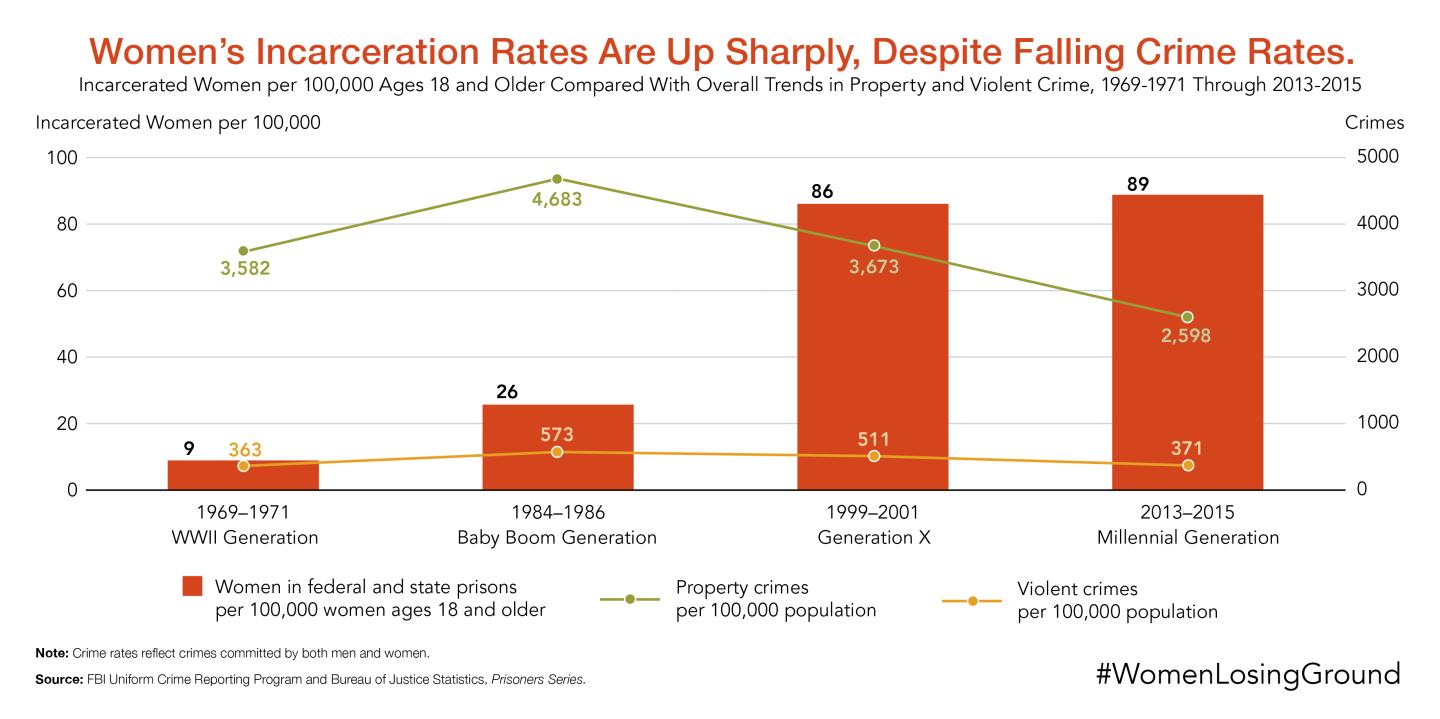
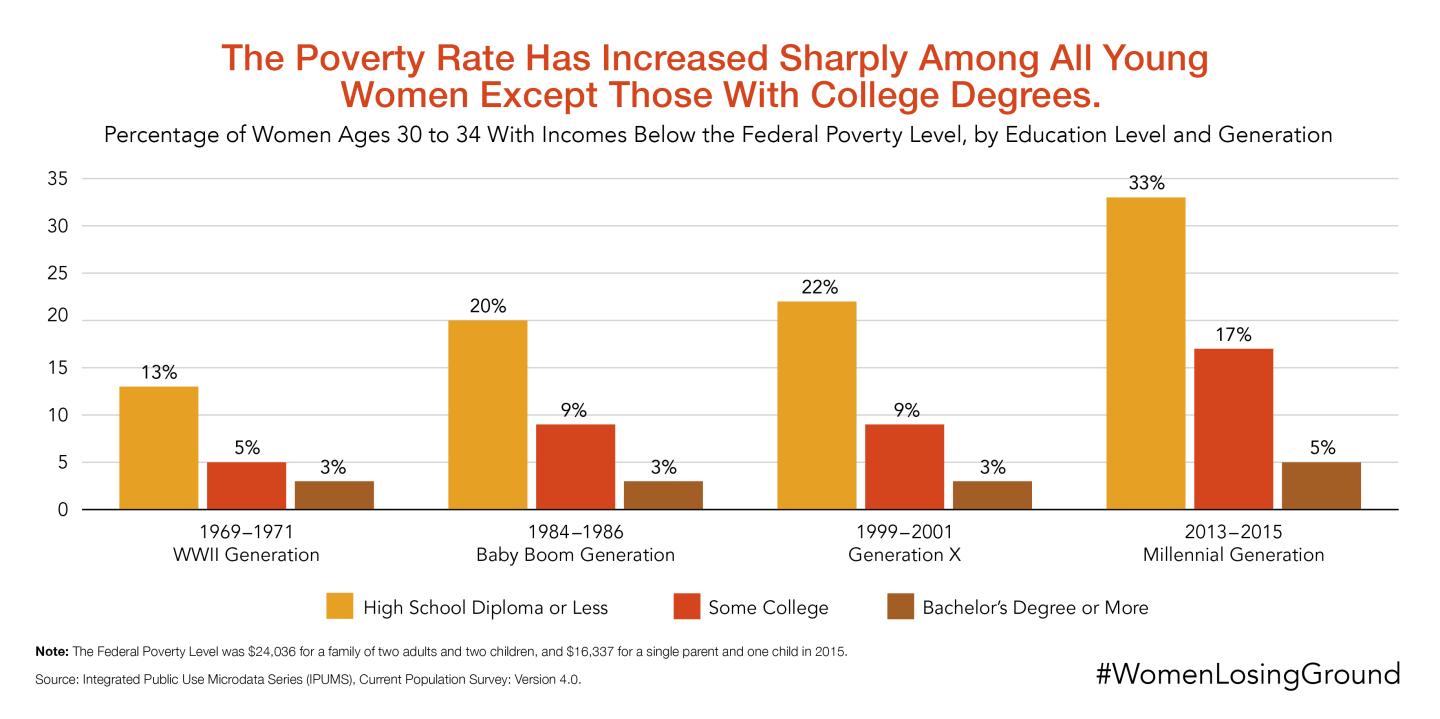
So why the stalled or reversed progress for women of younger generations? Researchers blame “social and structural barriers.” For example: The study found that Millennial and Generation X women face higher rates of maternal mortality than their Baby Boomer counterparts.
That’s partly because abortion policies were liberalized in the 1970s, causing maternal mortality rates fall dramatically. But in recent years, according to the study, “the maternal mortality rate rose as federal and state policies began restricting access to reproductive health services. In addition, improvements in fetal and infant care, designed to reduce infant mortality and improve child health, have not been paralleled by—and have sometimes come at the expense of—care for women in the postpartum period.”
The news isn’t all bad. Researchers concluded that Millennial women are more likely to earn a bachelor’s degree than previous generations, and teen birth rates are at an historic low. In terms of earnings and business ownership, the gender gap has narrowed from one generation to the next. More women are also participating in Congress. According to the study, the share of female legislators has increased from generation to generation. Female homicide rates are also on the decline, according to the study.
Still, in the overall index, the positives trends didn’t outweigh the negatives ones, the study notes.
“While some measures are improving, overall the index paints a picture of lost momentum,” said Beth Jarosz, an author of the study, in a statement. “Too many women lack the resources and supportive environments they need to live healthier lives and achieve their full potential.”