• Home
  • Latest
  • Fortune 500
  • Finance
  • Tech
  • Leadership
  • Lifestyle
  • Rankings
  • Multimedia

Trendingnow

1

Jensen Huang made his $172 billion fortune on AI chips. His family's $75 million gift to Vanderbilt argues art decides what technology is for

2

'The demographic dividend of the last 40 years is ending': J.P. Morgan says the world is running out of the two things that kept interest rates down

3

The $39 trillion U.S. national debt isn’t as high as Japan’s and Singapore’s relative to economy size—and yet it's still worse somehow

1

Jensen Huang made his $172 billion fortune on AI chips. His family's $75 million gift to Vanderbilt argues art decides what technology is for

2

'The demographic dividend of the last 40 years is ending': J.P. Morgan says the world is running out of the two things that kept interest rates down

3

The $39 trillion U.S. national debt isn’t as high as Japan’s and Singapore’s relative to economy size—and yet it's still worse somehow
Retail

This Startup Has a Natural Solution to the $2.6 Trillion Food Waste Problem

By
Beth Kowitt
Beth Kowitt
Down Arrow Button Icon
By
Beth Kowitt
Beth Kowitt
Down Arrow Button Icon
April 28, 2017, 9:20 AM ET
Add Fortune on Google for similar content.

By 2050 earth will be home to 9.7 billion people, all of whom must be fed using less land and fewer resources. And it will have to be done as climate change wreaks havoc on farmers.

“We need to build a system that allows us to feed the population in a much more efficient manner,” says James Rogers, CEO of Apeel Sciences.

But to Rogers, efficiency isn’t about growing more food. It’s about better utilizing the food that we already grow—a tremendous amount of which ends up spoiling before it ever reaches consumers. The U.N.’s Food and Agriculture Organizations estimates that the global cost of food waste is a whopping $2.6 trillion per year.

Rogers’ startup is attempting to solve the waste problem by prolonging the shelf life of produce—about a third of which ends up in landfills in the U.S. (In developing nations, that rate is even higher because of a lack of access to refrigeration technology.) To do it, he’s tackling the leading cause of spoilage in fruits and vegetables—water getting out and oxygen getting in.

Five-year-old Apeel makes an edible substance that can be applied to the outside of produce, creating an invisible barrier that Rogers says can double to quadruple shelf life. That’s key for growers in developing economies who want to access faraway markets where their produce commands a premium.

Take Peruvian avocados. It takes about 30 days to get them to China, where avocado consumption is exploding, Rogers says. But even with cold storage, the avocado has a shelf life of about 30 days—meaning they are essential spoiled just as they arrive. His product, he claims, can extend that shelf life to 50 days.

Here’s how the product works: The company takes uneaten plant material like banana leaves and peels—whatever is left behind on the farm—blends them up, and extracts certain lipid molecules. It ships the resulting product in powder form, which is reconstituted into a liquid before it’s sprayed onto produce, or produce is dipped into the solution.

The resulting barrier acts as a physical impediment to water evaporating, keeping the moisture inside. “We’re very simply augmenting what nature has already designed,” he says.

The barrier also controls for the rate at which the produce breathes, called respiring. All produce has a certain number of “breaths” it takes in its lifetime, a process which has traditionally been slowed by cooling fruits and vegetables as soon as they are picked (cooling by 10 degrees Celsius cuts the rate in half). Apeel’s barrier, however, can also slow that rate down, doubling the shelf life without any form of refrigeration. Every fruit has a different rate of breathing, so Apeel creates a custom formulation that matches the breathing rate of each type.

Apeel’s product have been approved by the U.S. Food and Drug Administration and has already been used by some farmers in Santa Barbara. Yesterday Apeel received its organic certification, which means the product is now cleared for use on USDA organic produce.

Rogers says he expects the product to be used at a very large commercial scale in the second and third quarters and be in large grocers later this year. Apeel has raised $40 million in funding from backers including Andreessen Horowitz, Upfront Ventures, DBL Partners, the Bill and Melinda Gates Foundation, and the Rockefeller Foundation.

Rogers says that while the company’s core focus today is developing a commercially viable business in the U.S., he’s committed to introducing the product in developing markets. The company has already been working with the Bill and Melinda Gates Foundation in Kenya and Nigeria.

Rogers came up with the idea when he was doing work at the University of California, Santa Barbara, and Berkeley. During the nearly six-hour drive between the two campuses he would pass California’s lush green fields, ready for harvest, and wonder, “How is it possible that we’re screwing this up so bad that there are people who are still hungry?”

There is perhaps no one better suited to take on this task than Rogers, who has a background in material engineering. As an undergraduate at Carnegie Mellon, Rogers studied steel—a combination of iron and carbon atoms. Rust limits steel’s application, but Rogers had learned that if you incorporate sacrificial atoms like nickel into the iron, these atoms will react with the oxygen in the atmosphere and form a barrier that covers the outside of the steel.

Rogers realized that if fresh produce is afflicted by the same elements as steel—water and oxygen—maybe he could use the same approach to prolong their shelf life.

At the time he was studying flexible solar panels, which led him to solar paint. “I spent six and a half years of my life watching paint dry,” he quips. He discovered that if you dried the paint slower, you would get solar cells that were two times as efficient as the ones that dried faster. It applied directly to the work he wanted to do with produce—studying how a barrier dries to get just the right type of properties.

Rogers got pushback when he first started telling friends about his idea. “They said, ‘Sounds like a great idea but no one wants to eat chemicals,'” he explains. “That’s such a naive thing to say. Food is a chemical.” But he realized that he would need to find a material present in the crops already if consumers were going to feel comfortable with the idea.

“What we’re doing is using food to preserve food,” he says. “There’s no magic.”

About the Author
By Beth Kowitt
LinkedIn iconTwitter icon
See full bioRight Arrow Button Icon
Add Fortune on Google for similar content.

Latest in Retail

Finance
Lorem ipsum dolor sit amet, consectetur adipiscing elit, sed do eiusmod tempor incididunt ut labore et dolore magna aliqua. Ut enim ad minim veniam
By Fortune Editors
October 20, 2025
Finance
Lorem ipsum dolor sit amet, consectetur adipiscing elit, sed do eiusmod tempor incididunt ut labore et dolore magna aliqua. Ut enim ad minim veniam
By Fortune Editors
October 20, 2025
Finance
Lorem ipsum dolor sit amet, consectetur adipiscing elit, sed do eiusmod tempor incididunt ut labore et dolore magna aliqua. Ut enim ad minim veniam
By Fortune Editors
October 20, 2025
Finance
Lorem ipsum dolor sit amet, consectetur adipiscing elit, sed do eiusmod tempor incididunt ut labore et dolore magna aliqua. Ut enim ad minim veniam
By Fortune Editors
October 20, 2025
Finance
Lorem ipsum dolor sit amet, consectetur adipiscing elit, sed do eiusmod tempor incididunt ut labore et dolore magna aliqua. Ut enim ad minim veniam
By Fortune Editors
October 20, 2025
Finance
Lorem ipsum dolor sit amet, consectetur adipiscing elit, sed do eiusmod tempor incididunt ut labore et dolore magna aliqua. Ut enim ad minim veniam
By Fortune Editors
October 20, 2025

Most Popular

Finance
Lorem ipsum dolor sit amet, consectetur adipiscing elit, sed do eiusmod tempor incididunt ut labore et dolore magna aliqua. Ut enim ad minim veniam
By Fortune Editors
October 20, 2025
Finance
Lorem ipsum dolor sit amet, consectetur adipiscing elit, sed do eiusmod tempor incididunt ut labore et dolore magna aliqua. Ut enim ad minim veniam
By Fortune Editors
October 20, 2025
Finance
Lorem ipsum dolor sit amet, consectetur adipiscing elit, sed do eiusmod tempor incididunt ut labore et dolore magna aliqua. Ut enim ad minim veniam
By Fortune Editors
October 20, 2025
Finance
Lorem ipsum dolor sit amet, consectetur adipiscing elit, sed do eiusmod tempor incididunt ut labore et dolore magna aliqua. Ut enim ad minim veniam
By Fortune Editors
October 20, 2025
Finance
Lorem ipsum dolor sit amet, consectetur adipiscing elit, sed do eiusmod tempor incididunt ut labore et dolore magna aliqua. Ut enim ad minim veniam
By Fortune Editors
October 20, 2025
Finance
Lorem ipsum dolor sit amet, consectetur adipiscing elit, sed do eiusmod tempor incididunt ut labore et dolore magna aliqua. Ut enim ad minim veniam
By Fortune Editors
October 20, 2025
Fortune Secondary Logo
Rankings
  • 100 Best Companies
  • Fortune 500
  • Global 500
  • Fortune 500 Europe
  • Most Powerful Women
  • World's Most Admired Companies
  • See All Rankings
  • Lists Calendar
Sections
  • Finance
  • Fortune Crypto
  • Features
  • Leadership
  • Health
  • Commentary
  • Success
  • Retail
  • Mpw
  • Tech
  • Lifestyle
  • CEO Initiative
  • Asia
  • Politics
  • Conferences
  • Europe
  • Newsletters
  • Personal Finance
  • Environment
  • Magazine
  • Education
Customer Support
  • Frequently Asked Questions
  • Customer Service Portal
  • Privacy Policy
  • Terms Of Use
  • Single Issues For Purchase
  • International Print
Commercial Services
  • Advertising
  • Fortune Brand Studio
  • Fortune Analytics
  • Fortune Conferences
  • Business Development
  • Group Subscriptions
About Us
  • About Us
  • Press Center
  • Work At Fortune
  • Terms And Conditions
  • Site Map
  • About Us
  • Press Center
  • Work At Fortune
  • Terms And Conditions
  • Site Map
  • Facebook icon
  • Twitter icon
  • LinkedIn icon
  • Instagram icon
  • TikTok icon
  • YouTube icon

Latest in Retail

Photo of retailer Wildberries
PoliticsUkraine
Ukraine’s drone strikes on Russia’s Amazon rival’s warehouses hit military supply chain and shake public morale
By The Associated Press and Dasha LitvinovaJuly 24, 2026
13 hours ago
shop
EnergyInflation
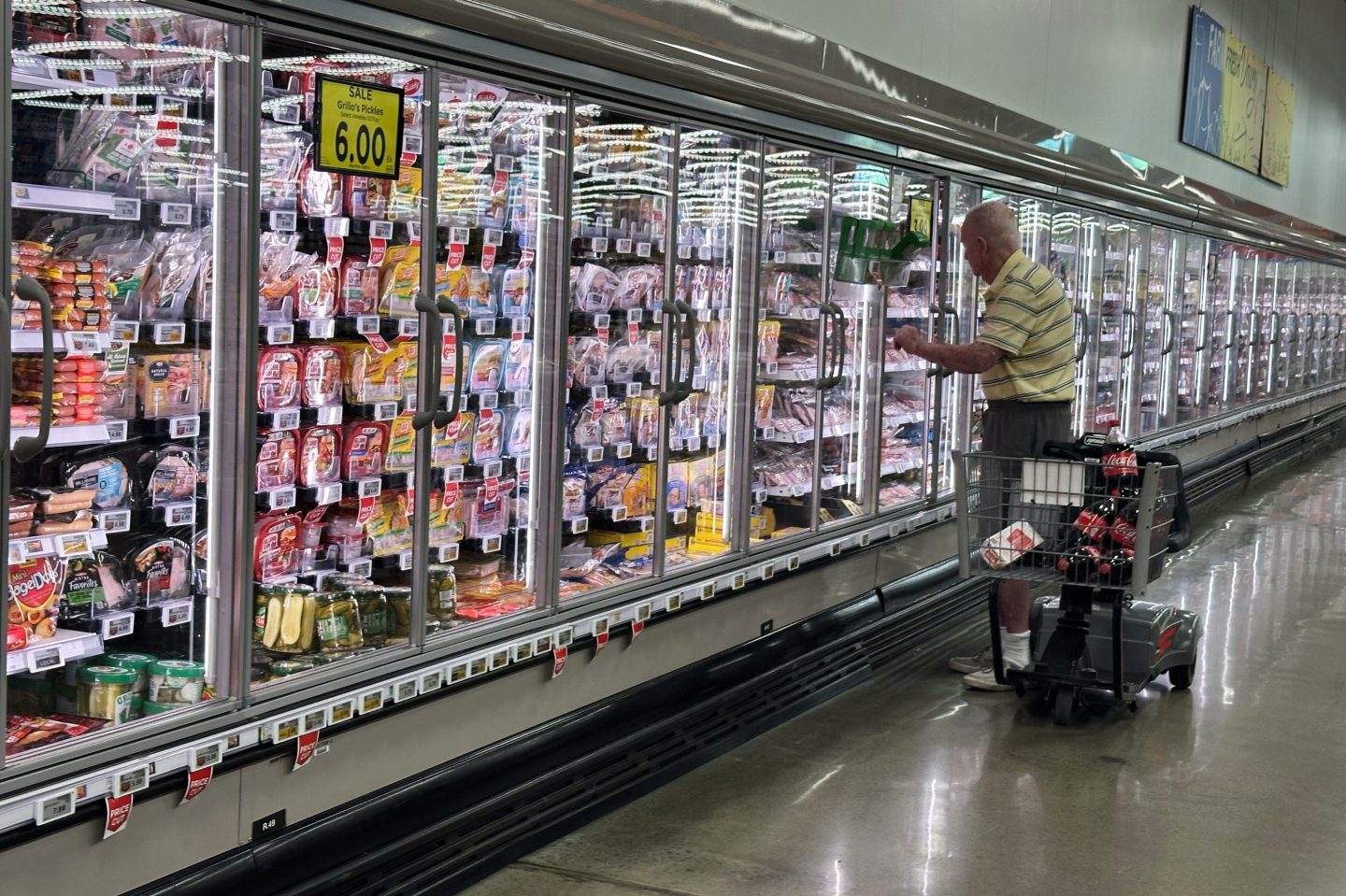
Oil at $100 is pushing up costs from gas pumps to grocery aisles
By Cathy Bussewitz, Mae Anderson, Anne D'Innocenzio and The Associated PressJuly 24, 2026
15 hours ago
craig
CommentaryPharmaceutical Industry
Big pharma’s patent cliff meets a new biotech Cold War: We need to outrun China, not outlaw it
By Craig GarthwaiteJuly 24, 2026
16 hours ago
tim
Commentarysmartphones and mobile devices
NYU Stern pricing expert: There’s a hidden ‘AI tax’ hitting Apple, Dell — and your next phone
By Srikanth JagabathulaJuly 24, 2026
16 hours ago
cc
AISocial Media
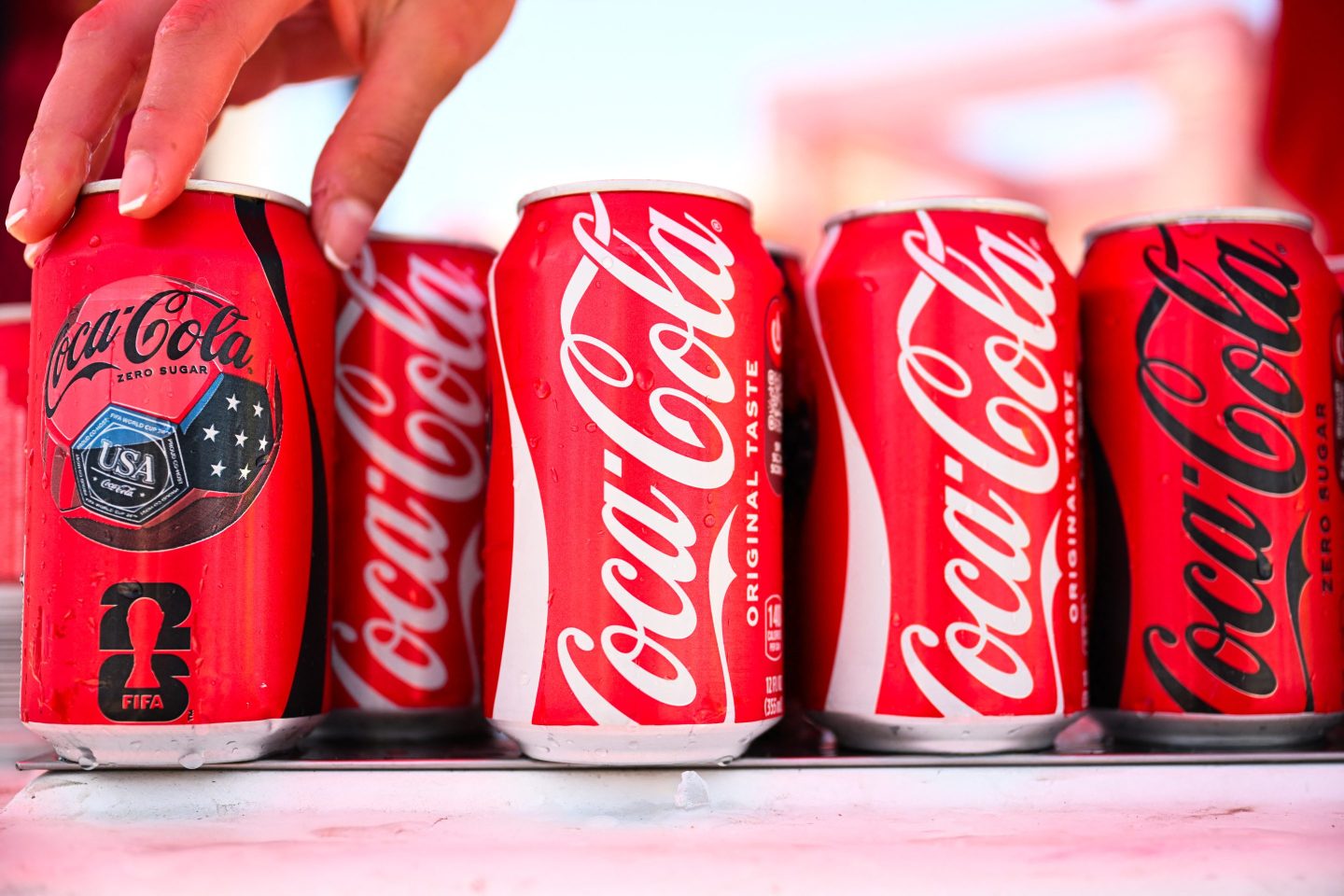
Coke on its rebrand accidentally nailing Gen Z’s ‘fridge cigarette’ joke: ‘building on on the things people already know and love’
By Tatiana SatauaJuly 23, 2026
1 day ago
cinerama
Arts & EntertainmentHollywood
Hollywood’s iconic Cinerama Dome to reopen under deal with Sony, Alamo Drafthouse
By The Associated PressJuly 22, 2026
2 days ago

Most Popular

Jensen Huang made his $172 billion fortune on AI chips. His family's $75 million gift to Vanderbilt argues art decides what technology is for
Big Tech
Jensen Huang made his $172 billion fortune on AI chips. His family's $75 million gift to Vanderbilt argues art decides what technology is for
By Sydney LakeJuly 23, 2026
2 days ago
'The demographic dividend of the last 40 years is ending': J.P. Morgan says the world is running out of the two things that kept interest rates down
Economy
'The demographic dividend of the last 40 years is ending': J.P. Morgan says the world is running out of the two things that kept interest rates down
By Eleanor PringleJuly 24, 2026
20 hours ago
The $39 trillion U.S. national debt isn’t as high as Japan’s and Singapore’s relative to economy size—and yet it's still worse somehow
Economy
The $39 trillion U.S. national debt isn’t as high as Japan’s and Singapore’s relative to economy size—and yet it's still worse somehow
By Sasha RogelbergJuly 23, 2026
2 days ago
The millennial generation has split, new Fed research shows: Those over 35 are edging toward boomer-style wealth, while everyone else falls behind
Real Estate
The millennial generation has split, new Fed research shows: Those over 35 are edging toward boomer-style wealth, while everyone else falls behind
By Nick LichtenbergJuly 22, 2026
2 days ago
Current price of oil as of July 24, 2026
Personal Finance
Current price of oil as of July 24, 2026
By Joseph HostetlerJuly 24, 2026
18 hours ago
Turns out Dead Internet Theory was right: AI agents are eating the Web, growing by nearly 8,000% and rewiring the Internet's business model
AI
Turns out Dead Internet Theory was right: AI agents are eating the Web, growing by nearly 8,000% and rewiring the Internet's business model
By Mia OsmonbekovJuly 23, 2026
1 day ago

© 2026 Fortune Media IP Limited. All Rights Reserved. Use of this site constitutes acceptance of our Terms of Use and Privacy Policy | CA Notice at Collection and Privacy Notice | Do Not Sell/Share My Personal Information
FORTUNE is a trademark of Fortune Media IP Limited, registered in the U.S. and other countries. FORTUNE may receive compensation for some links to products and services on this website. Offers may be subject to change without notice.