• Home
  • Latest
  • Fortune 500
  • Finance
  • Tech
  • Leadership
  • Lifestyle
  • Rankings
  • Multimedia
CommentaryTariffs

Trump Just Created a New Enemy for America’s Housing Market

By
Granger MacDonald
Granger MacDonald
and
Bethany Cianciolo
Bethany Cianciolo
Down Arrow Button Icon
By
Granger MacDonald
Granger MacDonald
and
Bethany Cianciolo
Bethany Cianciolo
Down Arrow Button Icon
April 27, 2017, 3:31 PM ET
Beetle Plague Spurs Canadians On U.S. Lumber-Mill Buying Spree
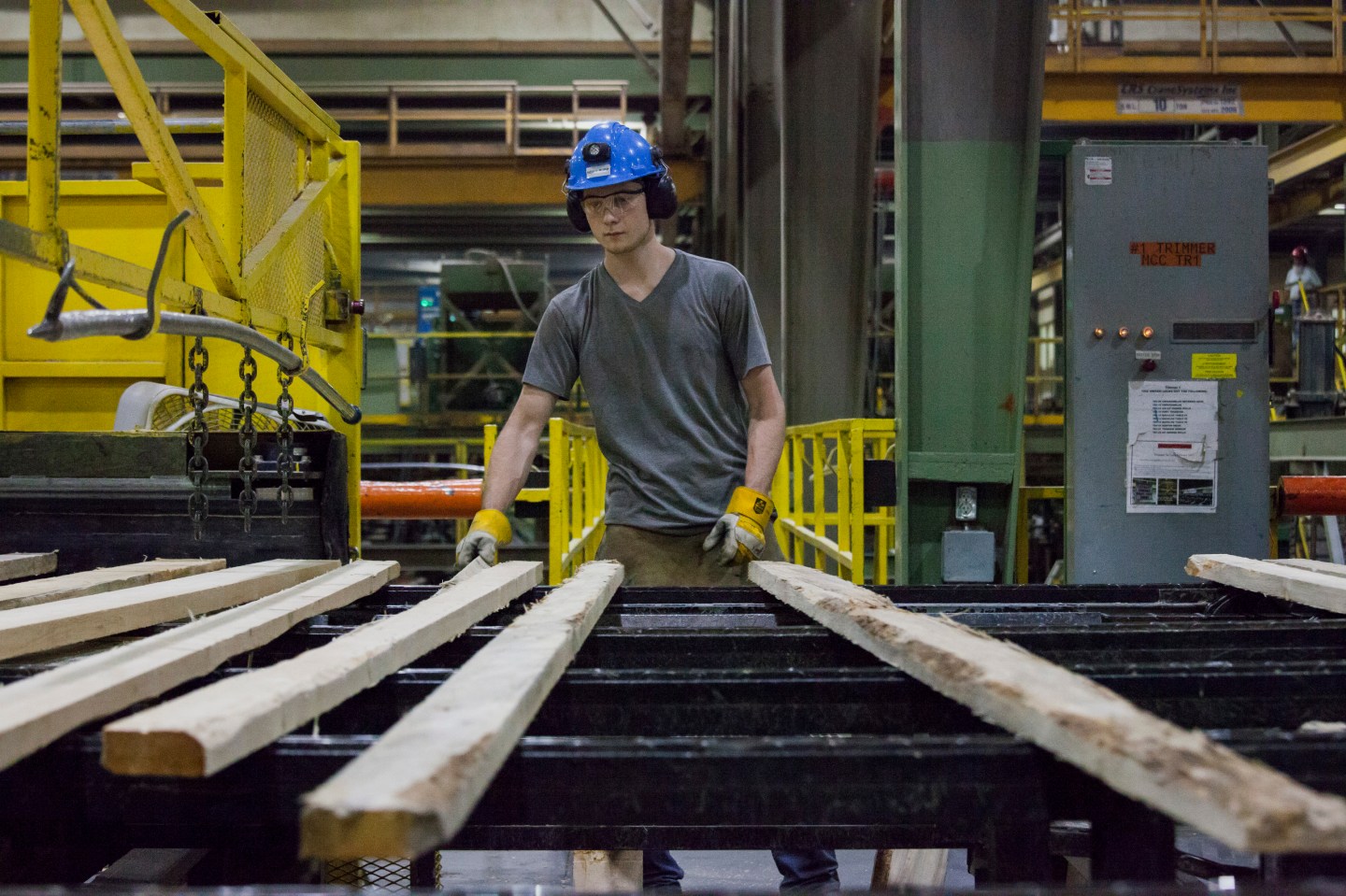
An employee monitors lumber as it moves through machines for processing at the West Fraser Timber Co. sawmill in Quesnel, British Columbia, Canada, on Friday, June 5, 2015. Since the late 1990s, the grain-of-rice-sized mountain pine beetle has attacked and killed more than 700 million cubic meters of pine trees in the inland forests of British Columbia, Canada's top lumber-producing province. Photographer: David Ryder/Bloomberg via Getty ImagesPhotograph by David Ryder — Bloomberg via Getty Images

Americans of all political persuasions and economic strata can agree that policies that support affordable homeownership and housing are laudable and worth pursuing.

So every citizen should be deeply concerned about the U.S. Department of Commerce’s recently announced plan to impose countervailing duties averaging 20% on Canadian softwood lumber. This unjustified tax will raise the cost of housing for millions of American households.

Lumber is, by far, the predominant building material used in new home construction, and there are 15,000 board feet of lumber in a typical new home. America must import about one-third of its lumber supply from Canada because U.S. lumber production is simply not robust enough to meet the nation’s needs. Therefore, lumber imports are vital for the construction of affordable homes for American families.

Lumber prices have already soared more than 20% since the beginning of the year, largely because the markets were already factoring in the effects of the anticipated tariff. In practical terms, this jump in lumber prices has already added nearly $3,600 to the cost of a new single-family home. Simply put, inflated lumber prices already act as a tax that U.S. homebuyers pay for to subsidize corporate lumber producers.

So obviously, U.S. lumber producers have a big incentive to ensure lumber import tariffs and quotas are in effect. That just means bigger profits, largely funded by American homebuyers. It’s also why lumber producers have gone to this playbook five times since the 1980s by requesting investigations to determine if Canada was subsidizing lumber exports to the U.S. In two of the three most recent investigations, it was ultimately ruled that the U.S. industry’s subsidy allegations were unfounded; the third was never completed because a negotiated settlement was put in place.

The timber industry represents a far greater share of the economic output in Canada compared to the U.S. Domestic producers have used this leverage in the past to coerce Canada into making bad trade deals with quotas and/or tariffs that are unfavorable to the Canadian timber industry, as well as American homebuyers, homebuilders, and other lumber consumers.

Imposing unwarranted, protectionist trade barriers that hurt millions of American citizens in order to line the pockets of the large, domestic lumber producers is not the answer to resolve the U.S.-Canada lumber trade dispute, or encourage economic growth.

Canada and the U.S. need to work together to promptly hammer out a long-term solution equitable to all parties that will ensure a lasting and stable supply of lumber imports into the U.S. at a competitive price.

And since the U.S. does not have the capacity to meet domestic demand, these are the steps it could take instead:

  • Exhaust all avenues to boost domestic production. Increasing timber sales from publicly owned lands and making more federal forestlands available for logging in an environmentally sustainable way are good starting points.
  • Reduce U.S. lumber exports. Domestic producers are selling abroad to China and other international clients in order to boost profits. Exporting timber should be discouraged when there is a gaping need at home.
  • Seek out new suppliers. Last year, the National Association of Home Builders (NAHB) held productive talks with the Chilean government, trade experts, and industry officials that focused on increasing exports of softwood lumber to America. NAHB is also exploring opportunities in Sweden and Brazil to open up competition in the U.S. lumber market to a steady supply of affordably priced lumber and keep housing affordable for home buyers.

As the U.S. housing market continues to pick up steam, the demand for softwood lumber will continue to grow. The administration can take a firm stand for American families seeking to become homeowners by acting to rescind the lumber duties.

Granger MacDonald is chairman of the National Association of Home Builders.

About the Authors
By Granger MacDonald
See full bioRight Arrow Button Icon
By Bethany Cianciolo
See full bioRight Arrow Button Icon

Latest in Commentary

Julian Braithwaite is the Director General of the International Alliance for Responsible Drinking
CommentaryProductivity
Gen Z is drinking 20% less than Millennials. Productivity is rising. Coincidence? Not quite
By Julian BraithwaiteDecember 13, 2025
17 hours ago
carbon
Commentaryclimate change
Banking on carbon markets 2.0: why financial institutions should engage with carbon credits
By Usha Rao-MonariDecember 13, 2025
18 hours ago
Dr. Javier Cárdenas is the director of the Rockefeller Neuroscience Institute NeuroPerformance Innovation Center.
Commentaryconcussions
Fists, not football: There is no concussion protocol for domestic violence survivors
By Javier CárdenasDecember 12, 2025
2 days ago
Gary Locke is the former U.S. ambassador to China, U.S. secretary of commerce, and governor of Washington.
CommentaryChina
China is winning the biotech race. Patent reform is how we catch up
By Gary LockeDecember 12, 2025
2 days ago
millennial
CommentaryConsumer Spending
Meet the 2025 holiday white whale: the millennial dad spending $500+ per kid
By Phillip GoerickeDecember 12, 2025
2 days ago
Sarandos
CommentaryAntitrust
Netflix, Warner, Paramount and antitrust: Entertainment megadeal’s outcome must follow the evidence, not politics or fear of integration
By Satya MararDecember 12, 2025
2 days ago

Most Popular

placeholder alt text
Success
Apple cofounder Ronald Wayne sold his 10% stake for $800 in 1976—today it’d be worth up to $400 billion
By Preston ForeDecember 12, 2025
2 days ago
placeholder alt text
Economy
Tariffs are taxes and they were used to finance the federal government until the 1913 income tax. A top economist breaks it down
By Kent JonesDecember 12, 2025
2 days ago
placeholder alt text
Success
40% of Stanford undergrads receive disability accommodations—but it’s become a college-wide phenomenon as Gen Z try to succeed in the current climate
By Preston ForeDecember 12, 2025
2 days ago
placeholder alt text
Economy
The Fed just ‘Trump-proofed’ itself with a unanimous move to preempt a potential leadership shake-up
By Jason MaDecember 12, 2025
1 day ago
placeholder alt text
Success
Apple CEO Tim Cook out-earns the average American’s salary in just 7 hours—to put that into context, he could buy a new $439,000 home in just 2 days
By Emma BurleighDecember 12, 2025
2 days ago
placeholder alt text
Economy
For the first time since Trump’s tariff rollout, import tax revenue has fallen, threatening his lofty plans to slash the $38 trillion national debt
By Sasha RogelbergDecember 12, 2025
1 day ago
Rankings
  • 100 Best Companies
  • Fortune 500
  • Global 500
  • Fortune 500 Europe
  • Most Powerful Women
  • Future 50
  • World’s Most Admired Companies
  • See All Rankings
Sections
  • Finance
  • Leadership
  • Success
  • Tech
  • Asia
  • Europe
  • Environment
  • Fortune Crypto
  • Health
  • Retail
  • Lifestyle
  • Politics
  • Newsletters
  • Magazine
  • Features
  • Commentary
  • Mpw
  • CEO Initiative
  • Conferences
  • Personal Finance
  • Education
Customer Support
  • Frequently Asked Questions
  • Customer Service Portal
  • Privacy Policy
  • Terms Of Use
  • Single Issues For Purchase
  • International Print
Commercial Services
  • Advertising
  • Fortune Brand Studio
  • Fortune Analytics
  • Fortune Conferences
  • Business Development
About Us
  • About Us
  • Editorial Calendar
  • Press Center
  • Work At Fortune
  • Diversity And Inclusion
  • Terms And Conditions
  • Site Map

© 2025 Fortune Media IP Limited. All Rights Reserved. Use of this site constitutes acceptance of our Terms of Use and Privacy Policy | CA Notice at Collection and Privacy Notice | Do Not Sell/Share My Personal Information
FORTUNE is a trademark of Fortune Media IP Limited, registered in the U.S. and other countries. FORTUNE may receive compensation for some links to products and services on this website. Offers may be subject to change without notice.