• Home
  • Latest
  • Fortune 500
  • Finance
  • Tech
  • Leadership
  • Lifestyle
  • Rankings
  • Multimedia
CommentaryFinance

Will Donald Trump Keep His Campaign Promise To Reinstate Glass-Steagall?

By
Eleanor Bloxham
Eleanor Bloxham
Down Arrow Button Icon
By
Eleanor Bloxham
Eleanor Bloxham
Down Arrow Button Icon
March 20, 2017, 4:51 PM ET
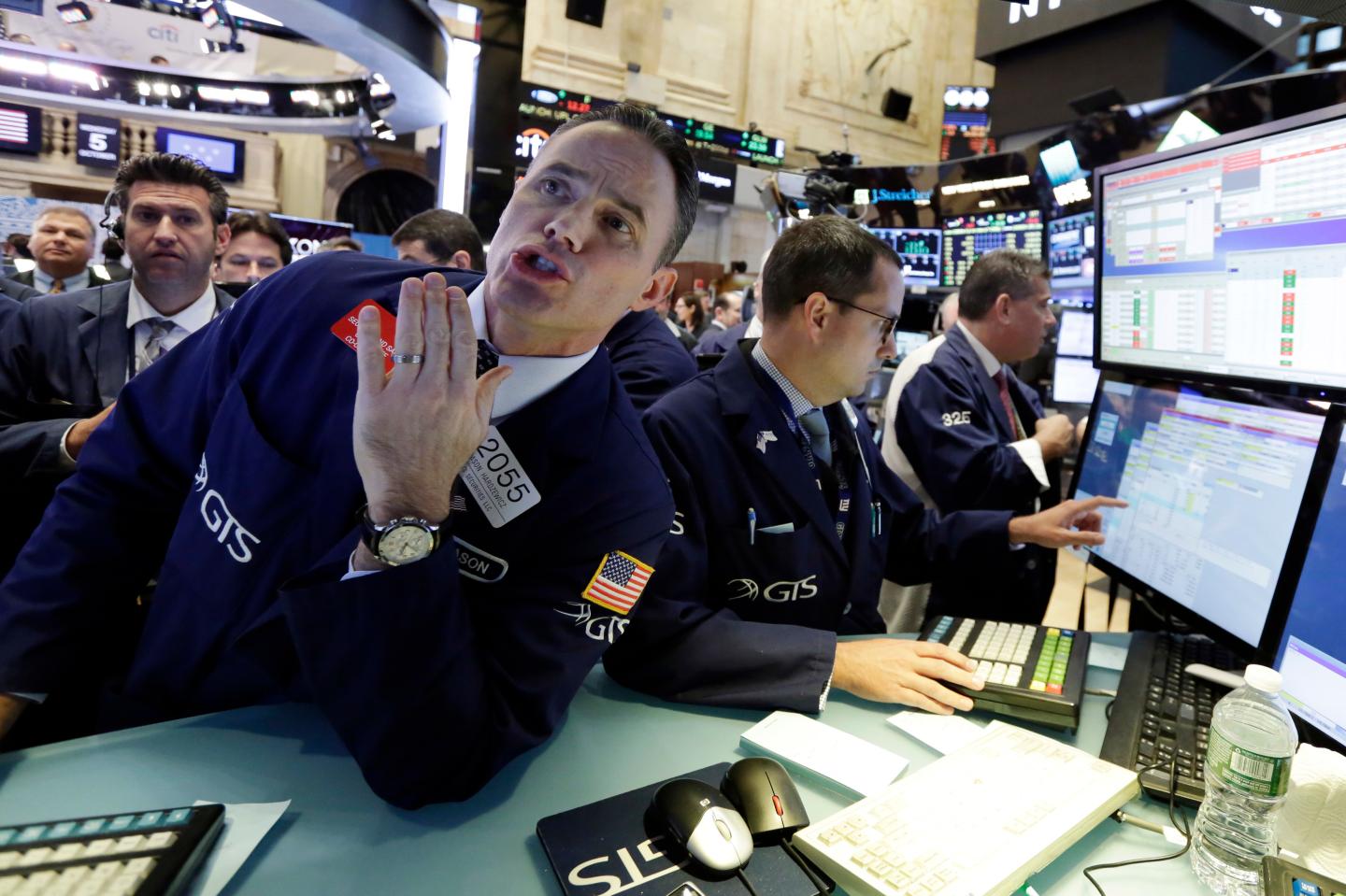
Jason Hardzewicz
Specialist Jason Hardzewicz, left, works at his post on the floor of the New York Stock Exchange, Wednesday, Oct. 5, 2016. Energy stocks are leading an early gain on Wall Street as the price of crude oil moves higher. (AP Photo/Richard Drew)Richard Drew — AP

During a press briefing earlier this month, White House Spokesman Sean Spicer said the administration remained committed to a Trump campaign promise to restore Glass-Steagall, which effectively prohibits commercial banks from engaging in investment banking. The law was created in 1933, but most of it was rescinded in 1999. However unreliable Spicer has shown himself to be, bringing back the law would be a welcome move for anyone hoping to get tough on Wall Street’s continuing risks.

Glass-Steagall was put in place after the Depression to ward off the economic wreckage of financial crises by requiring that banks either be a regular bank that takes in customer deposits or an investment bank that makes markets in securities. Bank regulators’ failure to enforce the law aided its demise, and Congress repealed the requirement for separation of the two types of banks during the Clinton Administration under the Gramm-Leach-Bliley bill.

Arthur Levitt, who ran the SEC at the time, told Frontline that pressures from the White House, the Federal Reserve and many lobbyists from the financial services industry, including a big push from the derivatives lobby, led to the reversal. The name of the Senate Banking Committee chair at the time, Phil Gramm, is on the repeal law, and together with his wife Wendy, the couple helped make possible Enron’s infamous use of derivatives that led to the energy company’s spectacular collapse in 2001. After Enron’s demise, although the huge risks in derivatives were known, banks continued to proliferate them, one of the proximate causes for the financial crisis in 2007.

That Glass-Steagall has not yet been reinstated speaks to the power of the financial services industry and the misguided faith in humans to self-regulate on matters conflicting with their immediate self-interest. Whether or not the Trump administration takes action, a bipartisan group of 26 members of Congress in February called for a return to Glass-Steagall. That’s not a surprise since the law’s re-instatement was on the 2016 party platforms of both the Democratic and Republican parties.

As I’ve argued before, a return to Glass-Steagall is not sufficient to prevent future crises, but it is necessary. It’s impossible for managers and boards to do their jobs effectively in overseeing banks with both investment and regular banking under the same roof, each with such distinct risk appetites, divergent cultures and differing stakeholder expectations.

At Citigroup, after the Salomon Smith-Barney merger, for example, the aggressive, transaction-oriented nature of investment banking ran roughshod over the more genteel business of corporate relationship management: relationships were out and quick bucks were in. And along the way, the company lost one of its greatest attributes: a culture of strategic inquiry.

We have seen multiple examples of the combined banks’ customer mal-treatment and malfeasance in the foreclosure crisis. Think J.P. Morgan and Bank of America to name a couple. Then fast-forward to today and look at the Wells Fargo fake account scandal last year. Like Citi, Wells Fargo is another case where the culture of the growing investment banking business appears to have bled over to the regular bank. It’s unreasonable to expect a management team to embody two competing cultures at once. At Wells, regular customers were harmed, which led to calls to break up the bank. It remains to be seen what could happen down the road, but for now, The LA Times reported last week that Wells Fargo has adopted a divide and conquer strategy meeting with Republicans in December while while rebuffing attempts by Democrats to dialogue.

Restoring Glass-Steagall is relatively straightforward, while other alternatives like going to shareholders — bank by bank — to force separation are much more time consuming and tedious. But since Congress hasn’t acted, Public Citizen’s Financial Policy Advocate Bart Naylor, who supports full separation and owns shares in Citigroup, has a proposal on Citigroup’s ballot this Spring. Shareholders will have the opportunity to vote on whether to encourage the Citi board to “explore options to split the firm into two or more companies,” with one to house investment banking and a separate company to perform “basic business and consumer lending.”

Glass-Steagall is also more effective than structures that might mimic it. During my talk last week with Tom Hoenig, the Federal Deposit Insurance Corporation (FDIC) vice chair told me that he also has seen how the risky culture of investment banking overran the relationship culture of regular banking after Glass-Steagall.

And he continues to be concerned that the largest, riskiest banks could again take down the economic system, leaving taxpayers to clean up the mess. But unsure that Congress will pass Glass-Steagall, he’s suggested a complex alternative, which would not break the largest banks in two, but would call for the bank holding company (with its existing board and stock) to create two separate businesses (a commercial bank and an investment bank), each with separate stock and separate boards. To its credit, the idea is that the new boards would not have members who also serve at the holding company level. To its detriment, however, the plan relies on markets to effectively monitor the new individual stocks with no promise of shareholder voting rights or say on pay or election of directors at the underlying companies. The holding company board would likely control appointment of board directors to the investment banking and regular banking boards, Hoenig says.

Glass-Steagall’s reinstatement is also important because it makes it easier to comply with existing requirements and other needed banking reforms (related to capital levels and derivatives). With Glass-Steagall, we could expect better living wills and stress tests, as the entities would be separate and less complex. And implementing capital increases (that both Hoenig and Naylor support, although at different levels) and addressing the key ongoing concerns of derivatives (through improvements in capital calculations as Hoenig recommends and limiting their use as Naylor advocates) would also be easier to implement.

Of course, reinstating Glass-Steagall is bound to elicit cries of victimization from financial institution CEOs and their lobbyists. But that’s to be expected. I don’t personally know anyone who relishes a restructure imposed from the outside that might narrow his power. Do you?

Eleanor Bloxham is CEO of The Value Alliance, an independent board education and advisory firm. She is the author of two books on corporate governance and valuation.

About the Author
By Eleanor Bloxham
See full bioRight Arrow Button Icon

Latest in Commentary

Finance
Lorem ipsum dolor sit amet, consectetur adipiscing elit, sed do eiusmod tempor incididunt ut labore et dolore magna aliqua. Ut enim ad minim veniam
By Fortune Editors
October 20, 2025
Finance
Lorem ipsum dolor sit amet, consectetur adipiscing elit, sed do eiusmod tempor incididunt ut labore et dolore magna aliqua. Ut enim ad minim veniam
By Fortune Editors
October 20, 2025
Finance
Lorem ipsum dolor sit amet, consectetur adipiscing elit, sed do eiusmod tempor incididunt ut labore et dolore magna aliqua. Ut enim ad minim veniam
By Fortune Editors
October 20, 2025
Finance
Lorem ipsum dolor sit amet, consectetur adipiscing elit, sed do eiusmod tempor incididunt ut labore et dolore magna aliqua. Ut enim ad minim veniam
By Fortune Editors
October 20, 2025
Finance
Lorem ipsum dolor sit amet, consectetur adipiscing elit, sed do eiusmod tempor incididunt ut labore et dolore magna aliqua. Ut enim ad minim veniam
By Fortune Editors
October 20, 2025
Finance
Lorem ipsum dolor sit amet, consectetur adipiscing elit, sed do eiusmod tempor incididunt ut labore et dolore magna aliqua. Ut enim ad minim veniam
By Fortune Editors
October 20, 2025

Most Popular

Finance
Lorem ipsum dolor sit amet, consectetur adipiscing elit, sed do eiusmod tempor incididunt ut labore et dolore magna aliqua. Ut enim ad minim veniam
By Fortune Editors
October 20, 2025
Finance
Lorem ipsum dolor sit amet, consectetur adipiscing elit, sed do eiusmod tempor incididunt ut labore et dolore magna aliqua. Ut enim ad minim veniam
By Fortune Editors
October 20, 2025
Finance
Lorem ipsum dolor sit amet, consectetur adipiscing elit, sed do eiusmod tempor incididunt ut labore et dolore magna aliqua. Ut enim ad minim veniam
By Fortune Editors
October 20, 2025
Finance
Lorem ipsum dolor sit amet, consectetur adipiscing elit, sed do eiusmod tempor incididunt ut labore et dolore magna aliqua. Ut enim ad minim veniam
By Fortune Editors
October 20, 2025
Finance
Lorem ipsum dolor sit amet, consectetur adipiscing elit, sed do eiusmod tempor incididunt ut labore et dolore magna aliqua. Ut enim ad minim veniam
By Fortune Editors
October 20, 2025
Finance
Lorem ipsum dolor sit amet, consectetur adipiscing elit, sed do eiusmod tempor incididunt ut labore et dolore magna aliqua. Ut enim ad minim veniam
By Fortune Editors
October 20, 2025
Fortune Secondary Logo
Rankings
  • 100 Best Companies
  • Fortune 500
  • Global 500
  • Fortune 500 Europe
  • Most Powerful Women
  • Future 50
  • World’s Most Admired Companies
  • See All Rankings
Sections
  • Finance
  • Fortune Crypto
  • Features
  • Leadership
  • Health
  • Commentary
  • Success
  • Retail
  • Mpw
  • Tech
  • Lifestyle
  • CEO Initiative
  • Asia
  • Politics
  • Conferences
  • Europe
  • Newsletters
  • Personal Finance
  • Environment
  • Magazine
  • Education
Customer Support
  • Frequently Asked Questions
  • Customer Service Portal
  • Privacy Policy
  • Terms Of Use
  • Single Issues For Purchase
  • International Print
Commercial Services
  • Advertising
  • Fortune Brand Studio
  • Fortune Analytics
  • Fortune Conferences
  • Business Development
  • Group Subscriptions
About Us
  • About Us
  • Editorial Calendar
  • Press Center
  • Work At Fortune
  • Diversity And Inclusion
  • Terms And Conditions
  • Site Map
  • About Us
  • Editorial Calendar
  • Press Center
  • Work At Fortune
  • Diversity And Inclusion
  • Terms And Conditions
  • Site Map
  • Facebook icon
  • Twitter icon
  • LinkedIn icon
  • Instagram icon
  • Pinterest icon

Latest in Commentary

trump
CommentaryZoom
The U.S. has a $282 billion trade surplus you’ve never heard of — and it’s at risk
By Josh KallmerApril 19, 2026
1 day ago
benioff
CommentarySalesforce
AI’s next act: how Salesforce is turning efficiency gains into revenue
By Keith Ferrazzi and Wendy SmithApril 18, 2026
2 days ago
trump
CommentaryWhite House
Trump has already endorsed the Monroe Doctrine. Now he needs to endorse the Truman Doctrine
By Robert HormatsApril 18, 2026
2 days ago
trump
CommentaryManufacturing
Tariffs alone won’t save American manufacturing — here’s what actually will
By Johan "Kip" EidebergApril 18, 2026
2 days ago
hormuz
CommentaryIran
With Hormuz under strain, a trade corridor built for resilience faces a real-world test
By Angela Chitkara and Samantha SuttonApril 17, 2026
3 days ago
broker
CommentarySoftware
The 3 forces quietly dismantling the business model that made enterprise software fabulously profitable
By Michael Jacobides and Stefano PuntoniApril 17, 2026
3 days ago

Most Popular

Thousands of CEOs admit AI had no impact on employment or productivity—and it has economists resurrecting a paradox from 40 years ago
AI
Thousands of CEOs admit AI had no impact on employment or productivity—and it has economists resurrecting a paradox from 40 years ago
By Sasha RogelbergApril 19, 2026
1 day ago
Markets shudder as Strait of Hormuz starts resembling a combat zone. 'We're prepared to subject you to disabling fire'
Energy
Markets shudder as Strait of Hormuz starts resembling a combat zone. 'We're prepared to subject you to disabling fire'
By Jason MaApril 19, 2026
16 hours ago
Elon Musk bans résumés and cover letters in hiring for his chip team. These are the 3 bullet points he’s looking for instead
Future of Work
Elon Musk bans résumés and cover letters in hiring for his chip team. These are the 3 bullet points he’s looking for instead
By Jake AngeloApril 19, 2026
1 day ago
The explosion of U.S. debt is wiping out the 'safety premium' of Treasury bonds, and time is running out for an orderly fiscal solution, IMF warns
Economy
The explosion of U.S. debt is wiping out the 'safety premium' of Treasury bonds, and time is running out for an orderly fiscal solution, IMF warns
By Jason MaApril 19, 2026
20 hours ago
'We should absolutely be concerned about non-college-educated men today': higher rents, living at home, falling out of the labor market
Economy
'We should absolutely be concerned about non-college-educated men today': higher rents, living at home, falling out of the labor market
By Catherina GioinoApril 18, 2026
2 days ago
The $6 billion Vatican Bank was beset by scandals, disastrous investments—and ties to the Mafia. How Pope Francis tried to fix it
Banking
The $6 billion Vatican Bank was beset by scandals, disastrous investments—and ties to the Mafia. How Pope Francis tried to fix it
By Marco Quiroz-GutierrezApril 18, 2026
2 days ago

© 2026 Fortune Media IP Limited. All Rights Reserved. Use of this site constitutes acceptance of our Terms of Use and Privacy Policy | CA Notice at Collection and Privacy Notice | Do Not Sell/Share My Personal Information
FORTUNE is a trademark of Fortune Media IP Limited, registered in the U.S. and other countries. FORTUNE may receive compensation for some links to products and services on this website. Offers may be subject to change without notice.