• Home
  • Latest
  • Fortune 500
  • Finance
  • Tech
  • Leadership
  • Lifestyle
  • Rankings
  • Multimedia

Trendingnow

1

New York City women are making up to $30,000 per month by renting out their closets to strangers

2

College-educated women are snapping up the highest-earning men without college degrees, leaving the rest further behind

3

The millennial generation is split in 2: an older crowd with boomer-style comfort, a younger set going 'back to the early 1900s'

1

New York City women are making up to $30,000 per month by renting out their closets to strangers

2

College-educated women are snapping up the highest-earning men without college degrees, leaving the rest further behind

3

The millennial generation is split in 2: an older crowd with boomer-style comfort, a younger set going 'back to the early 1900s'
Finance

Here’s Why Bull Markets Create Bad Habits in Investors

By
Chris Taylor
Chris Taylor
Down Arrow Button Icon
By
Chris Taylor
Chris Taylor
Down Arrow Button Icon
February 23, 2017, 12:00 PM ET
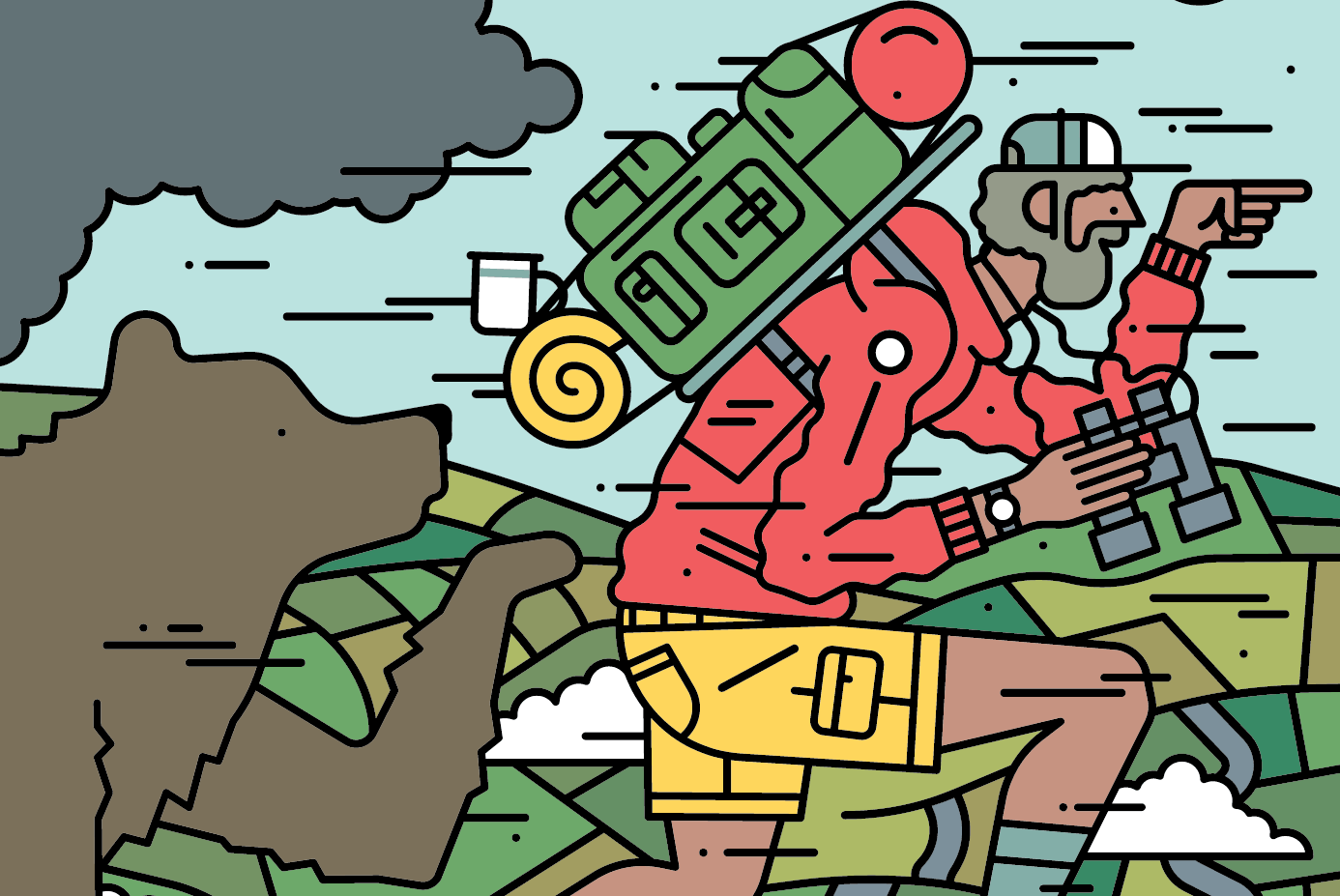
Illustration by Sam Peet
Add Fortune on Google for similar content.

Picture this: It’s the NBA Finals, and LeBron James has just drained a jump shot for the Cleveland Cavaliers. Then he hits another. And another.

He’s on a hot streak: three in a row. He’s going to hit the next one, right?

Most people would unhesitatingly reply, “Yes.” That assumption doesn’t say as much about King James’s skills as it does about the inner workings of your own brain. Indeed, a whole lot of evolutionary history is packed into that projection. But here’s the thing about that hunch: It’s off the mark. Statistically, LeBron isn’t significantly more likely to make the shot than he is to clang it off the back rim—streak or no streak.

This leaping-to-conclusions phenomenon is called “recency bias,” and it’s deep in our emotional wiring. “It’s an interesting effect,” says Dan Ariely, a professor of behavioral economics at Duke University and the author of books including Predictably Irrational (and the originator of the hoops analogy). “We look at the most recent evidence, take it too seriously, and expect that things will continue in that way.”

There’s an evolutionary advantage to this. Think back to the origins of humanity somewhere on the African savannas: If the wildebeests have shown up at the same watering hole a few days in a row, odds are we’re going to hunt at that same spot the next day. Nowadays, though we’re hunched at computers instead of hunting game, we still instinctively seek patterns in the events that have happened most recently, while memories of older occurrences have less influence over our behavior.

Nicolas Rapp
NIcolas Rapp

The problem, of course, is that the wildebeests don’t always come back. And that makes recency bias particularly dangerous for investors: Unchecked, it’s your brain’s very own portfolio killer. Intellectually, we know that the market already saw two brutal bear markets this century—in 2000–02 and 2007–09. But as we approach the eighth birthday in March of the second-­longest bull market in modern times, recency bias can lull us into a false sense of security, especially given the very good returns of the past three or four years. “If you think about the creation of asset bubbles, that’s always what happens,” Ariely says. “Things go up and up and up, and we start thinking it has to always go up.”

Market professionals are hardly immune to this trend. At the beginning of 2008, trouble signs were emerging in the global economy. But after five straight years of positive returns, sentiment among equity analysts neared an all-time high, with the Wall Street consensus calling for an 11.1% gain, according to a recent study by Bespoke Investment Group. Their calls were based in part on—you guessed it—analysis of the recent past. We all know what happened next: The economy went off a cliff, and the S&P 500 fell 38.5% that year.

Recency bias also helps explain retail investor behavior during times of greed or panic. Assets often flow into stocks near market tops and exit at the bottom—exactly the opposite of what investors should be doing, says David Santschi, CEO of TrimTabs Investment Research. Recent signs here aren’t encouraging: Net inflows for U.S. stock mutual funds hit $27.8 billion in December, according to fund research shop Morningstar—the highest monthly total since April 2000, at the dawn of the tech-stock crash.

Investors can be particularly susceptible to recency bias as they get closer to retirement—­exactly the time when they can least afford big losses. That’s part of the mechanism of coping with aging, according to Shlomo Benartzi, a behavioral economist and UCLA professor. If we felt constantly hamstrung by the bad things that have happened to us over the course of our lives, none of us would get out of bed. But those rose-tinted glasses can cloud investing decisions, leading savers to assume too much risk at the tail end of a bull market.

Looking ahead, few experts are predicting the imminent arrival of a bear market—then again, few ever do. So how can you combat and counteract your own recency bias and resist letting excessive optimism (or pessimism, for that matter) hurt your decision-making? For starters, you could put your portfolio on autopilot, taking your mood swings out of the equation. That might mean vehicles like target-date funds, which shift investment allocations automatically to make them less risky as the account holder ages. Also helpful: robo-advisers such as Betterment and Wealthfront, which can be set up to rebalance your portfolio automatically when the prices of one asset class get out of whack. “I’m a big fan of any investing approach that removes us from impulse-based decisions,” says Lisa Kramer, a behavioral economist at the University of Toronto.

It’s also worth keeping historical data in your decision-making arsenal. The average bull-market length is 54 months, according to J.P. Morgan Asset Management—41 months shorter than the Obama-Trump bull run, through January. And the S&P 500 long-term average price/earnings ratio? It’s just 15, compared with more than 25 today. That kind of wider context signals that today’s valuations and recent good times won’t be easy to sustain.

All the more reason to make sure that, if and when the market does turn, any moves you make will be driven by a long-term plan rather than the emotions generated by the last thing you heard on CNBC. With major indexes setting records, it’s a good time for investors to rebalance: If the equities portion of your portfolio has ballooned from your 60% target to 75%, say, take some profits off the table and use them to buy asset classes that are hardier during downturns, like investment-grade bonds. Older investors may want to move that money into assets that are even less risky, like cash or annuities.

“In investing you have to deny your emotions, like Odysseus sailing by the sirens in Greek mythology,” says Raife Giovin­azzo, research director at Fuller & Thaler Asset Management. “Put wax in your ears or tie yourself to the mast—otherwise, you’re going to drown along the cliffs.”

Click here for more articles from Time Inc.’s Looking Forward series.


How to Beat Your Biases

Deep-rooted mental habits, including “recency bias,” can throw off investors’ decision-making and hurt their portfolios. Here are three ways to keep those habits in check.

Watch out for high prices
Unusually high price/earnings valuations are often a sign that the party for stocks has gone on a little too long. With stocks trading well above their averages, now may be a good time to sell big winners and put the profits aside.

Play it safe for retirement
The years immediately before and after retirement are when losses can hurt an investor’s long-term plans the most. Savers in that life stage should consider putting more money in cash and bonds—no matter how bullish they feel.

Rely on an autopilot
When emotions run high, it helps to have tools that discourage buying or selling on impulse. Target-date funds, “robo-advisers,” and annuities can help investors avoid taking excessive risks in good times or panic selling in bad.


A version of this article appears in the March 1, 2017 issue of Fortune with the headline “Beware of Happy Memories.” We’ve included affiliate links in this article. Click here to learn what those are.

About the Author
By Chris Taylor
See full bioRight Arrow Button Icon
Add Fortune on Google for similar content.

Latest in Finance

Finance
Lorem ipsum dolor sit amet, consectetur adipiscing elit, sed do eiusmod tempor incididunt ut labore et dolore magna aliqua. Ut enim ad minim veniam
By Fortune Editors
October 20, 2025
Finance
Lorem ipsum dolor sit amet, consectetur adipiscing elit, sed do eiusmod tempor incididunt ut labore et dolore magna aliqua. Ut enim ad minim veniam
By Fortune Editors
October 20, 2025
Finance
Lorem ipsum dolor sit amet, consectetur adipiscing elit, sed do eiusmod tempor incididunt ut labore et dolore magna aliqua. Ut enim ad minim veniam
By Fortune Editors
October 20, 2025
Finance
Lorem ipsum dolor sit amet, consectetur adipiscing elit, sed do eiusmod tempor incididunt ut labore et dolore magna aliqua. Ut enim ad minim veniam
By Fortune Editors
October 20, 2025
Finance
Lorem ipsum dolor sit amet, consectetur adipiscing elit, sed do eiusmod tempor incididunt ut labore et dolore magna aliqua. Ut enim ad minim veniam
By Fortune Editors
October 20, 2025
Finance
Lorem ipsum dolor sit amet, consectetur adipiscing elit, sed do eiusmod tempor incididunt ut labore et dolore magna aliqua. Ut enim ad minim veniam
By Fortune Editors
October 20, 2025

Most Popular

Finance
Lorem ipsum dolor sit amet, consectetur adipiscing elit, sed do eiusmod tempor incididunt ut labore et dolore magna aliqua. Ut enim ad minim veniam
By Fortune Editors
October 20, 2025
Finance
Lorem ipsum dolor sit amet, consectetur adipiscing elit, sed do eiusmod tempor incididunt ut labore et dolore magna aliqua. Ut enim ad minim veniam
By Fortune Editors
October 20, 2025
Finance
Lorem ipsum dolor sit amet, consectetur adipiscing elit, sed do eiusmod tempor incididunt ut labore et dolore magna aliqua. Ut enim ad minim veniam
By Fortune Editors
October 20, 2025
Finance
Lorem ipsum dolor sit amet, consectetur adipiscing elit, sed do eiusmod tempor incididunt ut labore et dolore magna aliqua. Ut enim ad minim veniam
By Fortune Editors
October 20, 2025
Finance
Lorem ipsum dolor sit amet, consectetur adipiscing elit, sed do eiusmod tempor incididunt ut labore et dolore magna aliqua. Ut enim ad minim veniam
By Fortune Editors
October 20, 2025
Finance
Lorem ipsum dolor sit amet, consectetur adipiscing elit, sed do eiusmod tempor incididunt ut labore et dolore magna aliqua. Ut enim ad minim veniam
By Fortune Editors
October 20, 2025
Fortune Secondary Logo
Rankings
  • 100 Best Companies
  • Fortune 500
  • Global 500
  • Fortune 500 Europe
  • Most Powerful Women
  • World's Most Admired Companies
  • See All Rankings
  • Lists Calendar
Sections
  • Finance
  • Fortune Crypto
  • Features
  • Leadership
  • Health
  • Commentary
  • Success
  • Retail
  • Mpw
  • Tech
  • Lifestyle
  • CEO Initiative
  • Asia
  • Politics
  • Conferences
  • Europe
  • Newsletters
  • Personal Finance
  • Environment
  • Magazine
  • Education
Customer Support
  • Frequently Asked Questions
  • Customer Service Portal
  • Privacy Policy
  • Terms Of Use
  • Single Issues For Purchase
  • International Print
Commercial Services
  • Advertising
  • Fortune Brand Studio
  • Fortune Analytics
  • Fortune Conferences
  • Business Development
  • Group Subscriptions
About Us
  • About Us
  • Press Center
  • Work At Fortune
  • Terms And Conditions
  • Site Map
  • About Us
  • Press Center
  • Work At Fortune
  • Terms And Conditions
  • Site Map
  • Facebook icon
  • Twitter icon
  • LinkedIn icon
  • Instagram icon
  • TikTok icon
  • YouTube icon

Latest in Finance

LeBron James took a pay cut to maybe live in New York and commute to Philly by chopper, risking double taxation as NYC also tries to ban helicopters
Real EstateSports
LeBron James took a pay cut to maybe live in New York and commute to Philly by chopper, risking double taxation as NYC also tries to ban helicopters
By Catherina GioinoJuly 27, 2026
4 hours ago
Photo of truck driver
North AmericaCanada
U.S.—Canada bridge opens to traffic in Detroit amid Trump tariffs strain
By The Associated Press, Mike Householder and Ed WhiteJuly 27, 2026
5 hours ago
Bank of America, Chipotle, Dell, and Uber are chipping in on Trump Accounts for their workers’ kids—but most companies are sitting it out
Personal FinanceDonald Trump
Bank of America, Chipotle, Dell, and Uber are chipping in on Trump Accounts for their workers’ kids—but most companies are sitting it out
By Courtney Vinopal and HR BrewJuly 27, 2026
5 hours ago
Elon Musk’s vision of a post-money future got mocked. Vinod Khosla warns it could become a dystopia instead
AIthe future of work
Elon Musk’s vision of a post-money future got mocked. Vinod Khosla warns it could become a dystopia instead
By Nick LichtenbergJuly 27, 2026
6 hours ago
People at dinner table paying the bill
Personal FinanceVisa
About half of Gen Z owe their friends more than $1,000, while nearly another half goes into debt to cover group expenses they expect to be repaid
By Catherina GioinoJuly 27, 2026
6 hours ago
magic
RetailMillennials
What Magic: The Gathering’s record year reveals about America’s stalled adulthood economy
By Nick LichtenbergJuly 27, 2026
7 hours ago

Most Popular

New York City women are making up to $30,000 per month by renting out their closets to strangers
Retail
New York City women are making up to $30,000 per month by renting out their closets to strangers
By Sarah GlodekJuly 27, 2026
18 hours ago
College-educated women are snapping up the highest-earning men without college degrees, leaving the rest further behind
Economy
College-educated women are snapping up the highest-earning men without college degrees, leaving the rest further behind
By Mia OsmonbekovJuly 26, 2026
2 days ago
The millennial generation is split in 2: an older crowd with boomer-style comfort, a younger set going 'back to the early 1900s'
Real Estate
The millennial generation is split in 2: an older crowd with boomer-style comfort, a younger set going 'back to the early 1900s'
By Nick LichtenbergJuly 25, 2026
3 days ago
An 11-year-old is cleaning his neighbors' trash cans for $10 each—he now has 100K followers as teens face the worst summer job market since 1948
Success
An 11-year-old is cleaning his neighbors' trash cans for $10 each—he now has 100K followers as teens face the worst summer job market since 1948
By Orianna Rosa RoyleJuly 25, 2026
3 days ago
Why did a $154 billion CEO just endorse stripping most Americans of voting rights—and taking us back to the 19th century?
C-Suite
Why did a $154 billion CEO just endorse stripping most Americans of voting rights—and taking us back to the 19th century?
By Nick LichtenbergJuly 27, 2026
9 hours ago
I've been teaching college students for decades. Most of them can no longer finish a book
Commentary
I've been teaching college students for decades. Most of them can no longer finish a book
By Austin SaratJuly 26, 2026
2 days ago

© 2026 Fortune Media IP Limited. All Rights Reserved. Use of this site constitutes acceptance of our Terms of Use and Privacy Policy | CA Notice at Collection and Privacy Notice | Do Not Sell/Share My Personal Information
FORTUNE is a trademark of Fortune Media IP Limited, registered in the U.S. and other countries. FORTUNE may receive compensation for some links to products and services on this website. Offers may be subject to change without notice.