• Home
  • Latest
  • Fortune 500
  • Finance
  • Tech
  • Leadership
  • Lifestyle
  • Rankings
  • Multimedia

Trendingnow

1

Bolt CEO says he let go of his entire HR team for creating problems that didn’t exist: ‘Those problems disappeared when I let them go’ 

2

Despite a $500 million net worth, Shaq just finished his fourth degree. He warns graduates: 'Your character will take you further than your resume'

3

Meet a 21-year-old community college student who's going to China as the first American woman welder in the trades Olympics

1

Bolt CEO says he let go of his entire HR team for creating problems that didn’t exist: ‘Those problems disappeared when I let them go’ 

2

Despite a $500 million net worth, Shaq just finished his fourth degree. He warns graduates: 'Your character will take you further than your resume'

3

Meet a 21-year-old community college student who's going to China as the first American woman welder in the trades Olympics
FinanceInvestors Guide

Why the Stock Market ‘January Effect’ Is No Longer Very Effective

By
Stephen Gandel
Stephen Gandel
Down Arrow Button Icon
By
Stephen Gandel
Stephen Gandel
Down Arrow Button Icon
January 4, 2017, 6:00 AM ET
Dow Rises Over 400 Points Day After Fed Signals No Rise In Interest Rates
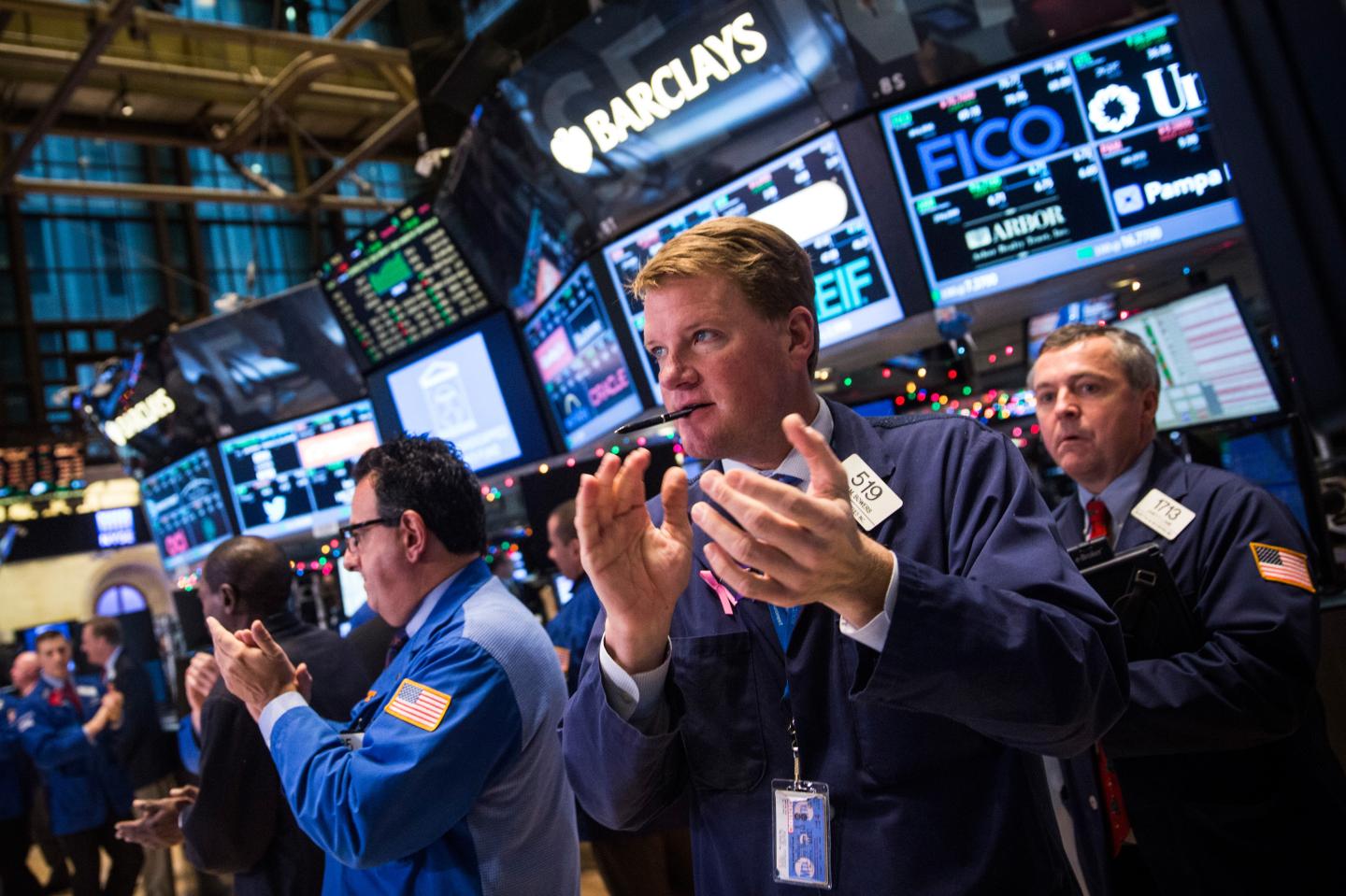
Traders work on the floor of the New York Stock Exchange during the afternoon of December 18, 2014 in New York City. The stock market had its best day of 2014, with the Dow Jones Industrial Average rising over 400 points after the Federal Reserve signaled that it would not raise interest rates.Photograph by Andrew Burton/Getty Images

January appears to have less of a pull on the market than it used to.

Stock investors have long looked to January to tell them where the market might be headed for the rest of the year. And for good reason: Over the long haul, the-first-month-of-the-year indicator has seemed to work pretty well. Historically, stocks have tended to rise in January. And in general, when stocks were up at the end of January, eleven months later shares logged a positive year; when January was down, shares ended the year in the red. Only 27% of the time since 1929 have the market and January parted ways, according to data from Standard & Poor’s.

That seems like good news for 2017 (based on a very small sample size). The Dow Jones industrial average rose 119 points on Tuesday, or 0.6%, on the first trading day of 2017. Let the good times roll.

The problem: Recently, the market connection between January and the rest of the year has been pretty lousy. During the past 11 years, stocks as measured by the S&P 500 have fallen six times in January. Yet the market has ended down in only two of those six years.

The divergence was particularly big last year. In 2016, the market had its worst start of the year since 1896, which Reuters, at the time, noted was seven years before the Wright brothers took flight and 12 years before Ford began selling the Model T. (On Tuesday, Ford scrapped plans to move some of its car production to Mexico.) The market ended the first month of last year down just over 5%.

Nonetheless, in part thanks to the Trump Bump, 2016 ended up being a pretty good year for stocks, up 9.5%.

Overall, the last few years have resulted in a lot of false negatives and false positives for the January indicator. And 2016 wasn’t the only year of big divergence. In 2009, for instance, the market dropped more than 8% in the first 31 days of the year. By March, though, the market was rebounding from the financial-crisis slump, and stocks ended that year up nearly 24%.

In 2015, the January indicator worked, but just barely. Stocks fell 3% in January, but ended the year down just 1%. Erase January, and stocks were actually up the other 11 months of that year. Not exactly the bloodbath that January would have predicted.

Even the first order January Effect—that stocks tend to rise in January—hasn’t been bankable lately. Again, of the past 11 years, only five have had up Januarys.

What’s going on?

One answer could have to do with index funds. More and more money has been shifting into passive investing—funds that blindly track an index. Active fund managers typically sell some stocks in December either to lock in positive returns for the year, or to realize losses (for tax purposes), and then go on a buying spree in January. In the past, that in turn may have created momentum for the stock market for the rest of the year (or at least for a few months), as emotion-driven humans reacted to the spree and dove into the stock market, not wanting to miss out. Index investing, in contrast, lacks those behavioral quirks.

Jeff Rubin, the director of research at investment firm Birinyi Associates, believes the January effect has waned because the January trade became too predictable. In order to capture the month’s gains, more investors have been buying stocks in December, leaving fewer left to buy in January. What’s more, the growing degree of market timing around the first 31 days of the year made January’s gains or losses an increasingly poor representation of how people actually thought about stocks or the economy. “The more people who pile into any trade, the less it works,” says Rubin.

Another answer could be that in an era of historically low interest rates, the stock market, except for the disastrous 2008, has generally been up. Yes, Januarys in which the stock market has risen have been good predictors—five out of the past five have coincided with up years. But, as a post on stock blog Seeking Alpha points out, that’s because the market has gone up in nine of the past 11 years.

There are a number of better-than-average reasons to doubt the predictive powers of this January’s results, if stocks do finish the month with gains. The biggest is President-elect Donald Trump: Actions he may take to stymie global trade, for example, could hobble stocks. Add to that the fact that the Federal Reserve has indicated that it plans more interest rate increases this year. What’s more, as my colleague Shawn Tully writes this week, it looks likely that Wall Street’s big bet on soaring earnings could be a fantasy.

So stocks could continue to rise in January, even past Dow 20,000, as investors remain on a Trump high. But don’t let that fool you. January’s ability to predict the stock market’s future is weaker than ever.

About the Author
By Stephen Gandel
See full bioRight Arrow Button Icon

Latest in Finance

Finance
Lorem ipsum dolor sit amet, consectetur adipiscing elit, sed do eiusmod tempor incididunt ut labore et dolore magna aliqua. Ut enim ad minim veniam
By Fortune Editors
October 20, 2025
Finance
Lorem ipsum dolor sit amet, consectetur adipiscing elit, sed do eiusmod tempor incididunt ut labore et dolore magna aliqua. Ut enim ad minim veniam
By Fortune Editors
October 20, 2025
Finance
Lorem ipsum dolor sit amet, consectetur adipiscing elit, sed do eiusmod tempor incididunt ut labore et dolore magna aliqua. Ut enim ad minim veniam
By Fortune Editors
October 20, 2025
Finance
Lorem ipsum dolor sit amet, consectetur adipiscing elit, sed do eiusmod tempor incididunt ut labore et dolore magna aliqua. Ut enim ad minim veniam
By Fortune Editors
October 20, 2025
Finance
Lorem ipsum dolor sit amet, consectetur adipiscing elit, sed do eiusmod tempor incididunt ut labore et dolore magna aliqua. Ut enim ad minim veniam
By Fortune Editors
October 20, 2025
Finance
Lorem ipsum dolor sit amet, consectetur adipiscing elit, sed do eiusmod tempor incididunt ut labore et dolore magna aliqua. Ut enim ad minim veniam
By Fortune Editors
October 20, 2025

Most Popular

Finance
Lorem ipsum dolor sit amet, consectetur adipiscing elit, sed do eiusmod tempor incididunt ut labore et dolore magna aliqua. Ut enim ad minim veniam
By Fortune Editors
October 20, 2025
Finance
Lorem ipsum dolor sit amet, consectetur adipiscing elit, sed do eiusmod tempor incididunt ut labore et dolore magna aliqua. Ut enim ad minim veniam
By Fortune Editors
October 20, 2025
Finance
Lorem ipsum dolor sit amet, consectetur adipiscing elit, sed do eiusmod tempor incididunt ut labore et dolore magna aliqua. Ut enim ad minim veniam
By Fortune Editors
October 20, 2025
Finance
Lorem ipsum dolor sit amet, consectetur adipiscing elit, sed do eiusmod tempor incididunt ut labore et dolore magna aliqua. Ut enim ad minim veniam
By Fortune Editors
October 20, 2025
Finance
Lorem ipsum dolor sit amet, consectetur adipiscing elit, sed do eiusmod tempor incididunt ut labore et dolore magna aliqua. Ut enim ad minim veniam
By Fortune Editors
October 20, 2025
Finance
Lorem ipsum dolor sit amet, consectetur adipiscing elit, sed do eiusmod tempor incididunt ut labore et dolore magna aliqua. Ut enim ad minim veniam
By Fortune Editors
October 20, 2025
Fortune Secondary Logo
Rankings
  • 100 Best Companies
  • Fortune 500
  • Global 500
  • Fortune 500 Europe
  • Most Powerful Women
  • World's Most Admired Companies
  • See All Rankings
  • Lists Calendar
Sections
  • Finance
  • Fortune Crypto
  • Features
  • Leadership
  • Health
  • Commentary
  • Success
  • Retail
  • Mpw
  • Tech
  • Lifestyle
  • CEO Initiative
  • Asia
  • Politics
  • Conferences
  • Europe
  • Newsletters
  • Personal Finance
  • Environment
  • Magazine
  • Education
Customer Support
  • Frequently Asked Questions
  • Customer Service Portal
  • Privacy Policy
  • Terms Of Use
  • Single Issues For Purchase
  • International Print
Commercial Services
  • Advertising
  • Fortune Brand Studio
  • Fortune Analytics
  • Fortune Conferences
  • Business Development
  • Group Subscriptions
About Us
  • About Us
  • Press Center
  • Work At Fortune
  • Terms And Conditions
  • Site Map
  • About Us
  • Press Center
  • Work At Fortune
  • Terms And Conditions
  • Site Map
  • Facebook icon
  • Twitter icon
  • LinkedIn icon
  • Instagram icon
  • Pinterest icon

Latest in Finance

reeves
Personal FinanceInflation
British government’s answer to cost-of-living crisis: discounts on theme park tickets, chocolate bars
By Jill Lawless and The Associated PressMay 21, 2026
1 hour ago
trump
AIWhite House
Trump says he’s calling off widely anticipated order to rein in AI
By Collin Binkley, Matt O'Brien and The Associated PressMay 21, 2026
2 hours ago
ro khanna
AITech
Ro Khanna blames ‘clueless’ boomers for Gen Z booing AI: They handed over a ‘broken economy’
By Jake AngeloMay 21, 2026
2 hours ago
Young worker looking tired in front of a screen
EconomyYoung workers
A Nobel economist figured out 60 years ago that people learn best on the job. The Atlanta Fed says AI is making that almost impossible
By Tristan BoveMay 21, 2026
3 hours ago
The Midwest is leading America’s spring housing rebound because of ‘buyers who are actually showing up,’ Realtor.com says
Real EstateHousing
The Midwest is leading America’s spring housing rebound because of ‘buyers who are actually showing up,’ Realtor.com says
By Sydney LakeMay 21, 2026
3 hours ago
Intuit CFO on why the company is simplifying its structure
NewslettersCFO Daily
Intuit CFO on why the company is simplifying its structure
By Sheryl EstradaMay 21, 2026
4 hours ago

Most Popular

Bolt CEO says he let go of his entire HR team for creating problems that didn’t exist: ‘Those problems disappeared when I let them go’ 
Workplace Culture
Bolt CEO says he let go of his entire HR team for creating problems that didn’t exist: ‘Those problems disappeared when I let them go’ 
By Preston ForeMay 19, 2026
2 days ago
Despite a $500 million net worth, Shaq just finished his fourth degree. He warns graduates: 'Your character will take you further than your resume'
Success
Despite a $500 million net worth, Shaq just finished his fourth degree. He warns graduates: 'Your character will take you further than your resume'
By Preston ForeMay 20, 2026
1 day ago
Meet a 21-year-old community college student who's going to China as the first American woman welder in the trades Olympics
Future of Work
Meet a 21-year-old community college student who's going to China as the first American woman welder in the trades Olympics
By Mike Householder and The Associated PressMay 17, 2026
4 days ago
Pay transparency is exposing a bigger problem: Most companies can't explain why they pay what they pay
Workplace Culture
Pay transparency is exposing a bigger problem: Most companies can't explain why they pay what they pay
By Sydney LakeMay 20, 2026
1 day ago
Dr. Bernice King on why companies that walked back DEI were never truly committed: 'If you retreat that quick…that reveals who you really are'
Workplace Culture
Dr. Bernice King on why companies that walked back DEI were never truly committed: 'If you retreat that quick…that reveals who you really are'
By Preston ForeMay 19, 2026
2 days ago
A 'proudly autistic' workplace expert says putting neurodivergent employees in a typical office is like dropping a polar bear in Austin, Texas
Conferences
A 'proudly autistic' workplace expert says putting neurodivergent employees in a typical office is like dropping a polar bear in Austin, Texas
By Tristan BoveMay 20, 2026
24 hours ago

© 2026 Fortune Media IP Limited. All Rights Reserved. Use of this site constitutes acceptance of our Terms of Use and Privacy Policy | CA Notice at Collection and Privacy Notice | Do Not Sell/Share My Personal Information
FORTUNE is a trademark of Fortune Media IP Limited, registered in the U.S. and other countries. FORTUNE may receive compensation for some links to products and services on this website. Offers may be subject to change without notice.