• Home
  • Latest
  • Fortune 500
  • Finance
  • Tech
  • Leadership
  • Lifestyle
  • Rankings
  • Multimedia
CommentaryLeadership

Trump’s Deals May Unintentionally Damage the US Economy

By
Scott R. Baker
Scott R. Baker
Down Arrow Button Icon
By
Scott R. Baker
Scott R. Baker
Down Arrow Button Icon
December 21, 2016, 2:24 PM ET
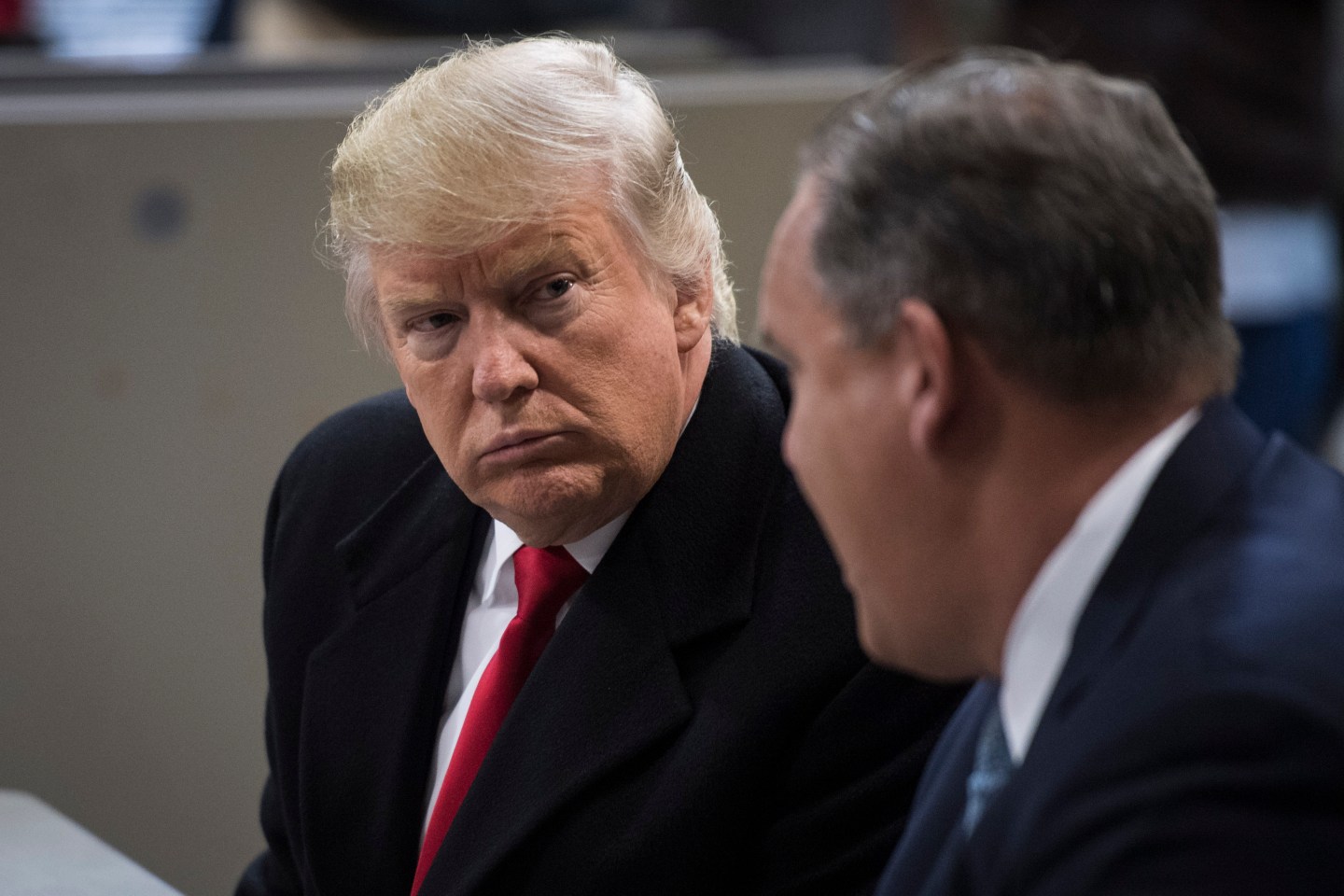
President-elect Donald Trump talks with people as they take a tour of Carrier Corporation in Indianapolis, IN on Thursday, Dec. 01, 2016.
Photograph by Jabin Botsford—The Washington Post via Getty Images

As the new Trump Administration seeks to deliver on promises of domestic growth, some of President-elect Trump’s controversial moves could undermine that goal as he has created uncertainties around U.S. economic policies.

Although Inauguration Day is about month away, Trump has already promised major overhauls, from tax codes to trade regulations, and has pointedly singled out corporations that he views as running counter to his policies-in-the-making. The latest involved Lockheed Martin Corp., which Trump has criticized over the costs of the F35 fighter jet. Shares of the aerospace and defense company fell, as he reportedly described the jet’s costs as “out of control.”

Trump also has taken on Carrier Corp. and Ford Motor Co. over plans to move some production to Mexico. In the case of Carrier, Trump led the state of Indiana to offer $7 million in tax breaks to help keep 1,000 jobs in Indiana instead of going to Mexico. Meanwhile, Ford CEO Mark Fields told Bloomberg that the automaker is willing to work with the Trump administration, provided that the right policies are in place, such as fuel efficiency regulations.

My point here is not to weigh the merits or legality of particular moves by the Trump administration or any other politicians. Rather, I want to highlight a potential cost of political gamesmanship: an increase in political risk and economic policy uncertainty. When companies are uncertain of how they will be treated under government policy — whether because they fear being singled out or because of pressure on a particular industry (such as manufacturing and keeping jobs in the U.S.)— that can undermine a company’s business strategies.

Increased economic policy uncertainty can harm macroeconomic performance, according to research I conducted at Northwestern University’s Kellogg School of Management, along with Nicholas Bloom of Stanford University and Steven J. Davis of the University of Chicago Booth School of Business.

The rationale is simple: Large corporate expenditures are typically at least partially “irreversible” because of the magnitude of the cost and effort involved (i.e., building a multi-billion-dollar factory). If that investment is profitable under one tax regime, but not under another, any uncertainty will likely prompt the company to put off making that investment until the uncertainty is resolved, which reduces output and stymies job growth.

The effect of this uncertainty could hinder the goals of the Trump administration, which has promised to boost the U.S. economy by overhauling trade agreements, and which has taken a strong stance on swaying corporate decisions around on where to locate production facilities. For example, the president-elect has stated he will seek to impose tariffs of up to 35% on goods coming into the U.S. from American companies that decide to relocate production outside the country. Trade lawyers are already weighing in on the potential implications, saying any executive action of this type by the Trump administration would likely spark legal challenges, which could lead the new president to pursue tax legislation in Congress instead.

Economic policy uncertainty is not a new phenomenon. Our research began by developing an index of economic policy uncertainty (the EPU index) for the U.S. and a number of other major economies and to determine its evolution since 1985. The primary component of the EPU index reflects the frequency of articles in 10 leading U.S. newspapers that contain the following words: “economic” or “economy”; “uncertain” or “uncertainty”; and one or more of “congress,” “deficit,” “Federal Reserve,” “legislation,” “regulation,” or “White House.”

In recent years, our index has spiked during tight presidential elections, significant military action and terrorist attacks, the 2011 debt ceiling dispute, and other major battles over fiscal policy. Using archives for six major U.S. newspapers, events back to 1900 were also examined, including the outbreak of World War I and the rash of policies undertaken by President Franklin D. Roosevelt during the Great Depression.

More recently, there have been multiple periods when the EPU index was high: The 2008 global financial crisis and the recession that followed, and the unparalleled intervention by the Federal Reserve and other central banks to try to promote economic stability and jumpstart growth. Most recently, global uncertainty has surrounded the Brexit vote for the U.K. to exit the European Union and what “transitional arrangements” might materialize; the defeat of Italian constitutional reforms and the resignation of Italy’s prime minister; and the upcoming elections in France, which has extended its state of emergency following the November 2015 terrorist attacks in Paris.

The EPU index also has a high degree of correlation to other measures of uncertainty, such as the “VIX,” which measures volatility in the S&P 500 stock index using options trading patterns. As our research found, the VIX and the EPU index often move together. January 2017 may be one of those times of VIX and EPU correlation as some investors are expecting more volatility because of uncertainty around Trump’s economic policy positions.

Given that Trump has been an unconventional candidate with no prior political experience, some degree of uncertainty is to be expected. But excessive uncertainty over the future path of economic policy can undermine the economic policies the new administration is seeking to put in place. While some of the Trump administration’s proposed reforms may be good for economic growth, administering policy on a case-by-case basis makes it more difficult for firms (and households) to plan for the future.

Pursuing measures aimed at one or a few companies in either a punitive or beneficial fashion may prompt firms to wonder who will be next, hindering investment and causing firms to expend more effort on lobbying for favorable treatment. The incoming Trump administration might be better advised to provide greater clarity and neutrality around its economic and trade policies. While that may make for less dramatic political gamesmanship, it may prove far more effective for pursuing goals such as maintaining U.S. manufacturing and promoting economic growth and stability.

Scott R. Baker is a professor at Kellogg School of Management at Northwestern University.

About the Author
By Scott R. Baker
See full bioRight Arrow Button Icon

Latest in Commentary

Finance
Lorem ipsum dolor sit amet, consectetur adipiscing elit, sed do eiusmod tempor incididunt ut labore et dolore magna aliqua. Ut enim ad minim veniam
By Fortune Editors
October 20, 2025
Finance
Lorem ipsum dolor sit amet, consectetur adipiscing elit, sed do eiusmod tempor incididunt ut labore et dolore magna aliqua. Ut enim ad minim veniam
By Fortune Editors
October 20, 2025
Finance
Lorem ipsum dolor sit amet, consectetur adipiscing elit, sed do eiusmod tempor incididunt ut labore et dolore magna aliqua. Ut enim ad minim veniam
By Fortune Editors
October 20, 2025
Finance
Lorem ipsum dolor sit amet, consectetur adipiscing elit, sed do eiusmod tempor incididunt ut labore et dolore magna aliqua. Ut enim ad minim veniam
By Fortune Editors
October 20, 2025
Finance
Lorem ipsum dolor sit amet, consectetur adipiscing elit, sed do eiusmod tempor incididunt ut labore et dolore magna aliqua. Ut enim ad minim veniam
By Fortune Editors
October 20, 2025
Finance
Lorem ipsum dolor sit amet, consectetur adipiscing elit, sed do eiusmod tempor incididunt ut labore et dolore magna aliqua. Ut enim ad minim veniam
By Fortune Editors
October 20, 2025

Most Popular

Finance
Lorem ipsum dolor sit amet, consectetur adipiscing elit, sed do eiusmod tempor incididunt ut labore et dolore magna aliqua. Ut enim ad minim veniam
By Fortune Editors
October 20, 2025
Finance
Lorem ipsum dolor sit amet, consectetur adipiscing elit, sed do eiusmod tempor incididunt ut labore et dolore magna aliqua. Ut enim ad minim veniam
By Fortune Editors
October 20, 2025
Finance
Lorem ipsum dolor sit amet, consectetur adipiscing elit, sed do eiusmod tempor incididunt ut labore et dolore magna aliqua. Ut enim ad minim veniam
By Fortune Editors
October 20, 2025
Finance
Lorem ipsum dolor sit amet, consectetur adipiscing elit, sed do eiusmod tempor incididunt ut labore et dolore magna aliqua. Ut enim ad minim veniam
By Fortune Editors
October 20, 2025
Finance
Lorem ipsum dolor sit amet, consectetur adipiscing elit, sed do eiusmod tempor incididunt ut labore et dolore magna aliqua. Ut enim ad minim veniam
By Fortune Editors
October 20, 2025
Finance
Lorem ipsum dolor sit amet, consectetur adipiscing elit, sed do eiusmod tempor incididunt ut labore et dolore magna aliqua. Ut enim ad minim veniam
By Fortune Editors
October 20, 2025
Fortune Secondary Logo
Rankings
  • 100 Best Companies
  • Fortune 500
  • Global 500
  • Fortune 500 Europe
  • Most Powerful Women
  • Future 50
  • World’s Most Admired Companies
  • See All Rankings
Sections
  • Finance
  • Fortune Crypto
  • Features
  • Leadership
  • Health
  • Commentary
  • Success
  • Retail
  • Mpw
  • Tech
  • Lifestyle
  • CEO Initiative
  • Asia
  • Politics
  • Conferences
  • Europe
  • Newsletters
  • Personal Finance
  • Environment
  • Magazine
  • Education
Customer Support
  • Frequently Asked Questions
  • Customer Service Portal
  • Privacy Policy
  • Terms Of Use
  • Single Issues For Purchase
  • International Print
Commercial Services
  • Advertising
  • Fortune Brand Studio
  • Fortune Analytics
  • Fortune Conferences
  • Business Development
  • Group Subscriptions
About Us
  • About Us
  • Editorial Calendar
  • Press Center
  • Work At Fortune
  • Diversity And Inclusion
  • Terms And Conditions
  • Site Map
Fortune Secondary Logo
  • About Us
  • Editorial Calendar
  • Press Center
  • Work At Fortune
  • Diversity And Inclusion
  • Terms And Conditions
  • Site Map
  • Facebook icon
  • Twitter icon
  • LinkedIn icon
  • Instagram icon
  • Pinterest icon

Latest in Commentary

altman
Commentarydisruption
Sam Altman, Jensen Huang and the other AI kingpins only have themselves to blame for the scare rippling through the economy right now
By Kevin ManeyMarch 4, 2026
6 hours ago
wong
CommentaryLegal
Legal AI is splitting in two—and most people miss the difference
By David WongMarch 4, 2026
7 hours ago
cuban
CommentaryDrugs
Trump promised lower drug prices. Here’s how Congress virtually guaranteed the opposite
By Tony LoSassoMarch 4, 2026
7 hours ago
gen z
Commentarytourism
Millennials invented the experience economy and Gen Z is reinventing travel itself
By Nick FilatovMarch 4, 2026
7 hours ago
wolfgang
CommentaryLeadership
Europe doesn’t lack tech talent. Its leaders lack execution
By Wolfgang OelsMarch 3, 2026
1 day ago
zuck
Commentarycyber
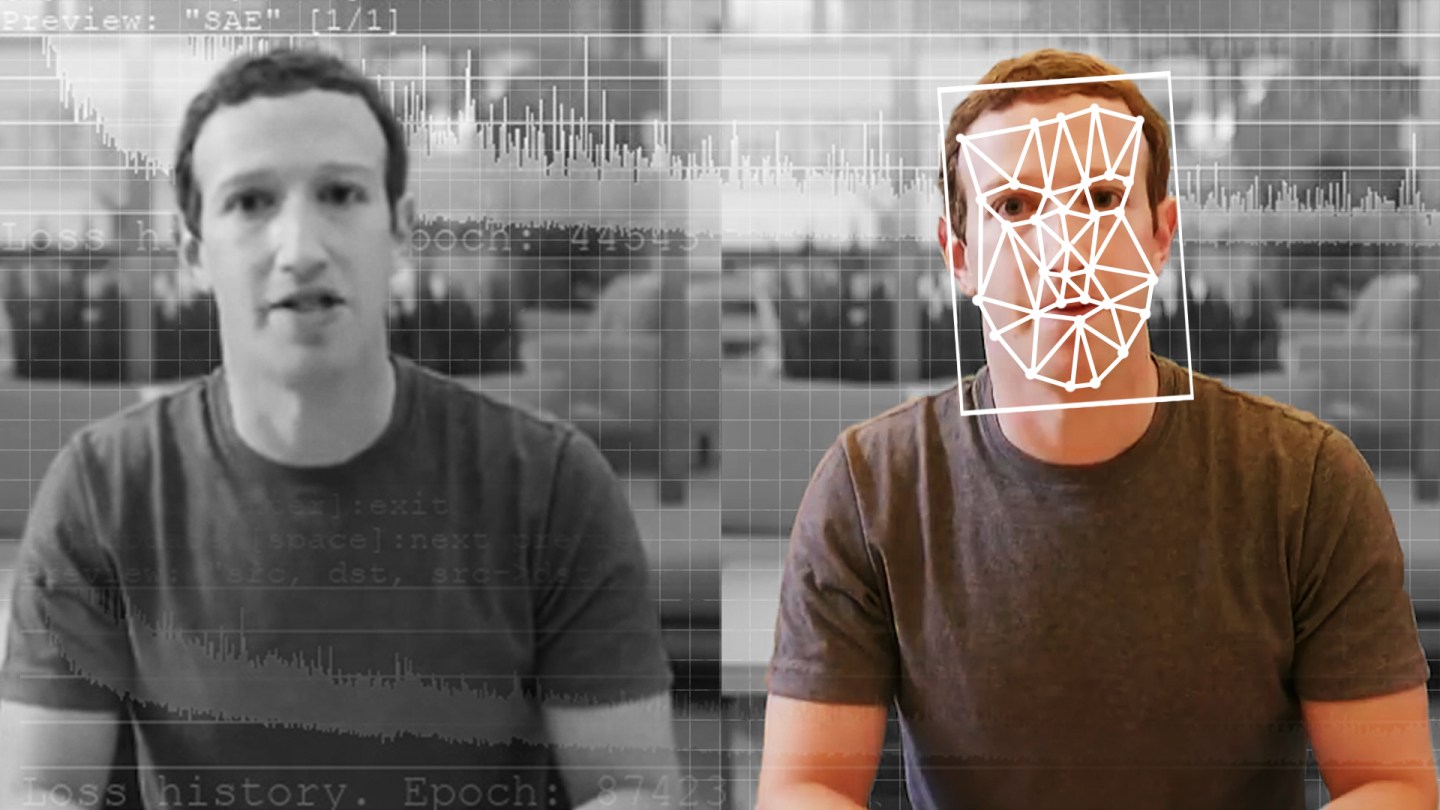
Boards aren’t ready for the AI age: What happens when your CEO gets deepfaked?
By James RichardsonMarch 3, 2026
1 day ago

Most Popular

placeholder alt text
Economy
Interest on the $38.8 trillion national debt has tripled since 2020, and it already costs taxpayers more than defense and Medicaid
By Nick LichtenbergMarch 2, 2026
2 days ago
placeholder alt text
Personal Finance
Current price of silver as of Tuesday, March 3, 2026
By Joseph HostetlerMarch 3, 2026
1 day ago
placeholder alt text
Real Estate
Meet a burned out 28-year-old who pays $168 a month in China's faux Venice to retire early from her Shanghai finance gig
By Albee Zhang and The Associated PressMarch 2, 2026
2 days ago
placeholder alt text
Middle East
Iran’s Islamic Revolutionary Guard controls a sprawling business empire that dominates the economy
By Jason MaMarch 2, 2026
2 days ago
placeholder alt text
Cybersecurity
Cities join Amazon in cutting ties with license-plate reader Flock following public outcry. ‘Your privacy is totally fine,’ says Ring CEO
By Catherina GioinoMarch 3, 2026
21 hours ago
placeholder alt text
Personal Finance
Current price of gold as of March 3, 2026
By Danny BakstMarch 3, 2026
1 day ago

© 2026 Fortune Media IP Limited. All Rights Reserved. Use of this site constitutes acceptance of our Terms of Use and Privacy Policy | CA Notice at Collection and Privacy Notice | Do Not Sell/Share My Personal Information
FORTUNE is a trademark of Fortune Media IP Limited, registered in the U.S. and other countries. FORTUNE may receive compensation for some links to products and services on this website. Offers may be subject to change without notice.