• Home
  • Latest
  • Fortune 500
  • Finance
  • Tech
  • Leadership
  • Lifestyle
  • Rankings
  • Multimedia
Commentary

What the FBI’s Clinton Email Case Teaches Leaders About Delivering Tough News

By
Suzanne J. Piotrowski
Down Arrow Button Icon
By
Suzanne J. Piotrowski
Down Arrow Button Icon
November 5, 2016, 9:00 AM ET
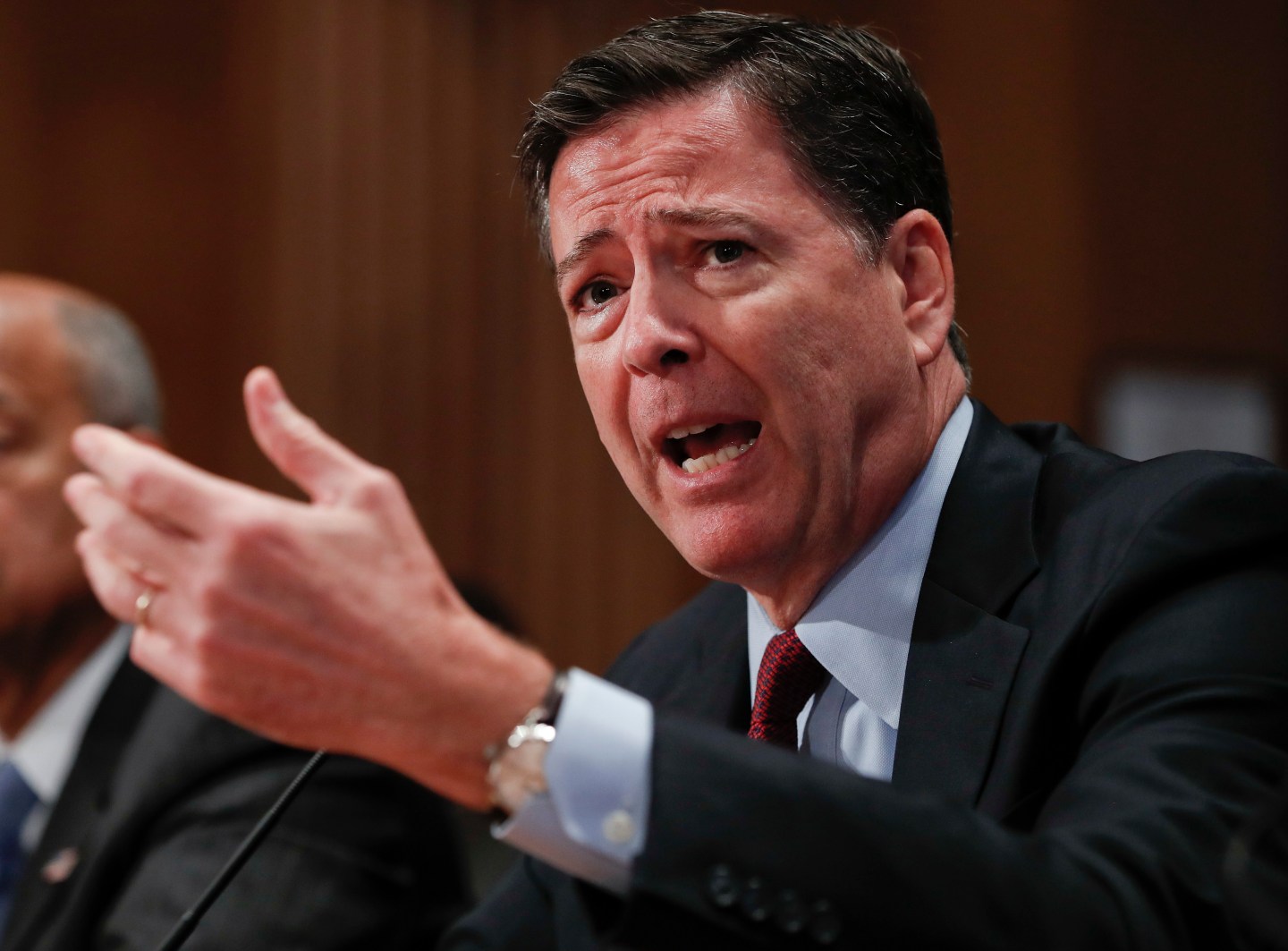
James Comey
FILE - In this Sept. 27, 2016 file photo, FBI Director James Comey testifies on Capitol Hill in Washington. The longtime Hillary Clinton aide at the center of a renewed FBI email investigation testified under oath four months ago she never deleted old emails, despite promising in 2013 not to take sensitive files when she left the State Department. (AP Photo/Pablo Martinez Monsivais, File)Pablo Martinez Monsivais—AP

Released emails. Deleted emails. Found emails. The latest scandal, in a long list of scandals this presidential election season, is one of transparency.

Hilary Clinton operated a private email server while Secretary of State from 2009 to 2013. The FBI investigated her handling of classified information while using this server. As part of this investigation, Clinton’s team turned over 30,000 emails but deleted another 33,000 messages noting they were personal in nature. FBI Director James Comey concluded this investigation by saying that while Clinton had been “extremely careless” there were no grounds to charge her.

However, that’s not the end of the story. Recently, new emails were found on a computer belonging to the husband of Clinton’s close associate. In retrospect, it was almost inevitable that more hardware with additional emails would come to light. The latest twist in the tale of transparency surrounds the decision of Comey telling Congress that additional emails were found. The emails are being reviewed to determine if the original decision not to press charges needs to be adjusted.

The question of whether Comey’s letter to Congress is legal will be decided in the courts. But is it productive transparency?

When releasing information that isn’t mandatory, leaders need to consider whether their actions match the following core values:

When to release

That new emails were found was always going to become public. The issue is about timing. There are many reasons the release of information is typically delayed, including evolving public policy development, contract negotiations, or an ongoing criminal investigation. What is unclear is how much the Congressional notification and subsequent attention has affected the actual investigation. However, the FBI agents handling this investigation are clearly now under an increased amount of pressure to finish their analysis of 30,000 emails before the election.

What to release

Government officials need to decide if the information under consideration refers to a governmental process or is about an event or action. Transparency of process is useful and welcome. We want to understand how governments make decisions. The issue with Comey’s letter at such an early stage of the investigation is whether it could somehow alter the outcome of the investigation. This of course is something we will never fully know. The release of information is frequently tied to reputation—the reputation of an organization and the reputation of individuals. Comey apparently decided to release the information to protect the FBI and his own reputation, not necessarily to increase our understanding of Clinton’s handling of classified information.

Governmental transparency versus governmental waste

Make no mistake – transparency costs money and slows things down. In many cases the more transparent a government agency is the more it costs to operate. If government officials were to post every memo they wrote, upload every data set they developed to a data portal, and hold every meeting in the open very little work would get done. Of course, extreme transparency is not embodied in the norms, rules, and regulations we have in the United States and does not happen in practice. However, without transparency, journalists, activists, and regular citizens are unable to highlight government overspending, waste, or poor management. The right amount of transparency saves money.

More transparency does not equal more trust

The relationship between governmental transparency and trust is unclear. More transparency doesn’t always lead to greater trust in government. This isn’t inherently a problem. Transparency doesn’t always lead to more trust in government, but that is not the only goal. As a country, we have embraced transparency because it promotes democratic accountability. The purpose of transparency policies is not just to increase trust, but more broadly legitimacy and accountability. The goals may be at odds with each other. In the Comey case, the values in tension are transparency and due process. Will the release of the information about reopening the email investigation inhibit due process?

Usability is important

How information is presented matters. Raw data is of less use than digestible information. While it is interesting to know that an investigation is going on, that piece of information on its own does not at all inform our understanding of the issue.

A close analysis of Clinton’s email practices is one that deserves national attention. Comey’s decision to inform Congress now about the ongoing investigation has helped protect the reputation of the FBI and its director, possibly at the expense of cost and due-process, but there is little evidence that the early release of this information has added in any meaningful way to the public’s understanding of this complicated issue.

Suzanne J. Piotrowski is a deputy dean and associate professor at Rutgers University’s School of Public Affairs and Administration.

About the Author
By Suzanne J. Piotrowski
See full bioRight Arrow Button Icon

Latest in Commentary

Finance
Lorem ipsum dolor sit amet, consectetur adipiscing elit, sed do eiusmod tempor incididunt ut labore et dolore magna aliqua. Ut enim ad minim veniam
By Fortune Editors
October 20, 2025
Finance
Lorem ipsum dolor sit amet, consectetur adipiscing elit, sed do eiusmod tempor incididunt ut labore et dolore magna aliqua. Ut enim ad minim veniam
By Fortune Editors
October 20, 2025
Finance
Lorem ipsum dolor sit amet, consectetur adipiscing elit, sed do eiusmod tempor incididunt ut labore et dolore magna aliqua. Ut enim ad minim veniam
By Fortune Editors
October 20, 2025
Finance
Lorem ipsum dolor sit amet, consectetur adipiscing elit, sed do eiusmod tempor incididunt ut labore et dolore magna aliqua. Ut enim ad minim veniam
By Fortune Editors
October 20, 2025
Finance
Lorem ipsum dolor sit amet, consectetur adipiscing elit, sed do eiusmod tempor incididunt ut labore et dolore magna aliqua. Ut enim ad minim veniam
By Fortune Editors
October 20, 2025
Finance
Lorem ipsum dolor sit amet, consectetur adipiscing elit, sed do eiusmod tempor incididunt ut labore et dolore magna aliqua. Ut enim ad minim veniam
By Fortune Editors
October 20, 2025

Most Popular

Finance
Lorem ipsum dolor sit amet, consectetur adipiscing elit, sed do eiusmod tempor incididunt ut labore et dolore magna aliqua. Ut enim ad minim veniam
By Fortune Editors
October 20, 2025
Finance
Lorem ipsum dolor sit amet, consectetur adipiscing elit, sed do eiusmod tempor incididunt ut labore et dolore magna aliqua. Ut enim ad minim veniam
By Fortune Editors
October 20, 2025
Finance
Lorem ipsum dolor sit amet, consectetur adipiscing elit, sed do eiusmod tempor incididunt ut labore et dolore magna aliqua. Ut enim ad minim veniam
By Fortune Editors
October 20, 2025
Finance
Lorem ipsum dolor sit amet, consectetur adipiscing elit, sed do eiusmod tempor incididunt ut labore et dolore magna aliqua. Ut enim ad minim veniam
By Fortune Editors
October 20, 2025
Finance
Lorem ipsum dolor sit amet, consectetur adipiscing elit, sed do eiusmod tempor incididunt ut labore et dolore magna aliqua. Ut enim ad minim veniam
By Fortune Editors
October 20, 2025
Finance
Lorem ipsum dolor sit amet, consectetur adipiscing elit, sed do eiusmod tempor incididunt ut labore et dolore magna aliqua. Ut enim ad minim veniam
By Fortune Editors
October 20, 2025
Rankings
  • 100 Best Companies
  • Fortune 500
  • Global 500
  • Fortune 500 Europe
  • Most Powerful Women
  • Future 50
  • World’s Most Admired Companies
  • See All Rankings
Sections
  • Finance
  • Leadership
  • Success
  • Tech
  • Asia
  • Europe
  • Environment
  • Fortune Crypto
  • Health
  • Retail
  • Lifestyle
  • Politics
  • Newsletters
  • Magazine
  • Features
  • Commentary
  • Mpw
  • CEO Initiative
  • Conferences
  • Personal Finance
  • Education
Customer Support
  • Frequently Asked Questions
  • Customer Service Portal
  • Privacy Policy
  • Terms Of Use
  • Single Issues For Purchase
  • International Print
Commercial Services
  • Advertising
  • Fortune Brand Studio
  • Fortune Analytics
  • Fortune Conferences
  • Business Development
About Us
  • About Us
  • Editorial Calendar
  • Press Center
  • Work At Fortune
  • Diversity And Inclusion
  • Terms And Conditions
  • Site Map

© 2025 Fortune Media IP Limited. All Rights Reserved. Use of this site constitutes acceptance of our Terms of Use and Privacy Policy | CA Notice at Collection and Privacy Notice | Do Not Sell/Share My Personal Information
FORTUNE is a trademark of Fortune Media IP Limited, registered in the U.S. and other countries. FORTUNE may receive compensation for some links to products and services on this website. Offers may be subject to change without notice.


Latest in Commentary

Sridhar Ramaswamy is CEO of Snowflake, the AI Data Cloud company.
CommentarySoftware
Snowflake CEO: Big Tech’s grip on AI will loosen in 2026 — plus 6 more predictions that will define the year
By Sridhar RamaswamyDecember 28, 2025
2 hours ago
Federal Reserve Gov. Chris Waller engages 200 top CEOs at the Yale CEO Summit in December, 2025. (Photo courtesy of the Yale Chief Executive Leadership Institute/Photographer Donovan Marks)
CommentaryFederal Reserve
Why over 80% of America’s top CEOs think Trump would be wrong not to pick Chris Waller for Fed chair
By Jeffrey Sonnenfeld and Steven TianDecember 27, 2025
1 day ago
Kence Anderson is the founder and CEO of AMESA 
CommentarySoftware
I pioneered machine teaching at Microsoft. Building AI agents is like building a basketball team, not drafting a player 
By Kence AndersonDecember 27, 2025
1 day ago
Butch Meily
Commentaryempathy
The global empathy crisis that confronts us this Christmas
By Butch MeilyDecember 25, 2025
3 days ago
economy
CommentaryGDP
Why 4.3% GDP growth proves the ‘vibecession’ theory is historically wrong
By Brian HamiltonDecember 24, 2025
4 days ago
students
CommentaryEducation
Why restricting graduate loans will bankrupt America’s talent supply chain
By Katica RoyDecember 23, 2025
5 days ago

Most Popular

placeholder alt text
Retail
Trump just declared December 26th a national holiday. What's open and closed?
By Dave SmithDecember 26, 2025
2 days ago
placeholder alt text
Success
As millions of Gen Zers face unemployment, CEOs of Amazon, Walmart, and McDonald's say opportunity is still there—if you have the right mindset
By Preston ForeDecember 26, 2025
2 days ago
placeholder alt text
Future of Work
Malcolm Gladwell tells young people if they want a STEM degree, 'don’t go to Harvard.' You may end up at the bottom of your class and drop out
By Sasha RogelbergDecember 27, 2025
1 day ago
placeholder alt text
Europe
Christmas 500 years ago was a drunken 6-week feast that may have been considerably better than the modern holiday, medieval historian says
By Bobbi Sutherland and The ConversationDecember 25, 2025
3 days ago
placeholder alt text
Politics
Peter Thiel and Larry Page are preparing to flee California in case the state passes a billionaire wealth tax, report says
By Jason MaDecember 27, 2025
19 hours ago
placeholder alt text
Banking
Russian official warns a banking crisis is possible amid nonpayments. 'I don’t want to think about a continuation of the war or an escalation'
By Jason MaDecember 27, 2025
16 hours ago