• Home
  • News
  • Fortune 500
  • Tech
  • Finance
  • Leadership
  • Lifestyle
  • Rankings
  • Multimedia
Tech

New Study Finds Zero-Emission Cars will Slash Healthcare and Environmental Spending

By
David Z. Morris
David Z. Morris
Down Arrow Button Icon
By
David Z. Morris
David Z. Morris
Down Arrow Button Icon
October 29, 2016, 12:14 PM ET
Petrobras Managment Considering Lowering Gas Ptrices To Incerase Sales
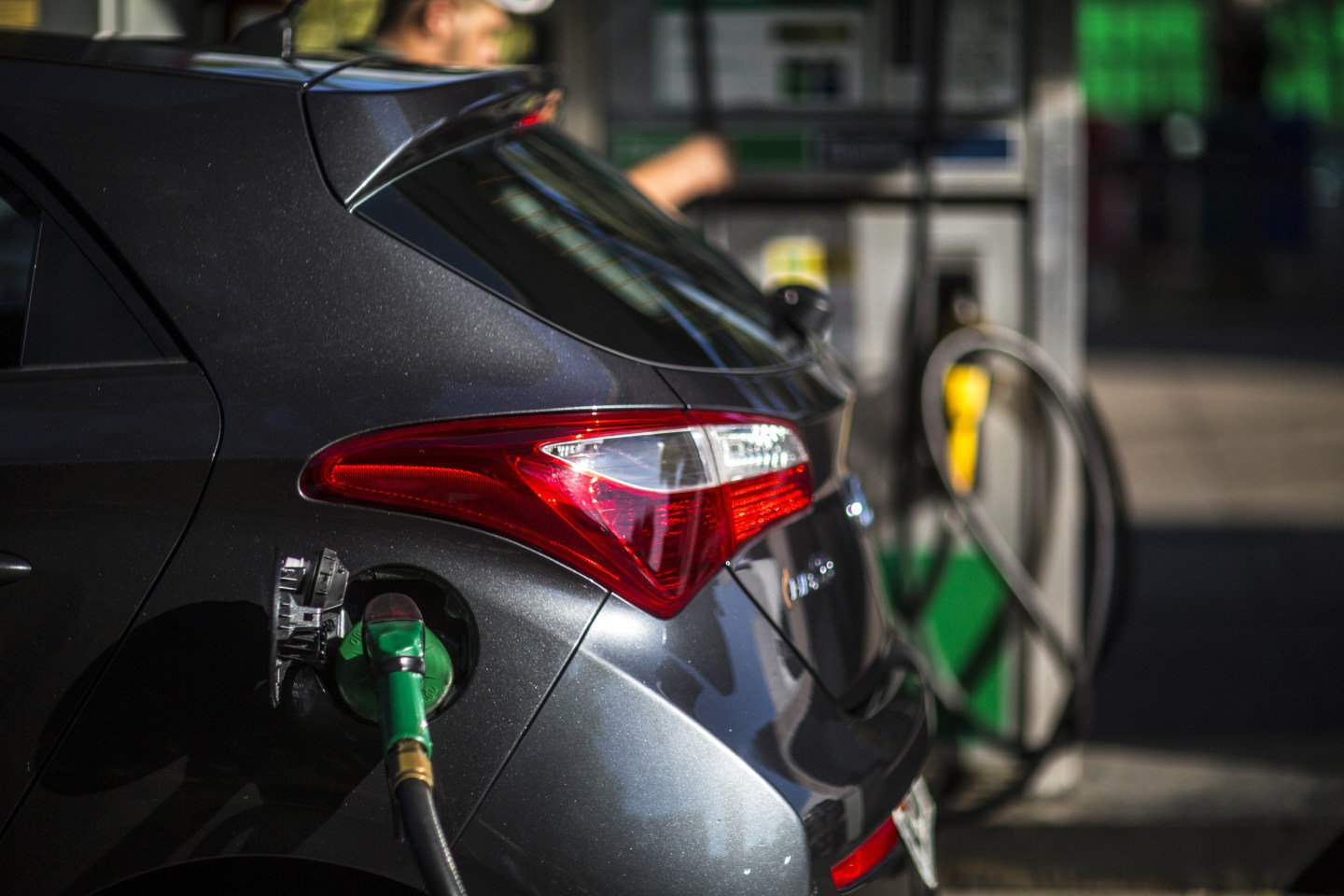
A car is filled with gas at a Petrobras BR station in Rio de Janeiro, Brazil, on Wednesday, April 6, 2016. Petrobras Chairman Nelson Carvalho has opposed a management proposal to reduce the price of gasoline in a bid to boost sales, said a person familiar with the discussions. Photographer: Dado Galdieri/Bloomberg via Getty ImagesPhoto by Dado Galdieri/Bloomberg via Getty Images

A study released this month by the American Lung Association finds that, while a gallon of regular gas now averages around $2.22 nationwide, that price does not reflect about $1.15 in healthcare and other costs imposed on taxpayers, healthcare consumers, and businesses when it is used.

The study is based on data from ten states that have adopted California’s aggressive goals for transitioning to zero-emission vehicles (ZEVs). In 2015, those states—including New York, Oregon, and New Jersey—suffered $24 billion in health-related costs, including 220,000 lost work days, from asthma, heart attacks, and other ailments caused by vehicle emissions.

Those states also suffered $13 billion in climate costs from vehicle emissions, including costs to agricultural productivity and property damage from increased flood risk. The transportation sector produces 49% of greenhouse emissions in the states surveyed.

Get Data Sheet, Fortune’s technology newsletter.

According to the ALA’s calculations, that means every 16 gallon tank of gas used in 2015 generated $11.82 in healthcare costs and $6.55 in climate-related costs.

The ALA also estimated the future cost savings of a transition to zero-emission vehicles. If 100% of new cars sold by 2050 are battery-electric, plug-in hybrid, or hydrogen fuel cell vehicles, and 65% of the entire passenger fleet is made up of such vehicles, the ten ZEV states will save $20.5 billion in annual health costs and $12.8 billion in climate costs.

The social costs of vehicle emissions are what’s known in economics as an externality—a cost (or benefit) of a product that isn’t reflected in its market-derived price. Other examples of negative externalities include the damage water pollution can do to the fishing industry, or the quality of life damage caused by outdoor advertising. The quintessential positive externality is education, whose economic benefits reach far beyond the individual being educated.

In some markets, particularly in Europe, high taxes have long been imposed on gasoline, in part as an attempt to make its price better match its real social costs, and to financially offset those impacts.

For more on tech and the environment, watch our video.

The ALA study arguably oversimplifies the link between emissions in a region and climate costs in that region, because the impact of greenhouse gases on climate change are global rather than local. The dispersed nature of climate impacts has contributed to the challenge of negotiating greenhouse-gas reduction treaties, thanks to what’s known as the free rider problem. All nations benefit more or less equally when one chooses to reduce its emissions, while only those making cuts suffer the economic impacts of reduced fossil fuel use, making it extremely tempting for individual actors to do nothing.

But the particulates that cause most emissions-related health problems, such as microscopic soot and ash, do have highly localized impacts. The new study shows that many of the benefits of the transition to zero-emissions vehicles are quite local—and quite substantial.


About the Author
By David Z. Morris
See full bioRight Arrow Button Icon

Latest in Tech

InnovationVenture Capital
This Khosla Ventures-backed startup is using AI to personalize cancer care
By Allie GarfinkleDecember 4, 2025
3 hours ago
AIEye on AI
Companies are increasingly falling victim to AI impersonation scams. This startup just raised $28M to stop deepfakes in real time
By Sharon GoldmanDecember 4, 2025
3 hours ago
Jensen Huang
SuccessBillionaires
Nvidia CEO Jensen Huang admits he works 7 days a week, including holidays, in a constant ‘state of anxiety’ out of fear of going bankrupt
By Jessica CoacciDecember 4, 2025
3 hours ago
Ted Pick
BankingData centers
Morgan Stanley considers offloading some of its data-center exposure
By Esteban Duarte, Paula Seligson, Davide Scigliuzzo and BloombergDecember 4, 2025
3 hours ago
Zuckerberg
EnergyMeta
Meta’s Zuckerberg plans deep cuts for Metaverse efforts
By Kurt Wagner and BloombergDecember 4, 2025
3 hours ago
Pichai
Big TechAlphabet
Alphabet’s AI chips are a potential $900 billion ‘secret sauce’
By Ryan Vlastelica and BloombergDecember 4, 2025
3 hours ago

Most Popular

placeholder alt text
Economy
Two months into the new fiscal year and the U.S. government is already spending more than $10 billion a week servicing national debt
By Eleanor PringleDecember 4, 2025
8 hours ago
placeholder alt text
North America
Jeff Bezos and Lauren Sánchez Bezos commit $102.5 million to organizations combating homelessness across the U.S.: ‘This is just the beginning’
By Sydney LakeDecember 2, 2025
2 days ago
placeholder alt text
Economy
Ford workers told their CEO 'none of the young people want to work here.' So Jim Farley took a page out of the founder's playbook
By Sasha RogelbergNovember 28, 2025
6 days ago
placeholder alt text
North America
Anonymous $50 million donation helps cover the next 50 years of tuition for medical lab science students at University of Washington
By The Associated PressDecember 2, 2025
2 days ago
placeholder alt text
Economy
Scott Bessent calls the Giving Pledge well-intentioned but ‘very amorphous,’ growing from ‘a panic among the billionaire class’
By Nick LichtenbergDecember 3, 2025
1 day ago
placeholder alt text
AI
IBM CEO warns there’s ‘no way’ hyperscalers like Google and Amazon will be able to turn a profit at the rate of their data center spending
By Marco Quiroz-GutierrezDecember 3, 2025
1 day ago
Rankings
  • 100 Best Companies
  • Fortune 500
  • Global 500
  • Fortune 500 Europe
  • Most Powerful Women
  • Future 50
  • World’s Most Admired Companies
  • See All Rankings
Sections
  • Finance
  • Leadership
  • Success
  • Tech
  • Asia
  • Europe
  • Environment
  • Fortune Crypto
  • Health
  • Retail
  • Lifestyle
  • Politics
  • Newsletters
  • Magazine
  • Features
  • Commentary
  • Mpw
  • CEO Initiative
  • Conferences
  • Personal Finance
  • Education
Customer Support
  • Frequently Asked Questions
  • Customer Service Portal
  • Privacy Policy
  • Terms Of Use
  • Single Issues For Purchase
  • International Print
Commercial Services
  • Advertising
  • Fortune Brand Studio
  • Fortune Analytics
  • Fortune Conferences
  • Business Development
About Us
  • About Us
  • Editorial Calendar
  • Press Center
  • Work At Fortune
  • Diversity And Inclusion
  • Terms And Conditions
  • Site Map

© 2025 Fortune Media IP Limited. All Rights Reserved. Use of this site constitutes acceptance of our Terms of Use and Privacy Policy | CA Notice at Collection and Privacy Notice | Do Not Sell/Share My Personal Information
FORTUNE is a trademark of Fortune Media IP Limited, registered in the U.S. and other countries. FORTUNE may receive compensation for some links to products and services on this website. Offers may be subject to change without notice.