• Home
  • Latest
  • Fortune 500
  • Finance
  • Tech
  • Leadership
  • Lifestyle
  • Rankings
  • Multimedia
Finance

The Rewards Programs of These Credit Cards Are Too Generous

By
Reuters
Reuters
Down Arrow Button Icon
By
Reuters
Reuters
Down Arrow Button Icon
October 17, 2016, 4:10 PM ET
CIO, 2 Others To Resign After JPMorgan Chase $2 Billion Trading Error
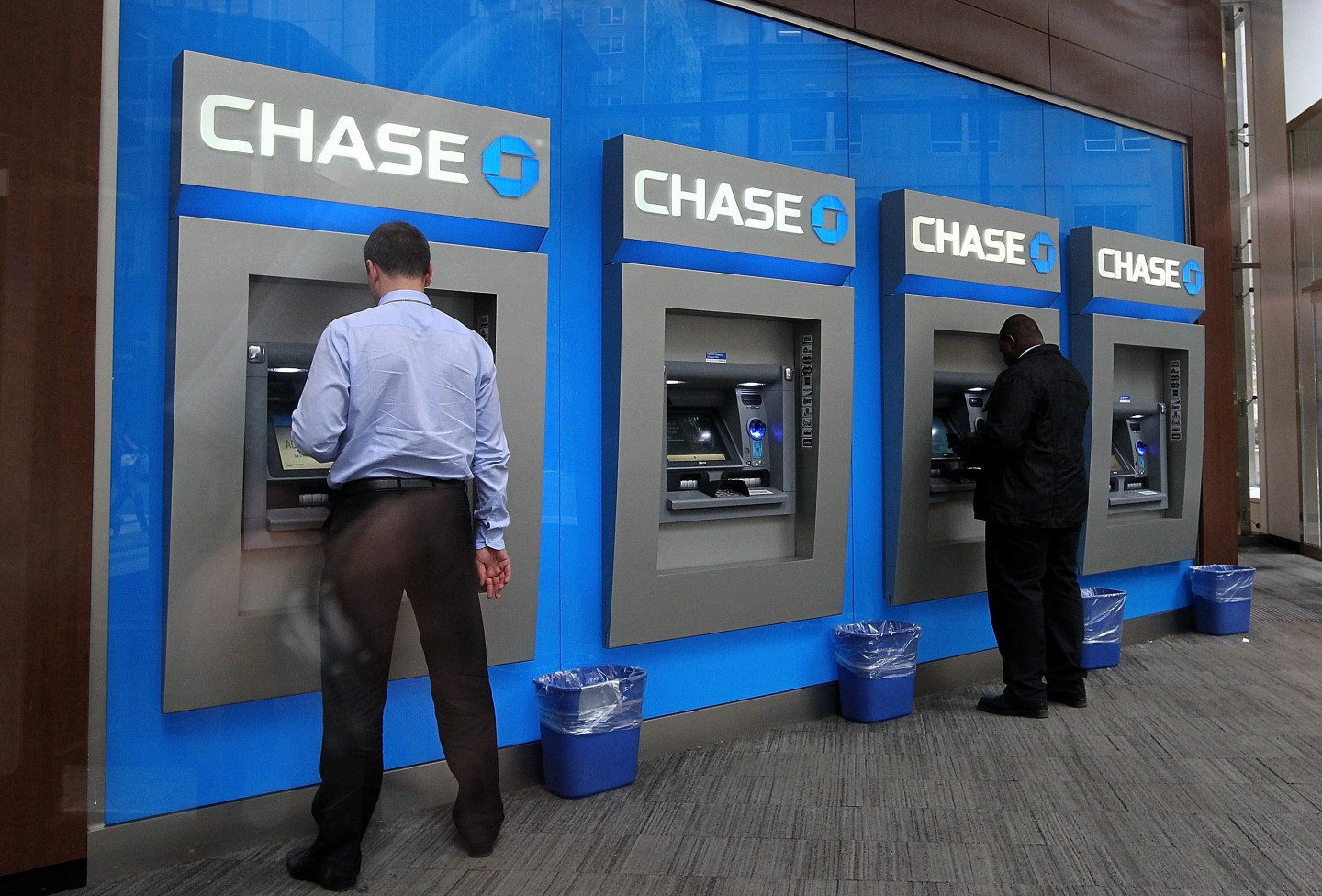
NEW YORK, NY - MAY 14: Bank customers use ATMs at a Chase Bank branchJustin Sullivan Getty Images

Morrie Low, a 27-year-old Seattle cocktail server, has found an unlikely new source of pleasure: credit card companies.

After working off card balances he built up during college, Low started collecting new cards in May specifically to reap the increasingly lucrative travel awards banks are offering to encourage spending on their cards.

In August, Low snagged a new Sapphire Reserve card, from J.P. Morgan Chase (JPM), which has become a magnet for millennials willing to pay the $450 annual fee for a sign-up bonus worth as much as $1,500 in travel, plus $300 in annual spending credits and more freebies.

Now Low is planning a trip to Germany with his girlfriend on J.P. Morgan’s dime. “I have never been to Europe, so that is something pretty cool about this hobby,” he said.

The Reserve card opens up a new front in the war among banks to build up their lucrative credit card businesses. While it may be fun for customers, investors and analysts worry that battle will eat away the fat profit margins that made the sector so attractive to banks in the first place.

“You have five or six big national players and they are going around killing one another,” said Chris Kotowski, an analyst at Oppenheimer & Co.

Metal Cards Run Out

Low illustrates the problem. J.P. Morgan won’t know if he will become a profitable customer for another year because the up-front rewards are so great. He may drop the Reserve card before the next annual fee. He has already acquired two more cards and now is spending on those to meet their requirements for more sign-up bonuses.

And he doesn’t intend to borrow on his cards. That could be bad for J.P. Morgan because credit card companies historically have made about three-fourths of their revenue from interest. The rest has come from fees, which are being whittled away by the rising costs of the givebacks.

Still, J.P. Morgan executives say they are thrilled that many more young people applied for the Reserve card than they ever expected. That’s especially true with millennials—people who reached adulthood around 2000—who are the next generation of depositors and borrowers.

“It has been a huge success,” said Kevin Watters, the bank’s chief executive for cards. The bank so underestimated the demand that it quickly ran out of its initial stock of metal cards and had to resort to plastic for a while.

To make money from the card, J.P. Morgan has to have the right mix of customer spending, annual renewals, and borrowing with repayments, said John Grund, a partner at card industry consulting firm First Annapolis.

Marianne Lake, J.P. Morgan’s chief financial officer, declined to say how much card debt the bank needs customers to take on.

“I am not going to give you the details of our business case, but I will tell you that we obviously have a lot of experience in a number of different (card) products,” Lake told reporters on Friday after the bank posted results.

Historically, airline travel award cards have been successful, with about 50% of customers borrowing, said Grund. High-fee cards used by the wealthy have worked with less borrowing, but with less valuable incentives than the Reserve card.

Card War

Like J.P. Morgan, Citigroup (C) also has been spending hundreds of millions of dollars to encourage additional spending and borrowing on its cards.

The other two banks among the four biggest in the United States, Bank of America (BAC) and Wells Fargo (WFC), have also been looking for more card business, but less aggressively.

Citigroup intensified the card war last year by giving retailer Costco Wholesale such a sweet deal for running its Costco card that it took the business from American Express, which said the winning terms were uneconomical.

Citigroup said on Friday that its Costco deal drove spending on its cards to $73 billion in the latest quarter, 57% higher than a year earlier. J.P. Morgan said spending on its cards rose 10% to $139 billion.

On Monday, Bank of America said spending on its credit cards was up 8%, adjusted for some divestitures late last year. The bank’s chief executive, Brian Moynihan, told analysts that “one of the great debates we have in the company” is over giving up too much, or too little, in incentives on cards.

The banks do not report clear and mutually comparable figures for actual profits from cards. But executives say cards are among the most profitable of any business, with returns on equity of as much as 25%, about twice banks’ recent overall return.

Citigroup’s Costco deal fueled a round of concessions by banks to renew contracts with other retailers, hotel and airline companies for co-branded cards. J.P. Morgan’s new deals with Southwest Airlines, United Airlines, online retailer Amazon.com and others, for example, will cut revenue by about $900 million annually, the bank said earlier this year.

Now, with the Reserve card, J.P. Morgan has “fundamentally changed the calculus for what makes a premium credit card,” said Sean McQuay, who tracks card offers at online personal finance website NerdWallet.com. Citigroup, he said, needs to respond with more givebacks on its Prestige premium card.

Citigroup Chief Financial Officer John Gerspach disagrees. The Prestige card is already a “strong offering,” he told reporters on Friday. J.P. Morgan, he said, has “a very attractive offer on the table right now. We will see whether or not that is sustainable.”

Earlier this month, American Express increased rewards on its Platinum card, the traditional leader among high-fee cards. American Express spokeswoman Charlotte Fuller said the move was not a competitive response, but a coincidental improvement for customers.

Personal Redemption

The intense competition over card rewards has its roots in the financial crisis of 2008. Post-crisis reforms reduced the profitability of other businesses such as mortgages and capital markets trading, encouraging banks to turn to cards for profits. And, within that business, the reforms pushed banks from people with lower credit ratings toward creditworthy customers who respond to incentives.

And lately, the banks have had the means to bid more for customers because loan losses have declined to record lows.

At the same time, cardholders have become more savvy about working the incentives.

Ivan Drucker, a New York City-based consultant to Apple computer users, recently used awards from a strategically managed mix of credit cards to travel in luxury to Finland.

Drucker, 46, said he borrowed on cards at high rates in years past, but he’s determined not to do it again.

“For me, there’s personal redemption in this,” Drucker said. “They got the better of me. Now I hope to turn those tables.”

About the Author
By Reuters
See full bioRight Arrow Button Icon

Latest in Finance

Finance
Lorem ipsum dolor sit amet, consectetur adipiscing elit, sed do eiusmod tempor incididunt ut labore et dolore magna aliqua. Ut enim ad minim veniam
By Fortune Editors
October 20, 2025
Finance
Lorem ipsum dolor sit amet, consectetur adipiscing elit, sed do eiusmod tempor incididunt ut labore et dolore magna aliqua. Ut enim ad minim veniam
By Fortune Editors
October 20, 2025
Finance
Lorem ipsum dolor sit amet, consectetur adipiscing elit, sed do eiusmod tempor incididunt ut labore et dolore magna aliqua. Ut enim ad minim veniam
By Fortune Editors
October 20, 2025
Finance
Lorem ipsum dolor sit amet, consectetur adipiscing elit, sed do eiusmod tempor incididunt ut labore et dolore magna aliqua. Ut enim ad minim veniam
By Fortune Editors
October 20, 2025
Finance
Lorem ipsum dolor sit amet, consectetur adipiscing elit, sed do eiusmod tempor incididunt ut labore et dolore magna aliqua. Ut enim ad minim veniam
By Fortune Editors
October 20, 2025
Finance
Lorem ipsum dolor sit amet, consectetur adipiscing elit, sed do eiusmod tempor incididunt ut labore et dolore magna aliqua. Ut enim ad minim veniam
By Fortune Editors
October 20, 2025

Most Popular

Finance
Lorem ipsum dolor sit amet, consectetur adipiscing elit, sed do eiusmod tempor incididunt ut labore et dolore magna aliqua. Ut enim ad minim veniam
By Fortune Editors
October 20, 2025
Finance
Lorem ipsum dolor sit amet, consectetur adipiscing elit, sed do eiusmod tempor incididunt ut labore et dolore magna aliqua. Ut enim ad minim veniam
By Fortune Editors
October 20, 2025
Finance
Lorem ipsum dolor sit amet, consectetur adipiscing elit, sed do eiusmod tempor incididunt ut labore et dolore magna aliqua. Ut enim ad minim veniam
By Fortune Editors
October 20, 2025
Finance
Lorem ipsum dolor sit amet, consectetur adipiscing elit, sed do eiusmod tempor incididunt ut labore et dolore magna aliqua. Ut enim ad minim veniam
By Fortune Editors
October 20, 2025
Finance
Lorem ipsum dolor sit amet, consectetur adipiscing elit, sed do eiusmod tempor incididunt ut labore et dolore magna aliqua. Ut enim ad minim veniam
By Fortune Editors
October 20, 2025
Finance
Lorem ipsum dolor sit amet, consectetur adipiscing elit, sed do eiusmod tempor incididunt ut labore et dolore magna aliqua. Ut enim ad minim veniam
By Fortune Editors
October 20, 2025
Fortune Secondary Logo
Rankings
  • 100 Best Companies
  • Fortune 500
  • Global 500
  • Fortune 500 Europe
  • Most Powerful Women
  • World's Most Admired Companies
  • See All Rankings
  • Lists Calendar
Sections
  • Finance
  • Fortune Crypto
  • Features
  • Leadership
  • Health
  • Commentary
  • Success
  • Retail
  • Mpw
  • Tech
  • Lifestyle
  • CEO Initiative
  • Asia
  • Politics
  • Conferences
  • Europe
  • Newsletters
  • Personal Finance
  • Environment
  • Magazine
  • Education
Customer Support
  • Frequently Asked Questions
  • Customer Service Portal
  • Privacy Policy
  • Terms Of Use
  • Single Issues For Purchase
  • International Print
Commercial Services
  • Advertising
  • Fortune Brand Studio
  • Fortune Analytics
  • Fortune Conferences
  • Business Development
  • Group Subscriptions
About Us
  • About Us
  • Press Center
  • Work At Fortune
  • Terms And Conditions
  • Site Map
  • About Us
  • Press Center
  • Work At Fortune
  • Terms And Conditions
  • Site Map
  • Facebook icon
  • Twitter icon
  • LinkedIn icon
  • Instagram icon
  • Pinterest icon

Latest in Finance

Man wearing a suit and tie and glasses
Big TechTech
Microsoft, Meta, and Google just announced billions more in AI spending. Only Google convinced investors it’s paying off
By Amanda GerutApril 29, 2026
1 hour ago
A man in a suit and tie
InvestingMeta
Meta just bumped its 2026 capex forecast up to as much as $145 billion for the AI boom—and investors flinched
By Amanda GerutApril 29, 2026
3 hours ago
teri
BankingBanks
Exclusive: America’s largest Black-owned bank launches podcast with mission to unlock hidden shame holding back generational wealth
By Nick LichtenbergApril 29, 2026
3 hours ago
A broken grounded plane sits on the tarmac surrounded by machinery
North AmericaAirports
Trackers will be added to emergency vehicles at LaGuardia following deadly March collision
By Bruce Shipkowski and The Associated PressApril 29, 2026
6 hours ago
People wait in long lines at the airport.
PoliticsWhite House
More airport disruptions may be coming as White House warns pay for TSA workers will ‘soon run out’
By Lisa Mascaro and The Associated PressApril 29, 2026
6 hours ago
trump
Energywind energy
Trump spent nearly $2 billion of taxpayer money to undo wind projects already underway. Dems demand answers
By Jennifer McDermott and The Associated PressApril 29, 2026
6 hours ago

Most Popular

Apple cofounder Ronald Wayne—whose stake would be worth up to $400 billion had he not sold it in 1976—says that at 91, he has no regrets
Success
Apple cofounder Ronald Wayne—whose stake would be worth up to $400 billion had he not sold it in 1976—says that at 91, he has no regrets
By Preston ForeApril 27, 2026
2 days ago
‘Take the money and run’: Johns Hopkins economist Steve Hanke on why the UAE quit OPEC
Energy
‘Take the money and run’: Johns Hopkins economist Steve Hanke on why the UAE quit OPEC
By Shawn TullyApril 29, 2026
19 hours ago
‘The cost of compute is far beyond the costs of the employees’: Nvidia executive says right now AI is more expensive than paying human workers
AI
‘The cost of compute is far beyond the costs of the employees’: Nvidia executive says right now AI is more expensive than paying human workers
By Sasha RogelbergApril 28, 2026
2 days ago
Jamie Dimon gets candid about national debt: ‘There will be a bond crisis, and then we’ll have to deal with it’
Economy
Jamie Dimon gets candid about national debt: ‘There will be a bond crisis, and then we’ll have to deal with it’
By Eleanor PringleApril 29, 2026
15 hours ago
Current price of gold as of April 28, 2026
Personal Finance
Current price of gold as of April 28, 2026
By Danny BakstApril 28, 2026
2 days ago
More than two-thirds of U.S. schools say they’re unable to afford the cost of student free lunch—and MAHA’s dietary guidelines may make it worse
Economy
More than two-thirds of U.S. schools say they’re unable to afford the cost of student free lunch—and MAHA’s dietary guidelines may make it worse
By Sasha RogelbergApril 29, 2026
17 hours ago

© 2026 Fortune Media IP Limited. All Rights Reserved. Use of this site constitutes acceptance of our Terms of Use and Privacy Policy | CA Notice at Collection and Privacy Notice | Do Not Sell/Share My Personal Information
FORTUNE is a trademark of Fortune Media IP Limited, registered in the U.S. and other countries. FORTUNE may receive compensation for some links to products and services on this website. Offers may be subject to change without notice.