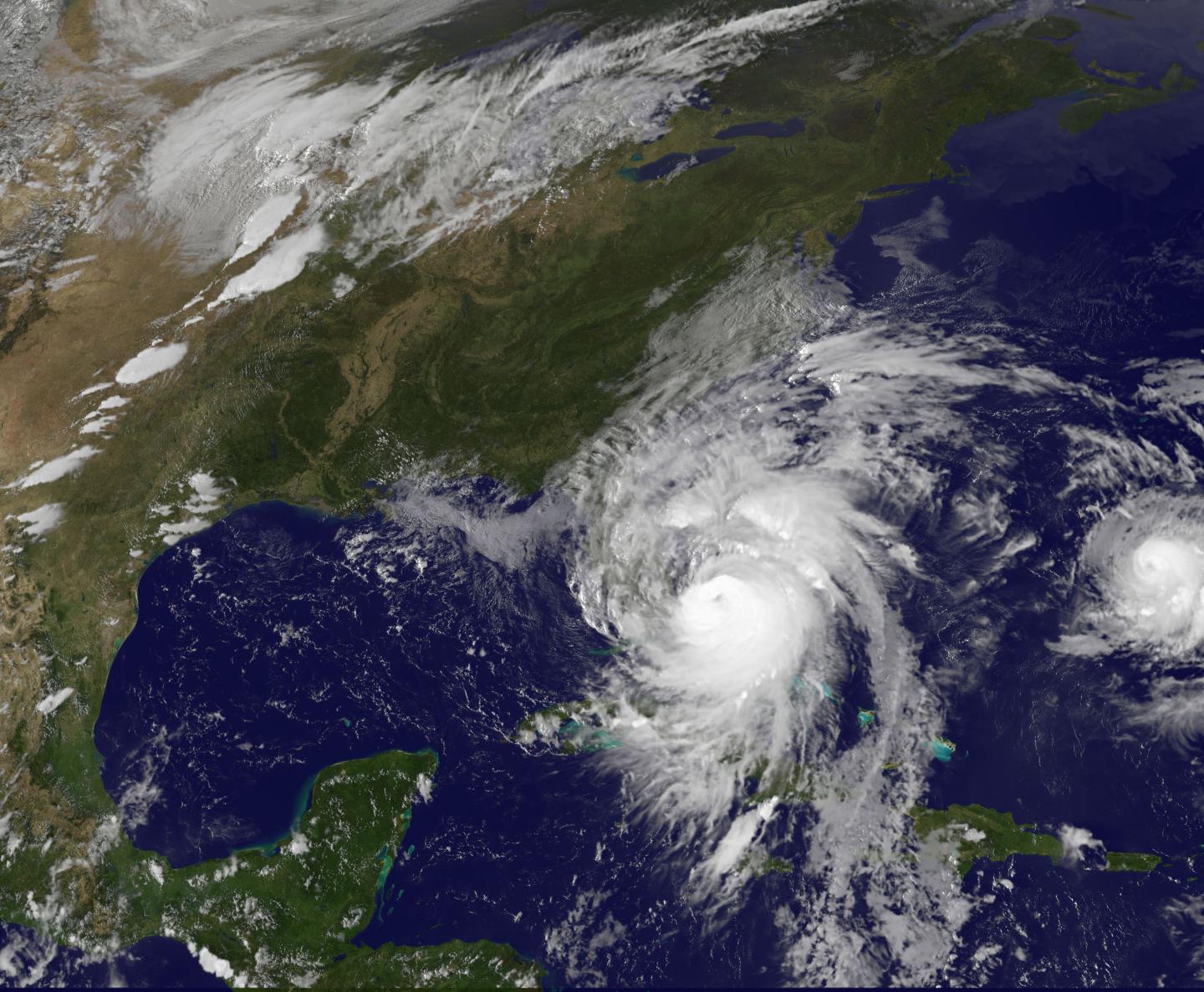
Hurricane Matthew is the strongest storm to hit Florida since Hugo in 1989, capping (we hope) a devastating season of record-breaking heat and rain.
In August, for example, Louisiana rescuers had to evacuate 20,000 people from their flood-ravaged homes. The rains swelled six rivers by record amounts with the Amite exceeding the previous high water mark by over six feet. That was followed by Hurricane Hermine, which caused $400 million of damage in Florida and parts of the east coast.
These extreme weather events cost society billions. Super Storm Sandy alone caused $50 billion in damage in the New York and New Jersey area in 2012.
In his new book The Well-Tempered City, Jonathan Rose puts forth some intriguing solutions that involve using the power of nature to harness the destruction that heavy rains and flooding can bring to our urban areas. His provocative book is a must-read for politicians, urban planners, business leaders and anyone else who’s worried about the future of our cities.

Rose is a sustainable real estate developer known for his green affordable and mixed income housing projects. His New York City business, Jonathan Rose Companies has won multiple awards including from the Urban Land Institute and the Trust for Historic Preservation for his ability to mix smart urban design, energy efficiency and affordability. His Via Verde mixed-income apartment complex in the South Bronx, for example, earned a LEED gold designation and includes roof top gardens that grow fruits and vegetables, absorb rain run-off and provide open space for residents.
In his book, Rose writes about natural infrastructure. This means using nature instead of the brute force of steel and concrete to mitigate flooding and harmful run off. Back in the mid-2000s, for example, heavy rains were over-taxing Philadelphia’s sewer system, spilling billions of gallons of toxic waste into the Schuylkill River. The EPA mandated that the city spend $8 billion on a massive, underground storm water system. Philadelphia proposed instead spending $1 billion on a soft, natural system that included building new parks, removing asphalt in school yards and replacing it with turf and encouraging building owners to add green roofs, trees and permeable paving in their parking lots.
The project not only saved the city $7 billion but, Rose argues, increased the quality of life and health for urban dwellers while reducing improving water and air quality.
[fortune-gallery id=”1776933″]
“What’s so compelling about natural systems solutions is that they not only save costs but also improve the quality of life,” Rose argues. “Urban neighborhoods that have trees can be six degrees cooler, increase real estate value and thus generate more city tax revenue.”
In the aftermath of Super Storm Sandy, New York City is restoring its wetlands and increasing its harbor biodiversity to make the city more resilient. Wetlands not only absorb storm surges but also replenish ground water, clean human toxins, remove nitrogen, absorb carbon and transfer nutrients to plants and animals.
Harbors can play their own role in mitigating the effects of extreme storms.
When the Dutch arrived in New York, it had 220,000 acres of oyster reefs. By the 1800s oystermen harvested more than half a billion oysters from the reefs. Since then urban pollution have destroyed most of the reefs and made the oysters inedible. Now the city is working to restore those reefs. Oysters not only clean the water—a single oyster can filter 35 gallons of water a day—but also act as a storm buffer for the city.
In 2010, the Urban Assembly’s harbor school made a pledge to plant and grow a billion oysters in New York Harbor by 2030. The federal government, which shouldered almost half the cost of repairs in the wake of Sandy, has asked for proposals for projects that might lessen future damage. One of the projects that won funding is the Living Breakwaters Project. Rather than constructing a huge steel and concrete dike in the harbor, the idea, as proposed by landscape architect Kate Orff, would be to build a necklace of underwater reefs, natural breakwaters, and restored beaches and wetlands. Living Breakwaters had received $60 million in federal funding and hopes to complete the project, which will protect the south shore of Staten Island, by the end of 2019.
The federal government currently spends $97 billion a year on disaster relief for floods, hurricanes, forest fires and earthquakes. Rose suggests that if Washington diverted a portion of that to projects that made our cities more resilient, the taxpayer would get a much better return. “Don’t just rebuild the old infrastructure,” says Rose. “We need to pick the cities most vulnerable to risk and invest federal and state and private funds in preventative projects like restoring wetlands and rebuilding oyster reefs.”
He has a point. Prior to Hurricane Katrina, the insurance company FM Global worked with 500 commercial clients on hurricane preparedness, and as a result these businesses experienced 85% less property damage from the hurricane than similar properties that were not as well prepared. FM Global calculated that a $2.5 million investment in preparedness prevented $500 million in damages. Even a far more modest projection from the National Institute of Building Sciences states that every dollar spent on mitigation saves four dollars of losses. That sounds like a deal we can’t afford to pass up.