• Home
  • Latest
  • Fortune 500
  • Finance
  • Tech
  • Leadership
  • Lifestyle
  • Rankings
  • Multimedia
Commentary

The Problem With Calling Hillary Clinton ‘Corrupt’

By
Donald Brand
Donald Brand
and
Bethany Cianciolo
Bethany Cianciolo
Down Arrow Button Icon
By
Donald Brand
Donald Brand
and
Bethany Cianciolo
Bethany Cianciolo
Down Arrow Button Icon
September 22, 2016, 2:00 PM ET
Hillary Clinton
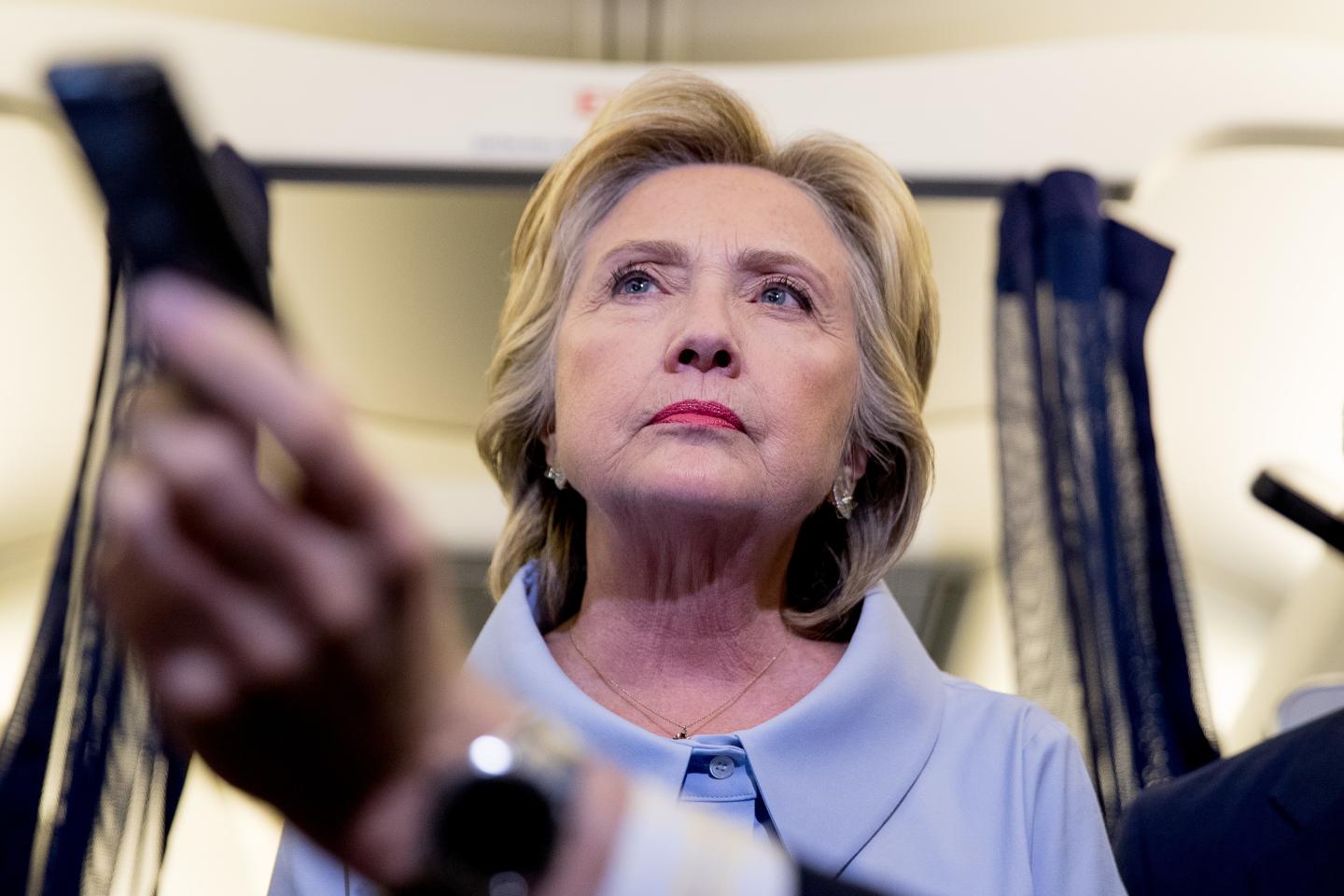
Democratic presidential candidate Hillary Clinton takes a question from a member of the media on her campaign plane while traveling to Quad Cities International Airport in Moline, Ill., Monday, Sept. 5, 2016. (AP Photo/Andrew Harnik)Andrew Harnik — AP

Trump’s moniker, “crooked Hillary,” has become standard fare in his stump speech, demonstrating his efforts to cast her and her campaign as corrupt. Just last month during a rally in New Hampshire, he scorned her for using a private email server “in order to hide her corrupt dealings,” calling for a break in a “corrupt cycle.” But before concluding that Hillary Clinton is indeed corrupt, it’s worth looking at the definition of corruption.

As Chief Justice Roberts defined it in the 2014 case, McCutcheon v. FEC, corruption is “a contribution to a particular candidate in exchange for his agreeing to do a particular act within his official duties.” The definition is encapsulated in the phrase “quid pro quo (this for that),” the one that has prevailed in the U.S. legal system.

Quid pro quo corruption would cover the case of a campaign contribution explicitly and intentionally made in exchange for a specific political favor, such as including a tax exemption that applied only to a specific company in a tax bill. The broader the official act, the less likely quid pro quo is involved. Barring clear evidence that a vote on a piece of legislation was sold to the highest bidder, an official who has accepted campaign contributions from a lobbyist and then votes for a bill favored by the lobbyist is not guilty of quid pro quo corruption. A legislator who accepts contributions from the NRA and then votes against a gun control bill is not presumed to have sold his vote to the NRA. The law presumes that the NRA is contributing to the campaign of a legislator who would have opposed the gun control measure even without the NRA contribution. It is part of politics as usual that donors give to candidates who share their views and vote in accord with those views.

Just how stringent the quid pro quo standard is with regard to corruption became clear this year in McDonnell v. United States. Former governor of Virginia Bob McDonnell had been convicted on corruption charges in Virginia. He had accepted $175,000 in loans, gifts, and vacations from Jonnie Williams Sr., who owned a company making diet supplements. This largesse on the part of Williams was rewarded with access to a variety of officials. McDonnell arranged meetings for his benefactor and attended events hosted by Williams’ company, but there was no proof that he had performed an official act on behalf of Williams. Since Virginia law at the time did not put a financial limit on the gifts that lobbyists could give to state officials (a new 2015 Virginia law sets a $100 limit on gifts from any lobbyist to a legislator or government official), illegality would turn on the “quo” that Williams received.

Speaking for a unanimous Supreme Court, Justice Roberts concluded that state prosecutors had not demonstrated a formal government action, such as an administrative decision that favored Williams, that was causally linked to the gifts. Warning of the dangers posed by criminalizing politics as usual, Roberts argued that providing access to public officials in and of itself is not corruption. “Conscientious public officials arrange meetings for constituents, contact other officials on their behalf and include them in events all the time,” he said. Roberts conceded that McDonnell’s behavior was “distasteful,” but argued against an overly broad interpretation of federal bribery statutes. McDonnell’s lawyers cited the narrow definition of corruption in Citizens United v. FEC (2010), which concluded that corruption had to go beyond “ingratiation and access.”


Herein lies the dilemma for Republicans. Republicans have vigorously defended Citizens United, a decision written by the conservative justices on the Supreme Court, from a torrent of criticism by the political left. Barack Obama was so offended by the Citizens United decision that he singled it out for criticism during his 2010 State of the Union address—with the Supreme Court justices sitting in front of him. Clinton has pledged to appoint Supreme Court justices who would overturn Citizens United, and Republicans counter with a defense of the expansive interpretation of First Amendment free speech rights provided in the ruling. But the corollary of this expansive interpretation of free speech rights is the narrow quid pro quo conception of corruption. If Republicans embrace a more expansive conception of corruption to attack Clinton, they are at the same time eroding the conceptual foundations of Citizens United. But if Republicans embrace the narrow conception of corruption, can they legitimately berate Clinton corrupt?

Author Peter Schweizer, whose scathing indictment of the Clinton Foundation in Clinton Cash has been influential in building the “corrupt Hillary” case, admitted to George Stephanopoulos that his evidence suggested a pattern of corruption, but that he had not uncovered the smoking gun demonstrating quid pro quo corruption. Has Clinton really gone beyond the “ingratiation and access” that Justice Roberts defined as politics as usual?

But before dwelling too long on the hypocrisy of Republicans who want to narrowly define corruption in constitutional law but then pillory Clinton as corrupt using a more expansive meaning of corruption, it’s worth noting that Democrats are playing the same game. In order to criticize Citizens United, they embrace an expansive conception of corruption, but then they eagerly retreat to the quid pro quo, narrow conception to defend Clinton. Is consistency really the hobgoblin of narrow minds?

Citizens United is the legal keystone protecting a robust conception of political free speech in the modern era. Conservatives would be short-sighted to erode its conceptual foundations for the sake of short-term political gain.

Donald Brand is a professor of political science at the College of the Holy Cross in Worcester, Mass.

About the Authors
By Donald Brand
See full bioRight Arrow Button Icon
By Bethany Cianciolo
See full bioRight Arrow Button Icon

Latest in Commentary

Finance
Lorem ipsum dolor sit amet, consectetur adipiscing elit, sed do eiusmod tempor incididunt ut labore et dolore magna aliqua. Ut enim ad minim veniam
By Fortune Editors
October 20, 2025
Finance
Lorem ipsum dolor sit amet, consectetur adipiscing elit, sed do eiusmod tempor incididunt ut labore et dolore magna aliqua. Ut enim ad minim veniam
By Fortune Editors
October 20, 2025
Finance
Lorem ipsum dolor sit amet, consectetur adipiscing elit, sed do eiusmod tempor incididunt ut labore et dolore magna aliqua. Ut enim ad minim veniam
By Fortune Editors
October 20, 2025
Finance
Lorem ipsum dolor sit amet, consectetur adipiscing elit, sed do eiusmod tempor incididunt ut labore et dolore magna aliqua. Ut enim ad minim veniam
By Fortune Editors
October 20, 2025
Finance
Lorem ipsum dolor sit amet, consectetur adipiscing elit, sed do eiusmod tempor incididunt ut labore et dolore magna aliqua. Ut enim ad minim veniam
By Fortune Editors
October 20, 2025
Finance
Lorem ipsum dolor sit amet, consectetur adipiscing elit, sed do eiusmod tempor incididunt ut labore et dolore magna aliqua. Ut enim ad minim veniam
By Fortune Editors
October 20, 2025

Most Popular

Finance
Lorem ipsum dolor sit amet, consectetur adipiscing elit, sed do eiusmod tempor incididunt ut labore et dolore magna aliqua. Ut enim ad minim veniam
By Fortune Editors
October 20, 2025
Finance
Lorem ipsum dolor sit amet, consectetur adipiscing elit, sed do eiusmod tempor incididunt ut labore et dolore magna aliqua. Ut enim ad minim veniam
By Fortune Editors
October 20, 2025
Finance
Lorem ipsum dolor sit amet, consectetur adipiscing elit, sed do eiusmod tempor incididunt ut labore et dolore magna aliqua. Ut enim ad minim veniam
By Fortune Editors
October 20, 2025
Finance
Lorem ipsum dolor sit amet, consectetur adipiscing elit, sed do eiusmod tempor incididunt ut labore et dolore magna aliqua. Ut enim ad minim veniam
By Fortune Editors
October 20, 2025
Finance
Lorem ipsum dolor sit amet, consectetur adipiscing elit, sed do eiusmod tempor incididunt ut labore et dolore magna aliqua. Ut enim ad minim veniam
By Fortune Editors
October 20, 2025
Finance
Lorem ipsum dolor sit amet, consectetur adipiscing elit, sed do eiusmod tempor incididunt ut labore et dolore magna aliqua. Ut enim ad minim veniam
By Fortune Editors
October 20, 2025
Fortune Secondary Logo
Rankings
  • 100 Best Companies
  • Fortune 500
  • Global 500
  • Fortune 500 Europe
  • Most Powerful Women
  • World's Most Admired Companies
  • See All Rankings
  • Lists Calendar
Sections
  • Finance
  • Fortune Crypto
  • Features
  • Leadership
  • Health
  • Commentary
  • Success
  • Retail
  • Mpw
  • Tech
  • Lifestyle
  • CEO Initiative
  • Asia
  • Politics
  • Conferences
  • Europe
  • Newsletters
  • Personal Finance
  • Environment
  • Magazine
  • Education
Customer Support
  • Frequently Asked Questions
  • Customer Service Portal
  • Privacy Policy
  • Terms Of Use
  • Single Issues For Purchase
  • International Print
Commercial Services
  • Advertising
  • Fortune Brand Studio
  • Fortune Analytics
  • Fortune Conferences
  • Business Development
  • Group Subscriptions
About Us
  • About Us
  • Press Center
  • Work At Fortune
  • Terms And Conditions
  • Site Map
  • About Us
  • Press Center
  • Work At Fortune
  • Terms And Conditions
  • Site Map
  • Facebook icon
  • Twitter icon
  • LinkedIn icon
  • Instagram icon
  • Pinterest icon

Latest in Commentary

kapoor
Commentaryquarterly results
Morningstar CEO: I agree with the SEC on ending quarterly reporting—with conditions
By Kunal KapoorMay 5, 2026
12 hours ago
crane
Commentaryclean energy
Clean energy’s winning argument is the one it refuses to make
By David CraneMay 5, 2026
16 hours ago
alain
CommentaryIran
I watched my father run his business through the Lebanese Civil War. Here’s what it taught me about leading through disruption.
By Alain BejjaniMay 5, 2026
20 hours ago
Hong Kong is the hub for China’s AI IPOs. It can be so much more than that
CommentaryHong Kong
Hong Kong is the hub for China’s AI IPOs. It can be so much more than that
By Brian Wong and Tony ChanMay 3, 2026
2 days ago
jason corso
Commentarydisruption
AI models are choking on junk data
By Jason Corso and David CowanMay 3, 2026
3 days ago
blake
CommentaryHousing
I spent a decade selling homes to the ultra-wealthy. What I saw explains the housing market’s nepo problem
By Blake O'ShaughnessyMay 3, 2026
3 days ago

Most Popular

Clean energy's winning argument is the one it refuses to make
Commentary
Clean energy's winning argument is the one it refuses to make
By David CraneMay 5, 2026
16 hours ago
Diary of a CEO founder says he hired someone with 'zero' work experience because she 'thanked the security guard by name' before the interview
Success
Diary of a CEO founder says he hired someone with 'zero' work experience because she 'thanked the security guard by name' before the interview
By Emma BurleighMay 3, 2026
3 days ago
Current price of oil as of May 5, 2026
Personal Finance
Current price of oil as of May 5, 2026
By Joseph HostetlerMay 5, 2026
14 hours ago
Current price of silver as of Monday, May 4, 2026
Personal Finance
Current price of silver as of Monday, May 4, 2026
By Joseph HostetlerMay 4, 2026
2 days ago
Gen Z workers say showing up 10 minutes late to work is as good as on time—but baby boomer bosses have zero tolerance for tardiness, research reveals
Success
Gen Z workers say showing up 10 minutes late to work is as good as on time—but baby boomer bosses have zero tolerance for tardiness, research reveals
By Orianna Rosa RoyleMay 5, 2026
13 hours ago
China stopped issuing new robotaxi licenses over a glitch. America can't stop them from rolling into active shooter situations
Law
China stopped issuing new robotaxi licenses over a glitch. America can't stop them from rolling into active shooter situations
By Catherina GioinoMay 4, 2026
1 day ago

© 2026 Fortune Media IP Limited. All Rights Reserved. Use of this site constitutes acceptance of our Terms of Use and Privacy Policy | CA Notice at Collection and Privacy Notice | Do Not Sell/Share My Personal Information
FORTUNE is a trademark of Fortune Media IP Limited, registered in the U.S. and other countries. FORTUNE may receive compensation for some links to products and services on this website. Offers may be subject to change without notice.