• Home
  • Latest
  • Fortune 500
  • Finance
  • Tech
  • Leadership
  • Lifestyle
  • Rankings
  • Multimedia
climate change

The Paradox of American Farmers and Climate Change

By
Beth Kowitt
Beth Kowitt
Down Arrow Button Icon
By
Beth Kowitt
Beth Kowitt
Down Arrow Button Icon
June 29, 2016, 1:22 PM ET
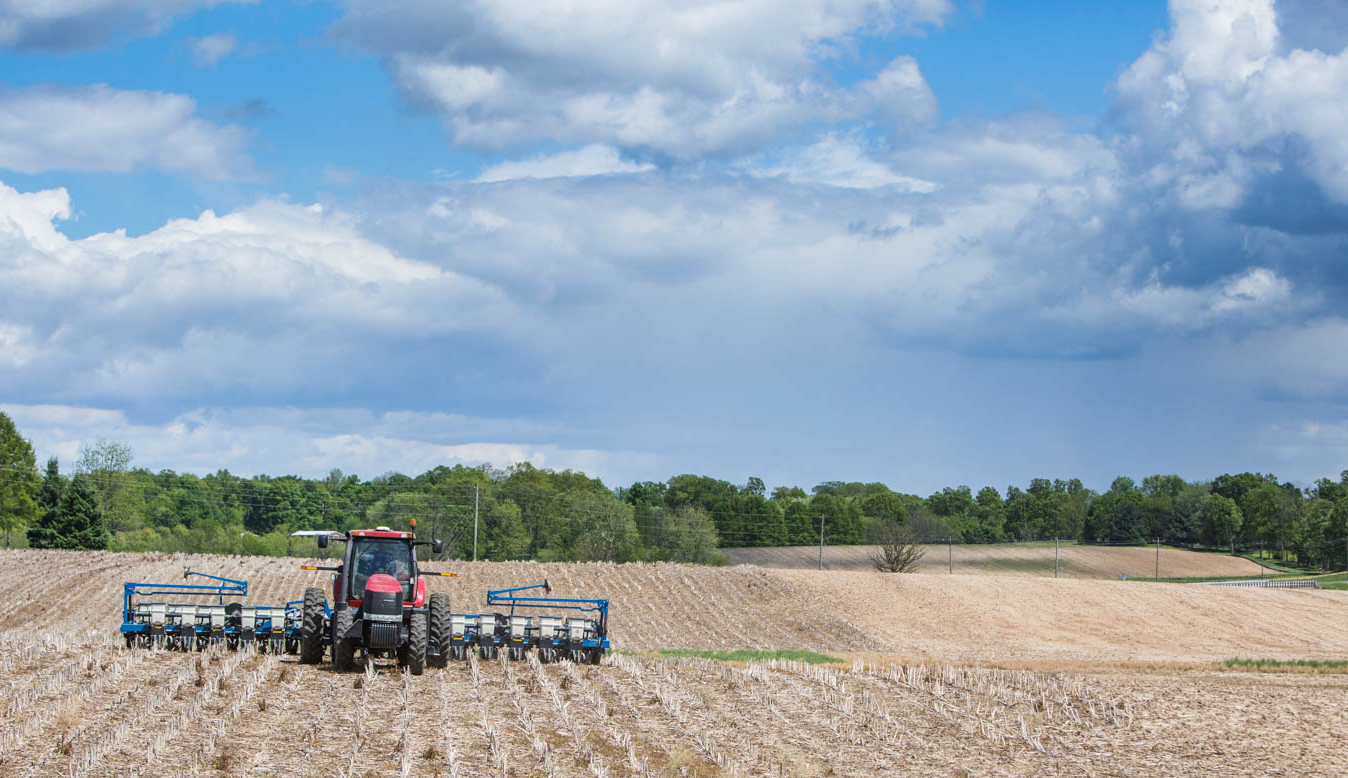
Photograph by Ryan Donnell for Fortune Magazine

There’s a strange paradox in the world of agriculture: farmers are perhaps the segment of the population most affected by climate change, and yet a significant number of them don’t believe in it—especially the notion that it’s man-made.

I encountered this phenomenon as I reported a feature for Fortune on how agricultural giant Monsanto is attempting to help farmers both mitigate their impact on the environment and adapt to climate change. All the farmers I talked to readily acknowledged that the weather patterns governing growing seasons had been turned upside down in recent years, but I was on the receiving end of a lot of eye rolls whenever I brought up climate change.

Monsanto (MON) gets a similar response from the growers who buy its seed. The company’s chief technology officer, Robb Fraley, told me he’s received numerous angry emails from farmers asking why the company is supporting what some call “this government effort.”

I don’t want to suggest that all farmers reject the concept of climate change. That’s not the case. But here’s what some of the numbers show: A survey conducted by Iowa State Professor J. Arbuckle and Purdue University professor Linda Prokopy of 5,000 Cornbelt farmers—representing about 60% of U.S. corn production and 80% of farmland in the region—found that only 8% believed climate change is taking place and caused primarily by human activity. That 8% figure is significantly lower than the general population. A poll from January found that 27% of the general public primarily blames human activity.

Meanwhile, 33% of the farmers surveyed said climate change was caused more or less equally by natural changes and human activities, 25% said it was caused by changes in the environment, 31% said there wasn’t sufficient evidence to know if climate change is occurring, and 4% said climate change is not happening.

So, what’s driving this sentiment? “In some quarters of agriculture the term climate change can be politically charged,” U.S. Secretary of Agriculture Tom Vilsack told me, “and there is a reluctance to embrace that term while also recognizing weather patterns are changing and that farmers need to adapt.”

The politicization of science is nothing new. Just think of the anti-vaccination movement. But it comes out in full force within the world of agriculture, especially when considering climate change and genetically modified organisms—one of the industry’s hot-button issues. Many farmers who accept the scientific consensus on the safety of genetically modified seed reject the consensus on climate change. Meanwhile, many environmental activists reject the science on the safety of genetically modified seed but embrace science that supports their views on climate change. Monsanto gets hit from all sides because it believes in both.

Yale Law School Professor Dan Kahan, who studies science communication, has written that “when people are shown evidence relating to what scientists believe about a culturally disputed, policy-relevant fact … they selectively credit or dismiss that evidence depending on whether it is consistent with or inconsistent with their cultural group’s position.” This leads people to “form polarized perceptions of scientific consensus even when they rely on the same sources of evidence.”

We’ll save examining the GMO vs. climate change debate among environmental activists for another day. But if you look at farmers, they “are simultaneously the most skeptical when it comes to climate change, but the group that uses climate science in decision making the most,” Kahan says.

Kahan has written extensively on this paradox, but he doesn’t view it as an inconsistency. “There are two climate changes,” Kahan explains. “There’s the one that people have a position on that reflects a kind of cultural identity that’s associated with accepting it or not, and then there’s the climate change that people make decisions about with consequences for their life. They’re totally different things.”

Kahan summed this up nicely in one of his papers: “Peoples’ answers to whether one ‘believes in’ human-caused global warming doesn’t measure what they know; it expresses who they are.” Kahan says it’s no different from the person who wears a pro-climate change t-shirt but knows absolutely nothing about the science behind it.

Citing a parallel to farmer sentiment about climate change, Kahan points to work by Donald Everhart and Salman Hameed, who have studied Pakistani physicians in the U.S. In their work, they describe an oncologist “who ‘disbelieves in’ evolution at home but ‘believes in’ it at work.” The doctor believes in evolution to treat his patients, but rejects it as a devout Muslim.

At work, farmers acknowledge changes in the growing season and adopt practices like no-till farming and cover crops that help deal with climate change’s effects on agriculture. “They really seem to be working hard to adapt,” Arbuckle says, “but then much of their base doesn’t want to talk about climate change.”

Kahan has found that there’s no correlation between belief in man-made climate change and measures of scientific knowledge, but there is a high match between beliefs in climate change and political identity. One study Kahan has cited found that 75% people who viewed themselves as liberal believe that human activity is the main source of global warming; only 22% of respondents who classified themselves as conservative held the same belief, and 58% said they did not believe there was enough evidence to show the planet was warming. “We know that farmers tend to be as a group more conservative than the average member of the public,” Purdue University professor Prokopy told me.

So, does it matter if farmers believe in climate change? Maybe not if they are already adopting practices that help with both mitigation and adaptation. But it does show that scientists and regulators (and journalists) need to be careful about how they talk to farmers about climate change.

About the Author
By Beth Kowitt
LinkedIn iconTwitter icon
See full bioRight Arrow Button Icon

Latest in

Finance
Lorem ipsum dolor sit amet, consectetur adipiscing elit, sed do eiusmod tempor incididunt ut labore et dolore magna aliqua. Ut enim ad minim veniam
By Fortune Editors
October 20, 2025
Finance
Lorem ipsum dolor sit amet, consectetur adipiscing elit, sed do eiusmod tempor incididunt ut labore et dolore magna aliqua. Ut enim ad minim veniam
By Fortune Editors
October 20, 2025
Finance
Lorem ipsum dolor sit amet, consectetur adipiscing elit, sed do eiusmod tempor incididunt ut labore et dolore magna aliqua. Ut enim ad minim veniam
By Fortune Editors
October 20, 2025
Finance
Lorem ipsum dolor sit amet, consectetur adipiscing elit, sed do eiusmod tempor incididunt ut labore et dolore magna aliqua. Ut enim ad minim veniam
By Fortune Editors
October 20, 2025
Finance
Lorem ipsum dolor sit amet, consectetur adipiscing elit, sed do eiusmod tempor incididunt ut labore et dolore magna aliqua. Ut enim ad minim veniam
By Fortune Editors
October 20, 2025
Finance
Lorem ipsum dolor sit amet, consectetur adipiscing elit, sed do eiusmod tempor incididunt ut labore et dolore magna aliqua. Ut enim ad minim veniam
By Fortune Editors
October 20, 2025

Most Popular

Finance
Lorem ipsum dolor sit amet, consectetur adipiscing elit, sed do eiusmod tempor incididunt ut labore et dolore magna aliqua. Ut enim ad minim veniam
By Fortune Editors
October 20, 2025
Finance
Lorem ipsum dolor sit amet, consectetur adipiscing elit, sed do eiusmod tempor incididunt ut labore et dolore magna aliqua. Ut enim ad minim veniam
By Fortune Editors
October 20, 2025
Finance
Lorem ipsum dolor sit amet, consectetur adipiscing elit, sed do eiusmod tempor incididunt ut labore et dolore magna aliqua. Ut enim ad minim veniam
By Fortune Editors
October 20, 2025
Finance
Lorem ipsum dolor sit amet, consectetur adipiscing elit, sed do eiusmod tempor incididunt ut labore et dolore magna aliqua. Ut enim ad minim veniam
By Fortune Editors
October 20, 2025
Finance
Lorem ipsum dolor sit amet, consectetur adipiscing elit, sed do eiusmod tempor incididunt ut labore et dolore magna aliqua. Ut enim ad minim veniam
By Fortune Editors
October 20, 2025
Finance
Lorem ipsum dolor sit amet, consectetur adipiscing elit, sed do eiusmod tempor incididunt ut labore et dolore magna aliqua. Ut enim ad minim veniam
By Fortune Editors
October 20, 2025
Rankings
  • 100 Best Companies
  • Fortune 500
  • Global 500
  • Fortune 500 Europe
  • Most Powerful Women
  • Future 50
  • World’s Most Admired Companies
  • See All Rankings
Sections
  • Finance
  • Leadership
  • Success
  • Tech
  • Asia
  • Europe
  • Environment
  • Fortune Crypto
  • Health
  • Retail
  • Lifestyle
  • Politics
  • Newsletters
  • Magazine
  • Features
  • Commentary
  • Mpw
  • CEO Initiative
  • Conferences
  • Personal Finance
  • Education
Customer Support
  • Frequently Asked Questions
  • Customer Service Portal
  • Privacy Policy
  • Terms Of Use
  • Single Issues For Purchase
  • International Print
Commercial Services
  • Advertising
  • Fortune Brand Studio
  • Fortune Analytics
  • Fortune Conferences
  • Business Development
About Us
  • About Us
  • Editorial Calendar
  • Press Center
  • Work At Fortune
  • Diversity And Inclusion
  • Terms And Conditions
  • Site Map
  • Facebook icon
  • Twitter icon
  • LinkedIn icon
  • Instagram icon
  • Pinterest icon

© 2026 Fortune Media IP Limited. All Rights Reserved. Use of this site constitutes acceptance of our Terms of Use and Privacy Policy | CA Notice at Collection and Privacy Notice | Do Not Sell/Share My Personal Information
FORTUNE is a trademark of Fortune Media IP Limited, registered in the U.S. and other countries. FORTUNE may receive compensation for some links to products and services on this website. Offers may be subject to change without notice.


Most Popular

placeholder alt text
Economy
Elon Musk warns the U.S. is '1,000% going to go bankrupt' unless AI and robotics save the economy from crushing debt
By Jason MaFebruary 7, 2026
1 day ago
placeholder alt text
Success
Gen Z Patriots quarterback Drake Maye still drives a 2015 pickup truck even after it broke down on the highway—despite his $37 million contract
By Sasha RogelbergFebruary 7, 2026
2 days ago
placeholder alt text
Success
Even with $850 billion to his name, Elon Musk admits ‘money can’t buy happiness.’ But billionaire Mark Cuban says it’s not so simple
By Preston ForeFebruary 6, 2026
2 days ago
placeholder alt text
Future of Work
Anthropic cofounder says studying the humanities will be 'more important than ever' and reveals what the AI company looks for when hiring
By Jason MaFebruary 7, 2026
1 day ago
placeholder alt text
AI
AI can make anyone rich: Mark Cuban says it could turn 'just one dude in a basement' into a trillionaire
By Sydney LakeFebruary 7, 2026
1 day ago
placeholder alt text
Real Estate
We may be looking at the housing affordability crisis all wrong. Higher earners are driving home prices, not lack of supply, researchers say
By Jason MaFebruary 7, 2026
24 hours ago

Latest in

CommentaryHealth
Patient private capital is needed to help Asia plug its healthcare gaps
By Abrar MirFebruary 8, 2026
33 minutes ago
Arts & EntertainmentAdvertising
Super Bowl ads go for silliness, tears and nostalgia as Americans reel from ‘collective trauma’ of recent upheaval — ‘Everybody is stressed out’
By Dee-Ann Durbin, Mae Anderson, Wyatte Grantham-Philips and The Associated PressFebruary 8, 2026
1 hour ago
PoliticsOlympics
Trump calls U.S. Olympian a ‘real Loser’ as athletes speak out against administration policies, while Jake Paul tells critics to ‘live somewhere else’
By Fernanda Figueroa and The Associated PressFebruary 8, 2026
2 hours ago
HealthVaccines
Dr. Oz begs Americans to get inoculated against measles as outbreaks spiral around the country. ‘Take the vaccine, please’
By Matt Brown and The Associated PressFebruary 8, 2026
2 hours ago
EconomyUkraine invasion
Russian officials are warning Putin that a financial crisis could arrive this summer, report says, while his war on Ukraine becomes too big to fail
By Jason MaFebruary 8, 2026
3 hours ago
InvestingGold
Bessent sees ‘unruly’ Chinese trading behind gold price swings
By Maria Paula Mijares Torres, Hadriana Lowenkron and BloombergFebruary 8, 2026
5 hours ago