• Home
  • Latest
  • Fortune 500
  • Finance
  • Tech
  • Leadership
  • Lifestyle
  • Rankings
  • Multimedia
Commentary

America’s Superpower Status Is in Trouble, and Politicians Don’t Seem to Care

By
Alan Wolff
Alan Wolff
and
Bethany Cianciolo
Bethany Cianciolo
Down Arrow Button Icon
By
Alan Wolff
Alan Wolff
and
Bethany Cianciolo
Bethany Cianciolo
Down Arrow Button Icon
June 5, 2016, 9:00 PM ET
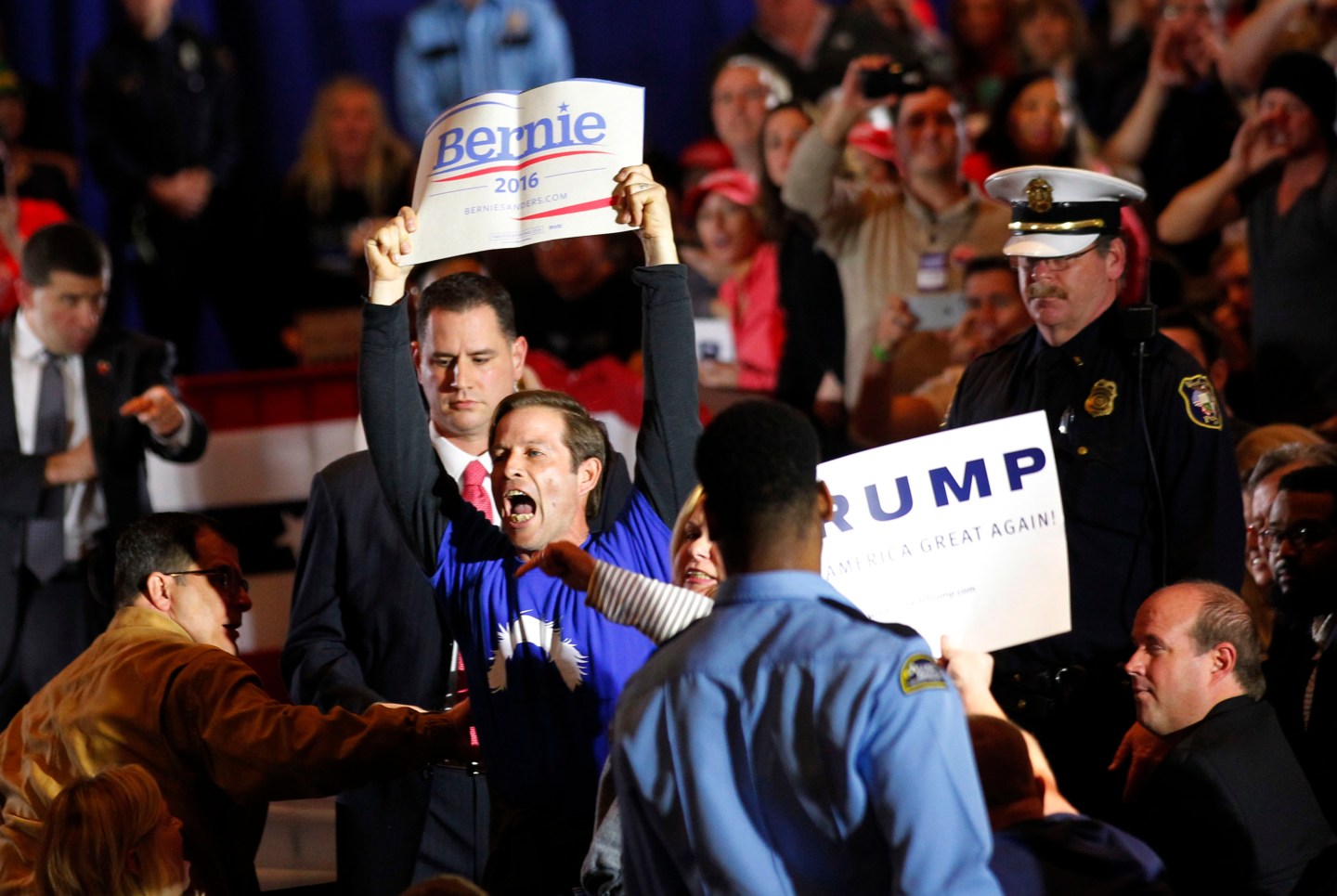
Donald Trump Holds Campaign Rally in Cincinnati Ahead Of Ohio Primary
CINCINNATI, OH- MARCH 13: A Bernie Sanders' supporter is taken out by police during Republican Presidential candidate Donald Trump's campaign rally at the Savannah Center March 13, 2016, in Cincinnati, Ohio. Trump continue to campaign before Ohio March 15th primary day. (Photo by John Sommers II/Getty Images)Photograph by John Sommers II via Getty Images

In ancient Greek mythology, Zeus condemned a lesser god, Atlas, to hold the heavens on his shoulders, an image captured in a monumental bronze statue standing in front of Rockefeller Center on New York’s Fifth Avenue. As pictured by novelist Ayn Rand, Atlas is holding up the world itself, when one of her characters asks what would happen if the weight became unbearable. The answer: He shrugs. That is what all too many American voters appear to feel today—tired of the United States playing the role of a modern-day Atlas, ready to cast off the burden of having world superpower status.

America has borne a large part of the weight of the world under a series of presidents—from Woodrow Wilson to Franklin Roosevelt, John F. Kennedy, right up through the present. For a long time, this vision was fully supported by Congress, converted from isolationism to a need to fight fascism and world communism, and by a mission to raise living standards around the world through the creation of the World Bank and a series of other development institutions. It was best manifested on a very large scale with the post-World War II Marshall Plan—the rebuilding of a war-ravaged Europe. It was not done solely out of altruism, but national interest.

What was once a common vision of the need for America’s world leadership has dimmed. In part, this is due to unsatisfactory foreign engagements, starting with the Korean War to some extent, but with a growing sense of public disillusionment building up through the Vietnam War, the second Gulf War, the war in Afghanistan, and the current chaos in the Middle East.

This world-weariness has been compounded by a strong feeling at home that prosperity is increasingly less evenly shared under the pressures of globalization and technological change. The “Greatest Generation” benefitted from the GI bill, created the interstate highway system, reveled in new inventions and a better life, and therefore felt that the United States could do it all. Now their grandchildren and great-grandchildren see a mountain of student debt, less well-paying jobs, and a crumbling national infrastructure. This is visible in absolute terms, with our highways and bridges in bad repair, and many of America’s aging airports looking shabby as compared with East Asia’s spectacular ones.

The picture is not that dark. The United States is still the most well off of any country by any measure—whether economic or military. It has strong alliances and close trading partners. But there is a strong mood in the country of moving toward disengagement from the rest of the world: “Why do we have to be the world’s policeman?” Isn’t our international economic engagement leaving us holding the wrong end of the stick? This year’s presidential election has brought those feelings to the surface, and even encouraged them, so much so that they’re now a dominant theme.

Donald Trump and Bernie Sanders tell voters that current international trade agreements—the instruments that with America’s leadership will help create a better world—are not worth having, but are in fact harmful.


China is presenting an alternative. It offers investment in infrastructure to Asia without pressing the ideals of democratic freedom or providing an opportunity for individuals to improve their economic well being through freer markets. At the same time, China is using its power to solidify its claims over large areas of disputed ocean.

America has at hand a far better and more constructive approach to Asia—putting into place the Trans-Pacific Partnership. TPP is the first major broad trade agreement negotiated in 20 years, led by the United States and joined in by 11 other Pacific-Rim countries. It is more than a start toward improving world trade among these 12—a half dozen other economies in the region have expressed a strong interest in joining. Its importance transcends modest reductions in U.S. tariffs more than matched by larger reductions in foreign market barriers. It maintains the positive presence of America in Asia. By doing so, it fosters the policies begun and carried on by American presidents for well over a century of making that part of the world a more secure and better place.

This enterprise is in very serious trouble. With the U.S. government characterized by nearly eight years of gridlock, and with domestic politics far more poisonous than ever before, the expectation is of yet more congressional inaction—even after this election has come and gone. Why should Congress act to approve this agreement when no presidential candidate has embraced it?

What is needed is a breakthrough in the lame duck session of Congress meeting after the election—a “Hail Mary” pass, approving this trade pact during the few days remaining this year. For what follows in 2017 is all too clear—a long pause. It is certain that any new administration that the American people choose will find it difficult to act on any trade agreement, at least for a few years.

Other countries are not going to stand around waiting for America to get its act together. They are working on preferential trade agreements among themselves that will discriminate against American goods and services. That will not help with America’s income inequality or economic growth. National inertia is deeply harmful to America’s geopolitical and economic interests.

A word of advice: Don’t stand too close to that statue on Fifth Avenue. Atlas may be about to shrug.

Alan Wm. Wolff is a former U.S. Deputy Trade Negotiator, a long time practicing international trade lawyer, and Chairman of the National Foreign Trade Council (NFTC).

About the Authors
By Alan Wolff
See full bioRight Arrow Button Icon
By Bethany Cianciolo
See full bioRight Arrow Button Icon

Latest in Commentary

Finance
Lorem ipsum dolor sit amet, consectetur adipiscing elit, sed do eiusmod tempor incididunt ut labore et dolore magna aliqua. Ut enim ad minim veniam
By Fortune Editors
October 20, 2025
Finance
Lorem ipsum dolor sit amet, consectetur adipiscing elit, sed do eiusmod tempor incididunt ut labore et dolore magna aliqua. Ut enim ad minim veniam
By Fortune Editors
October 20, 2025
Finance
Lorem ipsum dolor sit amet, consectetur adipiscing elit, sed do eiusmod tempor incididunt ut labore et dolore magna aliqua. Ut enim ad minim veniam
By Fortune Editors
October 20, 2025
Finance
Lorem ipsum dolor sit amet, consectetur adipiscing elit, sed do eiusmod tempor incididunt ut labore et dolore magna aliqua. Ut enim ad minim veniam
By Fortune Editors
October 20, 2025
Finance
Lorem ipsum dolor sit amet, consectetur adipiscing elit, sed do eiusmod tempor incididunt ut labore et dolore magna aliqua. Ut enim ad minim veniam
By Fortune Editors
October 20, 2025
Finance
Lorem ipsum dolor sit amet, consectetur adipiscing elit, sed do eiusmod tempor incididunt ut labore et dolore magna aliqua. Ut enim ad minim veniam
By Fortune Editors
October 20, 2025

Most Popular

Finance
Lorem ipsum dolor sit amet, consectetur adipiscing elit, sed do eiusmod tempor incididunt ut labore et dolore magna aliqua. Ut enim ad minim veniam
By Fortune Editors
October 20, 2025
Finance
Lorem ipsum dolor sit amet, consectetur adipiscing elit, sed do eiusmod tempor incididunt ut labore et dolore magna aliqua. Ut enim ad minim veniam
By Fortune Editors
October 20, 2025
Finance
Lorem ipsum dolor sit amet, consectetur adipiscing elit, sed do eiusmod tempor incididunt ut labore et dolore magna aliqua. Ut enim ad minim veniam
By Fortune Editors
October 20, 2025
Finance
Lorem ipsum dolor sit amet, consectetur adipiscing elit, sed do eiusmod tempor incididunt ut labore et dolore magna aliqua. Ut enim ad minim veniam
By Fortune Editors
October 20, 2025
Finance
Lorem ipsum dolor sit amet, consectetur adipiscing elit, sed do eiusmod tempor incididunt ut labore et dolore magna aliqua. Ut enim ad minim veniam
By Fortune Editors
October 20, 2025
Finance
Lorem ipsum dolor sit amet, consectetur adipiscing elit, sed do eiusmod tempor incididunt ut labore et dolore magna aliqua. Ut enim ad minim veniam
By Fortune Editors
October 20, 2025
Fortune Secondary Logo
Rankings
  • 100 Best Companies
  • Fortune 500
  • Global 500
  • Fortune 500 Europe
  • Most Powerful Women
  • Future 50
  • World’s Most Admired Companies
  • See All Rankings
Sections
  • Finance
  • Fortune Crypto
  • Features
  • Leadership
  • Health
  • Commentary
  • Success
  • Retail
  • Mpw
  • Tech
  • Lifestyle
  • CEO Initiative
  • Asia
  • Politics
  • Conferences
  • Europe
  • Newsletters
  • Personal Finance
  • Environment
  • Magazine
  • Education
Customer Support
  • Frequently Asked Questions
  • Customer Service Portal
  • Privacy Policy
  • Terms Of Use
  • Single Issues For Purchase
  • International Print
Commercial Services
  • Advertising
  • Fortune Brand Studio
  • Fortune Analytics
  • Fortune Conferences
  • Business Development
  • Group Subscriptions
About Us
  • About Us
  • Editorial Calendar
  • Press Center
  • Work At Fortune
  • Diversity And Inclusion
  • Terms And Conditions
  • Site Map
  • About Us
  • Editorial Calendar
  • Press Center
  • Work At Fortune
  • Diversity And Inclusion
  • Terms And Conditions
  • Site Map
  • Facebook icon
  • Twitter icon
  • LinkedIn icon
  • Instagram icon
  • Pinterest icon

Latest in Commentary

elon
CommentarySpaceX
The SpaceX IPO is great — but it won’t deliver 100x returns 
By Jeffrey StewartApril 1, 2026
11 hours ago
gary
Commentaryregulation
The biggest mistake CEOs make with AI has nothing to do with the technology
By Gary ShapiroApril 1, 2026
20 hours ago
trump
CommentaryEPA
The EPA just valued a human life at $0. That’s not just a moral crisis — it’s a market crisis
By Andrew BeharApril 1, 2026
21 hours ago
dressel
Commentaryhistory
AI can’t remember what your company learned the hard way 
By Jason DresselApril 1, 2026
22 hours ago
pelosi
CommentaryElections
Congress has a lower approval rating than Hitler in some polls. And we just keep voting for the same 2 parties
By Stu StrumwasserApril 1, 2026
24 hours ago
gen z
CommentaryGen Z
Gen Z is engineering an analog future — and it’s at least a $5 billion opportunity
By Luba KassovaApril 1, 2026
1 day ago

Most Popular

Two-thirds of parents say their adult Gen Z kids still rely on them financially  for support—even though it's putting them under strain
Success
Two-thirds of parents say their adult Gen Z kids still rely on them financially  for support—even though it's putting them under strain
By Fortune EditorsMarch 31, 2026
2 days ago
Jerome Powell says the $39 trillion national debt is ‘not unsustainable,’ but warns the trajectory ‘will not end well’
Economy
Jerome Powell says the $39 trillion national debt is ‘not unsustainable,’ but warns the trajectory ‘will not end well’
By Fortune EditorsMarch 30, 2026
3 days ago
Current price of gold as of April 1, 2026
Personal Finance
Current price of gold as of April 1, 2026
By Fortune EditorsApril 1, 2026
20 hours ago
Current price of oil as of April 1, 2026
Personal Finance
Current price of oil as of April 1, 2026
By Fortune EditorsApril 1, 2026
21 hours ago
A man used AI to call 3,000 Irish bartenders to track the cost of Guinness. Now pubs are lowering their prices to compete
AI
A man used AI to call 3,000 Irish bartenders to track the cost of Guinness. Now pubs are lowering their prices to compete
By Fortune EditorsMarch 30, 2026
3 days ago
Hiring just hit a level not seen since the economy was ‘closed down literally’ during COVID, top economist says
Economy
Hiring just hit a level not seen since the economy was ‘closed down literally’ during COVID, top economist says
By Fortune EditorsMarch 31, 2026
2 days ago

© 2026 Fortune Media IP Limited. All Rights Reserved. Use of this site constitutes acceptance of our Terms of Use and Privacy Policy | CA Notice at Collection and Privacy Notice | Do Not Sell/Share My Personal Information
FORTUNE is a trademark of Fortune Media IP Limited, registered in the U.S. and other countries. FORTUNE may receive compensation for some links to products and services on this website. Offers may be subject to change without notice.