• Home
  • News
  • Fortune 500
  • Tech
  • Finance
  • Leadership
  • Lifestyle
  • Rankings
  • Multimedia
CommentaryOPEC

Here’s Why OPEC Meetings Are a Total Snore

By
George Perry
George Perry
and
DJ Nordquist
DJ Nordquist
Down Arrow Button Icon
By
George Perry
George Perry
and
DJ Nordquist
DJ Nordquist
Down Arrow Button Icon
June 4, 2016, 8:00 AM ET
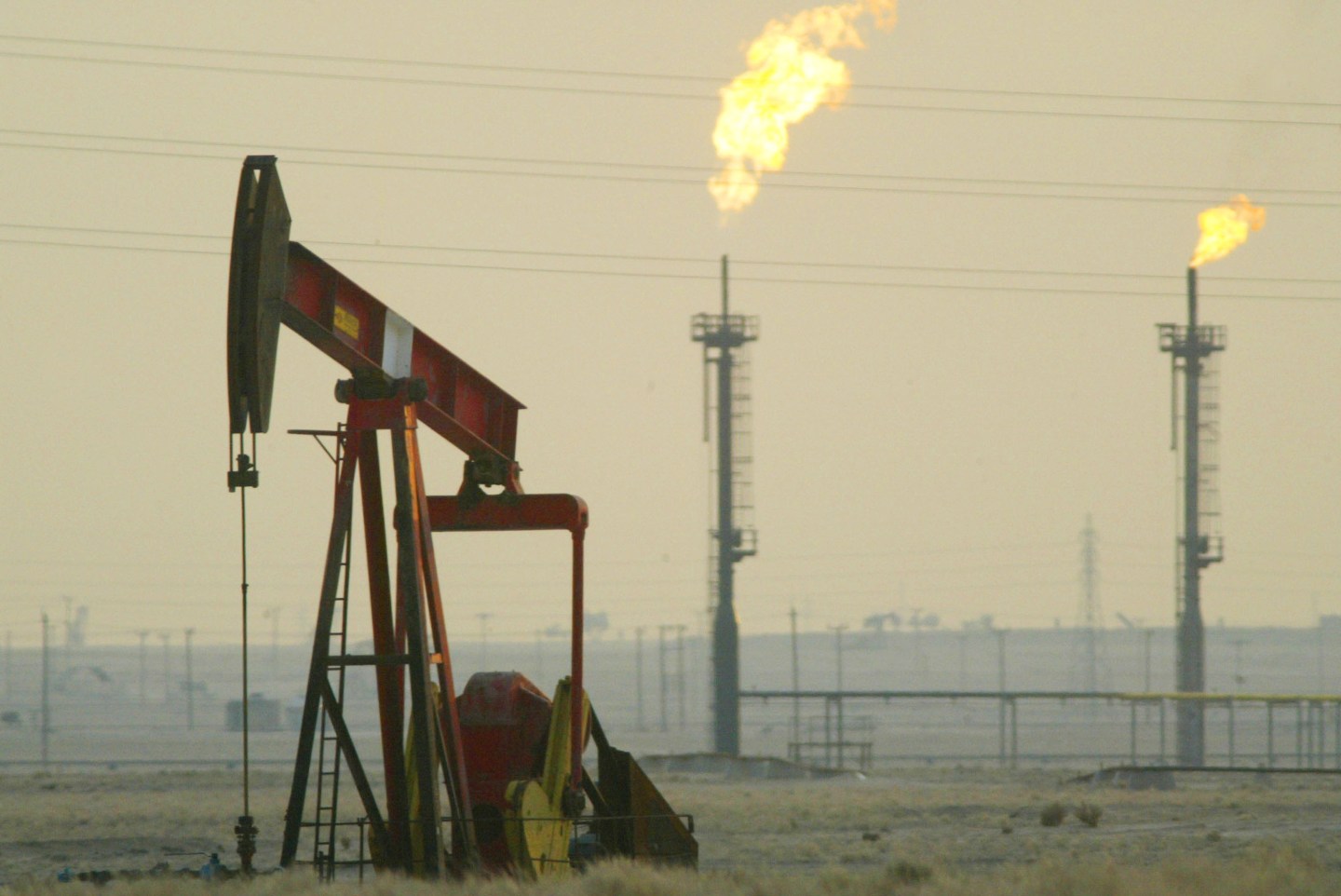
Photograph by Joe Raedle — Getty Images

Earlier this week, the 13-nation Organization of the Petroleum Exporting Countries ended its meeting without reaching an agreement on oil production. Some had hoped OPEC would freeze and lower oil supplies to stabilize prices on Thursday, but Saudi Arabia’s new oil minister and de factor OPEC leader left supplies unchanged.

The gathering in Vienna received plenty of attention similar to previous ones, but it’s time for the world to stop following OPEC meetings.

The truth is that everyone should have stopped paying attention by late 2014 when it became clear the Saudis and other Arab states would not curtail their own output so as to sustain world oil prices that had soared to over $100 a barrel. The price had risen that far because demand for oil had risen with the growth of China and other emerging energy-hungry economies and because hostilities had disrupted oil supplies from some producing nations.

But the big new actor on the scene was North America. Specifically, the rapid rise of oil production in the United States and Canada, made possible by fracking — the development of new technologies to extract oil out of shale and other “tight” deposits. As a result, the Saudis realized that they would have to continually reduce their own production if shale oil production kept rising to keep the overall world oil supply unchanged. And at prices over $100, it would keep rising.

But if that is the basic story, there are many subplots in this operetta. Oil production from Iran had been curtailed because of embargoes imposed on Iranian output by the major powers of the world due to their renegade nuclear program. However, with a new agreement in place designed to curtail that program, the embargo has been lifted and Iran wants to return production to what it would have been without the embargo — it had been responsible for 11% of OPEC’s production in 2012.

The Arab states want to stabilize all members’ production at around recent levels, while Iran wants to go back to its pre-embargo production. Since many of these countries are mortal enemies on non-oil matters, it will be hard to get agreement on this point. Other complications include the disruptions to supply that arise from political and military conflicts in nations such as Venezuela, Nigeria, Syria, and Iraq. The lack of political stability may have sustained the recent rise in oil prices, but they complicate forecasts for the future.

We are currently living through and learning how U.S. producers will respond to current prices of around $50 a barrel, how they may change output, and whether they can survive at lower prices. Some shale fields are profitable at still lower prices but others are indeed closing down – the Saudis and OPEC have been playing this type of long game.
Farther down the road, what happens to oil prices in the future will determine how much U.S. supply will grow, if at all. And U.S. supply, in turn, will be a big factor determining prices across the rest of the world. If that sounds circular, it shouldn’t. Because shale oil production can profitably be turned on and off much more readily than oil from conventional fields, the world price will be sensitive to how productive this new technology turns out to be.

So the world oil market is likely to be uncertain for some time. OPEC could reduce that uncertainty if its members could agree to collude, as they have in the past. In that regard, it is ironic that the greatest oil fields were discovered in the sands of the Middle East early in the 20th century, and that the oil market still depends so heavily on production from countries that are so politically challenged in spite of their century-long liquid gold bonanza.

Will the Arab states curtail oil production enough to allow Iran to expand its own output at higher prices? Answer that and you can imagine a world with relatively stable oil prices. Now figure out at what price U.S. shale production would stabilize, and you can predict the trend in world oil prices. Or at least what that trend would be absent wars, overthrown governments and the like.

Bottom line: OPEC meetings are not as important as they used to be. They could be, if Iran and the Arabs could make friends, but from what we’ve seen today, we will need plenty of luck.

George Perry is a senior fellow and DJ Nordquist is chief of staff in Economic Studies at the Brookings Institution.

About the Authors
By George Perry
See full bioRight Arrow Button Icon
By DJ Nordquist
See full bioRight Arrow Button Icon

Latest in Commentary

Matt Rogers
CommentaryInfrastructure
I built the first iPhone with Steve Jobs. The AI industry is at risk of repeating an early smartphone mistake
By Matt RogersDecember 4, 2025
15 hours ago
Jerome Powell
CommentaryFederal Reserve
Fed officials like the mystique of being seen as financial technocrats, but it’s time to demystify the central bank
By Alexander William SalterDecember 4, 2025
15 hours ago
Rakesh Kumar
CommentarySemiconductors
China does not need Nvidia chips in the AI war — export controls only pushed it to build its own AI machine
By Rakesh KumarDecember 3, 2025
2 days ago
Rochelle Witharana is Chief Financial and Investment Officer for The California Wellness Foundation
Commentarydiversity and inclusion
Fund managers from diverse backgrounds are delivering standout returns and the smart money is slowly starting to pay attention
By Rochelle WitharanaDecember 3, 2025
2 days ago
Ayesha and Stephen Curry (L) and Arndrea Waters King and Martin Luther King III (R), who are behind Eat.Play.Learn and Realize the Dream, respectively.
Commentaryphilanthropy
Why time is becoming the new currency of giving
By Arndrea Waters King and Ayesha CurryDecember 2, 2025
3 days ago
Trump
CommentaryTariffs and trade
The trade war was never going to fix our deficit
By Daniel BunnDecember 2, 2025
3 days ago

Most Popular

placeholder alt text
Economy
Two months into the new fiscal year and the U.S. government is already spending more than $10 billion a week servicing national debt
By Eleanor PringleDecember 4, 2025
17 hours ago
placeholder alt text
Success
‘Godfather of AI’ says Bill Gates and Elon Musk are right about the future of work—but he predicts mass unemployment is on its way
By Preston ForeDecember 4, 2025
13 hours ago
placeholder alt text
North America
Jeff Bezos and Lauren Sánchez Bezos commit $102.5 million to organizations combating homelessness across the U.S.: ‘This is just the beginning’
By Sydney LakeDecember 2, 2025
3 days ago
placeholder alt text
Success
Nearly 4 million new manufacturing jobs are coming to America as boomers retire—but it's the one trade job Gen Z doesn't want
By Emma BurleighDecember 4, 2025
13 hours ago
placeholder alt text
Success
Nvidia CEO Jensen Huang admits he works 7 days a week, including holidays, in a constant 'state of anxiety' out of fear of going bankrupt
By Jessica CoacciDecember 4, 2025
12 hours ago
placeholder alt text
Health
Bill Gates decries ‘significant reversal in child deaths’ as nearly 5 million kids will die before they turn 5 this year
By Nick LichtenbergDecember 4, 2025
1 day ago
Rankings
  • 100 Best Companies
  • Fortune 500
  • Global 500
  • Fortune 500 Europe
  • Most Powerful Women
  • Future 50
  • World’s Most Admired Companies
  • See All Rankings
Sections
  • Finance
  • Leadership
  • Success
  • Tech
  • Asia
  • Europe
  • Environment
  • Fortune Crypto
  • Health
  • Retail
  • Lifestyle
  • Politics
  • Newsletters
  • Magazine
  • Features
  • Commentary
  • Mpw
  • CEO Initiative
  • Conferences
  • Personal Finance
  • Education
Customer Support
  • Frequently Asked Questions
  • Customer Service Portal
  • Privacy Policy
  • Terms Of Use
  • Single Issues For Purchase
  • International Print
Commercial Services
  • Advertising
  • Fortune Brand Studio
  • Fortune Analytics
  • Fortune Conferences
  • Business Development
About Us
  • About Us
  • Editorial Calendar
  • Press Center
  • Work At Fortune
  • Diversity And Inclusion
  • Terms And Conditions
  • Site Map

© 2025 Fortune Media IP Limited. All Rights Reserved. Use of this site constitutes acceptance of our Terms of Use and Privacy Policy | CA Notice at Collection and Privacy Notice | Do Not Sell/Share My Personal Information
FORTUNE is a trademark of Fortune Media IP Limited, registered in the U.S. and other countries. FORTUNE may receive compensation for some links to products and services on this website. Offers may be subject to change without notice.