Here’s How Some SunEdison Creditors Scored a Sweet No-Lose Deal
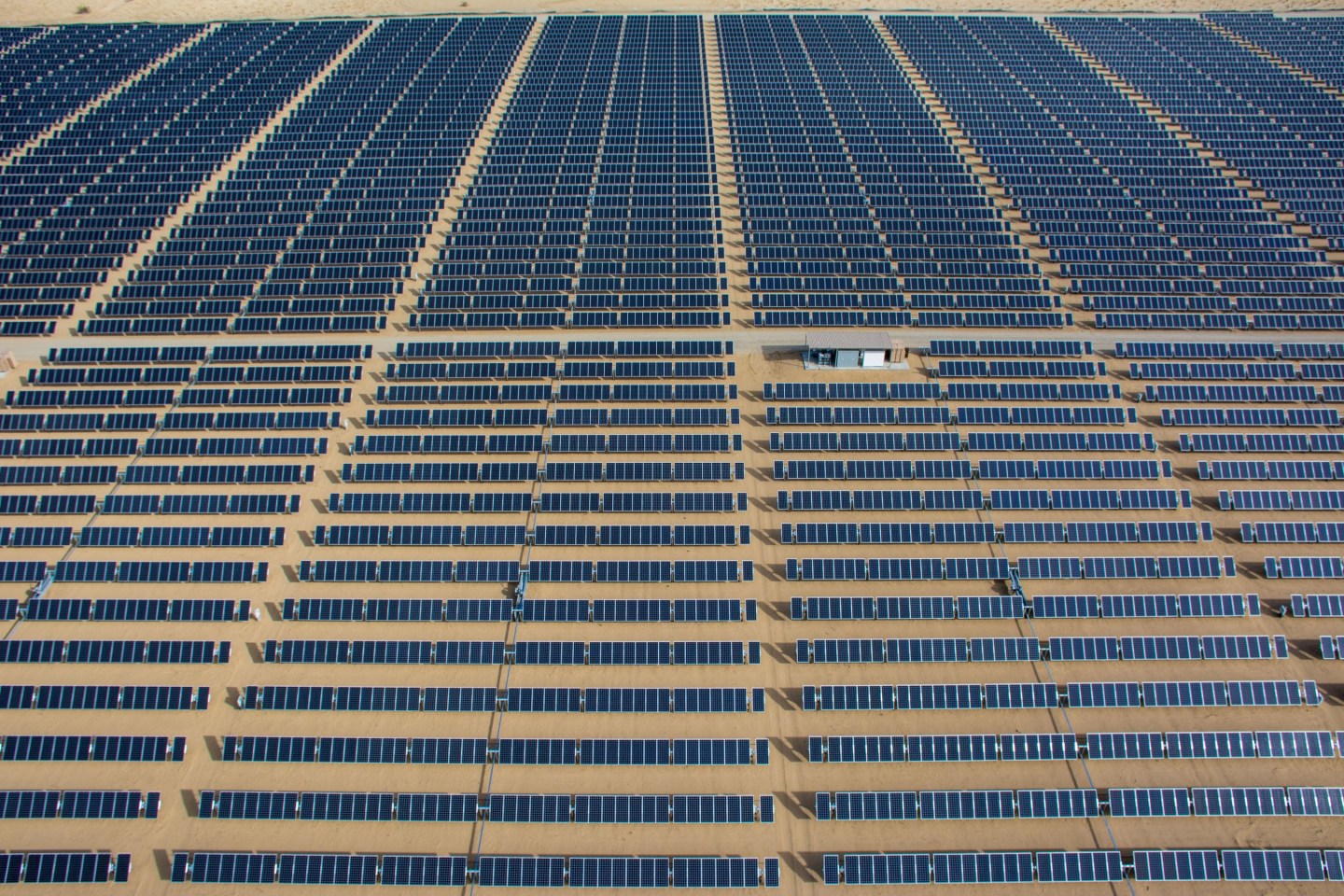
Photograph by AP—PRNewsFoto—SunEdison
About the Author
Latest in
Finance
Lorem ipsum dolor sit amet, consectetur adipiscing elit, sed do eiusmod tempor incididunt ut labore et dolore magna aliqua. Ut enim ad minim veniam
By Fortune Editors
October 20, 2025Finance
Lorem ipsum dolor sit amet, consectetur adipiscing elit, sed do eiusmod tempor incididunt ut labore et dolore magna aliqua. Ut enim ad minim veniam
By Fortune Editors
October 20, 2025Finance
Lorem ipsum dolor sit amet, consectetur adipiscing elit, sed do eiusmod tempor incididunt ut labore et dolore magna aliqua. Ut enim ad minim veniam
By Fortune Editors
October 20, 2025Finance
Lorem ipsum dolor sit amet, consectetur adipiscing elit, sed do eiusmod tempor incididunt ut labore et dolore magna aliqua. Ut enim ad minim veniam
By Fortune Editors
October 20, 2025Finance
Lorem ipsum dolor sit amet, consectetur adipiscing elit, sed do eiusmod tempor incididunt ut labore et dolore magna aliqua. Ut enim ad minim veniam
By Fortune Editors
October 20, 2025Finance
Lorem ipsum dolor sit amet, consectetur adipiscing elit, sed do eiusmod tempor incididunt ut labore et dolore magna aliqua. Ut enim ad minim veniam
By Fortune Editors
October 20, 2025Most Popular
Finance
Lorem ipsum dolor sit amet, consectetur adipiscing elit, sed do eiusmod tempor incididunt ut labore et dolore magna aliqua. Ut enim ad minim veniam
By Fortune Editors
October 20, 2025Finance
Lorem ipsum dolor sit amet, consectetur adipiscing elit, sed do eiusmod tempor incididunt ut labore et dolore magna aliqua. Ut enim ad minim veniam
By Fortune Editors
October 20, 2025Finance
Lorem ipsum dolor sit amet, consectetur adipiscing elit, sed do eiusmod tempor incididunt ut labore et dolore magna aliqua. Ut enim ad minim veniam
By Fortune Editors
October 20, 2025Finance
Lorem ipsum dolor sit amet, consectetur adipiscing elit, sed do eiusmod tempor incididunt ut labore et dolore magna aliqua. Ut enim ad minim veniam
By Fortune Editors
October 20, 2025Finance
Lorem ipsum dolor sit amet, consectetur adipiscing elit, sed do eiusmod tempor incididunt ut labore et dolore magna aliqua. Ut enim ad minim veniam
By Fortune Editors
October 20, 2025Finance
Lorem ipsum dolor sit amet, consectetur adipiscing elit, sed do eiusmod tempor incididunt ut labore et dolore magna aliqua. Ut enim ad minim veniam
By Fortune Editors
October 20, 2025









When a group of hedge funds agreed to lend $725 million to SunEdison — three months before it filed for bankruptcy last week — they secured an unusually generous concession from the U.S. renewable energy company and its other lenders.
The funds, which at the time included Tennenbaum Capital Partners and Candlewood Investment Group, put themselves in a prime position to handle so-called debtor-in-position financing in the event of a bankruptcy.
Such deals are coveted because they are lucrative and relatively safe. In this case, the loan holders will earn about 10% on a $175 million debt that amounts to nearly risk-free investment: SunEdison cannot emerge from bankruptcy unless it repays the money, and any liquidation would almost certainly provide the funds to recoup it.
The move set the funds up to salvage a large portion of their January investment, which might have been nearly worthless as SunEdison filed for bankruptcy amid federal inquiries into its financing and liquidity.
It is unclear whether some funds subsequently sold their loan holdings in the secondary market.
When the consortium of hedge funds made the first loan of $725 million in January, the money was a second-lien investment. As a condition, the group negotiated a cap on the amount first-lien lenders could issue in debtor-in-possession financing in a bankruptcy.
While such caps are common, this one was set so low that SunEdison had to turn to the second-lien lenders for a substantial chunk of the DIP financing when it sought a total of $300 million, according to an analyst and court filings.
First-lien lenders provided the remaining $125 million of the DIP financing.
SunEdison has not disclosed the identity of the investors that handled the DIP financing, but has said in court filings that about 90% of the creditors holding second-lien debt participated in the DIP.
SunEdison and Tennenbaum Capital Partners declined to comment. Candlewood Investment Group did not respond to requests for comment.
Limiting the Damage
Shortly before the bankruptcy filing, the funds also negotiated a second condition that could provide crucial protection for their first loan of $725 million—and bring them up to first position in collecting on collateral.
Typically, second-lien lenders are paid only after first-lien creditors are satisfied. But DIP lenders are paid before anyone.
In negotiating the DIP, the hedge funds asked that, for every new dollar the group extended to SunEdison in DIP financing, two dollars of their original investment be given the same seniority as the DIP.
As a result, by lending another $175 million for the DIP, they got a near-guarantee that $350 million of their second-lien debt would be repaid.
In addition to the $725 million loan from January, the second-lien debt includes another $225 million in bonds, for a total of $950 million in second-lien debt.
As a group, investors lost big on SunEdison, which overextended itself with an acquisition spree of renewable energy projects across the globe. Investors who bet on SunEdison’s shares saw almost $10 billion in value erased since last summer.
The hedge fund consortium made a bad bet, too, on its $725 million loan to SunEdison. But it deftly limited its downside risk in negotiations with a company that desperately needed cash, said John Sirico, an analyst at credit research firm Covenant Review.
“SunEdison was in great need for financing just months before bankruptcy,” he said. “The second lien lenders had greater leverage.”
SunEdison also had little negotiating power in its talks with creditors for DIP financing. It needed as big a DIP loan as possible to give the company enough time to sell assets at high enough prices and sort out its finances under court protection.
Without the deal on the DIP loan in place, SunEdison could have faced a protracted and brutal fight among creditors in bankruptcy court, racking up fees and further draining its resources.
Investment Crashes
For the hedge funds, the cap on the DIP was a master stroke because they watched their investment crash in value months after they made it.
Their $725 million second-lien loan was trading in the secondary market at between 31 and 33 cents on the dollar earlier this month, according to Thomson Reuters Loan Pricing Corp.
The $225 million in bonds was also trading at distressed levels.
But the DIP arrangement, which must still be finalized by a U.S. bankruptcy court judge, would likely preserve $350 million of the total $950 million in second-lien debt. DIP loans typically trade at close to par.