• Home
  • Latest
  • Fortune 500
  • Finance
  • Tech
  • Leadership
  • Lifestyle
  • Rankings
  • Multimedia
Commentary

Donald Trump’s Plan to Build a Wall Is Actually Really Dangerous

By
Aaron Klein
Aaron Klein
Down Arrow Button Icon
By
Aaron Klein
Aaron Klein
Down Arrow Button Icon
April 7, 2016, 1:44 PM ET
USA-ELECTION/TRUMP
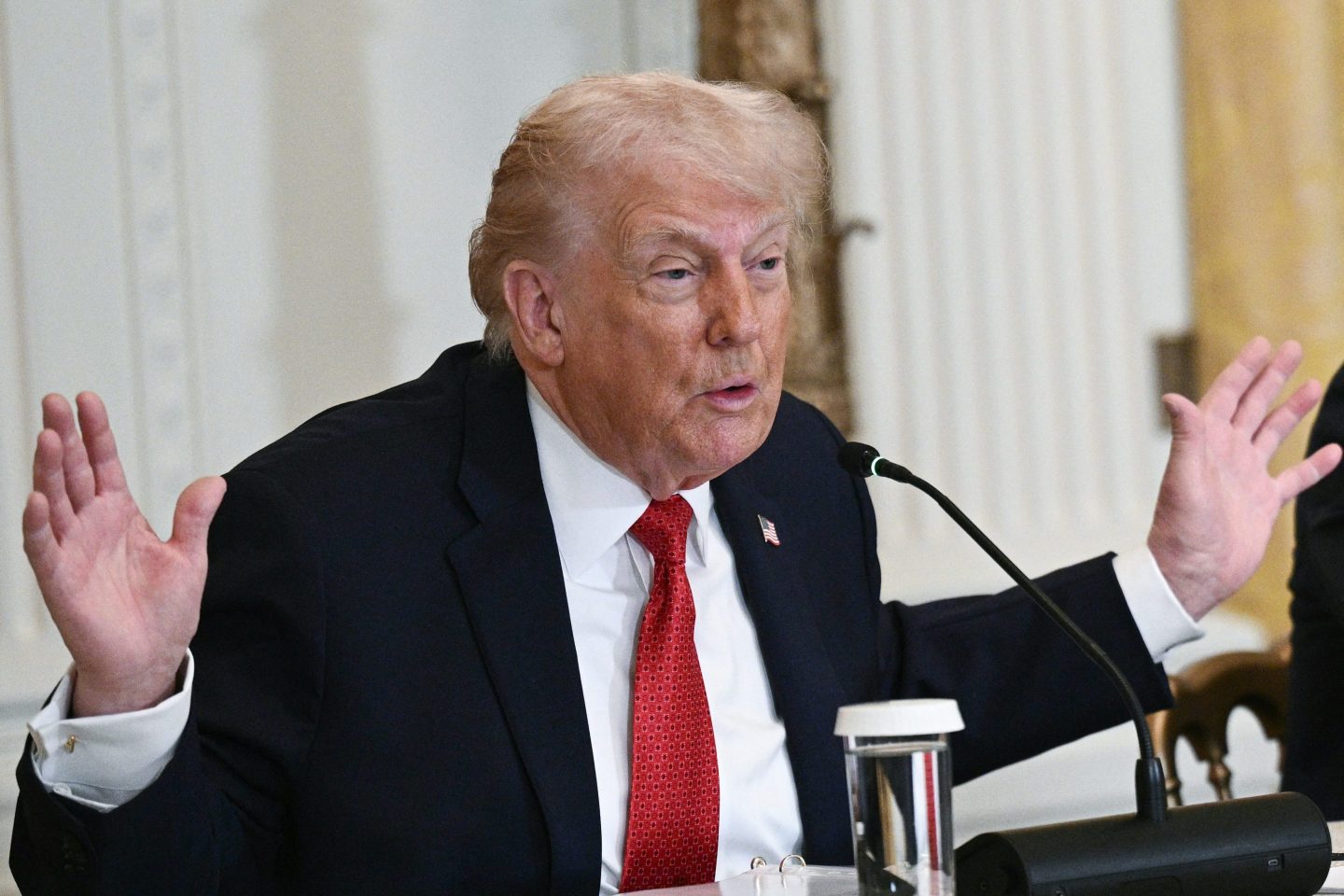
Republican U.S. presidential candidate Donald Trump speaks to supporters during a campaign rally in Warren, Michigan, March 4, 2016. REUTERS/Carlos Barria - RTS9BR8Photograph by Carlos Barria — Reuters

Donald Trump’s proposal to force Mexico to pay for a Wall guarding against the flux of immigrants into the U.S. made news this week, and rightfully so. Trump’s idea would be to curtail the ability of banks, credit unions, and wire transmission companies to send money abroad — a sharp departure from policy and law whose bipartisan aim has been to bring remittances to all countries into the financial mainstream and out from the shadowy illegal word of people moving cash in suitcases.

Encouraging remittances to go through the financial system benefits everyone: it enhances the ability to combat terrorist finance and money-laundering, it reduces crime in both the U.S. and abroad, it increases economic growth in the U.S. and overseas, and it provides for greater competition and market incentives to allow people to keep more of their hard-earned money to use as they see fit. Moving in the opposite direction would be a major mistake.

This is a big issue that affects a lot more people than one might think – more than just sending money to Mexico. In America today, more than 40 million people were born in other countries, a record number. This translates into just more than 1 in 8 Americans, a sharp increase from 1970 when fewer than 1 in 25 Americans were foreign born. Thus, it is not surprising that many people perceive America to have more foreign-born people than any time in their lifetime. However, that is not the case for the lifetime of America. Between the Civil War and the 1920s, America had as high — or higher — share of foreign born as we do today.

Remittances are not a new phenomenon. Most American families likely sent remittances at some point whenever their family first immigrated. My great-grand father sent money back to what is today the Czech Republic so that his wife and their children (including my grandmother) could come and join him and escape what became the Second World War. Today, remittance flows go toward the new generation of American immigrants and the children of those immigrants. More than $120 billion was sent abroad in 2012 according to the Pew Center and while it is true that Mexico received the largest amount at just under $23 billion, the rest of the top 5 countries may surprise you: China ($13 billion), India ($12 billion), Philippines ($10.5 billion), and Nigeria ($6 billion). And old habits remain as Germany ($2.5 billion) and France ($2 billion) are still among the top 15 countries that receive remittances from the United States.

This money comes in lots of small chunks, which can make sending it expensive. The typical new migrant worker sends money home around 14 times a year, which corresponds to once a month plus Mother’s Day and Christmas. These are usually small sums (less than $300) and represent an extraordinary level of savings given the worker’s income. The money goes through both the formal banking system including banks, credit unions, and wire transmitters who eventually use banks like Western Union and MoneyGram. Some goes through informal means, including “viajeros” who are people that literally carry cash in suitcases on planes that are often breaking the law and outside of the standard anti-money laundering and terrorist finance enforcement system. Why would anyone want to encourage that?

The idea of using this flow of funds to try to implement other policy objectives, such as border control, would be a sharp departure from current practice. The Patriot Act and subsequent federal law governing remittances in financial laws like the Dodd-Frank Act were never intended to be used to threaten to cut off the flow of migrant worker remittances. These laws were intended to track and crack down on the flow of money laundering or support for illegal and terrorist organizations while at the same time providing consumer protections to workers who are sending hard-earned cash back home to their parents, grandparents, and children. In fact, the bipartisan goal of policy concerning remittances has been to encourage the flow of money to come into the official system and to discourage the flow of funds through the underground network.

In 2004, then Federal Reserve Governor Ben Bernanke made clear that, “The Federal Reserve is attempting to support banks’ efforts to better serve immigrant populations, with remittances and other money transfers being a key area of interest.” House Financial Services Chairman Mike Oxley (R-OH) told President Bush’s then-Treasury Secretary John Snow, “Remittances between established and emerging economies foster growth in both types of economies simultaneously. I will be interested in hearing your views on how unnecessary costs can be eliminated in this area.” When Senator Paul S. Sarbanes (D-MD) introduced legislation that became the basis for today’s law that covers remittances he had the simple goal to “increase transparency, competition and efficiency in the remittance market, while helping to bring more Americans into the financial mainstream.”

The longstanding bipartisan support for bringing remittances into the financial mainstream is based on the fact that most immigrants, regardless of whether they are U.S. citizens, legal residents, or undocumented, send remittances. A system that tried to assert proof of citizenship or legal status upon wiring money overseas would be burdensome, costly, and ineffective at best and if effective, it would simply drive more money into illegal transmission schemes while increasing crime here in the U.S. and abroad. Imagine if an entire community knew that someone would be walking through their immigrant neighborhood with a suitcase full of tens of thousands of dollars in cash.

Thought of another way, if I went to the bank to send money to my mother who lives in France part of the year, how would I prove that I’m a citizen? My driver’s license alone is not proof of legal status. Would I need to bring my passport? What if, like the majority of Americans, (62% according to the State Department) I don’t have a valid passport? Would I have to bring my birth certificate to the local Western Union? I guess the one positive thing from such a system is that it would help stop the email scams asking for money from a Nigerian Prince….

Aaron Klein is a fellow at the Brookings Institution and served as Deputy Assistant Secretary of the US Treasury Department from 2009 to 2012. He also serves as an unpaid member of the Clinton campaign’s Infrastructure Finance Working Group; he has not served as an advisor on any banking or finance issues.


About the Author
By Aaron Klein
See full bioRight Arrow Button Icon

Latest in Commentary

Finance
Lorem ipsum dolor sit amet, consectetur adipiscing elit, sed do eiusmod tempor incididunt ut labore et dolore magna aliqua. Ut enim ad minim veniam
By Fortune Editors
October 20, 2025
Finance
Lorem ipsum dolor sit amet, consectetur adipiscing elit, sed do eiusmod tempor incididunt ut labore et dolore magna aliqua. Ut enim ad minim veniam
By Fortune Editors
October 20, 2025
Finance
Lorem ipsum dolor sit amet, consectetur adipiscing elit, sed do eiusmod tempor incididunt ut labore et dolore magna aliqua. Ut enim ad minim veniam
By Fortune Editors
October 20, 2025
Finance
Lorem ipsum dolor sit amet, consectetur adipiscing elit, sed do eiusmod tempor incididunt ut labore et dolore magna aliqua. Ut enim ad minim veniam
By Fortune Editors
October 20, 2025
Finance
Lorem ipsum dolor sit amet, consectetur adipiscing elit, sed do eiusmod tempor incididunt ut labore et dolore magna aliqua. Ut enim ad minim veniam
By Fortune Editors
October 20, 2025
Finance
Lorem ipsum dolor sit amet, consectetur adipiscing elit, sed do eiusmod tempor incididunt ut labore et dolore magna aliqua. Ut enim ad minim veniam
By Fortune Editors
October 20, 2025

Most Popular

Finance
Lorem ipsum dolor sit amet, consectetur adipiscing elit, sed do eiusmod tempor incididunt ut labore et dolore magna aliqua. Ut enim ad minim veniam
By Fortune Editors
October 20, 2025
Finance
Lorem ipsum dolor sit amet, consectetur adipiscing elit, sed do eiusmod tempor incididunt ut labore et dolore magna aliqua. Ut enim ad minim veniam
By Fortune Editors
October 20, 2025
Finance
Lorem ipsum dolor sit amet, consectetur adipiscing elit, sed do eiusmod tempor incididunt ut labore et dolore magna aliqua. Ut enim ad minim veniam
By Fortune Editors
October 20, 2025
Finance
Lorem ipsum dolor sit amet, consectetur adipiscing elit, sed do eiusmod tempor incididunt ut labore et dolore magna aliqua. Ut enim ad minim veniam
By Fortune Editors
October 20, 2025
Finance
Lorem ipsum dolor sit amet, consectetur adipiscing elit, sed do eiusmod tempor incididunt ut labore et dolore magna aliqua. Ut enim ad minim veniam
By Fortune Editors
October 20, 2025
Finance
Lorem ipsum dolor sit amet, consectetur adipiscing elit, sed do eiusmod tempor incididunt ut labore et dolore magna aliqua. Ut enim ad minim veniam
By Fortune Editors
October 20, 2025
Rankings
  • 100 Best Companies
  • Fortune 500
  • Global 500
  • Fortune 500 Europe
  • Most Powerful Women
  • Future 50
  • World’s Most Admired Companies
  • See All Rankings
Sections
  • Finance
  • Leadership
  • Success
  • Tech
  • Asia
  • Europe
  • Environment
  • Fortune Crypto
  • Health
  • Retail
  • Lifestyle
  • Politics
  • Newsletters
  • Magazine
  • Features
  • Commentary
  • Mpw
  • CEO Initiative
  • Conferences
  • Personal Finance
  • Education
Customer Support
  • Frequently Asked Questions
  • Customer Service Portal
  • Privacy Policy
  • Terms Of Use
  • Single Issues For Purchase
  • International Print
Commercial Services
  • Advertising
  • Fortune Brand Studio
  • Fortune Analytics
  • Fortune Conferences
  • Business Development
About Us
  • About Us
  • Editorial Calendar
  • Press Center
  • Work At Fortune
  • Diversity And Inclusion
  • Terms And Conditions
  • Site Map

© 2025 Fortune Media IP Limited. All Rights Reserved. Use of this site constitutes acceptance of our Terms of Use and Privacy Policy | CA Notice at Collection and Privacy Notice | Do Not Sell/Share My Personal Information
FORTUNE is a trademark of Fortune Media IP Limited, registered in the U.S. and other countries. FORTUNE may receive compensation for some links to products and services on this website. Offers may be subject to change without notice.


Latest in Commentary

MGI
CommentaryProductivity
The world is awash in wealth but starved for productivity—and that imbalance is distorting growth, debt, and opportunity. We need AI to come through
By Jan Mischke, Olivia White and Rebecca J. AndersonDecember 31, 2025
22 hours ago
Zohran, Trump
Commentarywork culture
Strange political bedfellows not that strange in the season of the new nihilism
By Ian ChaffeeDecember 31, 2025
22 hours ago
Moreland
CommentaryRetirement
Retirement is changing. Here’s why companies need to change, too
By Mary MorelandDecember 31, 2025
23 hours ago
worker
CommentaryJobs
Erased: what 2025 revealed about America’s real economic risk
By Katica RoyDecember 31, 2025
23 hours ago
Wesley Yin is a Professor of economics at UCLA in the Luskin School of Public Affairs and Anderson School of Management
CommentaryIPOs
Privatizing Fannie Mae and Freddie Mac the wrong way risks a second Great Recession
By Wesley YinDecember 30, 2025
2 days ago
TV
CommentaryMedia
Television is a state of mind: why user experience will define the next era of media
By Lin CherryDecember 30, 2025
2 days ago

Most Popular

placeholder alt text
Europe
George Clooney moves to France and sends a strong message about the American Dream
By Nick LichtenbergDecember 30, 2025
2 days ago
placeholder alt text
Environment
'I opened her door and the wind caught me, and I went flying': The U.S. Arctic air surge is sweeping northerners off their feet
By Holly Ramer and The Associated PressDecember 30, 2025
2 days ago
placeholder alt text
Success
Gen Z could wave goodbye to résumés because most companies have turned to skills-based recruitment—and find it more effective, research shows
By Orianna Rosa RoyleDecember 29, 2025
3 days ago
placeholder alt text
Health
Lay's drastically rebrands after disturbing finding: 42% of consumers didn't know their chips were made out of potatoes
By Matty Merritt and Morning BrewDecember 31, 2025
19 hours ago
placeholder alt text
C-Suite
Exiting CEO left each employee at his family-owned company a $443,000 gift—but they have to stay 5 more years to get all of it
By Nick LichtenbergDecember 30, 2025
2 days ago
placeholder alt text
Retail
Starbucks CEO Brian Niccol says a Reddit thread about people interviewing at the company convinced him his 'Back to Starbucks' plan is working
By Sasha RogelbergDecember 31, 2025
20 hours ago