As conservative legislatures in Southern states continue to plow ahead in the battle pitting religious freedom against LGBT-rights, mega-corporations like (DIS) Disney, (KO) Coca-Cola, and (FB) Facebook have earned an influential seat at the political roundtable. Earlier this week, Georgia Governor Nathan Deal vetoed a far-reaching religious freedom bill after facing pressure from these and other corporations threatening to pull their business out of the state.
North Carolina received similar scrutiny after passing House Bill 2, a sweeping religious freedom bill that essentially prohibits municipalities from passing LGBT-protective laws. The Charlotte-based Bank of America, Apple, and 80 other CEOs and business leaders signed onto a letter demanding that North Carolina Governor Pat McCrory repeal the controversial law.
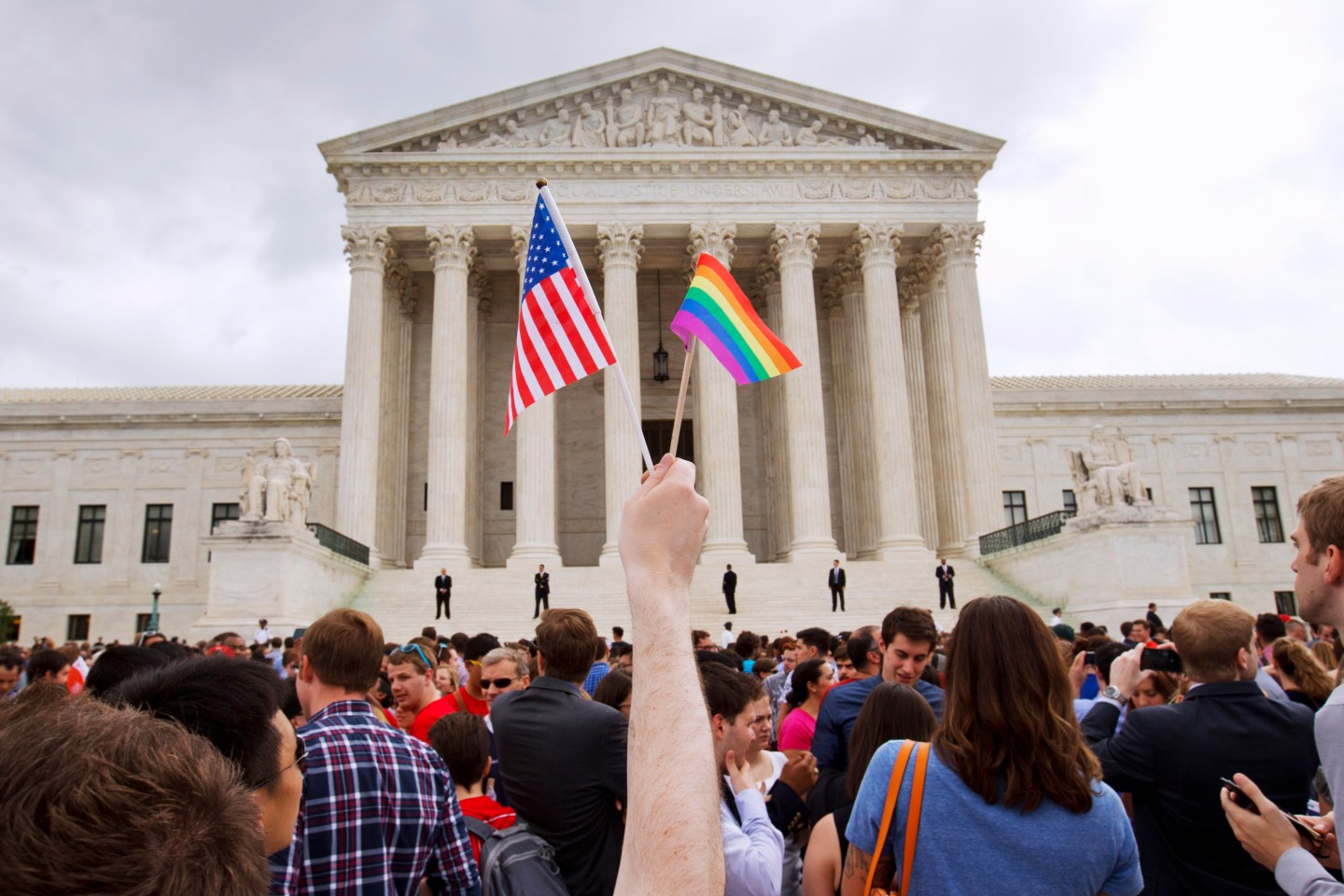
These and other “license to discriminate” bills enabling business to refuse to hire or serve LGBT individuals in the name of religious freedom are part of a larger narrative – a continuing backlash to the Supreme Court’s historic 2015 same-sex marriage decision. But as businesses like Twitter, Marriot, Levi Strauss, and American Airlines voice objections to these bills, becoming central players in the political conversation, the business world questions whether and to what extent these companies should voice their progressive opinions so loudly.
See also: Mississippi Legislators Just Passed the “Most Sweeping Anti-LGBT Legislation” in the U.S.
Although corporate America cannot serve in a legislative or enforcement role, its certainly influencing legislative policy, as evidenced by Governor Deal’s recent veto of the Georgia religious freedom bill. Critics of corporate interference in policymaking take issue with these outspoken corporations’ expression of strong stances on political issues. After all, corporations are not structured for assuming a central role on the political stage. Indeed, the corporate structure is designed primarily for making money, and opponents of the new corporate conscience argue that money and politics should keep a safe distance. This is the argument espoused by opponents of the Supreme Court’s controversial 2010 decision in Citizens United v. Federal Election Commission, which upheld the First Amendment right of corporations to make unlimited independent expenditures to political causes. In short, this decision and its aftermath have reshaped the country’s political landscape.
Like it or not, however, dollars and cents play a leading role in today’s politics. In an age where Super PACS are flexing their political muscles by funding negative media campaigns against their candidate’s opponent or publishing disparaging pictures of a candidate’s wife, the political game is entirely about money. When money equals access to political discourse, and more money means more access and influence in the political arena, why shouldn’t corporations speak up on socially important matters?
The recent trend of corporate threats to boycott is part of a larger shift toward a more sophisticated political structure. While the recent threats of corporate boycotts are reminiscent of the efforts of civil rights groups like the ACLU or the NAACP during the civil rights movement, socially-minded consumers have become more savvy. They recognize that the most effective metaphorical carrot over a state politician’s nose is the threat of corporate abandonment.
Today, instead of civil rights groups like the NAACP influencing individuals to ban together on social policy issues, consumer activists have realized that pushing for corporate pressure on state governors is far more effective. Now, corporations are standing in the shoes of the consumer activists as “super-consumers” to state economies. The corporate influence on state economies is simply more powerful than any same-minded individual citizen activist because, in monetary terms, the corporate presence in a state has a greater impact on the state’s economy than even the aggregate of socially-conscious consumers.
But, as corporations navigate their way through uncharted territory, where the modern corporation exercises its political influence, justifying such expression as an act of corporate conscience, they must be cognizant of their shareholders. Where shares and wares are traded daily in the business world, and the stock market’s fluctuation is a symptom of consumer whim, corporations are held more accountable to their constituents than politicians, whose records are only reviewed every few years when they come up for reelection.
Regardless of whether a corporation’s motive is pure and altruistic, or whether it is acting solely for economic reasons (packaged in social consciousness), threats of corporate boycotts send both a symbolic and fiscal message that the business world will not tolerate efforts to cloak discrimination in religious freedom. When 80 businesses threaten a single state’s economy, the aggregate negative affect on interstate commerce could be substantial. As such, Coca-Cola, Disney, and other mega-corporations will continue to hold tremendous power in shaping social policy.
Danielle Weatherby is an assistant professor at the University of Arkansas School of Law.