• Home
  • Latest
  • Fortune 500
  • Finance
  • Tech
  • Leadership
  • Lifestyle
  • Rankings
  • Multimedia
Commentaryclean energy

Why Every Entrepreneur Should Take a Closer Look at Clean Tech

By
Peter Shannon
Peter Shannon
and
Bethany Cianciolo
Bethany Cianciolo
Down Arrow Button Icon
By
Peter Shannon
Peter Shannon
and
Bethany Cianciolo
Bethany Cianciolo
Down Arrow Button Icon
March 29, 2016, 4:28 PM ET
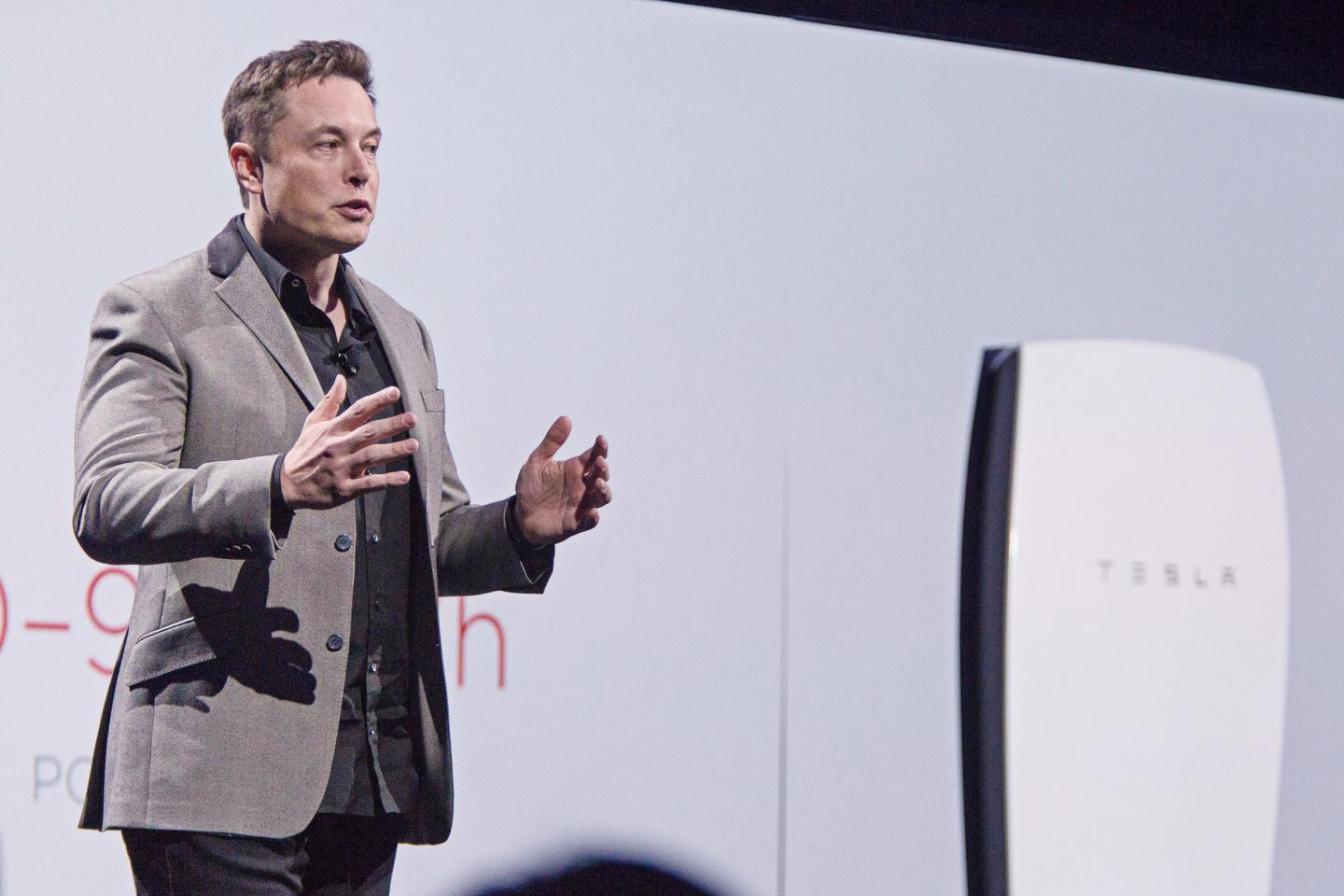
Tesla Motors Inc. Chief Executive Officer Elon Musk Unveils New Generation Of Batteries
Elon Musk, co-founder and chief executive officer of Tesla Motors Inc., speaks during the unveiling of the company's "Powerwall' at an event in Hawthorne, California, U.S., on Thursday, April 30, 2015. Musk unveiled a suite of batteries to store electricity for homes, businesses and utilities, saying a greener power grid furthers the company's mission to provide pollution-free energy. Photographer: Tim Rue/Bloomberg via Getty ImagesPhotograph by Tim Rue— Bloomberg via Getty Images

Over the past three years, clean-tech funding has been in the doldrums. In 2014, investors poured $2 billion into clean tech, but that number dropped to $1.2 billion last year, according to a report by PricewaterhouseCoopers and the National Venture Capital Association. But this trend just might be starting to change.

Why? A decade ago, clean-tech investment focused on funding risky inventions. Venture capitalists backed companies that attempted to solve big, scientific problems, such as building efficient solar panels or creating clean biofuels. While this effort proved a mismatch for venture capital investment, it did have a silver lining. We now have a range of clean technologies that are cost effective and available at scale.

Today, these include solar power, wind energy, efficient lighting, and batteries able to power vehicles—each of which can support many new clean tech products. For example, by itself a battery does little, but with battery-enabled propulsion, we can completely rethink transportation, mobility, robotics, drones, and much more.

Rather than emphasizing technology breakthroughs, this new wave of clean-tech businesses is all about finding applications and solutions. They will take existing, core technologies and combine them with software, the cloud, and sensors to build new products and services.

As a result, clean-tech entrepreneurs will be able to reintroduce an element of creativity into their work. The possibilities will be limited only by an entrepreneur’s imagination. The companies that succeed will do what smart new startups have always done: Focus on delighting customers and disrupting markets using creative combinations of technology, software, and business models. Already, Tesla Motors (TSLA) has rethought the car, Alta Motors has rethought the motorbike, and Sungevity has rethought consumer energy with solar.

For these reasons, new money is starting to flow into this sector. Andrew Chung, a former partner at Khosla, just launched his 1955 Capital fund, raising some $200 million. He plans to invest in technology that helps solve energy, food, and agriculture challenges in the developing world. Another new fund, Energy Ventures, will take minority stakes in startups developing technologies that include wind power, energy storage, and smart grids. Statoil ASA, the Norwegian oil giant, plans to invest $200 million in renewable energy.

And deals are starting to happen. Sunverge Energy, a utility-scale storage company, recently closed a $36.5 million Series C round, as reported by GTM. Powerhive raised $20 million in venture financing to bring electricity to communities in the developing world with a product enabled by a combination of energy generation, storage, sensor, and cloud technologies.

Some of the top areas we expect to see as big opportunities for investors and entrepreneurs include:

  • Bringing control and flexibility to how we grow food, using sensors, cheap LEDs, and software algorithms
  • Revolutionizing cold-chain logistics for fresh food using fuel cells, sensors, and big data
  • New business models for financing renewable energy assets that increase liquidity and market efficiency
  • Transforming urban mobility using computer vision, geospatial data, and leveraging the ubiquity of smartphones


Investing in base technologies was necessary yet tricky, but the new generation of clean-tech businesses will be rapidly growing and nimble in their pursuit of a wide spectrum of opportunities. As a result, they are much more compatible with the VC investment model. Many of VC’s greatest investment successes have been companies that leveraged existing technologies, like cloud computing, and used them to create unique, compelling products that disrupt markets. The new clean-tech startups will work in a similar way, building on clean technologies to create compelling products that not only cut the costs of sustainability but also improve people’s lives.


These new businesses can target specific customer segments, find untouched niche markets, and pivot to uncover new opportunities. Multiple products will be able succeed in the same category. We won’t merely have one brand of battery-powered vehicles, but a whole range of them will find ways to succeed. I call this divergent competition, and it’s essential for success in venture capital investment.

In addition, because we’re working not with the bleeding edge of materials sciences but with solutions dependent on proven technologies, we will have more predictable product development costs and times-to-market. That makes it easier to assess risk and manage capital requirements.

Finally, most of these product concepts can be validated before scaling. In the inventions wave of clean-tech investing, scale was largely the differentiator, and massive investment was required to succeed. Now, the opposite often holds true. We can test out the viability of products without having to build expensive dedicated manufacturing facilities.

Of course, for a few of these investments, a new business model will be involved. To convert to many clean technologies, customers will need to justify upfront costs in return for savings over time. Business model innovation mated with financing solves this, while opening a parallel avenue for investment in lower risk project finance. A well-known example of this is residential solar leasing, which enables homeowners to spread the costs of rooftop solar over many years. Similar models will be necessary for vehicle fleets, efficiency products, and numerous other technologies. The key to mastering this discipline will be understanding how the business model and financing work together and how to bridge from the initial financing models to more mature ones able to access the scale of broader capital markets.

Above all, this is a hopeful time. If our goal is to see new sustainable technologies succeed in reducing carbon emissions, we must create products that consumers and businesses want and can adopt in large numbers. Merely solving a technology challenge means little if investors do not back the creative startups that will take every advance and run with it.

Peter Shannon is a managing director with Firelake Capital in Palo Alto, CA and invests in sustainability technologies. He is a thought leader in the transportation and distributed energy sectors and is also a contributing writer for Resourcient, which promotes scalable investment in resource efficient businesses.


About the Authors
By Peter Shannon
See full bioRight Arrow Button Icon
By Bethany Cianciolo
See full bioRight Arrow Button Icon

Latest in Commentary

Finance
Lorem ipsum dolor sit amet, consectetur adipiscing elit, sed do eiusmod tempor incididunt ut labore et dolore magna aliqua. Ut enim ad minim veniam
By Fortune Editors
October 20, 2025
Finance
Lorem ipsum dolor sit amet, consectetur adipiscing elit, sed do eiusmod tempor incididunt ut labore et dolore magna aliqua. Ut enim ad minim veniam
By Fortune Editors
October 20, 2025
Finance
Lorem ipsum dolor sit amet, consectetur adipiscing elit, sed do eiusmod tempor incididunt ut labore et dolore magna aliqua. Ut enim ad minim veniam
By Fortune Editors
October 20, 2025
Finance
Lorem ipsum dolor sit amet, consectetur adipiscing elit, sed do eiusmod tempor incididunt ut labore et dolore magna aliqua. Ut enim ad minim veniam
By Fortune Editors
October 20, 2025
Finance
Lorem ipsum dolor sit amet, consectetur adipiscing elit, sed do eiusmod tempor incididunt ut labore et dolore magna aliqua. Ut enim ad minim veniam
By Fortune Editors
October 20, 2025
Finance
Lorem ipsum dolor sit amet, consectetur adipiscing elit, sed do eiusmod tempor incididunt ut labore et dolore magna aliqua. Ut enim ad minim veniam
By Fortune Editors
October 20, 2025

Most Popular

Finance
Lorem ipsum dolor sit amet, consectetur adipiscing elit, sed do eiusmod tempor incididunt ut labore et dolore magna aliqua. Ut enim ad minim veniam
By Fortune Editors
October 20, 2025
Finance
Lorem ipsum dolor sit amet, consectetur adipiscing elit, sed do eiusmod tempor incididunt ut labore et dolore magna aliqua. Ut enim ad minim veniam
By Fortune Editors
October 20, 2025
Finance
Lorem ipsum dolor sit amet, consectetur adipiscing elit, sed do eiusmod tempor incididunt ut labore et dolore magna aliqua. Ut enim ad minim veniam
By Fortune Editors
October 20, 2025
Finance
Lorem ipsum dolor sit amet, consectetur adipiscing elit, sed do eiusmod tempor incididunt ut labore et dolore magna aliqua. Ut enim ad minim veniam
By Fortune Editors
October 20, 2025
Finance
Lorem ipsum dolor sit amet, consectetur adipiscing elit, sed do eiusmod tempor incididunt ut labore et dolore magna aliqua. Ut enim ad minim veniam
By Fortune Editors
October 20, 2025
Finance
Lorem ipsum dolor sit amet, consectetur adipiscing elit, sed do eiusmod tempor incididunt ut labore et dolore magna aliqua. Ut enim ad minim veniam
By Fortune Editors
October 20, 2025
Fortune Secondary Logo
Rankings
  • 100 Best Companies
  • Fortune 500
  • Global 500
  • Fortune 500 Europe
  • Most Powerful Women
  • Future 50
  • World’s Most Admired Companies
  • See All Rankings
Sections
  • Finance
  • Fortune Crypto
  • Features
  • Leadership
  • Health
  • Commentary
  • Success
  • Retail
  • Mpw
  • Tech
  • Lifestyle
  • CEO Initiative
  • Asia
  • Politics
  • Conferences
  • Europe
  • Newsletters
  • Personal Finance
  • Environment
  • Magazine
  • Education
Customer Support
  • Frequently Asked Questions
  • Customer Service Portal
  • Privacy Policy
  • Terms Of Use
  • Single Issues For Purchase
  • International Print
Commercial Services
  • Advertising
  • Fortune Brand Studio
  • Fortune Analytics
  • Fortune Conferences
  • Business Development
  • Group Subscriptions
About Us
  • About Us
  • Editorial Calendar
  • Press Center
  • Work At Fortune
  • Diversity And Inclusion
  • Terms And Conditions
  • Site Map
  • About Us
  • Editorial Calendar
  • Press Center
  • Work At Fortune
  • Diversity And Inclusion
  • Terms And Conditions
  • Site Map
  • Facebook icon
  • Twitter icon
  • LinkedIn icon
  • Instagram icon
  • Pinterest icon

Latest in Commentary

gas
CommentaryMiddle class
The $100 oil shock is hitting the middle class like a margin call
By Katica RoyApril 21, 2026
4 hours ago
trump
CommentarySocial Security
What happens if nothing is done to fix Social Security by 2032?
By Martha SheddenApril 21, 2026
6 hours ago
ternus
CommentaryApple
This Apple doesn’t fall far from the tree: Tim Cook is leaving at a peak and John Ternus is exactly the right CEO for the AI era
By Jeffrey Sonnenfeld and Steven TianApril 20, 2026
14 hours ago
trump
CommentaryZoom
The U.S. has a $282 billion trade surplus you’ve never heard of — and it’s at risk
By Josh KallmerApril 19, 2026
2 days ago
benioff
CommentarySalesforce
AI’s next act: how Salesforce is turning efficiency gains into revenue
By Keith Ferrazzi and Wendy SmithApril 18, 2026
3 days ago
trump
CommentaryWhite House
Trump has already endorsed the Monroe Doctrine. Now he needs to endorse the Truman Doctrine
By Robert HormatsApril 18, 2026
3 days ago

Most Popular

$166 billion in tariff refunds just became available, but small businesses may already be at a disadvantage
Law
$166 billion in tariff refunds just became available, but small businesses may already be at a disadvantage
By Sasha RogelbergApril 20, 2026
18 hours ago
Thousands of CEOs admit AI had no impact on employment or productivity—and it has economists resurrecting a paradox from 40 years ago
AI
Thousands of CEOs admit AI had no impact on employment or productivity—and it has economists resurrecting a paradox from 40 years ago
By Sasha RogelbergApril 19, 2026
2 days ago
Jeff Bezos once gave Eva Longoria and the admiral behind Osama bin Laden's capture $100 million—but she says you don't need wealth to give back
Success
Jeff Bezos once gave Eva Longoria and the admiral behind Osama bin Laden's capture $100 million—but she says you don't need wealth to give back
By Orianna Rosa RoyleApril 21, 2026
8 hours ago
Current price of oil as of April 20, 2026
Personal Finance
Current price of oil as of April 20, 2026
By Joseph HostetlerApril 20, 2026
1 day ago
Meet John Ternus, the 51-year-old former swimming champ who will succeed Tim Cook as Apple CEO
Big Tech
Meet John Ternus, the 51-year-old former swimming champ who will succeed Tim Cook as Apple CEO
By Dave Smith and Fortune EditorsApril 20, 2026
18 hours ago
This talent CEO says laid-off tech workers are ignoring a $300K ‘white-collar trade job’ with 81K openings a year
Economy
This talent CEO says laid-off tech workers are ignoring a $300K ‘white-collar trade job’ with 81K openings a year
By Jake AngeloApril 20, 2026
23 hours ago

© 2026 Fortune Media IP Limited. All Rights Reserved. Use of this site constitutes acceptance of our Terms of Use and Privacy Policy | CA Notice at Collection and Privacy Notice | Do Not Sell/Share My Personal Information
FORTUNE is a trademark of Fortune Media IP Limited, registered in the U.S. and other countries. FORTUNE may receive compensation for some links to products and services on this website. Offers may be subject to change without notice.