• Home
  • Latest
  • Fortune 500
  • Finance
  • Tech
  • Leadership
  • Lifestyle
  • Rankings
  • Multimedia
TechZeroing In

Your State May Fight for Internet Sales Tax

By
Don Reisinger
Don Reisinger
Down Arrow Button Icon
By
Don Reisinger
Don Reisinger
Down Arrow Button Icon
February 24, 2016, 11:38 AM ET
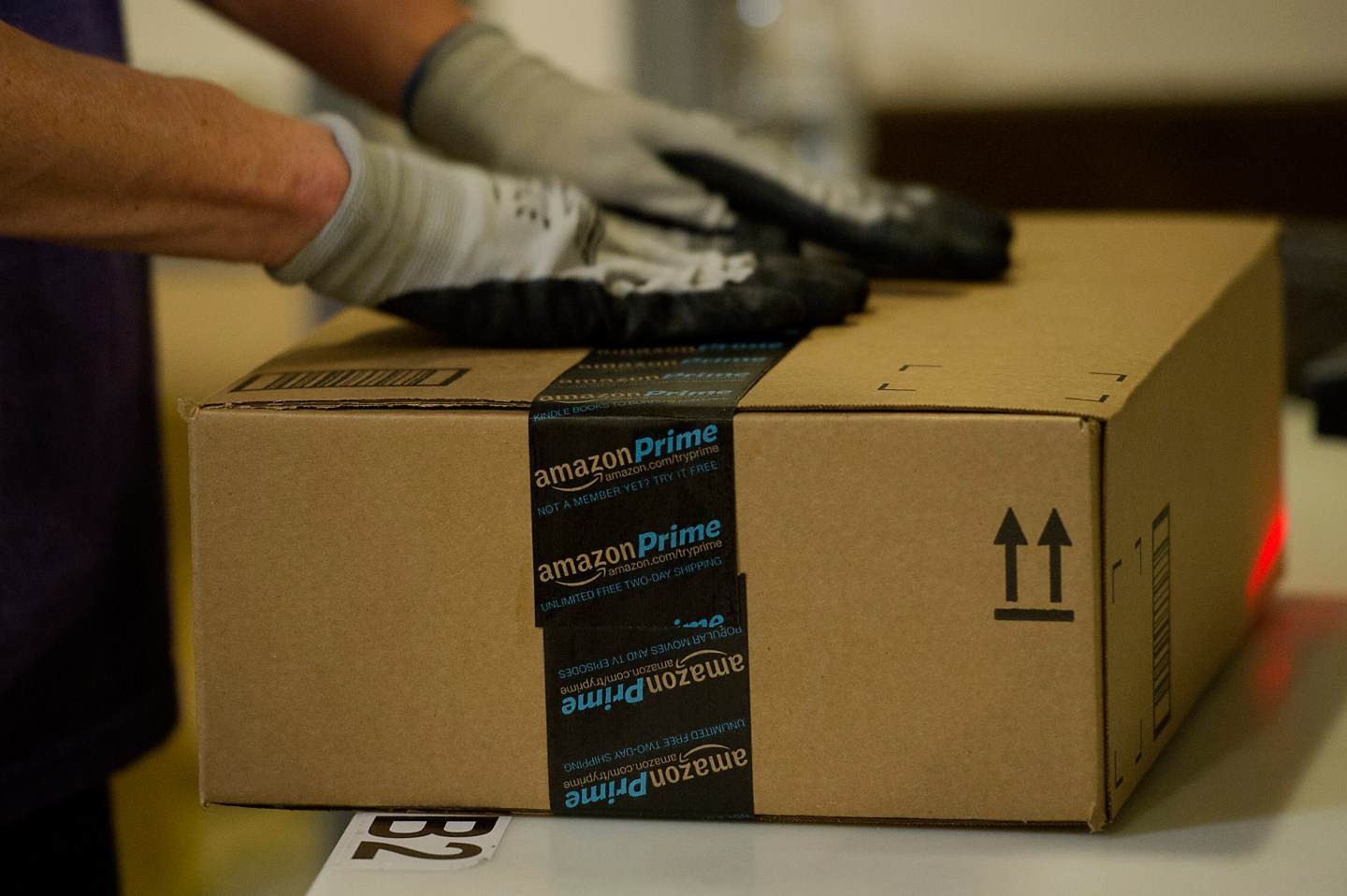
Operations Inside the Amazon.com Fulfillment Center On Cyber Monday
An employee seals a box at the Amazon.com Inc. fulfillment center in Phoenix, Arizona, U.S. on Monday, Dec. 2, 2013. More than 131 million consumers are expected to shop Cyber Monday events, up from 129 million last year, according to the National Retail Federation. Photographer: David Paul Morris/Bloomberg via Getty ImagesPhotograph by David Paul Morris — Bloomberg via Getty Images

The debate over an Internet sales tax could be coming to your home.

More than a dozen states, including Utah and South Dakota, are considering imposing regulations that would allow them to collect sales tax on Internet purchases made within their borders, the Wall Street Journal is reporting. In conversations with several states, the Journal found that states are pitching bills that would require e-retailers to fork over sales tax. Alabama already started imposing sales tax collection on Feb. 20.

The debate over whether Internet purchases should be subject to a sales tax has been long and bloody. Brick-and-mortar retailers have long argued that it’s unfair that Internet companies don’t need to collect sales tax if they don’t have a physical presence in the customer’s state. They say it provides a market advantage to web-based competitors.

Get Data Sheet, Fortune’s technology newsletter.

The U.S. Supreme Court has seen things differently. In 1992, it issued a ruling that allowed e-commerce companies, like Amazon (AMZN), to sell goods without collecting sales tax, as long as they didn’t have a physical location in that state. Since then, members on both sides of the aisle in Congress have debated whether the ruling is truly in the best interests of all retailers.

Despite the Supreme Court’s decision, some states have found ways around the decision, including New York, California, Rhode Island, and Georgia, among several others. New York, for example, collects sales tax from online retailers and Amazon, among other online retailers, collects sales tax in those states.

E-commerce giants have not necessarily been against collecting sales tax. In 2013, for instance, then-eBay CEO John Donahoe told Fortune that he wasn’t “against an Internet sales tax.” Amazon has also collected sales tax over the years with no complaint.

For more, read: Cracks in objections to Internet sales taxes

Online companies did balk, however, in 2013, when the Marketplace Fairness Act was floated in Congress. The idea was to allow state governments to collect sales taxes, even if an e-commerce company did not have a physical location in the state. Larger companies, including eBay, argued that it might prove unfair to smaller companies with less than $10 million in revenue. The cost to those firms could be exorbitant and put strain on their business, they said at the time.

Since 2013, the Marketplace Fairness Act has stalled in Congress with no signs of being signed into law anytime soon. Last year, another act, the Remote Transaction Parity Act was introduced to Congress in hopes of finding another path for states to tax online sales. Like the Marketplace Fairness Act, it’s been largely ignored.

Disturbed by the lack of progress and concerned with generating more tax revenue, the 13 states the Journal identified are looking to take matters into their own hands. Utah is expected to consider a bill in the near future that would sidestep the Supreme Court’s ruling by expanding physical presence to mean an e-commerce company’s use of a third-party delivery company to bring goods to a customer’s house, according to the Journal. Nebraska and Louisiana, among other states, are already considering similar bills to collect e-commerce sales tax, according to the report.

For more on Internet sales tax, watch:

Looking ahead, consensus on whether to collect e-commerce sales tax across the country seems far off. There is, however, one way that all states could collect e-commerce sales tax: By taxpayers tracking their online purchases and paying appropriate sales tax each year when they file their income taxes. The trouble is, just about no one does that, leaving states with no other option but to target companies.


About the Author
By Don Reisinger
See full bioRight Arrow Button Icon

Latest in Tech

robots
InnovationRobots
‘The question is really just how long it will take’: Over 2,000 gather at Humanoids Summit to meet the robots who may take their jobs someday
By Matt O'Brien and The Associated PressDecember 12, 2025
9 hours ago
Man about to go into police vehicle
CryptoCryptocurrency
Judge tells notorious crypto scammer ‘you have been bitten by the crypto bug’ in handing down 15 year sentence 
By Carlos GarciaDecember 12, 2025
10 hours ago
three men in suits, one gesturing
AIBrainstorm AI
The fastest athletes in the world can botch a baton pass if trust isn’t there—and the same is true of AI, Blackbaud exec says
By Amanda GerutDecember 12, 2025
10 hours ago
Brainstorm AI panel
AIBrainstorm AI
Creative workers won’t be replaced by AI—but their roles will change to become ‘directors’ managing AI agents, executives say
By Beatrice NolanDecember 12, 2025
11 hours ago
Fei-Fei Li, the "Godmother of AI," says she values AI skills more than college degrees when hiring software engineers for her tech startup.
AITech
‘Godmother of AI’ says degrees are less important in hiring than how quickly you can ‘superpower yourself’ with new tools
By Nino PaoliDecember 12, 2025
13 hours ago
C-SuiteFortune 500 Power Moves
Fortune 500 Power Moves: Which executives gained and lost power this week
By Fortune EditorsDecember 12, 2025
13 hours ago

Most Popular

placeholder alt text
Economy
Tariffs are taxes and they were used to finance the federal government until the 1913 income tax. A top economist breaks it down
By Kent JonesDecember 12, 2025
19 hours ago
placeholder alt text
Success
Apple cofounder Ronald Wayne sold his 10% stake for $800 in 1976—today it’d be worth up to $400 billion
By Preston ForeDecember 12, 2025
15 hours ago
placeholder alt text
Success
At 18, doctors gave him three hours to live. He played video games from his hospital bed—and now, he’s built a $10 million-a-year video game studio
By Preston ForeDecember 10, 2025
3 days ago
placeholder alt text
Success
40% of Stanford undergrads receive disability accommodations—but it’s become a college-wide phenomenon as Gen Z try to succeed in the current climate
By Preston ForeDecember 12, 2025
14 hours ago
placeholder alt text
Success
Palantir cofounder calls elite college undergrads a ‘loser generation’ as data reveals rise in students seeking support for disabilities, like ADHD
By Preston ForeDecember 11, 2025
2 days ago
placeholder alt text
Arts & Entertainment
'We're not just going to want to be fed AI slop for 16 hours a day': Analyst sees Disney/OpenAI deal as a dividing line in entertainment history
By Nick LichtenbergDecember 11, 2025
1 day ago
Rankings
  • 100 Best Companies
  • Fortune 500
  • Global 500
  • Fortune 500 Europe
  • Most Powerful Women
  • Future 50
  • World’s Most Admired Companies
  • See All Rankings
Sections
  • Finance
  • Leadership
  • Success
  • Tech
  • Asia
  • Europe
  • Environment
  • Fortune Crypto
  • Health
  • Retail
  • Lifestyle
  • Politics
  • Newsletters
  • Magazine
  • Features
  • Commentary
  • Mpw
  • CEO Initiative
  • Conferences
  • Personal Finance
  • Education
Customer Support
  • Frequently Asked Questions
  • Customer Service Portal
  • Privacy Policy
  • Terms Of Use
  • Single Issues For Purchase
  • International Print
Commercial Services
  • Advertising
  • Fortune Brand Studio
  • Fortune Analytics
  • Fortune Conferences
  • Business Development
About Us
  • About Us
  • Editorial Calendar
  • Press Center
  • Work At Fortune
  • Diversity And Inclusion
  • Terms And Conditions
  • Site Map

© 2025 Fortune Media IP Limited. All Rights Reserved. Use of this site constitutes acceptance of our Terms of Use and Privacy Policy | CA Notice at Collection and Privacy Notice | Do Not Sell/Share My Personal Information
FORTUNE is a trademark of Fortune Media IP Limited, registered in the U.S. and other countries. FORTUNE may receive compensation for some links to products and services on this website. Offers may be subject to change without notice.