• Home
  • Latest
  • Fortune 500
  • Finance
  • Tech
  • Leadership
  • Lifestyle
  • Rankings
  • Multimedia

Trendingnow

1

The millennial generation has split, new Fed research shows: Those over 35 are edging toward boomer-style wealth, while everyone else falls behind

2

Scott Bessent casually says the U.S. has more than $1 trillion in gold—and that it doesn’t matter for the dollar

3

Mark Cuban says he has the solution to growing income inequality, and it's to reward every employee—from CEO to janitor—with company stock

1

The millennial generation has split, new Fed research shows: Those over 35 are edging toward boomer-style wealth, while everyone else falls behind

2

Scott Bessent casually says the U.S. has more than $1 trillion in gold—and that it doesn’t matter for the dollar

3

Mark Cuban says he has the solution to growing income inequality, and it's to reward every employee—from CEO to janitor—with company stock
CommentaryVenezuela

4 Steps To Fix Venezuela’s Economy

By
Mark Weisbrot
Mark Weisbrot
Down Arrow Button Icon
By
Mark Weisbrot
Mark Weisbrot
Down Arrow Button Icon
February 20, 2016, 10:00 AM ET
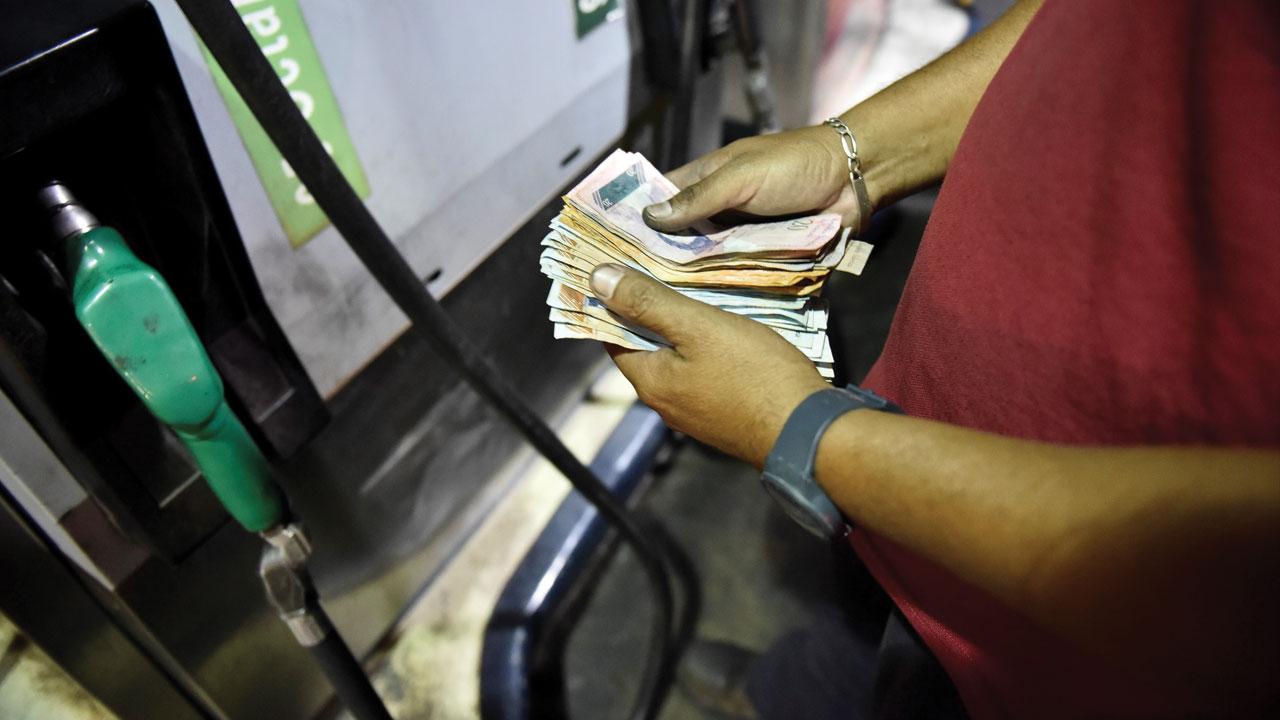
Photograph by Anadolu Agency / Getty Images
Add Fortune on Google for similar content.

Venezuela this week announced it would significantly raise fuel prices and devalue its currency as part of a series of measures to help shore up its flailing economy. While these measures are a step forward, there is much more that needs to be done in order to stabilize the economy.

Let’s look at the numbers. The best estimates and forecasts for the Venezuelan economy have come from Bank of America Merrill Lynch (BOA). Unlike the IMF, which was not even in the ballpark in their forecast for 2015 GDP, BOA was on target. (Using a statistical model, BOA even correctly forecast the December National Assembly election results.)

BOA estimates that Venezuela has a public sector financing gap, which includes principal payments on the debt — of about $24 billion for 2016, and that about $5 billion will be covered by Chinese loans. Looking at the economy as a whole, the current account (mostly trade) deficit was about $18 billion last year. BofA also estimates that the government has about $60 billion in assets that it can sell for U.S. dollars, including its international reserves. So, the country is not broke yet — there is still at least another year to turn the economy around, or possibly more, depending on oil prices.

So where should Venezuela go from here? Here are four measures the country could take to create a path toward economic recovery:

Make living affordable

The economy has large imbalances that will have to be adjusted. Therefore, the first thing to ensure is that poor and working Venezuelans do not suffer from the adjustment. This means setting up a system to make sure that food, medicine, and other essentials are available at affordable prices. There are many governments that have such systems – including the U.S., where more than 45 million people receive food stamps.

The Venezuelan government has shown that it has administrative capacity when it really wants to use it, for example in administering national elections. Last year, the country even reduced significantly the amount of dollars lost to capital flight, which is amazing given the incentives to cheat under the current exchange rate system. Venezuela also has funds to ensure that most citizens have access to necessities at affordable prices. So, it is definitely possible to set up a food-stamp-type system under which people are protected from price increases, and shortages are eliminated.

Stabilize the currency

Once this system is in place, the government can unify the exchange rate. This is the most damaging imbalance in the economy. It has been causing an inflation-depreciation spiral since the fall of 2012. The rising black market rate increases inflation, which then feeds back into the price of the black market dollar, in a continuing vicious circle.

The fastest and best way to break this cycle is to allow the currency to float. It’s hard to say where it would settle, but it would likely be somewhere between 150 and 200 Bolivares Fuertes to the U.S. Dollar — nowhere near the current black market rate. Although this devaluation would cause some inflation, in four out of the last five devaluations in Venezuela, the resulting increase in inflation disappeared within a year. Only the last devaluation, which took place in the middle of an inflation-depreciation spiral, contributed to a persistent increase in inflation. But unifying the exchange rate would break that spiral and put an end to the black market.

Once the currency begins to stabilize, a lot of U.S. Dollars would come back into the country, since everything would be cheap for those who hold dollars. This is what happened in Argentina in 2002, after a huge devaluation. The government then managed the exchange rate for the next six years at a realistic level, and the economy grew very fast. (The business press predicted hyperinflation and continued deep depression.) Any devaluation in Venezuela that does not break the inflation-depreciation spiral is likely to lead to continued balance of payments crises and more inflation.

By unifying the exchange rate at a realistic level and breaking the inflation-depreciation spiral, the government will also avoid having to lose precious reserves defending an overvalued currency. It will put an end to the chronic balance of payments crises, as well as most of the corruption that stems from the overvalued official exchange rates.

Eliminate dysfunctional price controls

Once these measures are taken, and consumers are protected from rising prices for essential goods, the government can begin to lift some of the dysfunctional price controls. This week’s announcement of a gasoline price increase is step in the right direction, but there are other price controls on food and household items that will need to be relaxed in order to eliminate shortages. This will save billions of dollars of foreign exchange lost to smuggling, although as noted above, consumers would have to be protected from price increases.

Adjust to lower international oil prices

Adjusting to lower oil prices over the intermediate and longer run will mean diversifying the economy away from oil. In 2011, Venezuela imported about 24% of its food; the country could become nearly self-sufficient in food production and pursue other import-substitution and diversification strategies, which would become more feasible with a lower-valued currency.

The government will have to take additional measures to bring down inflation, and there are many other policies that can contribute to economic growth and development. But first the economy has to be stabilized, to put an end to balance of payments crises and chronic shortages, as well as the recession of the past two years.

Mark Weisbrot is co-director of the Center for Economic and Policy Research in Washington, D.C., and the president of Just Foreign Policy. He is also the author of the new book Failed: What the ‘Experts’ Got Wrong About the Global Economy (2015, Oxford University Press).

About the Author
By Mark Weisbrot
See full bioRight Arrow Button Icon
Add Fortune on Google for similar content.

Latest in Commentary

Finance
Lorem ipsum dolor sit amet, consectetur adipiscing elit, sed do eiusmod tempor incididunt ut labore et dolore magna aliqua. Ut enim ad minim veniam
By Fortune Editors
October 20, 2025
Finance
Lorem ipsum dolor sit amet, consectetur adipiscing elit, sed do eiusmod tempor incididunt ut labore et dolore magna aliqua. Ut enim ad minim veniam
By Fortune Editors
October 20, 2025
Finance
Lorem ipsum dolor sit amet, consectetur adipiscing elit, sed do eiusmod tempor incididunt ut labore et dolore magna aliqua. Ut enim ad minim veniam
By Fortune Editors
October 20, 2025
Finance
Lorem ipsum dolor sit amet, consectetur adipiscing elit, sed do eiusmod tempor incididunt ut labore et dolore magna aliqua. Ut enim ad minim veniam
By Fortune Editors
October 20, 2025
Finance
Lorem ipsum dolor sit amet, consectetur adipiscing elit, sed do eiusmod tempor incididunt ut labore et dolore magna aliqua. Ut enim ad minim veniam
By Fortune Editors
October 20, 2025
Finance
Lorem ipsum dolor sit amet, consectetur adipiscing elit, sed do eiusmod tempor incididunt ut labore et dolore magna aliqua. Ut enim ad minim veniam
By Fortune Editors
October 20, 2025

Most Popular

Finance
Lorem ipsum dolor sit amet, consectetur adipiscing elit, sed do eiusmod tempor incididunt ut labore et dolore magna aliqua. Ut enim ad minim veniam
By Fortune Editors
October 20, 2025
Finance
Lorem ipsum dolor sit amet, consectetur adipiscing elit, sed do eiusmod tempor incididunt ut labore et dolore magna aliqua. Ut enim ad minim veniam
By Fortune Editors
October 20, 2025
Finance
Lorem ipsum dolor sit amet, consectetur adipiscing elit, sed do eiusmod tempor incididunt ut labore et dolore magna aliqua. Ut enim ad minim veniam
By Fortune Editors
October 20, 2025
Finance
Lorem ipsum dolor sit amet, consectetur adipiscing elit, sed do eiusmod tempor incididunt ut labore et dolore magna aliqua. Ut enim ad minim veniam
By Fortune Editors
October 20, 2025
Finance
Lorem ipsum dolor sit amet, consectetur adipiscing elit, sed do eiusmod tempor incididunt ut labore et dolore magna aliqua. Ut enim ad minim veniam
By Fortune Editors
October 20, 2025
Finance
Lorem ipsum dolor sit amet, consectetur adipiscing elit, sed do eiusmod tempor incididunt ut labore et dolore magna aliqua. Ut enim ad minim veniam
By Fortune Editors
October 20, 2025
Fortune Secondary Logo
Rankings
  • 100 Best Companies
  • Fortune 500
  • Global 500
  • Fortune 500 Europe
  • Most Powerful Women
  • World's Most Admired Companies
  • See All Rankings
  • Lists Calendar
Sections
  • Finance
  • Fortune Crypto
  • Features
  • Leadership
  • Health
  • Commentary
  • Success
  • Retail
  • Mpw
  • Tech
  • Lifestyle
  • CEO Initiative
  • Asia
  • Politics
  • Conferences
  • Europe
  • Newsletters
  • Personal Finance
  • Environment
  • Magazine
  • Education
Customer Support
  • Frequently Asked Questions
  • Customer Service Portal
  • Privacy Policy
  • Terms Of Use
  • Single Issues For Purchase
  • International Print
Commercial Services
  • Advertising
  • Fortune Brand Studio
  • Fortune Analytics
  • Fortune Conferences
  • Business Development
  • Group Subscriptions
About Us
  • About Us
  • Press Center
  • Work At Fortune
  • Terms And Conditions
  • Site Map
  • About Us
  • Press Center
  • Work At Fortune
  • Terms And Conditions
  • Site Map
  • Facebook icon
  • Twitter icon
  • LinkedIn icon
  • Instagram icon
  • TikTok icon
  • YouTube icon

Latest in Commentary

Can Bangkok future-proof itself against the heat?
CommentaryThailand
Can Bangkok future-proof itself against the heat?
By Curtis S. Chin and Ella TanJuly 23, 2026
40 minutes ago
mm
CommentaryLeadership
Michael Muthukrishna: The ‘lone genius’ myth is wrong and it’s holding back your business
By Michael MuthukrishnaJuly 23, 2026
10 hours ago
Paul Keary (L) and Mike Sutcliff (R).
CommentaryAI agents
Teneo & Thoughtworks CEOs: the AI race will be won with governance, not speed 
By Paul Keary and Mike SutcliffJuly 23, 2026
10 hours ago
marks
CommentaryNational Security
General James ‘Spider’ Marks: there’s a strategic risk hidden inside closed AI systems
By James MarksJuly 23, 2026
10 hours ago
glp
Commentaryobesity
The GLP-1 paradox: too expensive to cover, too effective to cut
By Bryan Sivak and Elina OnitskanskyJuly 23, 2026
10 hours ago
data
CommentaryData centers
The hidden cost of AI: Why your town is negotiating with Amazon and Microsoft
By Melody BirminghamJuly 23, 2026
11 hours ago

Most Popular

The millennial generation has split, new Fed research shows: Those over 35 are edging toward boomer-style wealth, while everyone else falls behind
Real Estate
The millennial generation has split, new Fed research shows: Those over 35 are edging toward boomer-style wealth, while everyone else falls behind
By Nick LichtenbergJuly 22, 2026
1 day ago
Scott Bessent casually says the U.S. has more than $1 trillion in gold—and that it doesn’t matter for the dollar
Economy
Scott Bessent casually says the U.S. has more than $1 trillion in gold—and that it doesn’t matter for the dollar
By Sasha RogelbergJuly 22, 2026
1 day ago
Mark Cuban says he has the solution to growing income inequality, and it's to reward every employee—from CEO to janitor—with company stock
Success
Mark Cuban says he has the solution to growing income inequality, and it's to reward every employee—from CEO to janitor—with company stock
By Sasha RogelbergJuly 20, 2026
3 days ago
'The man who dies rich dies disgraced': The last time America had such wealth inequality, Andrew Carnegie knew he had to give it all away
Success
'The man who dies rich dies disgraced': The last time America had such wealth inequality, Andrew Carnegie knew he had to give it all away
By Nick LichtenbergJuly 22, 2026
1 day ago
Mathematicians grapple with a ‘very rapid and very unsettling change’ as AI cracks yet another century-old problem
AI
Mathematicians grapple with a ‘very rapid and very unsettling change’ as AI cracks yet another century-old problem
By Eva RoytburgJuly 21, 2026
2 days ago
Despite a $156 million contract, Knicks star Jalen Brunson still calls his parents for financial advice any time he makes a big purchase
Success
Despite a $156 million contract, Knicks star Jalen Brunson still calls his parents for financial advice any time he makes a big purchase
By Emma BurleighJuly 21, 2026
2 days ago

© 2026 Fortune Media IP Limited. All Rights Reserved. Use of this site constitutes acceptance of our Terms of Use and Privacy Policy | CA Notice at Collection and Privacy Notice | Do Not Sell/Share My Personal Information
FORTUNE is a trademark of Fortune Media IP Limited, registered in the U.S. and other countries. FORTUNE may receive compensation for some links to products and services on this website. Offers may be subject to change without notice.