We officially have a Democratic nomination fight on our hands.
After months in which political observers were calling the Democratic primary process nothing more than a coronation of Hillary Clinton, Bernie Sanders has emerged as a legitimate contender, who should give Clinton a run for her money in the upcoming Nevada Caucuses.
Responding to Sanders momentum, the Clinton campaign has tried to paint the Vermont Senator as overly ambitious. Indeed, if Sanders is able to capture the Democratic nomination, he’d be the first major party nominee since Walter Mondale in 1984 to outline such a detailed plan to raise America’s taxes. Expect the details of these proposals to become an important campaign talking point in coming weeks. Here’s an outline of just how the Sanders tax plan would affect the median American household, and those in the top 5% of income:
A Financial Transactions Tax
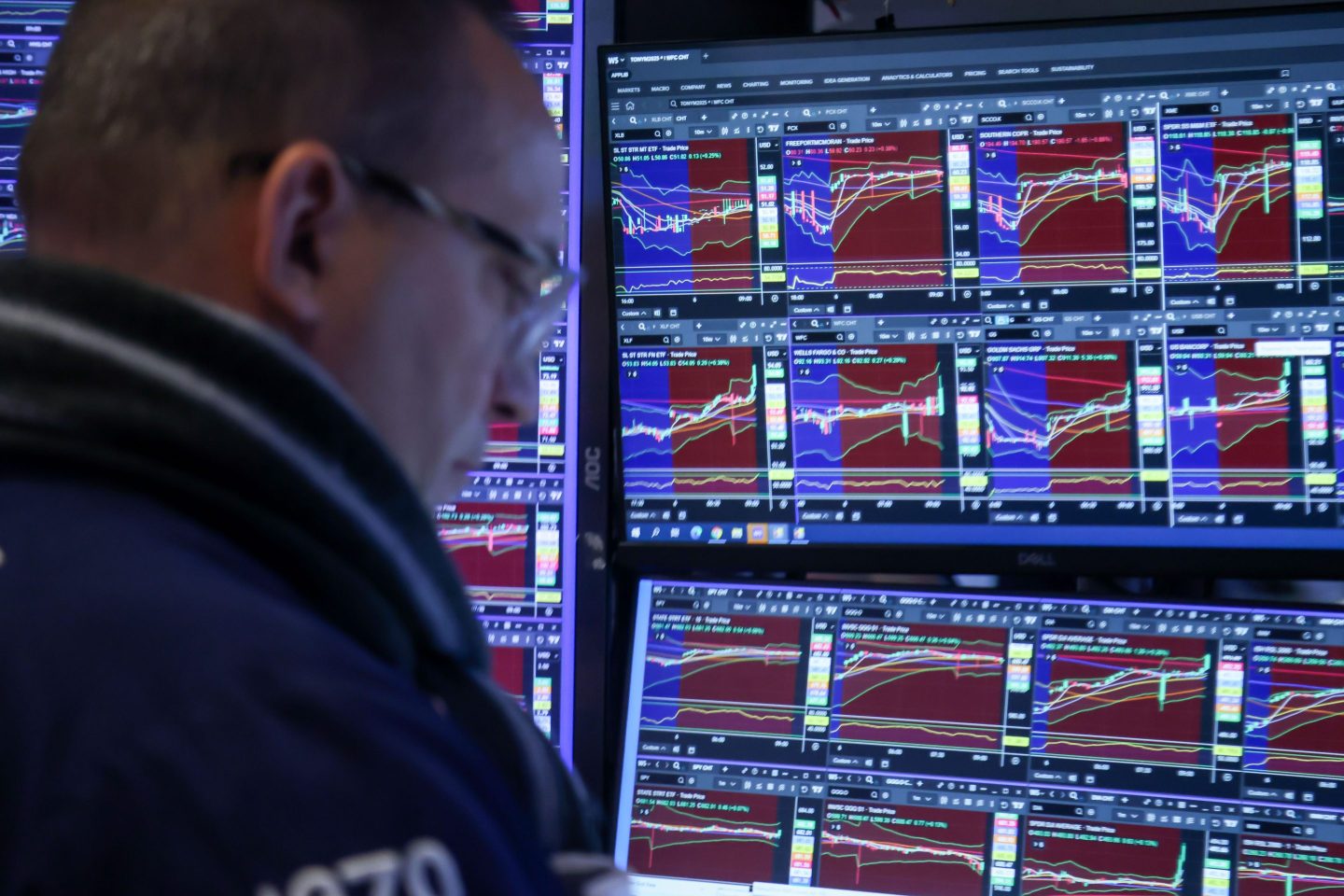
A financial transaction tax is basically a sales tax on moves like the purchase or sale of a stock, bond or derivative. They are popular with governments around the world because they raise a lot of revenue even at low rates, and the costs are primarily borne by relatively affluent citizens who buy and sell financial instruments.
For his proposal, Sanders relies on analysis prepared for the Robin Hood Tax Coalition by economists Robert Pollin and James Heintz. They assume that if the United States were to tax stock sales at 0.5%, bond sales at 0.1%, and derivative sales at .005%, it would reduce trading volumes by 50% and raise $352 billion per year. Sanders wants to use some of this money to fund a program to provide free public education for college students, which the campaign estimates would cost the federal government $47 billion per year, with the remaining $23 billion of the cost covered by state governments.
Other analysts are not so optimistic about the revenue-raising possibilities of the plan. A recent analysis of various financial transaction taxes by the Tax Policy Center found that a well-designed FTT could bring in about $75 billion per year, still probably enough to pay for Sanders’ public education proposal, but not nearly as much as the Vermont Senator hopes.
The financial transaction tax has a progressive appeal. The Tax policy center estimates that 40% of this cost of this tax would be borne by the top 1% of earners, whereas a family in the middle would only see their after-tax income fall 0.1%. The median American household (which earns $53,657 per year) would pay $53.60 per year. Those in the top 5% of earners (at least $230,000 in annual income) would pay at least $920 more in taxes per year.
Expanding Social Security
Social Security was originally sold to the American people way back in the 1930s as a forced insurance program, rather than a means of wealth redistribution. That’s why the Social Security tax is a flat 12.4%, half of which is paid by employers and half by the employee, and the benefits are higher or lower depending on how much money you earn. It’s also the justification for capping the tax at a specific income (currently $118,500), as forced insurance beyond a certain income level no longer increases welfare.
Sanders, and many other Democrats, want to eliminate this cap to secure Social Security’s future at a time when the ratio of workers supporting the program to retirees benefiting from it is very low and projected to fall. That’s why he is arguing to eliminate the cap on Social Security taxes for those who earn more than $250,000, in order to strengthen the program and expand benefits to current and future retirees.
The median American household would pay $0 more per year. Those in the top 5% of earners may not pay much more at all, either. You’d have to be at least in the top 1% percent of earners to pay significantly more. Someone with $1 million dollars in annual income, for instance, would pay $93,000 more in Social Security tax.
12 Weeks of Paid Family Sick Leave
Sanders supports a bill authored by New York Senator Kirsten Gillibrand, which would set up a Social Security-style trust fund for employees who need to be absent from work due to a family medical emergency or to take care of a new baby. It would be funded by a 0.4% tax on wages, to be shared equally by employees and employers. Since the vast majority of economists assume that payroll taxes paid by employers are ultimately borne by the employee in the form of lower wages, we’ll assume that each worker will pay 0.4% in tax.
The median American household would pay $189 more per year. Those in the top 5% of earners would pay the maximum $227 more per year year.
Medicare for All
This is, by far, the most radical plan Sanders is running on, and it would cost the most to implement in terms of taxes raised. To pay for Medicare for All, Sanders would institute:
- An 8.4% payroll tax increase for all workers (6.2% paid by employers and 2.2% paid employees);
- New marginal tax rates of 37%, 43%, 48%, and 52% for income earned between $250,000 and $500,000, $500,000 and $2 million, $2 million and $10 million, and above $10 million, respectively;
- An increase in capital gains taxes so that income from investments is taxed at the same rate as income from labor;
- Limiting tax deductions for the wealthy;
- And an increase in the inheritance tax for estates that pass on more than $3.5 million in assets to its heirs.
The median American household would pay $3,977 more per year in payroll taxes. (This includes the employer portion, assuming that employers respond to the tax by lowering wages). Those in the top 5% of earners would pay at least $15,753 more per year in payroll and income taxes.
A few things become clear when looking at these numbers. One is that the middle class is not looking at very large tax increases at all, and what taxes they do spend would in many cases be more than compensated for in the form of free healthcare. But the top 5% of earners would be in for very large tax increases, indeed.
The second takeaway is that the only truly transformational idea that Sanders is running on is his Medicare for All plan. The financial transaction tax would be difficult for the financial services industry to deal with. Certainly, there would be some businesses, like high frequency traders, that would have trouble staying afloat. But it appears to be a great source of revenue for any number of programs the federal government might want to fund, including subsidizing higher education. That’s likely why so many other governments, even financial centers like the United Kingdom, have adopted it.
Sander’s toughest sell will be his healthcare plan. While he is right that most other countries have more efficient healthcare systems than the United States does, there’s major disagreement among even left-leaning healthcare economists over whether the United States can easily get its costs down to where they’d need to be for Medicare for All to work as Sanders imagines it. Furthermore, most Americans get their healthcare through their employer, and they may be nervous about giving that up, even if they are promised something better.
And finally, despite the fact that Sanders tax plan wouldn’t raise taxes very much for most taxpayers, he still is running on the idea of raising everyone’s taxes. That’s not a message that has ever resonated with the American people, though Sanders recent success could be evidence that this is changing.