• Home
  • Latest
  • Fortune 500
  • Finance
  • Tech
  • Leadership
  • Lifestyle
  • Rankings
  • Multimedia
CommentaryDavos

This Should Be The Biggest Issue At Davos

By
Saadia Madsbjerg
Saadia Madsbjerg
Down Arrow Button Icon
By
Saadia Madsbjerg
Saadia Madsbjerg
Down Arrow Button Icon
January 20, 2016, 11:30 AM ET
Refugees Are Smuggled Past Authorities In Hungary
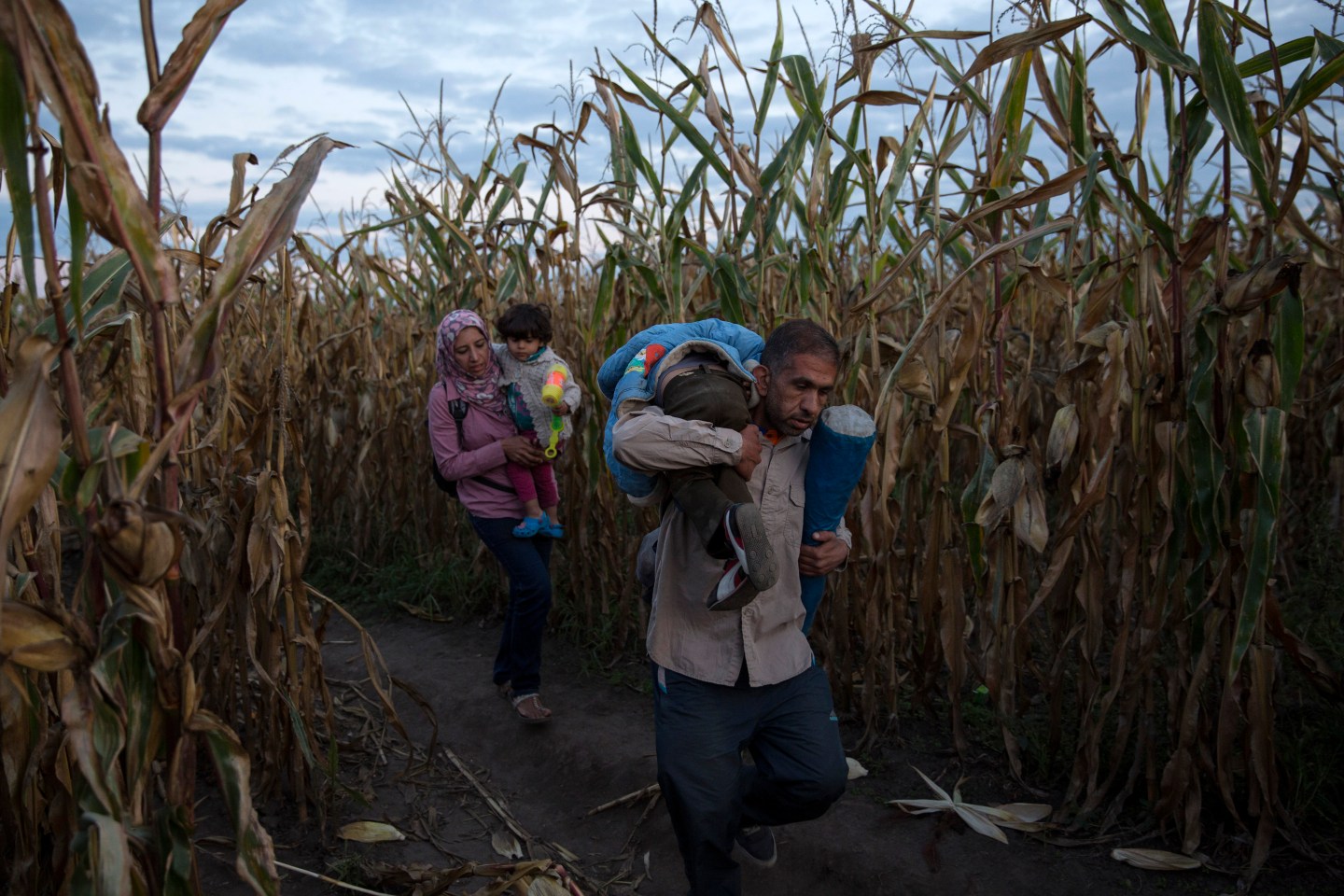
ROSZKE, HUNGARY - SEPTEMBER 08: Refugees are smuggled through fields and forests in an attempt to evade the Hungarian police close to the Serbian border on September 8, 2015 in Roszke, Hungary. Many migrants fear that if they are forced to officially register and have their fingerprints taken, it will stop them being able to move freely out of Hungary and further into Europe. A lack of clarity on the issue is causing many people to risk being arrested unnecessarily by taking such measures. Thousands of migrants have continued to cross into Hungary over the last few days from Serbia. Since the beginning of 2015 the number of migrants using the so-called 'Balkans route' has exploded with migrants arriving in Greece from Turkey and then travelling on through Macedonia and Serbia before entering the EU via Hungary. The number of people leaving their homes in war torn countries such as Syria, marks the largest migration of people since World War II. (Photo by Dan Kitwood/Getty Images)Photograph by Dan Kitwood — Getty Images

As business and political leaders gather for the World Economic Forum in Davos this week, climate change will be top of mind for many, as another refugee crisis is poised to begin. This one, however, won’t be because of ethnic or geopolitical strife. The cause will be our own environment.

Years of climate degradation has resulted in famine, floods, drought, and other environmental shocks and stresses that are leading entire communities and populations to leave their homes to seek refuge elsewhere. Since 2008, an average of 26.4 million people annually — the equivalent of one person every second — have been forced to leave their homes due to natural catastrophes, according to the Norwegian Refugee Council.

Threatened by drought and starvation, thousands of Somalis and Ethiopians have fleed to refugee camps in Kenya; while in Bangladesh, climate change has forced accelerated migration from coastal regions to cities. If climate change continues unchecked, as many as 200 million climate refugees may be on the move by 2050. The threat will not be isolated to a single region — the impact will be global and felt by both developing and developed nations alike. If the world stands a chance to stem the tide of climate migration, there are several crucial steps that leaders across government, philanthropy, business and civil society should be taking now.

The first step is recognition of the problem. Climate-based migration is considered a “displacement” issue, not a refugee issue, according to international laws. Indeed, the debate about the distinction between “migrant” and “refugee” has recently surfaced in Europe as countries seek to limit the number of people for whom they provide asylum. International laws dating back to 1951, when climate change was not an issue, provide protection only for people forced to leave their countries because of war and persecution. Legally, nations have no obligations to help or house climate refugees.

Policymakers must reform the laws and provide greater rights to people forced to seek refuge in other countries due to climate change.

The second step is to find new financing solutions that attract funding from the private sector to climate resilience efforts, such as planting drought-resistant seeds and using land irrigation systems that minimize the impact of droughts on agricultural production and livelihoods. But many countries can’t afford these expenses, estimated to be between $200 and $300 billion a year for developing countries alone.

The new Green Climate Fund, where advanced economies have agreed to invest $100 billion per year by 2020 to address the consequences of climate change, may be helpful, but it won’t be enough. Philanthropists and development institutions must focus on surfacing those innovative financing mechanisms today, so that we can put in place solutions that will support individuals and communities in their struggle with the impacts of climate change — and allow them to live with security and dignity.

For example, the Extreme Climate Facility (XCF) is a new innovative financing mechanism currently in development that aims to provide African countries with funds dedicated to climate adaptation. The facility is anticipated to issue more than $1 billion in bonds over the next 30 years. Institutional investors and private capital are the key to closing the funding gap, but we will only reach that goal with solutions like XCF’s “catastrophe bonds” that will be intentionally offered to institutional investors in global capital markets.

The last critical step is providing a meaningful impact on affected communities, immediate access to funds following natural disasters is essential. People don’t generally choose to leave their homes immediately after a natural disaster—they leave when they run out of options and have exhausted all hope. With access to immediate funding, people have a chance to bounce back, remain in their homes, and help rebuild their communities.

The African Risk Capacity catastrophe insurance pool, created in 2014, is an insurance solution that attempts to solve this problem by providing African governments with access to funds for timely interventions in response to climate disasters. By 2020, the African Risk Capacity aims to reach 30 countries with nearly $1.5 billion of coverage against drought, flood and cyclones—indirectly insuring 160 million Africans.

Another solution currently in development is Financial Disaster Risk Management, a new financing mechanism designed to channel funds more quickly to micro-finance institutions so that they can provide loans to people living in disaster prone areas of Africa, Asia, and South America. The facility is anticipated to raise more than $300 million in funds by 2020. Rather than depending on external support or humanitarian aid, which is often short-lived, loans from micro-finance institutions can significantly boost job creation and rebuild a disaster-struck economy.

As we look toward a future that includes potentially 200 million climate refugees on the move, it’s clear that the answers won’t lie with stricter border controls or equitable relocation quotas. Instead, solutions will emerge from joint efforts by international financial institutions and international development organizations that recognize that there’s a very human face to climate migration, and that it’s a decision made not out of choice, but out of desperation. If we are to beat back the ravages of climate change, we must find ways to ensure that people have the resources to stay resilient and remain where they want to be: at home.

Saadia Madsbjerg is managing director of The Rockefeller Foundation, which has provided grant funding for the research and development of XCF and Financial Disaster Risk Management.


About the Author
By Saadia Madsbjerg
See full bioRight Arrow Button Icon

Latest in Commentary

Finance
Lorem ipsum dolor sit amet, consectetur adipiscing elit, sed do eiusmod tempor incididunt ut labore et dolore magna aliqua. Ut enim ad minim veniam
By Fortune Editors
October 20, 2025
Finance
Lorem ipsum dolor sit amet, consectetur adipiscing elit, sed do eiusmod tempor incididunt ut labore et dolore magna aliqua. Ut enim ad minim veniam
By Fortune Editors
October 20, 2025
Finance
Lorem ipsum dolor sit amet, consectetur adipiscing elit, sed do eiusmod tempor incididunt ut labore et dolore magna aliqua. Ut enim ad minim veniam
By Fortune Editors
October 20, 2025
Finance
Lorem ipsum dolor sit amet, consectetur adipiscing elit, sed do eiusmod tempor incididunt ut labore et dolore magna aliqua. Ut enim ad minim veniam
By Fortune Editors
October 20, 2025
Finance
Lorem ipsum dolor sit amet, consectetur adipiscing elit, sed do eiusmod tempor incididunt ut labore et dolore magna aliqua. Ut enim ad minim veniam
By Fortune Editors
October 20, 2025
Finance
Lorem ipsum dolor sit amet, consectetur adipiscing elit, sed do eiusmod tempor incididunt ut labore et dolore magna aliqua. Ut enim ad minim veniam
By Fortune Editors
October 20, 2025

Most Popular

Finance
Lorem ipsum dolor sit amet, consectetur adipiscing elit, sed do eiusmod tempor incididunt ut labore et dolore magna aliqua. Ut enim ad minim veniam
By Fortune Editors
October 20, 2025
Finance
Lorem ipsum dolor sit amet, consectetur adipiscing elit, sed do eiusmod tempor incididunt ut labore et dolore magna aliqua. Ut enim ad minim veniam
By Fortune Editors
October 20, 2025
Finance
Lorem ipsum dolor sit amet, consectetur adipiscing elit, sed do eiusmod tempor incididunt ut labore et dolore magna aliqua. Ut enim ad minim veniam
By Fortune Editors
October 20, 2025
Finance
Lorem ipsum dolor sit amet, consectetur adipiscing elit, sed do eiusmod tempor incididunt ut labore et dolore magna aliqua. Ut enim ad minim veniam
By Fortune Editors
October 20, 2025
Finance
Lorem ipsum dolor sit amet, consectetur adipiscing elit, sed do eiusmod tempor incididunt ut labore et dolore magna aliqua. Ut enim ad minim veniam
By Fortune Editors
October 20, 2025
Finance
Lorem ipsum dolor sit amet, consectetur adipiscing elit, sed do eiusmod tempor incididunt ut labore et dolore magna aliqua. Ut enim ad minim veniam
By Fortune Editors
October 20, 2025
Rankings
  • 100 Best Companies
  • Fortune 500
  • Global 500
  • Fortune 500 Europe
  • Most Powerful Women
  • Future 50
  • World’s Most Admired Companies
  • See All Rankings
Sections
  • Finance
  • Leadership
  • Success
  • Tech
  • Asia
  • Europe
  • Environment
  • Fortune Crypto
  • Health
  • Retail
  • Lifestyle
  • Politics
  • Newsletters
  • Magazine
  • Features
  • Commentary
  • Mpw
  • CEO Initiative
  • Conferences
  • Personal Finance
  • Education
Customer Support
  • Frequently Asked Questions
  • Customer Service Portal
  • Privacy Policy
  • Terms Of Use
  • Single Issues For Purchase
  • International Print
Commercial Services
  • Advertising
  • Fortune Brand Studio
  • Fortune Analytics
  • Fortune Conferences
  • Business Development
About Us
  • About Us
  • Editorial Calendar
  • Press Center
  • Work At Fortune
  • Diversity And Inclusion
  • Terms And Conditions
  • Site Map

© 2025 Fortune Media IP Limited. All Rights Reserved. Use of this site constitutes acceptance of our Terms of Use and Privacy Policy | CA Notice at Collection and Privacy Notice | Do Not Sell/Share My Personal Information
FORTUNE is a trademark of Fortune Media IP Limited, registered in the U.S. and other countries. FORTUNE may receive compensation for some links to products and services on this website. Offers may be subject to change without notice.


Most Popular

placeholder alt text
Personal Finance
Janet Yellen warns the $38 trillion national debt is testing a red line economists have feared for decades
By Eva RoytburgJanuary 5, 2026
17 hours ago
placeholder alt text
AI
Experienced software developers assumed AI would save them a chunk of time. But in one experiment, their tasks took 20% longer
By Sasha RogelbergJanuary 5, 2026
20 hours ago
placeholder alt text
C-Suite
CEO of $90 billion Waste Management hauled trash and went to 1 a.m. safety briefings—‘It’s not always just dollars and cents’
By Amanda GerutJanuary 3, 2026
3 days ago
placeholder alt text
Future of Work
Bosses are fighting a new battle in the RTO wars: It's not about where you work, but when you work
By Nick LichtenbergJanuary 4, 2026
2 days ago
placeholder alt text
Energy
‘Big Short’ investor Michael Burry says toppling of Venezuela’s Maduro will weaken Russia’s global standing as its oil ‘just became less important’
By Marco Quiroz-GutierrezJanuary 5, 2026
16 hours ago
placeholder alt text
Economy
Under Biden, America got 150 countries to agree a 15% global corporate tax. Under Trump, America gets an exemption
By Fatima Hussein and The Associated PressJanuary 5, 2026
14 hours ago

Latest in Commentary

AsiaTariffs and trade
Countries must move beyond seeing AI as a race, where one side must beat the other
By Boris Babic and Brian WongJanuary 3, 2026
3 days ago
trump
CommentaryVenezuela
5 takeaways on Venezuela in the aftermath of Maduro: A memo to CEOs
By Jeffrey SonnenfeldJanuary 3, 2026
3 days ago
Bhargava
CommentaryPasswords
You probably use the same password for 30 different websites. It’s time for a passkey. 
By Rishi BhargavaJanuary 3, 2026
3 days ago
Sweden
CommentarySweden
Meet Sweden, the unicorn factory chasing America in the AI race
By Oscar TäckströmJanuary 3, 2026
3 days ago
Eric Simons
Commentarystart-ups
15 years after skipping college to launch 3 startups, I believe the taboo around questioning higher ed is holding an entire generation back
By Eric SimonsJanuary 2, 2026
4 days ago
MGI
CommentaryProductivity
The world is awash in wealth but starved for productivity—and that imbalance is distorting growth, debt, and opportunity. We need AI to come through
By Jan Mischke, Olivia White and Rebecca J. AndersonDecember 31, 2025
6 days ago