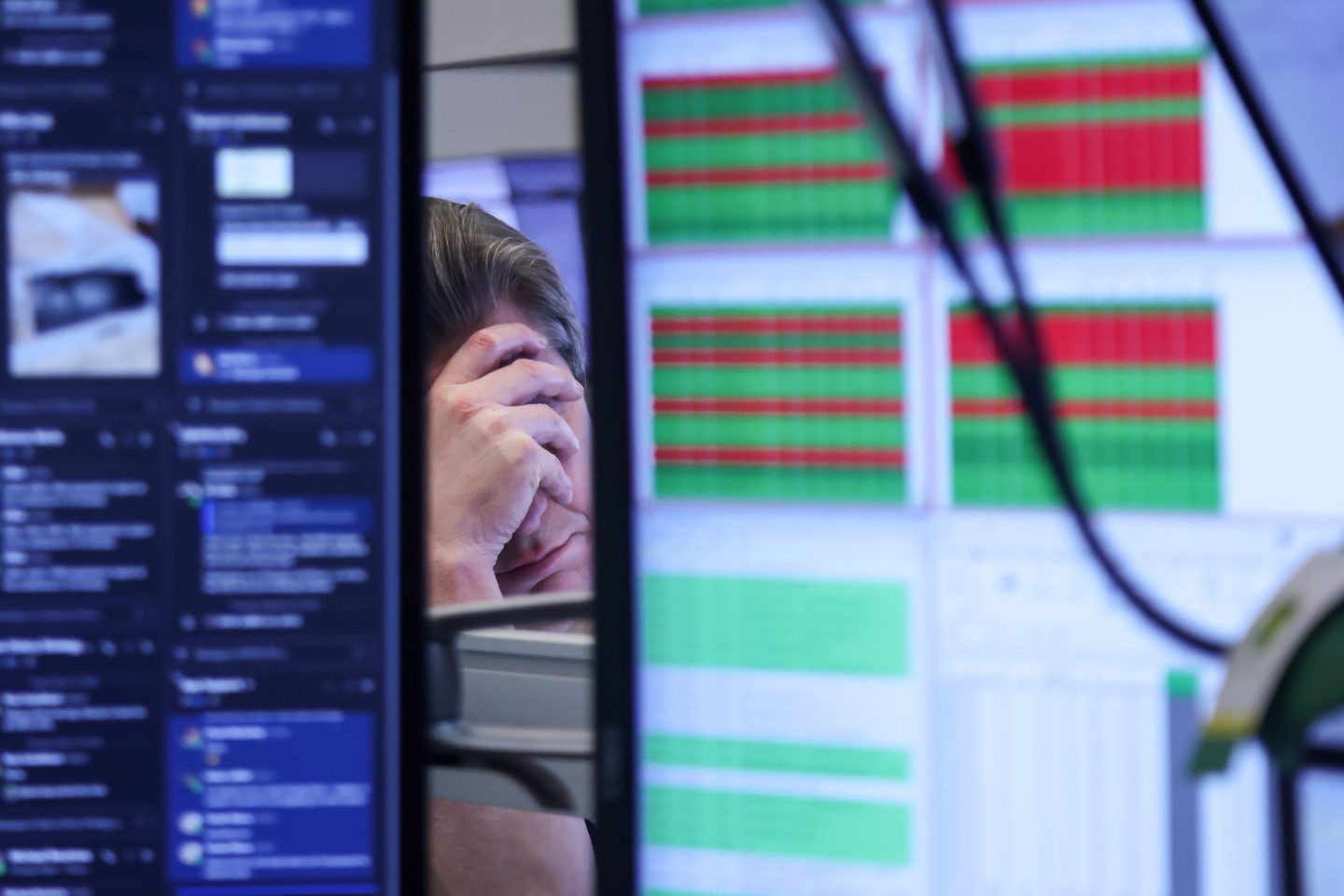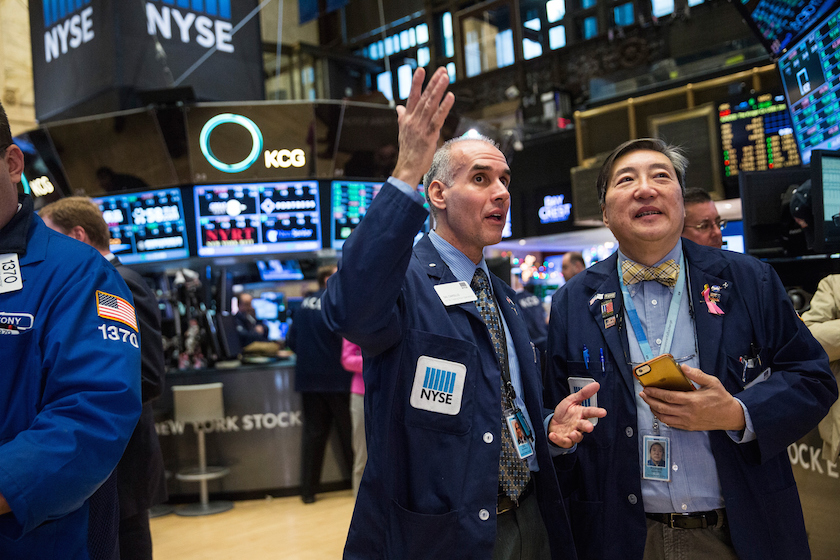
With financial markets having their worst start to the year in history, investors are following the advice of bears such as Royal Bank of Scotland to “sell (mostly) everything.” And yet little has fundamentally changed of late beyond sentiment.
Fears about China’s financial and economic health have prompted investors to dump stocks equal in value to the annual economic output of Britain and France combined since New Year.
RBS was not alone with its advice in a note to clients this week. Renowned bear Albert Edwards at Societe Generale in London said a further devaluation of China’s currency will result in “global deflation and recession.”
Western markets, Edwards added, were also vulnerable to the coming “carnage” because they have been inflated so much by central banks’ quantitative easing stimulus programs.
Bank of America Merrill Lynch (BAML) calculates about $5.7 trillion has been wiped off the value of world stock markets in the first nine trading days of this year. But is the downturn and doomsday mentality justified?
Investors are typically most optimistic in January as they put money to work for the year ahead. Yet two weeks in Wall Street is down by 6%, Germany’s DAX stock index by 8% and China by 18%. Oil has sunk 20% to a 12-year low below $30 a barrel.
The speed of the selloff has caught investors across all asset classes off guard, even though the factors behind it aren’t particularly new.
China’s economy is no longer growing at breakneck speed, so the price of global resources and commodities it has consumed voraciously is falling sharply, deepening worries about world demand, growth, and the risk of a pernicious deflationary cycle.
According to the Efficient Market Hypothesis, stocks incorporate and reflect all relevant information available to the market, meaning they are always fairly and accurately priced.
But as countless examples down the years have shown, markets are vulnerable to herd mentality among investors, resulting in huge price swings and volatility. Once a market gains momentum and overshoots in either direction, it’s often difficult to stop.
“We shouldn’t get carried away by being overly bearish right now. Sentiment has deteriorated but nothing has really changed in the last few weeks. Fundamentals are okay and expectations are already low,” said Michael Metcalfe, head of global macro strategy at State Street Global Markets in London.
China is not the sole focus of investors’ concern. The latest U.S. data suggest the world’s largest economy is struggling too, just as the Federal Reserve has begun to tighten monetary policy.
U.S. growth in the fourth quarter of 2015 is likely to have been less than 1%. Economists at BNP Paribas say GDP could even have contracted if the correction in inventories is larger than expected. Preliminary GDP data are due on Jan. 29.
We Could Be Safer
One notable difference between now and late last year is the message from the Fed. In September it backed down from raising interest rates, citing concern over Chinese growth and financial market volatility, before finally acting last month.
Now Fed officials appear insistent they will stick to their broad goal of continuing to raise rates this year, most likely with four further increases of 25 basis points each.
Peter Chatwell, head of European rates strategy at Mizuho International in London, said the growing risk that the Fed is heading down the wrong path is contributing to the gloom.
“The bearish sentiment may be at a peak but the likelihood of a Fed policy error is looking even stronger. This move has a lot of momentum to it,” he said, recommending investors opt for safety by buying U.S. Treasuries and German Bunds.
The latest global asset flow figures from BAML and data provider EPFR show investors bought $3.4 billion of government bonds in the week to Jan. 13, the largest inflow in almost a year. They also pulled $11.9 billion out of global equity funds, the largest outflow in 18 weeks.
Even taking account of stocks’ fall in recent weeks, the outlook for Wall Street still isn’t great. Earnings for S&P 500 companies are expected to have fallen 4.2% in the fourth quarter—the second straight quarterly decline and signaling an earnings, or profit, recession.
[fortune-brightcove videoid=4692300674001]
Yet the trouble with buying bonds, some argue, is that after a 30-year bull market and unprecedented policy easing from central banks, they too are expensive, perhaps extremely so.
It may be little surprise, therefore, that investors are piling into cash. They poured $24 billion into money market funds last week, according to the BAML figures, bringing the inflow since September last year to $149 billion.
“Clients are no longer in ‘denial’ about recession/bear market risks but (they’re) not yet willing to ‘accept’ we are already well into a normal, cyclical recession/bear market,” Michael Hartnett, chief investment strategist at BAML in New York, wrote on Friday.
Such a huge demand for cash might suggest investors fear a crisis is looming, and yet the consensus is that a repeat of 2007-09 when the entire global financial system almost collapsed is highly unlikely.
“We have to be careful here but I’d be surprised if in two or three months’ time we’re still as bearish as this,” said Metcalfe at State Street Global Markets.