• Home
  • News
  • Fortune 500
  • Tech
  • Finance
  • Leadership
  • Lifestyle
  • Rankings
  • Multimedia
Tech

L.A.’s Massive ‘Crater’ Shows Why Parking Is the Biggest Fight in Urban Planning

By
David Z. Morris
David Z. Morris
Down Arrow Button Icon
By
David Z. Morris
David Z. Morris
Down Arrow Button Icon
January 14, 2016, 12:22 PM ET
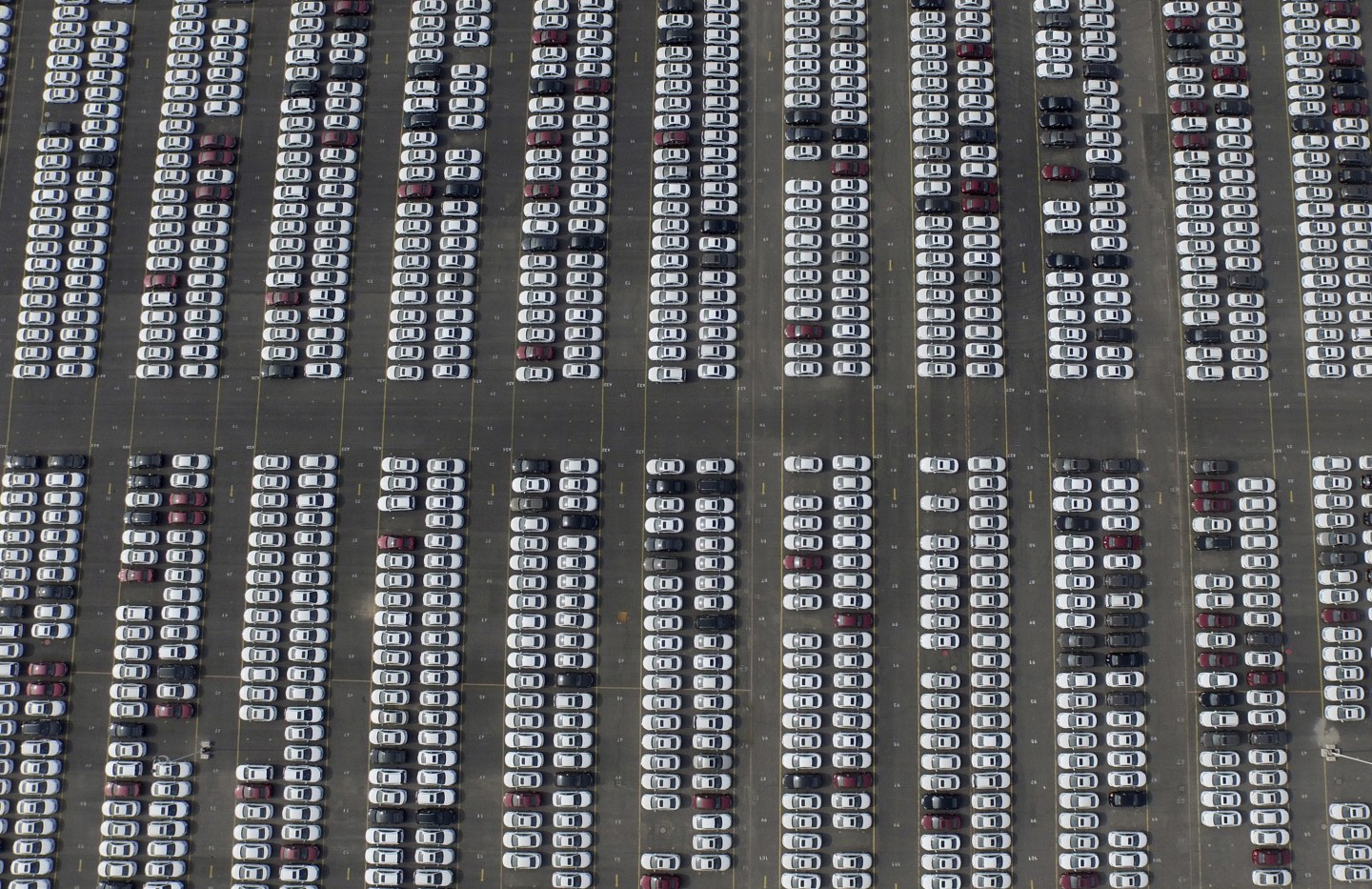
An aerial picture shows new Chevrolet cars at a General Motors' parking lot in Shenyang
An aerial picture shows new Chevrolet cars at a General Motors' parking lot in Shenyang, Liaoning province, China, June 28, 2015. Picture taken June 28, 2015. REUTERS/Stringer CHINA OUT. NO COMMERCIAL OR EDITORIAL SALES IN CHINA - RTX1I7AZPhotograph by Sheng Li — Reuters

Back in November, a group of researchers compiled a huge amount of data about parking in Los Angeles. Before you brush that off as the most obtuse project ever, have a look at their results:
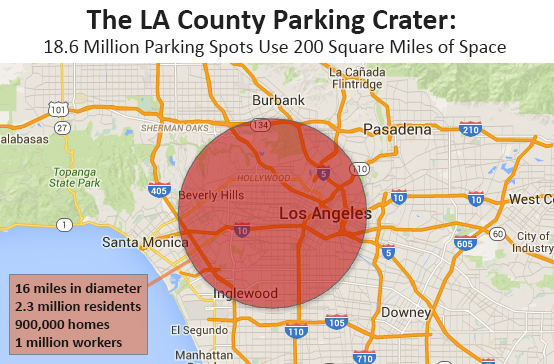
L.A.'s Parking Crater

The red circle is all the parking in L.A. County, smooshed together. It takes up more space than Beverly Hills, West Hollywood, downtown, and most of Glendale—combined.

Get Data Sheet, Fortune’s technology newsletter.

The graphic, crafted from the paper’s data courtesy of the blog Better Institutions, gives us a supersized vision of what has been dubbed a “parking crater” by the very vocal urban planning blogosphere. Normally, it’s a dismissive term for a particularly unsightly and wasteful expanse of asphalt. Streetsblog USA runs an annual competition to locate the worst offenders, with Camden, New Jersey’s hideous, half-empty waterfront parking scrum taking 2015’s ignoble first-place trophy.

But the L.A. graphic turns the parking crater into a broader metaphor for the tradeoffs that a car-centric city like Los Angeles has made to accommodate cars. Without all that parking, the map seems to scream at us, look how much more city L.A. could have!

Because, at least on the face of it, parking spaces are both economic and social duds. You can’t live, do business, or grow anything on a parking space. They make it harder to move between nearby buildings, cutting into the so-called “agglomeration” that is one of the biggest economic benefits of urbanization. Relatively few even generate significant parking fees—the authors of the L.A. study found that in 2010, 98% of car trips there started or ended with free parking.

Of course, parking has one obvious advantage: You can park there. And having more of it does make driving a whole lot easier. But studies (including a new one out this week) have shown that’s not actually great—increasing parking also increases traffic congestion by making driving more attractive than alternatives like mass transit.

UCLA’s Donald Shoup has shown that free or cheap parking doesn’t just increase commuter congestion, but snarls downtowns by encouraging drivers to circle incessantly in search of a free spot. And all that extra driving also increases pollution.

For more on innovation in parking, watch:

As the researchers point out, many city codes are continuing to feed this vicious cycle by requiring set amounts of parking for new developments. That has led to developers and community activists from Miami to DC pushing cities to do away with those requirements.

And it’s working. Dozens of cities, including Los Angeles, have made at least some reduction in parking requirements. That will make them better prepared to take advantage of the coming wave of transportation advances, from the lower parking needs of driverless cars to the popularity of tiny electric vehicles to, at least in some cities, the millennial-driven rise of public transit.

About the Author
By David Z. Morris
See full bioRight Arrow Button Icon

Latest in Tech

InnovationBrainstorm Design
Should form always follow function? Architect Ole Scheeren isn’t sure: ‘We think of buildings as living organisms’
By Christina PantinDecember 4, 2025
4 hours ago
satellite
AIData centers
Google’s plan to put data centers in the sky faces thousands of (little) problems: space junk
By Mojtaba Akhavan-TaftiDecember 3, 2025
14 hours ago
Mark Zuckerberg, chief executive officer of Meta Platforms Inc., during the Meta Connect event in Menlo Park, California, US, on Wednesday, Sept. 25, 2024.
AIMeta
Inside Silicon Valley’s ‘soup wars’: Why Mark Zuckerberg and OpenAI are hand-delivering soup to poach talent
By Eva RoytburgDecember 3, 2025
14 hours ago
Greg Abbott and Sundar Pichai sit next to each other at a red table.
AITech Bubble
Bank of America predicts an ‘air pocket,’ not an AI bubble, fueled by mountains of debt piling up from the data center rush
By Sasha RogelbergDecember 3, 2025
15 hours ago
Alex Karp smiles on stage
Big TechPalantir Technologies
Alex Karp credits his dyslexia for Palantir’s $415 billion success: ‘There is no playbook a dyslexic can master … therefore we learn to think freely’
By Lily Mae LazarusDecember 3, 2025
15 hours ago
Isaacman
PoliticsNASA
Billionaire spacewalker pleads his case to lead NASA, again, in Senate hearing
By Marcia Dunn and The Associated PressDecember 3, 2025
15 hours ago

Most Popular

placeholder alt text
North America
Jeff Bezos and Lauren Sánchez Bezos commit $102.5 million to organizations combating homelessness across the U.S.: ‘This is just the beginning’
By Sydney LakeDecember 2, 2025
2 days ago
placeholder alt text
Economy
Ford workers told their CEO 'none of the young people want to work here.' So Jim Farley took a page out of the founder's playbook
By Sasha RogelbergNovember 28, 2025
6 days ago
placeholder alt text
North America
Anonymous $50 million donation helps cover the next 50 years of tuition for medical lab science students at University of Washington
By The Associated PressDecember 2, 2025
2 days ago
placeholder alt text
C-Suite
MacKenzie Scott's $19 billion donations have turned philanthropy on its head—why her style of giving actually works
By Sydney LakeDecember 2, 2025
2 days ago
placeholder alt text
Innovation
Google CEO Sundar Pichai says we’re just a decade away from a new normal of extraterrestrial data centers
By Sasha RogelbergDecember 1, 2025
3 days ago
placeholder alt text
Economy
Scott Bessent calls the Giving Pledge well-intentioned but ‘very amorphous,’ growing from ‘a panic among the billionaire class’
By Nick LichtenbergDecember 3, 2025
16 hours ago
Rankings
  • 100 Best Companies
  • Fortune 500
  • Global 500
  • Fortune 500 Europe
  • Most Powerful Women
  • Future 50
  • World’s Most Admired Companies
  • See All Rankings
Sections
  • Finance
  • Leadership
  • Success
  • Tech
  • Asia
  • Europe
  • Environment
  • Fortune Crypto
  • Health
  • Retail
  • Lifestyle
  • Politics
  • Newsletters
  • Magazine
  • Features
  • Commentary
  • Mpw
  • CEO Initiative
  • Conferences
  • Personal Finance
  • Education
Customer Support
  • Frequently Asked Questions
  • Customer Service Portal
  • Privacy Policy
  • Terms Of Use
  • Single Issues For Purchase
  • International Print
Commercial Services
  • Advertising
  • Fortune Brand Studio
  • Fortune Analytics
  • Fortune Conferences
  • Business Development
About Us
  • About Us
  • Editorial Calendar
  • Press Center
  • Work At Fortune
  • Diversity And Inclusion
  • Terms And Conditions
  • Site Map

© 2025 Fortune Media IP Limited. All Rights Reserved. Use of this site constitutes acceptance of our Terms of Use and Privacy Policy | CA Notice at Collection and Privacy Notice | Do Not Sell/Share My Personal Information
FORTUNE is a trademark of Fortune Media IP Limited, registered in the U.S. and other countries. FORTUNE may receive compensation for some links to products and services on this website. Offers may be subject to change without notice.