• Home
  • Latest
  • Fortune 500
  • Finance
  • Tech
  • Leadership
  • Lifestyle
  • Rankings
  • Multimedia
TechBionic eye

This Bionic Eye Could Help the Blind See—From the Back of Their Head

By
Hilary Brueck
Hilary Brueck
Down Arrow Button Icon
By
Hilary Brueck
Hilary Brueck
Down Arrow Button Icon
January 6, 2016, 12:24 PM ET
Monash Art, Design and Architecture

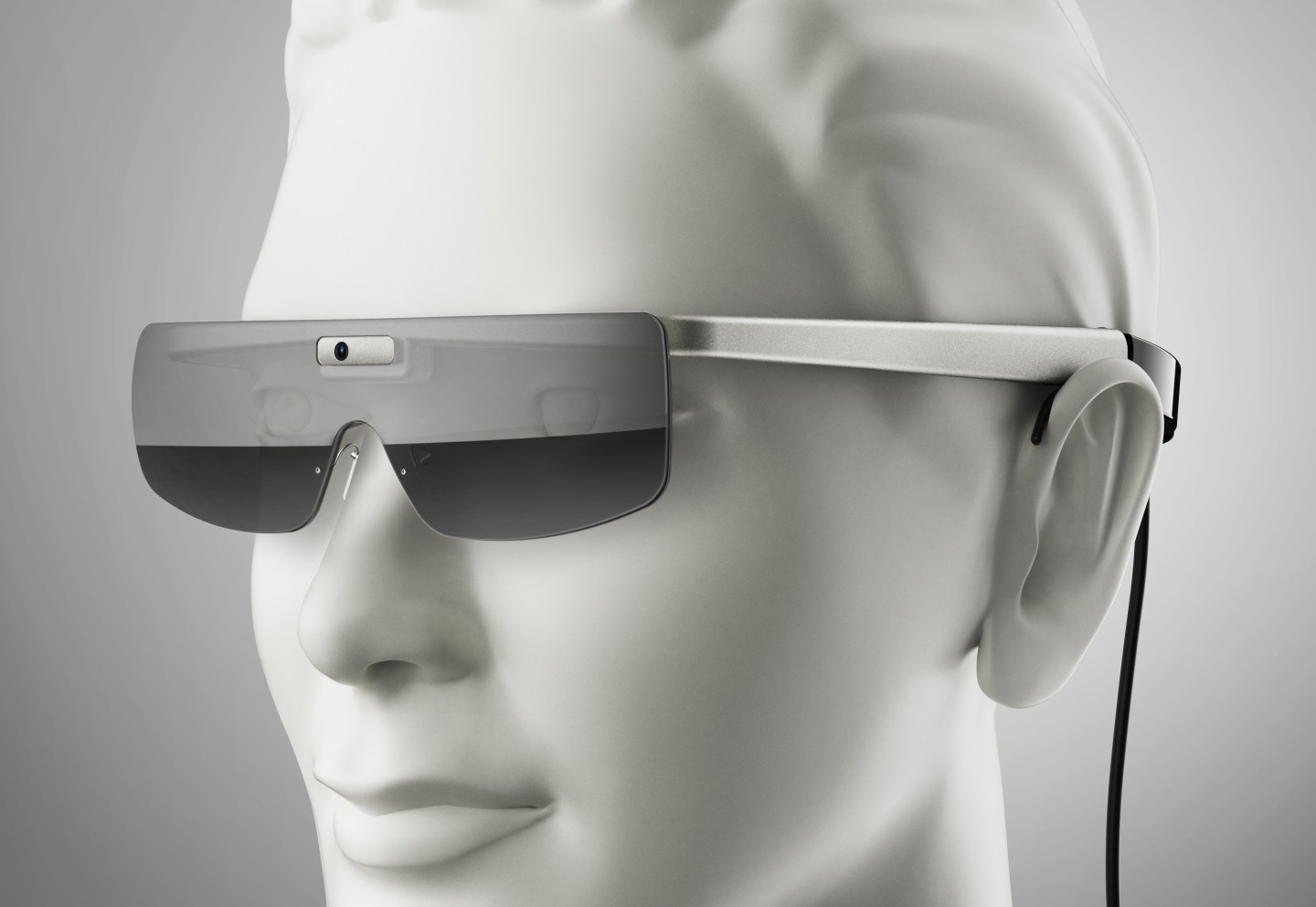
This year in Australia, researchers will implant a world-first bionic eye that can restore sight to the blind—no eyeball necessary.

While bionic eyes might sound futuristic, there are already a few retinal implants on the market. U.S.-based Second Sight, the FDA-approved industry leader, has put at least 150 of their $145,000 systems in retinas around the world.

But what electrical engineer Arthur Lowery and his team plan to do in 2016 is different. Because even if a patient’s eyeball is damaged or they’re completely eyeless, his new glasses could help them see. Not a picture-perfect view of the world, but instead, the image will be more like a couple hundred dots configured to help guide a patient’s way.

The system, developed in Australia at Monash University, inputs data directly from a glasses-mounted camera into the brain. And Lowery thinks it could help more than 80% of clinically blind people see their way around better.

SIGN UP: Get Data Sheet, Fortune’s daily newsletter about the business of technology.

That’s because the system is based on a front-mounted cell-phone sized camera that’s hooked up to the brain’s vision system not through the eyes, but at the back of the head, in a one-inch area just above where the neck ends. It’s here where the brain processes vision. Hook up a few electrode push pins into the grey matter under the skin, and it’s thought that the pulses could create ‘dotty’ images seen by the brain.

An implantable tile of 43 electrodes would send electrical pulses to the brain through the visual cortex, creating a vision of representative 'dots' for patients who can't see.
An implantable tile of 43 electrodes would send electrical pulses to the brain through the visual cortex, creating a vision of representative ‘dots’ for patients who can’t see.MiniFAB Pty Ltd
MiniFAB Pty Ltd

“We think it’s going to be initially perceived as dots of various sizes in the distance,” Lowery says. The dots could then be programmed, not just to see images, but also to help: Lighting up the clearest pathways out of a room, recognizing household objects, or even turning a room full of blurry colleagues dotted at a conference table into a cast of distinct computer-programmed emojis, so the patient can sort out who’s who. “It’s just the beginning, really, of a deeper understanding of learning how to work with human perception,” Lowery says.

He developed the system with an Australian army surgeon who’d seen a lot of traumatic eye damage and wanted a fix. But they aren’t the only researchers who’ve hacked into the brain’s vision system from behind.

WATCH: See Apple’s Medical Research App:

A scientist named Giles Brindley did it first while working at Cambridge in the 1960s. In those days, “you needed a bookcase full of equipment to have the electronics with the transmitters,” Lowery says, and the tech wasn’t practical for everyday use. Then in the 1970s American William Dobelle headed to Portugal to test out his own vision system for the blind, adding in an actual camera. But still, the technology wasn’t quite there: Wires connected to the back of the head had to be fed through the skin, a sometimes leaky system.

Today Lowery and his group can use pea-sized smartphone cameras and tiny computer processing technology, the same that’s in tablets and mobile phones. The team has spent roughly $20 million researching the tech, and is manufacturing batches of the devices now. They will need to get the device approved for Australian hospital trials from a research ethics committee before they can tap into their first patient. But in late 2016, they hope to be able to open up a patient’s cranium and slip in about four of those teeny electrode tiles. As they push them into the cellophane-like covering of the brain, connecting the tech up to human grey matter, they’ll be slowly learning how to bring up the lights for someone who’s lost their sight.
About the Author
By Hilary Brueck
See full bioRight Arrow Button Icon

Latest in Tech

Google DeepMind cofounder and CEO Demis Hassabis
AIU.K.
Google DeepMind agrees to sweeping partnership with U.K. government focused on science and clean energy
By Jeremy KahnDecember 10, 2025
4 hours ago
InnovationBrainstorm AI
Rivian CEO says buying an EV isn’t a political choice, pointing out that R1 buyers are split evenly between Republicans and Democrats
By Jason MaDecember 10, 2025
6 hours ago
Larry Ellison
Big TechMarkets
Oracle earnings may not be enough to assuage debt, AI deal fears
By Carmen Reinicke and BloombergDecember 10, 2025
7 hours ago
Curly haired woman in a black dress speaking.
AIBrainstorm AI
Actress Natasha Lyonne dropped out of NYU and watched movies instead. Now, she’s helping to shape the future of AI
By Amanda GerutDecember 10, 2025
8 hours ago
Jeff Williams, former Apple CEO
C-SuiteDisney
Jeff Williams, who retired from Apple after 27 years, less than a month ago, just got called up by Disney to join its board of directors
By Dave SmithDecember 10, 2025
9 hours ago
AIBrainstorm AI
Young people are ‘growing up fluent in AI’ and that’s helping them stand apart from their older peers, says Gen Z founder Kiara Nirghin
By Angelica AngDecember 10, 2025
11 hours ago

Most Popular

placeholder alt text
Success
At 18, doctors gave him three hours to live. He played video games from his hospital bed—and now, he’s built a $10 million-a-year video game studio
By Preston ForeDecember 10, 2025
18 hours ago
placeholder alt text
Politics
Exclusive: U.S. businesses are getting throttled by the drop in tourism from Canada: ‘I can count the number of Canadian visitors on one hand’
By Dave SmithDecember 10, 2025
16 hours ago
placeholder alt text
Economy
‘Fodder for a recession’: Top economist Mark Zandi warns about so many Americans ‘already living on the financial edge’ in a K-shaped economy 
By Eva RoytburgDecember 9, 2025
1 day ago
placeholder alt text
Economy
‘Be careful what you wish for’: Top economist warns any additional interest rate cuts after today would signal the economy is slipping into danger
By Eva RoytburgDecember 10, 2025
10 hours ago
placeholder alt text
Uncategorized
Transforming customer support through intelligent AI operations
By Lauren ChomiukNovember 26, 2025
14 days ago
placeholder alt text
Economy
The 'forever layoffs' era hits a recession trigger as corporates sack 1.1 million workers through November
By Nick Lichtenberg and Eva RoytburgDecember 9, 2025
2 days ago
Rankings
  • 100 Best Companies
  • Fortune 500
  • Global 500
  • Fortune 500 Europe
  • Most Powerful Women
  • Future 50
  • World’s Most Admired Companies
  • See All Rankings
Sections
  • Finance
  • Leadership
  • Success
  • Tech
  • Asia
  • Europe
  • Environment
  • Fortune Crypto
  • Health
  • Retail
  • Lifestyle
  • Politics
  • Newsletters
  • Magazine
  • Features
  • Commentary
  • Mpw
  • CEO Initiative
  • Conferences
  • Personal Finance
  • Education
Customer Support
  • Frequently Asked Questions
  • Customer Service Portal
  • Privacy Policy
  • Terms Of Use
  • Single Issues For Purchase
  • International Print
Commercial Services
  • Advertising
  • Fortune Brand Studio
  • Fortune Analytics
  • Fortune Conferences
  • Business Development
About Us
  • About Us
  • Editorial Calendar
  • Press Center
  • Work At Fortune
  • Diversity And Inclusion
  • Terms And Conditions
  • Site Map

© 2025 Fortune Media IP Limited. All Rights Reserved. Use of this site constitutes acceptance of our Terms of Use and Privacy Policy | CA Notice at Collection and Privacy Notice | Do Not Sell/Share My Personal Information
FORTUNE is a trademark of Fortune Media IP Limited, registered in the U.S. and other countries. FORTUNE may receive compensation for some links to products and services on this website. Offers may be subject to change without notice.