• Home
  • Latest
  • Fortune 500
  • Finance
  • Tech
  • Leadership
  • Lifestyle
  • Rankings
  • Multimedia

New Rules to Prevent Airline Delays Are Backfiring

By
Christopher Elliott
Christopher Elliott
Down Arrow Button Icon
By
Christopher Elliott
Christopher Elliott
Down Arrow Button Icon
January 6, 2016, 11:00 AM ET
US-WEATHER-THANKSGIVING-LIFESTYLE
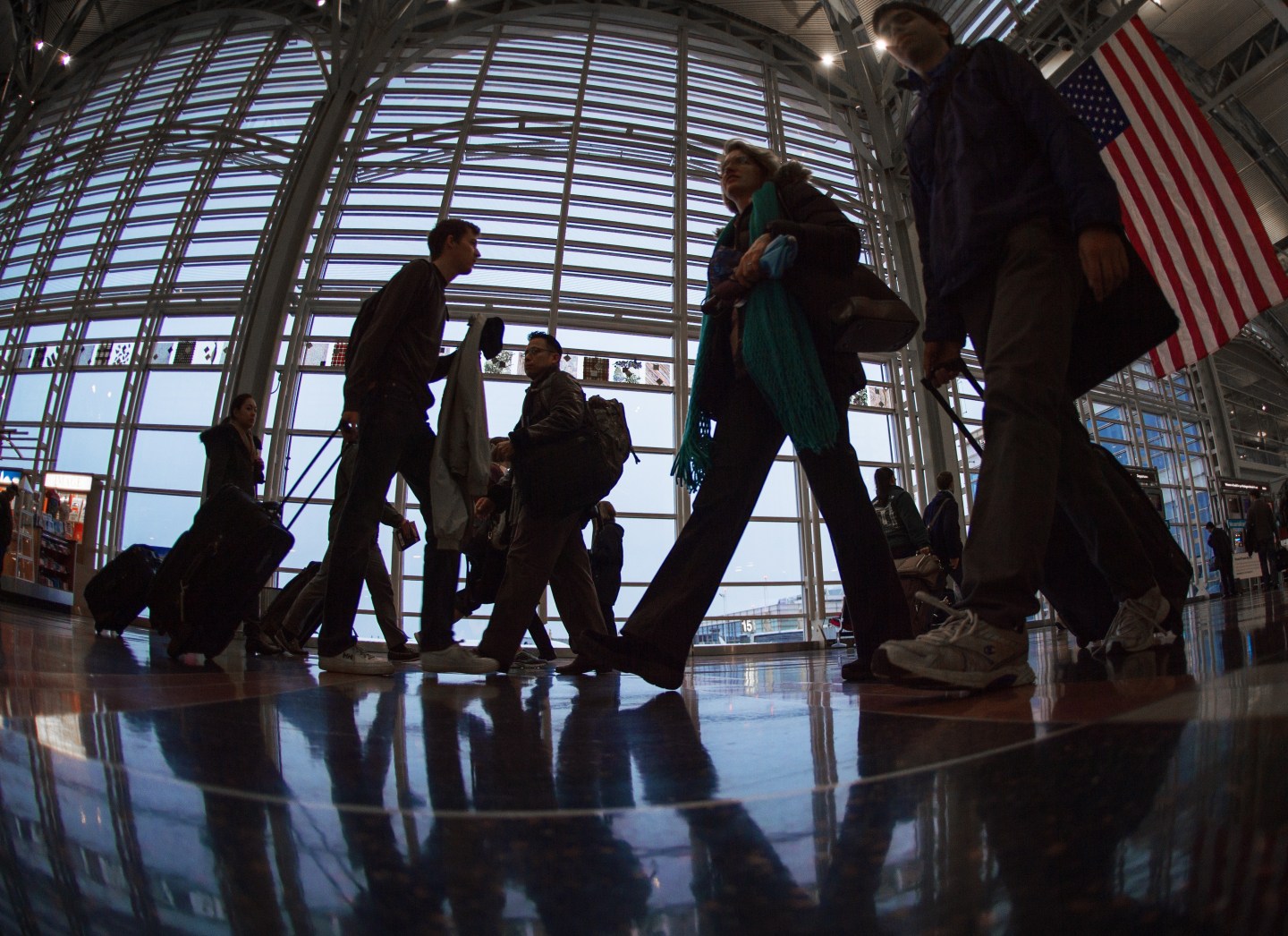
Airline travelers at Ronald Reagan National Airport in Arlington, Virginia, walk to a Transportation Security Administration (TSA) security checkpoint prior to traveling on November 26, 2014, the busiest travel day of the year. Hundreds of flights were cancelled or delayed Wednesday in the US northeast as a winter storm delivered freezing rain and snow ahead of the Thanksgiving holiday, one of the year's biggest travel weekends. A wintry mix was falling in Boston, Philadelphia, New York and Washington, according to the National Weather Service, which forecast "havoc" for travelers along the east coast from the Carolinas up through New England. AFP Photo/Paul J. Richards (Photo credit should read PAUL J. RICHARDS/AFP/Getty Images)Paul Richards—AFP/Getty Images

On a Valentine’s Day almost nine years ago, an ice storm changed the course of an entire industry. Hundreds of flights were unexpectedly grounded, leaving some planes stranded on the tarmac for as much as 11 hours. Toilets overflowed, food was scarce and tempers frayed.

In the aftermath, under intense pressure from consumer advocates, the government adopted a regulation that punished airlines for keeping passengers on a plane for more than three hours.

But they may have gone too far, new research suggests. The new regulations have “significantly increased” the number of passenger delays, according to a new study by Dartmouth College and the Massachusetts Institute of Technology.

How much of a delay? Each minute of time saved waiting on the tarmac translates into roughly three minutes of total passenger delay, according to the research.

“This is due primarily to increases in flight cancellations, resulting in passengers requiring rebooking, and often leading to extensive delays in reaching their final destinations,” says Vikrant Vaze, an assistant professor at Dartmouth’s Thayer School of Engineering.

Government data indicates about 1 in 5 flights is delayed. (A flight is considered delayed when it arrived 15 or more minutes than the schedule.) From October 2014 to 2015, the latest period for which statistics are available, 80 percent of flights operated on-time, according to the Bureau of Transportation Statistics. A year before, flights were running 77 percent on-time. A year before that, the national on-time average was 79 percent. The research, based on a hypothetical model, suggests there should have been fewer delays.

The study recommends the U.S. Department of Transportation (DOT) take the following steps to correct the over-regulation:

  • Changing its existing tarmac delay rules to a more flexible version. It proposes increasing the tarmac time limit to 3.5 hours from the current 3 hours.
  • Applying the tarmac delay rules only to flights with planned departure times before 5 p.m.
  • The researchers also recommends the tarmac time limit be defined in terms of when the aircraft must begin returning to the gate, instead of when passengers are allowed to deplane.

Now what?

The study has drawn a strong reaction from critics and prompted the question: What’s next? Will the research pressure the government to loosen its tarmac delay rules?

The airline industry hopes so. “The tarmac delay rule has actually caused more harm than good for the traveling public,” says Jean Medina, a spokeswoman for A4A, a trade group for some of the major domestic airlines. “The rigid structure of the rule in its current form has resulted in unnecessary delays in getting passengers to their intended destination, as carriers seek to avoid overly punitive fines from Department of Transportation.”

Medina says reforms are needed, including adjusting the rule to provide pilots more flexibility to complete flights. The airline industry, she adds, “remains committed to working with the Department of Transportation to ensure the rule benefits both customers and airline employees alike.”

A DOT representative said the agency hadn’t reviewed the new research yet. But the agency pointed out that a January 2014 study on the impact of the tarmac delay rule on flight cancellations concluded that the rule has virtually eliminated tarmac delays of more than three hours and that there was relatively little impact on flight cancellations.

Advocates oppose changes

The consumer advocates who pushed for the existing tarmac regulations insisted that the research is flawed and that no regulatory changes are necessary. Kendall Creighton, a spokeswoman for FlyersRights.org, says passengers support the existing three-hour rule.

“This action was the consequence of thousands of extended tarmac delays of nine hours or more, with horrifying conditions on-board commercial jets in the US,” she says. “Passengers witnessed children passing out due to heat exposure, overflowing toilets, cramped spaces, no food or water, screaming babies and no hope of ever getting off the plane as no laws were in place to protect them.”

Creighton claims the new study is timed to try to persuade both Congress and the DOT to either extend the tarmac delay rule or reduce the fines imposed for tarmac delays, but that it does nothing to help airline passengers. “Instead, it would allow the airlines more flexibility to overschedule, and prevent passenger migration in the event of a long ground delay,” she says.

Vaze, the Dartmouth researcher, says the paper is a scientific study that simply tried to accurately estimate the positive and negative effects of the tarmac delay rule on the passengers. And he’s just getting started. Next, his team plans to examine the rule’s impact on commercial airlines across different years, as well as on commercial airline schedule decision-making.
About the Author
By Christopher Elliott
See full bioRight Arrow Button Icon

Latest in

robots
InnovationRobots
‘The question is really just how long it will take’: Over 2,000 gather at Humanoids Summit to meet the robots who may take their jobs someday
By Matt O'Brien and The Associated PressDecember 12, 2025
8 minutes ago
Trump
PoliticsWhite House
House Democrats release new Epstein photos including Trump, Clinton, Prince Andrew
By Stephen Groves and The Associated PressDecember 12, 2025
10 minutes ago
Sherrone Moore
LawMichigan
Michigan mystery revealed: Fired football coach had broken into a lover’s apartment and threatened to kill himself when their affair ended
By Ed White and The Associated PressDecember 12, 2025
13 minutes ago
Orlando
LawTheme parks
32-year-old’s death on Universal roller coaster was accidental despite deep forehead gash, investigation finds
By Mike Schneider and The Associated PressDecember 12, 2025
18 minutes ago
Donald Trump
HealthHealth Insurance
‘Tragedy in the making’: Top healthcare exec on why insurance will spike to subsidize a tax cut to millionaires and billionaires
By Nick LichtenbergDecember 12, 2025
47 minutes ago
Man about to go into police vehicle
CryptoCryptocurrency
Judge tells notorious crypto scammer ‘you have been bitten by the crypto bug’ in handing down 15 year sentence 
By Carlos GarciaDecember 12, 2025
1 hour ago

Most Popular

placeholder alt text
Success
At 18, doctors gave him three hours to live. He played video games from his hospital bed—and now, he’s built a $10 million-a-year video game studio
By Preston ForeDecember 10, 2025
2 days ago
placeholder alt text
Economy
Tariffs are taxes and they were used to finance the federal government until the 1913 income tax. A top economist breaks it down
By Kent JonesDecember 12, 2025
10 hours ago
placeholder alt text
Success
Palantir cofounder calls elite college undergrads a ‘loser generation’ as data reveals rise in students seeking support for disabilities, like ADHD
By Preston ForeDecember 11, 2025
1 day ago
placeholder alt text
Investing
Baby boomers have now 'gobbled up' nearly one-third of America's wealth share, and they're leaving Gen Z and millennials behind
By Sasha RogelbergDecember 8, 2025
4 days ago
placeholder alt text
Arts & Entertainment
'We're not just going to want to be fed AI slop for 16 hours a day': Analyst sees Disney/OpenAI deal as a dividing line in entertainment history
By Nick LichtenbergDecember 11, 2025
22 hours ago
placeholder alt text
Economy
‘We have not seen this rosy picture’: ADP’s chief economist warns the real economy is pretty different from Wall Street’s bullish outlook
By Eleanor PringleDecember 11, 2025
1 day ago
Rankings
  • 100 Best Companies
  • Fortune 500
  • Global 500
  • Fortune 500 Europe
  • Most Powerful Women
  • Future 50
  • World’s Most Admired Companies
  • See All Rankings
Sections
  • Finance
  • Leadership
  • Success
  • Tech
  • Asia
  • Europe
  • Environment
  • Fortune Crypto
  • Health
  • Retail
  • Lifestyle
  • Politics
  • Newsletters
  • Magazine
  • Features
  • Commentary
  • Mpw
  • CEO Initiative
  • Conferences
  • Personal Finance
  • Education
Customer Support
  • Frequently Asked Questions
  • Customer Service Portal
  • Privacy Policy
  • Terms Of Use
  • Single Issues For Purchase
  • International Print
Commercial Services
  • Advertising
  • Fortune Brand Studio
  • Fortune Analytics
  • Fortune Conferences
  • Business Development
About Us
  • About Us
  • Editorial Calendar
  • Press Center
  • Work At Fortune
  • Diversity And Inclusion
  • Terms And Conditions
  • Site Map

© 2025 Fortune Media IP Limited. All Rights Reserved. Use of this site constitutes acceptance of our Terms of Use and Privacy Policy | CA Notice at Collection and Privacy Notice | Do Not Sell/Share My Personal Information
FORTUNE is a trademark of Fortune Media IP Limited, registered in the U.S. and other countries. FORTUNE may receive compensation for some links to products and services on this website. Offers may be subject to change without notice.