• Home
  • News
  • Fortune 500
  • Tech
  • Finance
  • Leadership
  • Lifestyle
  • Rankings
  • Multimedia
Commentary

What the TPP Means for Small Businesses

By
Michael Froman
Michael Froman
and
Bethany Cianciolo
Bethany Cianciolo
Down Arrow Button Icon
By
Michael Froman
Michael Froman
and
Bethany Cianciolo
Bethany Cianciolo
Down Arrow Button Icon
November 28, 2015, 9:00 AM ET
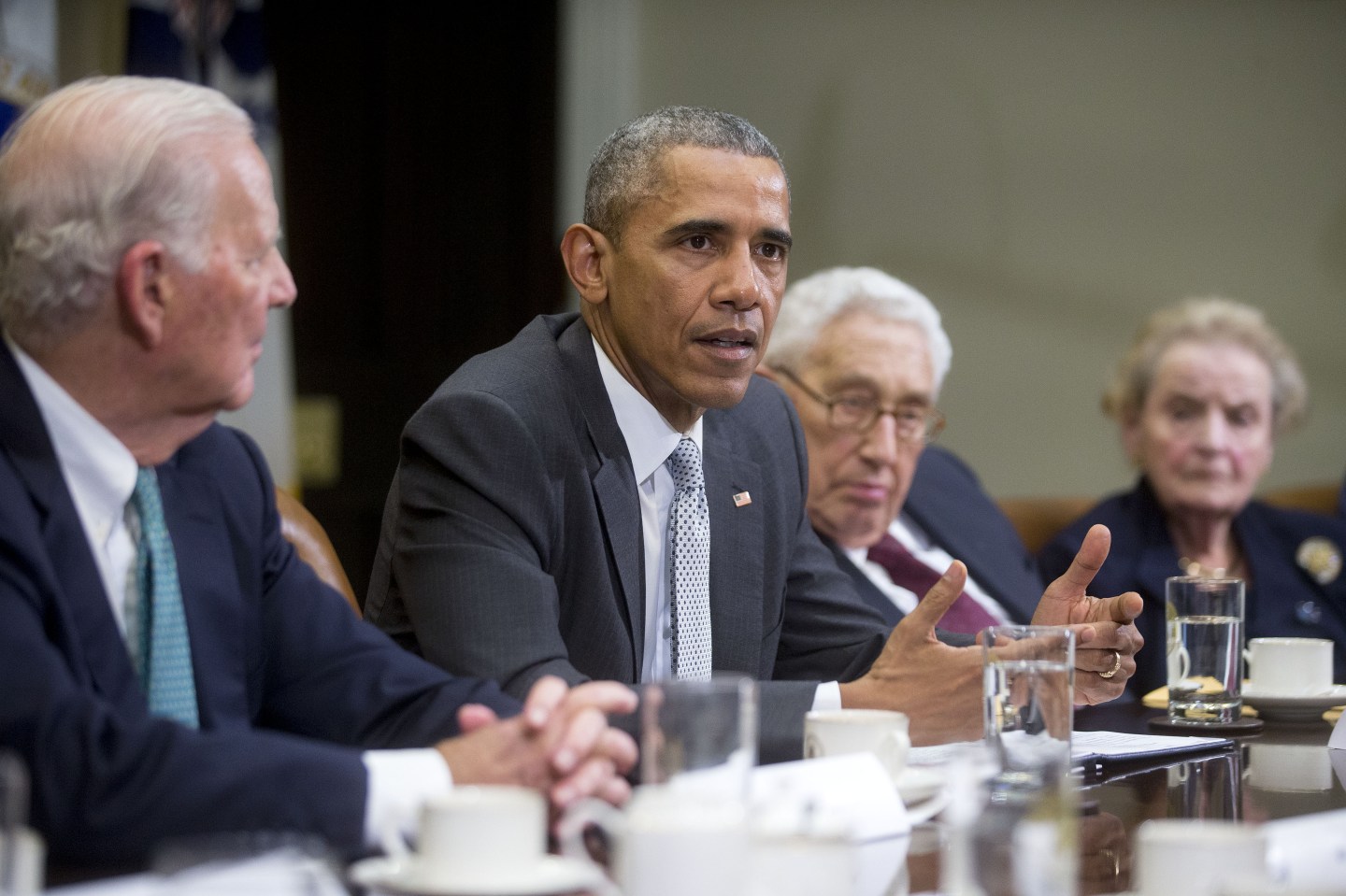
President Barack Obama Meets With National Security Leaders To Discuss The Trans-Pacific Partnership
U.S. President Barack Obama, second left, speaks while meeting with current and former diplomatic and national security officials including James Baker, former U.S. Secretary of State, from left, Obama, Henry Kissinger, former U.S. Secretary of State, Madeleine Albright, former U.S. Secretary of State and founder of Albright Stonebridge Group LLC, and Admiral Mike Mullen, former chairman of the U.S. Joint Chiefs of Staff, to discuss the Trans-Pacific Partnership (TPP) in the Roosevelt Room of the White House in Washington, D.C., U.S., on Friday, Nov. 13, 2015. Obama, hoping to kick off a new phase of selling the TPP at home while enhancing its prospects overseas, has enlisted some of the nations top national security leaders to give testimonials. Photographer: Andrew Harrer/Bloomberg via Getty ImagesPhotograph by Andrew Harrer — Bloomberg via Getty Images

As we honor America’s small businesses this Saturday, we should resolve to help them not only with our patronage at home, but also with our patriotism abroad.

It’s no secret that small businesses are the backbone of the U.S. economy. They account for nearly two-thirds of net new private sector jobs in recent decades. They are major innovators, producing 16 times more patents per employee than large patenting firms. Better yet, small businesses that export sell more, support more jobs, and pay up to 18% higher wages than small businesses that don’t export.

Even more impressive than these statistics are the stories behind them. Take Northwest Door, which produces garage doors in in Puyallup, Wash. and sells them to customers around the world. Since last year, its exports to the Pacific Region have increased 50%, helping the company grow its 245-person workforce.

As Asia’s economic strength grows in the coming years, so could exports from small businesses like Northwest Door. By 2030, Asia is projected to be home to two-thirds of the world’s middle-class consumers. As Northwest Door President Jeff Hohman told me, “We’ve found that with the emerging middle class and the value of American ingenuity and products, there are opportunities for Northwest Door to export.”

Another inspiring example is Pioneer Balloon Company of Wichita, Kan., which has been manufacturing high-quality balloons for more than 80 years. With more than 50% of its sales coming from exports, the company sees export growth as critical to its ability to expand, in addition to being instrumental in the hiring and retention of jobs here at home. However, to help Pioneer and other American small businesses succeed, we need to level the playing field overseas.

Through the Trans-Pacific Partnership (TPP), we can give these local job creators a fair shot at competing in global markets.

As it stands, the U.S. economy is already among the most open in the world. But the picture looks very different abroad, where the situation is too often tilted against American workers and businesses. Currently, average tariffs on American exports to other countries are twice as high as the average tariff we place on foreign imports to the U.S. Pioneer Balloon, for example, faces foreign taxes on U.S. exports as high as 20% in the 11 other countries now signed on to the TPP. Northwest Door faces 25% taxes on its exports.

These foreign taxes and regulations take an especially heavy toll on America’s small businesses. Unlike larger companies, many small businesses lack the resources to navigate complex foreign regulations. That’s one reason why less than 5% of all American small businesses export goods. In other words, more than 95% of our small businesses are missing out on 95% of the world’s customers.

That’s why the TPP is essential to supporting our small businesses. It’s the largest tax cut on American exports in a generation, slashing over 18,000 individual taxes on the products American manufacturers make, American farmers grow, and American innovators create. By cutting those foreign taxes, the TPP will help small businesses like Northwest Door and Pioneer Balloon Company export and support more high-paying American jobs. And by simplifying and making more transparent customs rules and procedures—which are some of the most daunting obstacles for small businesses to expand abroad—the TPP will help ensure that their products more easily make it to their customers.

The TPP is the first trade agreement to have a chapter dedicated to addressing many of the challenges faced by small businesses. That includes, for example, requiring countries to create public websites targeted at small businesses that provide easily accessible information on the agreement and how to take advantage of it. The agreement also establishes a committee to review how small businesses are taking advantage of the TPP and discuss recommendations.

Among the TPP’s most exciting features for small businesses are its provisions promoting digital trade and e-commerce. The Internet is the primary avenue for many small businesses to access the global marketplace, and the TPP will help keep it open and free. For example, it protects against costly requirements that would force businesses to locate infrastructure in the markets in which they seek to operate.

This Saturday is an opportunity to recognize our small businesses for their contributions to our economy. But our small businesses deserve more than a day, a week, or even a month. Through the TPP, we can give our small businesses the tools they need to win in tomorrow’s global economy. We can help turn Small Business Saturday into a Small Business Century.

Michael Froman is the U.S. Trade Representative.

About the Authors
By Michael Froman
See full bioRight Arrow Button Icon
By Bethany Cianciolo
See full bioRight Arrow Button Icon

Latest in Commentary

Amit Walia
CommentaryM&A
Why the timing was right for Salesforce’s $8 billion acquisition of Informatica — and for the opportunities ahead
By Amit WaliaDecember 6, 2025
16 hours ago
Steve Milton is the CEO of Chain, a culinary-led pop-culture experience company founded by B.J. Novak and backed by Studio Ramsay Global.
CommentaryFood and drink
Affordability isn’t enough. Fast-casual restaurants need a fandom-first approach
By Steve MiltonDecember 5, 2025
2 days ago
Paul Atkins
CommentaryCorporate Governance
Turning public companies into private companies: the SEC’s retreat from transparency and accountability
By Andrew BeharDecember 5, 2025
2 days ago
Matt Rogers
CommentaryInfrastructure
I built the first iPhone with Steve Jobs. The AI industry is at risk of repeating an early smartphone mistake
By Matt RogersDecember 4, 2025
3 days ago
Jerome Powell
CommentaryFederal Reserve
Fed officials like the mystique of being seen as financial technocrats, but it’s time to demystify the central bank
By Alexander William SalterDecember 4, 2025
3 days ago
Rakesh Kumar
CommentarySemiconductors
China does not need Nvidia chips in the AI war — export controls only pushed it to build its own AI machine
By Rakesh KumarDecember 3, 2025
4 days ago

Most Popular

placeholder alt text
AI
Nvidia CEO says data centers take about 3 years to construct in the U.S., while in China 'they can build a hospital in a weekend'
By Nino PaoliDecember 6, 2025
12 hours ago
placeholder alt text
Big Tech
Mark Zuckerberg rebranded Facebook for the metaverse. Four years and $70 billion in losses later, he’s moving on
By Eva RoytburgDecember 5, 2025
2 days ago
placeholder alt text
Success
Nvidia CEO Jensen Huang admits he works 7 days a week, including holidays, in a constant 'state of anxiety' out of fear of going bankrupt
By Jessica CoacciDecember 4, 2025
3 days ago
placeholder alt text
Real Estate
The 'Great Housing Reset' is coming: Income growth will outpace home-price growth in 2026, Redfin forecasts
By Nino PaoliDecember 6, 2025
17 hours ago
placeholder alt text
Economy
Two months into the new fiscal year and the U.S. government is already spending more than $10 billion a week servicing national debt
By Eleanor PringleDecember 4, 2025
3 days ago
placeholder alt text
Success
‘Godfather of AI’ says Bill Gates and Elon Musk are right about the future of work—but he predicts mass unemployment is on its way
By Preston ForeDecember 4, 2025
3 days ago
Rankings
  • 100 Best Companies
  • Fortune 500
  • Global 500
  • Fortune 500 Europe
  • Most Powerful Women
  • Future 50
  • World’s Most Admired Companies
  • See All Rankings
Sections
  • Finance
  • Leadership
  • Success
  • Tech
  • Asia
  • Europe
  • Environment
  • Fortune Crypto
  • Health
  • Retail
  • Lifestyle
  • Politics
  • Newsletters
  • Magazine
  • Features
  • Commentary
  • Mpw
  • CEO Initiative
  • Conferences
  • Personal Finance
  • Education
Customer Support
  • Frequently Asked Questions
  • Customer Service Portal
  • Privacy Policy
  • Terms Of Use
  • Single Issues For Purchase
  • International Print
Commercial Services
  • Advertising
  • Fortune Brand Studio
  • Fortune Analytics
  • Fortune Conferences
  • Business Development
About Us
  • About Us
  • Editorial Calendar
  • Press Center
  • Work At Fortune
  • Diversity And Inclusion
  • Terms And Conditions
  • Site Map

© 2025 Fortune Media IP Limited. All Rights Reserved. Use of this site constitutes acceptance of our Terms of Use and Privacy Policy | CA Notice at Collection and Privacy Notice | Do Not Sell/Share My Personal Information
FORTUNE is a trademark of Fortune Media IP Limited, registered in the U.S. and other countries. FORTUNE may receive compensation for some links to products and services on this website. Offers may be subject to change without notice.